
General
Private Sector Crucial to Successful AfCFTA Implementation—Delegates

By Dipo Olowookere
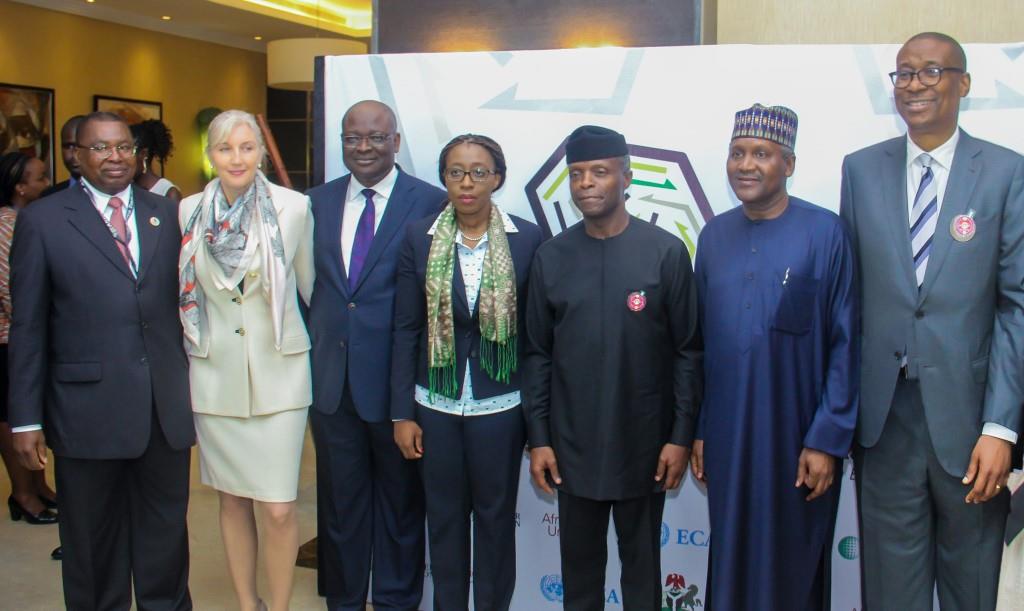
Delegates at the recently-concluded 2018 Africa Trade Forum held in Lagos have agreed that while governments need to set a conducive environment through collective and coordinated actions for the successful implementation of the African Continental Free Trade Area (AfCFTA), the private sector should be the main driver of the policy.
During the event, they also agreed that complementary interventions to boost competitiveness and reduce the high costs of doing business on the African continent would be crucial to ensure win-win gains from the AfCFTA, saying these will require proactive policies and programmes in the areas of infrastructure, financing, skills development, trade facilitation and quality infrastructure.
According to the Economic Commission for Africa’s Regional Integration and Trade Division Director, Stephen Karingi, while summing up the major takeaways from the forum, “In implementing the AfCFTA we must also make sure not to forget MSMEs, women traders, smallholder farmers and informal cross border traders, who represent the majority of Africa’s trading community, and are crucial to driving poverty reduction efforts.”
Delegates agreed the establishment of new business models, including renewable energy mini grids, was key to ensure efficient and sustainable access to electricity and help fill the existing gap.
“The recommendation is that we should promote new and reinforce existent sub-regional power pools within the continent,” Mr Karingi said.
Data, delegates agreed, was critical for the implementation of the AfCFTA. Countries, regional economic communities and the African Union Commission need to understand trade patterns to determine the correct strategies. Data is also central to the monitoring of the AfCFTA.
“Africa needs to design a data economy strategy to ensure that it is not vulnerable through data exposure caused by data storage in other regions. The combination of data and technology can address the challenges around formalisation of trade,” added Mr. Karingi in his closing remarks.
On agriculture, delegates said the AfCFTA by integrating African economies, offers opportunities for the continent to reduce its food imports from the rest of the World by increasing intra-African trade of processed agro-food products. For this to happen, effective implementation of the Agreement is key, in addition to removing non-tariff barriers to trade. Critical to this is to create an environment that will support small farmers and small producers (SMEs) to have timely access to markets, both output and input markets.
Speaking at the forum, Rockefeller Foundation’s Vice President, Global Policy and Advocacy, Christine Heenan, emphasized the importance of partnerships in ensuring the AfCFTA was a real game changer in Africa.
She said an online poll commissioned by Rockefeller was very compelling with more than 83 percent of respondents from across the continent saying the AfCFTA was important for Africa’s development. The poll is open until December 31.
“Engaging stakeholders remains very important,” she said, adding the poll meant a lot in terms of inclusivity of common African voices in the implementation of the African Continental Free Trade Agreement.
The Rockefeller Foundation, Ms. Heenan said, believed and relied on its partners for collective action that leads to progress on the continent.
In his closing remarks AUC’s Trade and Industry Commissioner, Albert Muchanga said six African countries have not yet signed the AFCFTA but two were expected to do so by December.
“African countries have resolved and are committed to making the AfCFTA a reality and there is no going back. We have to continually beat the challenges and use opportunities to come up with solutions,” he said.
Ambassador Chiedu Osakwe, Nigeria’s Chief Trade Negotiator, said to build a free trade area, Africa has to be at ease with the process of sincere debates on its trade policies.
“The European Union dealt with a lot of continuous debate for a long period of time. African countries need to work on consensus building, being at ease with challenges on ideas, methodologies and processes in order to be at ease with the negotiations process, “Ambassador Osakwe said.
On the next steps, Mr Karingi said the ECA with financial support of the EU was offering technical assistance to support Member States in developing comprehensive AfCFTA National Implementation Strategies. These strategies will: Identify new opportunities for diversification, industrialization and value chain development; identify current constraints to intra-African trade which must be addressed; recommend steps required for each country to take full advantage of national, regional and global markets in the AfCFTA context; align to existing policy frameworks at the national, regional and continental levels; and adopt a nationally-driven multi-stakeholder participatory approach.
The Forum highlighted the crucial importance of advocacy, consultations and consensus-building on the continent around its major programmes.
Mr Karingi thanked Nigeria and the Government of Lagos State for hosting the forum and for their dedicated support and collaboration in the lead up to this Forum.
“Although Nigeria has not yet signed the AfCFTA, it is in many ways many steps ahead in ensuring that the Agreement is a real game changer for economic transformation and development,” he said.
The Africa Trade Forum, which was held under the theme; AfCFTA Ratification and implementation: A game changer for African economies, was co-organized by the ECA, the Rockefeller Foundation, and the Nigerian government in collaboration with the AUC.




By Adedapo Adesanya
The Nigerian Independent System Operator (NISO) has attributed the poor power supply facing a considerable number of Nigerians to inadequate gas supply to thermal power plants.
Business Post reports that epileptic power supply has plagued consumers in Lagos, Oyo, Abuja, and Osun, among others, this month, leading to worries. Also, some businesses have recorded losses due to the epileptic power supply in their areas.
In a statement posted on its X handle, NISO disclosed that average available generation on the national grid currently stands at about 4,300 megawatts (MW), with the low output primarily attributed to gas supply constraints.
The system operator noted that thermal power plants, which account for the dominant share of Nigeria’s electricity generation mix, require an estimated 1,629.75 million standard cubic feet (MMSCF) of gas per day to operate at optimal capacity. However, as of February 23, 2026, actual gas supply to the plants was approximately 692.00 MMSCF per day.
The available supply represents less than 43 per cent of the daily gas requirement, resulting in constrained generation output and reduced electricity allocation to Distribution Companies (DisCos).
NISO, which independently manages the nation’s electricity grid, explained that any disruption or limitation in gas supply directly affects available generation capacity and overall grid output, given the heavy reliance on thermal plants.
It added that when total system generation drops significantly, the operator is compelled to implement load shedding across the network while dispatching available energy in line with allocation percentages approved under the Multi-Year Tariff Order (MYTO) framework of the Nigerian Electricity Regulatory Commission (NERC), to maintain grid stability and prevent system disturbances.
While expressing regret over the inconvenience to electricity consumers and market participants, NISO said it is working closely with relevant stakeholders to restore full energy allocation once gas supply improves and generation capacity returns to normal levels.
By Adedapo Adesanya
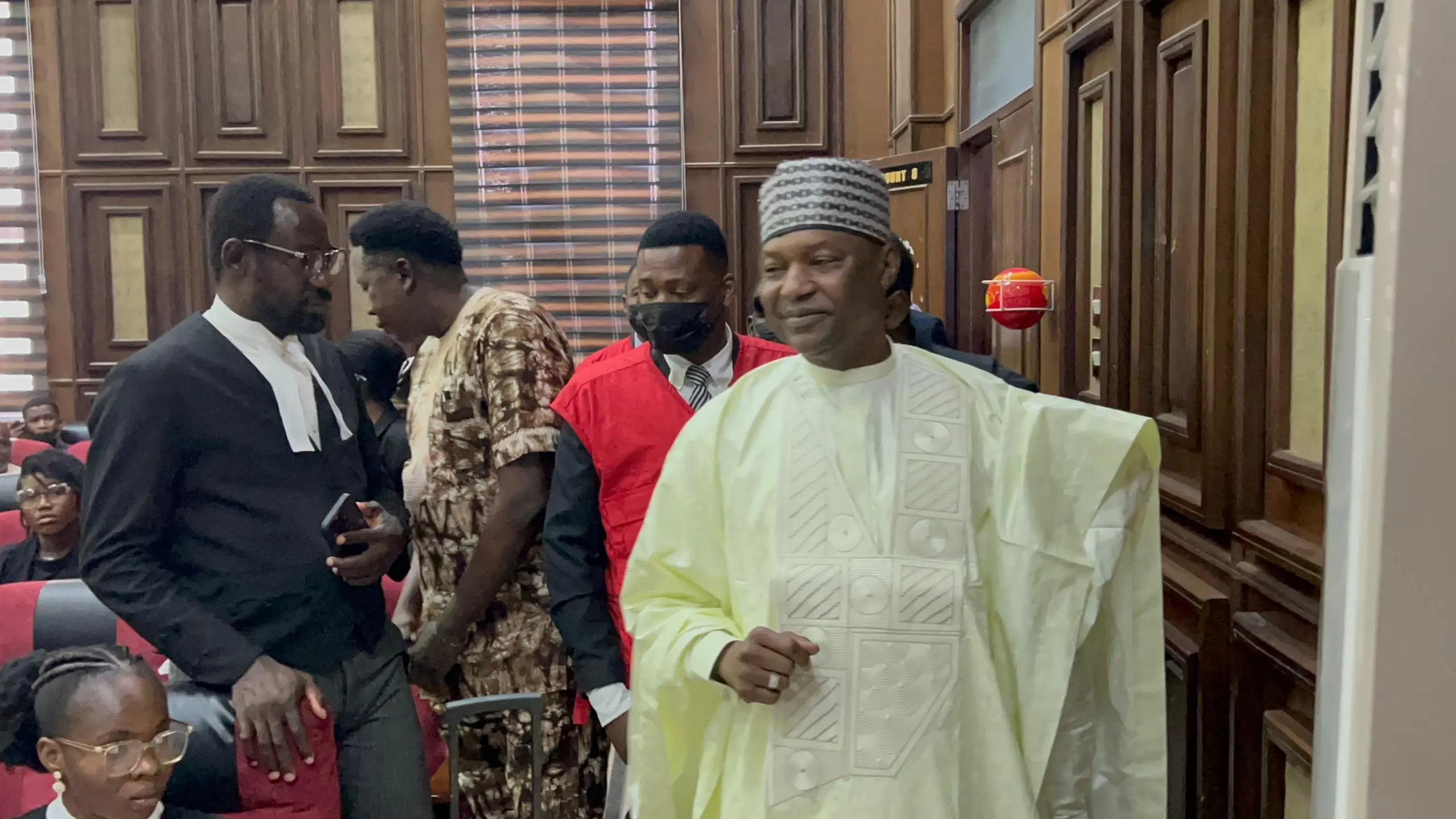
The Economic and Financial Crimes Commission (EFCC) has re-arraigned former Attorney-General of the Federation (AGF), Mr Abubakar Malami (SAN), his wife, Mrs Asabe Bashir, and son, Mr Abdulaziz Malami, on money laundering charges.
They were brought before Justice Joyce Abdulmalik of the Federal High Court in Abuja, following the re-assignment of the case to the new trial judge.
Upon resumed hearing, EFCC’s lawyer, Mr Jibrin Okutepa (SAN), informed the court that the matter was scheduled for defendants’ re-arraignment.
“The matter is coming before your lordship this morning for the very first time. I will be applying for the plea of the defendants to be taken,” he said.
Mr Okutepa equally applied that the sums listed in Counts 11 and 12 be corrected to read N325 million instead of N325 billion for Count 11, and N120 million instead of N120 billion for Count 12.
When it was not opposed by the defence lawyer, Mr Joseph Daudu (SAN), Justice Abdulmalik granted the oral application by Mr Okutepa.
The defendants, however, pleaded not guilty to the 16 counts preferred against them by the anti-graft agency bordering on money laundering.
Justice Obiora Egwuatu had, on February 12, withdrawn from the case shortly after the civil case filed by the EFCC was brought to him.
The case was formerly before Justice Emeka Nwite, who sat as a vacation judge during the Christmas/New Year break.
After the vacation period, the CJ reassigned the cases to Justice Egwuatu, who had now recused himself, before it was reassigned to Justice Abdulmalik.
The former AGF, his wife, and son were earlier arraigned before Justice Nwite on December 30, 2025.
While Malami and his son were remanded at Kuje Correctional Centre, Asabe was remanded at Suleja Correctional Centre before they were admitted to N500 million bail each, on January 7, with two sureties each in the like sum.

By Adedapo Adesanya
Nigeria will hold next year’s presidential and National Assembly elections a month earlier than planned, after the Independent National Electoral Commission (INEC) revised the polling schedule.
The elections will be held on January 16, instead of the previously announced date of February 20, INEC said in an X post, signed by Mr Mohammed Kudu Haruna, National Commissioner and Chairman, Information and Voter Education Committee.
There were also changes to the Governorship and State Houses of Assembly elections initially fixed for Saturday, March 6 2027, in line with the Electoral Act, 2022, have now been moved to Saturday, February 6, 2027.
The electoral commission said the changes were caused by the enactment of the Electoral Act, 2026 and the repeal of the Electoral Act, 2022, which introduced adjustments to statutory timelines governing pre-election and electoral activities.
“The Commission reviewed and realigned the schedule to ensure compliance with the new legal framework,” it said.
INEC said party primaries (including resolution of disputes) will commence on April 23, 2026 and end on May 30, 2026, after which Presidential and National Assembly campaigns will begin on August 19, 2026, while Governorship and State Houses of Assembly campaigns will begin on September 9, 2026.
It noted that campaigns will end 24 hours before Election Day, and political parties have been advised to strictly adhere to the timelines.
INEC also stated it will enforce compliance with the law.
The electoral body also rescheduled the Osun Governorship election which was earlier scheduled for Saturday, August 8 2026, by a week to Saturday, August 15, 2026.
INEC noted that some activities regarding the Ekiti and Osun governorship elections have already been conducted, and the remaining activities will be implemented in accordance with the Electoral Act, 2026.
Speaking at a news briefing in Abuja two weeks ago, the chairman of INEC, Mr Joash Amupitan, expressed the readiness of the commission to conduct the polls next year.
The timetable issued by the organisation for the polls at the time came when the federal parliament had yet to transmit the amended electoral bill to President Bola Tinubu for assent.
Later that week, the Senate passed the electoral bill, reducing the notice of elections from 360 days to 180 days, while the transmission of results was mandated with a proviso.







-
 Feature/OPED6 years ago
Davos was Different this year
-
Travel/Tourism10 years ago
Lagos Seals Western Lodge Hotel In Ikorodu
-

 Showbiz3 years ago
Estranged Lover Releases Videos of Empress Njamah Bathing
-
 Banking8 years ago
Sort Codes of GTBank Branches in Nigeria
-

 Economy3 years ago
Subsidy Removal: CNG at N130 Per Litre Cheaper Than Petrol—IPMAN
-

 Banking3 years ago
Sort Codes of UBA Branches in Nigeria
-

 Banking3 years ago
First Bank Announces Planned Downtime
-

 Sports3 years ago
Highest Paid Nigerian Footballer – How Much Do Nigerian Footballers Earn