

Banking
Q3 2018: UBA Impresses with N375b Earnings, N62b PAT

By Modupe Gbadeyanka
United Bank for Africa (UBA) Plc on Tuesday released its unaudited 2018 third quarter financial results to the Nigerian Stock Exchange (NSE).
The results were applauded by analysts, investors and shareholders because the pan African financial institution with presence in 20 African countries recorded an impressive growth in gross earnings, which stood at N374.8 billion, about 12.3 percent increase when compared with the N333.9 billion recorded in the corresponding period of 2017.
The lender revealed that its net operating improved by 1.7 percent year-on-year to N227.7 billion in contrast to N224 billion achieved in the similar period of 2017.
Amidst inflationary pressures and uncertainties undermining the business environment in Nigeria and a few other countries in Africa, UBA’s operating expenses only increased by 2.3 percent to N149.1 billion versus N145 billion recorded in the same period of last year.
The low cost profile can be better appreciated when put in the perspective of double digit inflation rate in Nigeria.
Overall, the bank posted a Profit Before Tax (PBT) of N79.1 billion whilst Profit After Tax (PAT) stood at N61.7 billion. This profit performance puts the bank’s annualized return on average equity at 16 percent and 20 percent at pre-tax and post-tax profit level respectively.
The bank continues to maintain a very strong balance sheet, with total assets of N4.51 trillion, an impressive 10.8 percent year-to-date rise over the N4.07 trillion total assets recorded as at December 2017.
Another strong indication of the growth of the bank and more so, acceptance of the franchise across Africa is the remarkable 16.2 percent year-to-date growth in customer deposits, which grew to N3.18 trillion against N2.73 trillion as at December 2017.
The shareholders’ fund remained very strong at N509.3 billion, even as the implementation of International Financial Reporting Standard (IFRS) 9 moderated the group’s equity by 3.8 percent year-to-date.
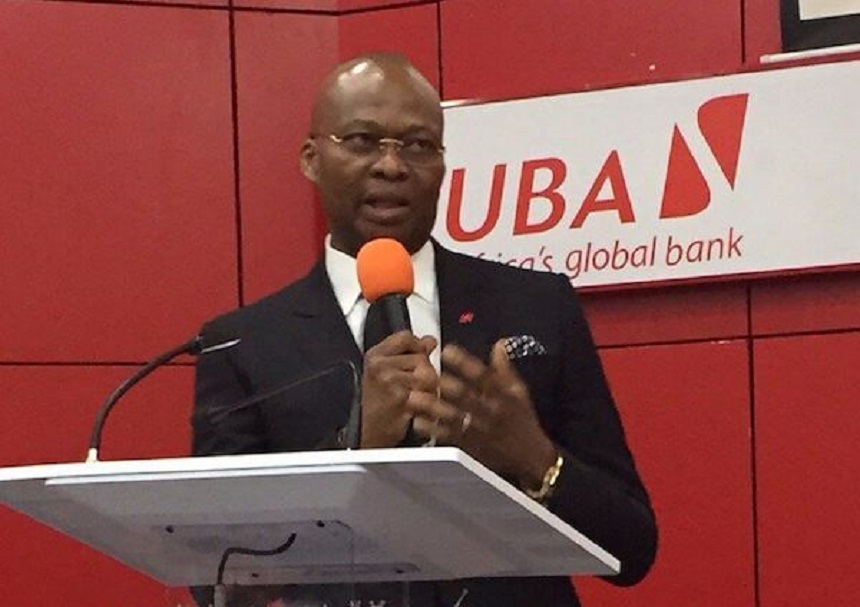
Commenting on the result, Group Managing Director/CEO of UBA Plc, Mr Kennedy Uzoka, stated that, “We achieved a number of strategic imperatives during the quarter and committed more investments in the future of the business – building a solid foundation for sustainable and superior return to our shareholders.”
Mr Uzoka said that he was pleased that the bank’s virtual banking Chatbot, Leo, which debuted on Facebook earlier in the year, was successfully launched on WhatsApp during the quarter.
“This new channel offering, which enables our customers to fulfil their banking transactions through simple chat commands, is another premier initiative in our suite.
“The early pay-offs are quite compelling – recent customer acquisitions and broader transaction volume growth are exciting leading indicators that reinforce our confidence in these novel channels,” he said.
“Our franchise is increasingly renowned for financial solution and I am happy with the consistent growth in our businesses across the continent. We have grown balance sheet by 11 percent year-to-date to over N4.5 trillion.
“Notwithstanding the statutory-induced cost growth, our earnings proved resilient, as we recorded nine-month profit before tax of N79 billion. Notwithstanding the macro-risk arising from upcoming elections in Nigeria, our single largest market, we are confident of finishing the year strong,” Mr Uzoka concluded.
Also speaking on UBA’s financial performance and position, the Group CFO, Mr Ugo Nwaghodoh, said despite the relative volatility in the third quarter of 2018, especially in the face of the United States’ interest rate hikes and concerns over global trade war, which has disrupted the interest and exchange rate environment in many African countries, the bank remains on track to deliver its earnings target for the year.
“We remain committed to our five-year plan of working down CIR to 50 percent, which we consider to be a normalised medium-term CIR.
“Overall, we closed the third quarter with a post-tax RoAE of 16 percent and the Group remains well capitalized and liquid, as reflected in the Group’s capital adequacy of 21 percent and bank’s liquidity ratio of 53 percent,” he said.
UBA is one of Africa’s leading banks with operations in 20 African countries. It also has presence in the global financial centres; London, New York and Paris. UBA provides banking services to more than 15 million customers globally, through diverse channels.



By Adedapo Adesanya
The operating licences of Aso Savings and Loans Plc and Union Homes Savings and Loans Plc have been revoked by the Central Bank of Nigeria (CBN) as part of efforts to strengthen the mortgage sub-sector and enforce compliance with banking regulations.
Mortgage banks are financial institutions that provide home loans and other housing finance products, and so, they are strictly regulated by the CBN to protect customers and ensure the stability of Nigeria’s financial system.
According to a post by the Acting Director of Corporate Communications of CBN, Mrs Hakama Ali, on the apex bank’s X handle on Tuesday, the affected institutions were accused of violating several provisions of the Banks and Other Financial Institutions Act (BOFIA) 2020 and the Revised Guidelines for Mortgage Banks in Nigeria.
The revocation is part of the central bank’s ongoing efforts to maintain a safe and reliable banking sector, protect customers’ deposits, and ensure that only financially sound institutions operate in the mortgage market.
“The breaches included failure to meet the minimum paid-up share capital requirement, insufficient assets to meet liabilities, being critically undercapitalised with a capital adequacy ratio below the prudential minimum, and non-compliance with directives issued by the CBN,” the post noted.
The CBN emphasised that the revocation aligns with its mandate to ensure financial system stability and maintain public confidence in the banking sector, assuring it is committed to promoting a sound and resilient financial system in Nigeria.

By Adedapo Adesanya
A five-member panel of the Supreme Court, led by Justice Lawal Garba, last Friday ruled in favour of Fidelity Bank in its appeal against Sagecom Concepts Limited.
The judgment brings definitive closure to a legacy case that has attracted attention across the financial sector for more than two decades. It also marks a significant victory for Fidelity Bank in a long-running legal dispute.
In a motion dated October 8, 2025, Fidelity Bank sought clarification from the Supreme Court, requesting a consequential order that the judgment debt be paid in Naira. The bank also asked that the interest rate be set at 19.5 per cent per annum rather than 19.5 per cent compounded daily.
It also requested the exchange rate used for conversion be the rate applicable as of the date of the High Court judgment, in line with the Supreme Court’s decision in Anibaba v. Dana Airlines.
Fidelity Bank further requested the judgment debt be fixed at N30,197,286,603.13 and that interest on this amount be payable at 19.5 per cent per annum until full settlement.
In the judgment delivered by Justice Adamu Jauro, the apex court granted the bank’s first three prayers but declined the fourth and fifth. As a result, the judgment sum will be paid in Naira at an annual interest rate of 19.5 per cent, rather than the daily compounded rate previously awarded by the High Court.
The Supreme Court equally affirmed that the applicable exchange rate should be the rate as of the date of the High Court judgment, consistent with its earlier decision in Anibaba v. Dana Airlines.
The dispute originated from a legacy transaction involving the former FSB International Bank, which merged with Fidelity Bank in 2005. It stemmed from a 2002 credit facility extended to G. Cappa Plc and subsequent legal proceedings tied to the collateral.
This ruling provides finality for years of litigation and confirms a significantly lower liability than the N225 billion previously speculated in the review of decisions leading up to the decision.
By Adedapo Adesanya
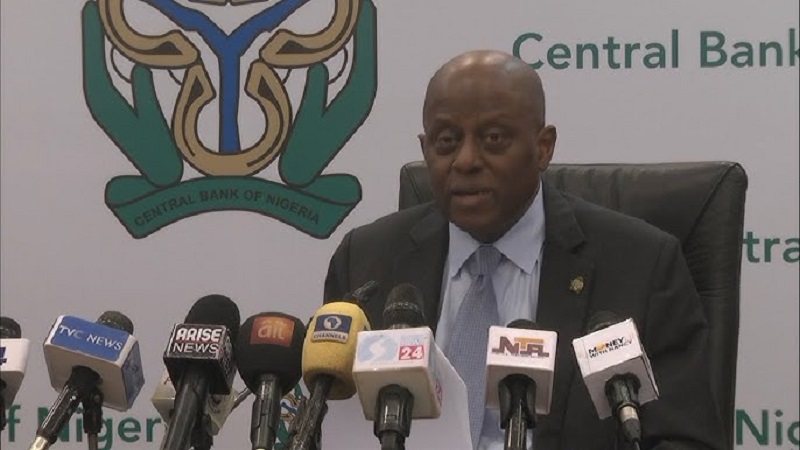
The operating licences of all legacy Bureau De Change (BDC) operators who failed to meet the new licensing requirements have been revoked by the Central Bank of Nigeria (CBN).
This happened after the central bank streamlined the BDCs to 82 in order to sanitise the foreign exchange (FX) market in the country.
The latest development was revealed by the apex bank in its Frequently Asked Questions document on the current reform of the bureau de change, published on its website on Tuesday.
According to the document, the CBN has now enforced the final cutoff, declaring that any BDC that did not meet the requirements by the end of November is no longer recognised.
“The guidelines provided a transition timeline of six months from the effective date, 3 June 2024, with a deadline of 3 December 2024, for all existing BDCs to meet the requirement of the new Guidelines or lose their licence(s). However, the management of the CBN graciously extended this deadline by another six months, which ended 3 June 2025, to give ample time for as many legacy BDCs desirous of meeting the new requirements to do so.
“Consequently, any legacy BDC that failed to meet the requirements of the new Guidelines as of 30 November 2025 has ceased to be a BDC, as its licence no longer exists. Please visit the CBN website for the updated list of existing BDCs in Nigeria,” the apex bank said.
According to the CBN, before its latest decision, an extended compliance window was granted under the revised BDC Guidelines. Existing operators were initially given six months, June 3 to December 3, 2024, to satisfy the new regulatory conditions.
The CBN later granted an additional six-month extension, which elapsed on June 3, 2025, to allow more operators to align with the updated standards.
The new measures form part of broader efforts by the CBN to strengthen transparency, compliance, and stability within Nigeria’s foreign exchange market.
The new CBN regulatory framework for BDCs, introduced in February 2024, mandated BDC operators to meet higher capital requirements. Tier-1 operators are required to meet a minimum capital requirement of N2bn, while Tier-2 operators must meet N500m as MCR.
The bank added that it would continue to receive applications on its Licensing, Approval and Requests Portal from prospective promoters, and those that meet the criteria will be considered for a license.
However, the CBN said it reserves the right to discontinue the licensing of BDCs at any time.










-
 Feature/OPED6 years ago
Davos was Different this year
-
Travel/Tourism9 years ago
Lagos Seals Western Lodge Hotel In Ikorodu
-

 Showbiz3 years ago
Estranged Lover Releases Videos of Empress Njamah Bathing
-
 Banking7 years ago
Sort Codes of GTBank Branches in Nigeria
-

 Economy3 years ago
Subsidy Removal: CNG at N130 Per Litre Cheaper Than Petrol—IPMAN
-

 Banking3 years ago
First Bank Announces Planned Downtime
-

 Banking3 years ago
Sort Codes of UBA Branches in Nigeria
-

 Sports3 years ago
Highest Paid Nigerian Footballer – How Much Do Nigerian Footballers Earn