

Economy
Court Orders Seplat Chairman to Pay Diamond Bank, Skye Bank $114m

By Dipo Olowookere
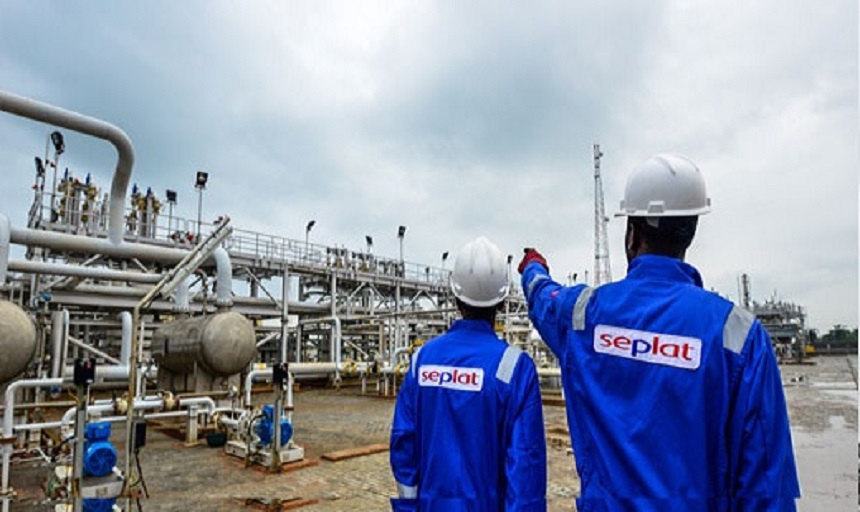
Founder and chairman of Seplat Petroleum Development Company (Seplat) Plc, Mr Ambrosie Bryant Chukwueloka Orjiako, has been directed to pay the sum of $144.2 million to three banks being the outstanding and accrued interest of a facility granted to him and one of his companies in 2011.
Seplat is a company trading its shares on both the Nigerian Stock Exchange (NSE) and the London Stock Exchange (LSE).
The trained medical doctor and his firm, Shebah Exploration and Production Company Limited had dragged Skye Bank (now defunct and known as Polaris Bank), Diamond Bank and the Africa Import Export Bank to a court in Lagos, seeking for the judgement of a Court of England and Wales, which awarded $143.9 million to the three lenders, to be set aside.
But the Federal High Court sitting in Ikoyi has certified judgment delivered by the High Court of Justice Queen’s Bench Division and upheld by the Supreme Court of the United Kingdom, directing Shebah Exploration & Production Company Ltd, Allenne Ltd and its president, Mr Orjiako to pay the three financial institutions a sum of $144.2 million.
According to ThisDay, the Lagos court certified the judgments on March 28 and ordered the defendants to comply with the judgment, denying them the permission to appeal it.
The first defendant, Shebah Exploration & Production Company Ltd is a Nigerian company engaged in oil exploration and production while the second defendant, Allenne Ltd is the guarantor of the borrowed loan.
The third defendant, Mr Orjiako, is the President of Shebah and a personal guarantor of the liabilities of Shebah and Allenne pursuant to a Deed of Guarantee and Indemnity dated July 1, 2011.
The claimants had dragged the defendants before the High Court of Justice Queen’s Bench Division in order to be able to recover an outstanding of the facility loan granted to them.
The claimants had apply for a summary judgment against the defendants for sums outstanding under a syndicated loan facility agreement totalling over $144.2 million, together with interest on those sums.
They had prayed the court to determine whether it is arguable that, in entering the Facility Agreement, the parties were contracting on the claimants’ written standard terms of business so as to engage section 3 of the Unfair Contract Terms Act 1997 (‘UCTA’).
In a judgment delivered by Mr Justice Phillips of the High Court of Justice Queen’s Bench Division on February 19, 2016, the court said Shebah had taken the loan for purpose of discharging certain of its existing borrowing and to provide working capital for its operations, including funding for a work-over programme to stimulate production at oil wells in the Ukpokiti oil field.
According to the court, the defendants never denied that the claimants advanced $150 million to Shebah pursuant to the Facility Agreement, nor dispute that, apart from paying one instalment of $6,111,111.11 in June 2012 but Shebah has failed to meet any further repayment instalment, despite the claimants agreeing to the deferral of several instalments.
The judge said in a previous proceeding, which commenced on March 11, 2014, the defendants agreed that, in exchange for the claimants’ discontinuing the proceedings, Shebah would repay all sums outstanding under the Facility Agreement in two tranches: $49.999,999.86 (with accrued interest) by April 30, 2014 and the balance of the loans and interest by July 1, 2014.
He added that Shebah failed to pay any part of the sum due on April 30, 2014. “The claimants were therefore entitled, under the terms of the Discontinuance Agreement, to commence fresh proceedings in respect of their claims.
These proceedings were commenced on June 2014, repeating the claims previously made and adding a claim against Shebah in respect of the $49.999,999.86 due under the Discontinuance Agreement”, the judge said.
Phillips stated that notwithstanding their previous stance, the defendants now contended that no sums whatsoever are due to the claimants, adding that they (the defendants) have arguable defence to the claim.
The judge however ruled that there is no merit in the defendants’ contention on the issues on the ground that there is simply no basis for inferring that the claimants, or any of them, habitually put forward the LMA form (or a tailored version of it) as a basis for their syndicated loan transactions.
“The most likely scenario is that it was chosen or selected by the claimants’ lawyer and that they will have adapted it to reflect the specifics of the transactions. It is impossible to draw any inferences as to what starting points may have been taken in other transactions, involving other permutations of lenders and other lawyers.
“I therefore satisfied that the defendants do not have a realistic prospect of establishing at trial that the Facilities Agreement is on the claimants’ written standard terms of business. The suggestion that the disclosure might alter the position is a classic example of hoping that something may turn up, in this case a forlorn hope given the evidence that there was in fact a degree of real negotiation of the final terms.”
Phillips in his judgment held that whilst the claimants’ purported acceleration of the loans on October 16, 2013 was ineffective, the defendants do not have a defence to the claimants’ alternative case, based upon the acceleration notice dated October 2, 2014 and subsequent demands dated April 14, 2015 and July 27, 2015.
“For the reasons set out above, the claimants are entitled to summary judgment against all three defendants for (i) the principal outstanding under the Facility Agreement of $143,888,888.89, subject to giving credit for the sum paid during the course of this application and the sums conceded in respect of default charges and hedging fees; (ii) the management fees claimed; and (iii) interest calculated on the alternative basis that the loan was accelerated on October 2, 2014”, the judge held.
Dissatisfied with the judgment, the defendants approached the Supreme Court of the United Kingdom, seeking to quash the judgment.
Ruling on the defendants’ application, the Supreme Court sitting comprising Lord Mance, Lord Reed and Lord Lloyd-Jones upheld the decision of the lower court and refused the permission to appeal the decision.
“After consideration of the application filed on behalf of the Appellants seeking permission to appeal the order made by the Court of Appeal on June 28,2017 and of the notice of objection filed by the Respondents.
“The court ordered that (1). Permission to appeal be refused because the application does not raise an arguable point of law of general importance. “(2). The Appellants pay the Respondents costs of the application and, where the Respondents apply for costs, the costs to be awarded be assessed.”






By Adedapo Adesanya
The World Bank has approved a $500 million facility for Nigeria to expand longer-term lending to small and medium sized businesses.
Approved under the Fostering Inclusive Finance for MSMEs in Nigeria (FINCLUDE) project, the package comprises a $400 million International Bank for Reconstruction and Development (IBRD) loan and a $100 million International Development Association (IDA) credit. Both IBRD and IDA are members of the World Bank Group.
The scheme will be implemented by the Development Bank of Nigeria (DBN), with credit guarantees provided through DBN’s subsidiary, Impact Credit Guarantee Limited (ICGL).
FINCLUDE is designed to address constraints faced by micro, small, and medium enterprises (MSMEs) in Nigeria which despite accounting for most businesses and nearly half of gross domestic product (GDP) face long-standing barriers to formal finance.
Fewer than one in 20 MSMEs have access to bank credit; loans are often short-term and costly; and collateral requirements exclude many viable firms. Women-led enterprises, which make up a substantial portion of MSMEs, are disproportionately affected, facing higher rejection rates and limited tailored products. Agribusinesses, central to food security and rural livelihoods, similarly struggle to obtain more extended‑tenor financing for equipment, processing, storage, and logistics.
However, FINCLUDE seeks to address these constraints by expanding access to affordable, longer-term finance and tailored solutions for segments with the most significant development impact.
Speaking on this, the World Bank Country Director for Nigeria, Mr Mathew Verghis, said, “FINCLUDE is about jobs, opportunity, and inclusion. By expanding access to finance for viable MSMEs—particularly women-led firms and agribusinesses—Nigeria can accelerate growth and deliver tangible benefits across communities nationwide.
“The project will make it easier for deserving small businesses to get the finance they need to grow and hire workers. With better support for lenders that practice inclusive finance and fairer, longer-term loans for entrepreneurs, we are backing the people who power Nigeria’s economy—especially women and those in agriculture.”
The FINCLUDE project will help to mobilise private investment and expand access to and usage of inclusive, innovative financial products for MSMEs nationwide.
Through DBN, the operation will strengthen the capacity of banks, including microfinance banks and non-bank financial institutions such as financial technologies (fintechs), to provide larger loans with more reasonable repayment periods, and—through ICGL—will scale partial credit guarantees so that lenders can extend credit to businesses they might otherwise consider too risky.
Targeted technical assistance will modernise loan appraisal by leveraging AI-enabled digital platforms to accelerate decision-making, improve data quality, strengthen impact measurement, and build capacity for both MSMEs and participating financial institutions.
According to the World Bank, a strong emphasis on inclusion will ensure that women-led businesses and agribusinesses benefit from these improvements.
Also commenting, Task Team Leader for FINCLUDE, Mrs Hadija Kamayo, said, “FINCLUDE will help to mobilize approximately $1.89 billion in private capital, expand debt financing to 250,000 MSMEs—including at least 150,000 women-led businesses and 100,000 agribusinesses—and issue up to $800 million in guarantees to catalyse lending.
“By extending the average maturity of MSME loans to about three years, it will help firms invest in equipment, factories, staff, and productivity, translating finance into jobs and growth.”
By Dipo Olowookere
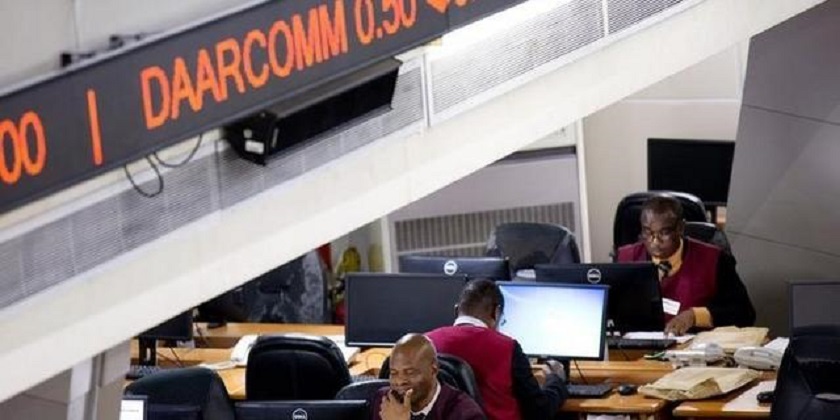
The local stock market firmed up by 1.13 per cent on Friday as appetite for Nigerian stocks remained strong.
Investors reacted well to the 2026 budget presentation of President Bola Tinubu to the National Assembly yesterday, especially because of the more realistic crude oil benchmark of $64 per barrel compared with the ambitious $75 per barrel for 2025. This year, prices have been between $60 and $65 per barrel.
Business Post observed profit-taking in the commodity and energy sectors as they respectively shed 0.14 per cent and 0.03 per cent.
But, bargain-hunting in the others sustained the positive run, with the consumer goods index up by 3.82 per cent.
Further, the industrial goods space appreciated by 1.46 per cent, the banking counter improved by 0.08 per cent, and the insurance industry gained 0.04 per cent.
As a result, the All-Share Index (ASI) increased by 1,694.33 points to 152,057.38 points from 150,363.05 points and the market capitalisation chalked up N1.080 trillion to finish at N96.937 trillion compared with Thursday’s closing value of N95.857 trillion.
A total of 34 shares ended on the advancers’ chart, while 24 were on the laggards’ log, representing a positive market breadth index and bullish investor sentiment.
Austin Laz gained 10.00 per cent to close at N2.42, Union Dicon also jumped 10.00 per cent to N6.60, Tantalizers increased by 9.80 per cent to N2.69, Aluminium Extrusion improved by 9.78 per cent to N12.35, and Champion Breweries grew by 9.71 per cent to N16.95.
Conversely, Sovereign Trust Insurance dipped by 7.42 per cent to N3.87, Royal Exchange lost 6.84 per cent to trade at N1.77, Omatek slipped by 6.84 per cent to N1.09, Eunisell depreciated by 5.88 per cent to N80.00, and Eterna dropped 5.63 per cent to close at N28.50.
Yesterday, traders transacted 1.5 billion units worth N21.8 billion in 25,667 deals compared with the 839.8 million units sold for N32.8 billion in 23,211 deals in the preceding session, showing a surge in the trading volume by 76.61 per cent, an uptick in the number of deals by 10.58 per cent, and a shrink in the trading value by 33.54 per cent.

By Adedapo Adesanya
Three stocks stretched the bearish run of the NASD Over-the-Counter (OTC) Securities Exchange by 1.21 per cent on Friday, December 19, with the market capitalisation giving up N26.01 billion to close at N2.121 billion compared with the N2.147 trillion it ended a day earlier, and the NASD Unlisted Security Index (NSI) dropping 43.47 points to 3,546.41 points from 3,589.88 points.
The trio of FrieslandCampina Wamco Nigeria Plc, Central Securities Clearing System (CSCS) Plc, and NASD Plc overpowered the gains printed by four other securities.
FrieslandCampina Wamco Nigeria Plc lost N6.00 to sell at N54.00 per unit versus N60.00 per unit, NASD Plc shrank by N3.50 to N58.50 per share from N55.00 per share, and CSCS Plc depleted by N2.91 to N33.87 per unit from N36.78 per unit.
On the flip side, Air Liquide Plc gained N1.01 to close at N13.00 per share versus N11.99 per share, Golden Capital Plc appreciated by 70 Kobo to N7.68 per unit from N6.98 per unit, Geo-Fluids Plc added 39 Kobo to sell at N5.50 per share versus N5.11 per share, and IPWA Plc rose by 8 Kobo to 85 Kobo per unit from 77 Kobo per unit.
During the trading day, market participants traded 1.9 million securities versus the previous day’s 30.5 million securities showing a decline of 49.3 per cent. The value of trades went down by 64.3 per cent to N80.3 million from N225.1 million, but the number of deals jumped by 32.1 per cent to 37 deals from 28 deals.
Infrastructure Credit Guarantee Company (InfraCredit) Plc finished the session as the most active stock by value on a year-to-date basis with 5.8 billion units valued at N16.4 billion, followed by Okitipupa Plc with 178.9 million units transacted for N9.5 billion, and MRS Oil Plc with 36.1 million units traded for N4.9 billion.
The most active stock by volume on a year-to-date basis was still InfraCredit Plc with 5.8 billion units worth N16.4 billion, trailed by Industrial and General Insurance (IGI) Plc with 1.2 billion units sold for N420.7 million, and Impresit Bakolori Plc with 536.9 million units traded for N524.9 million.










-
 Feature/OPED6 years ago
Davos was Different this year
-
Travel/Tourism9 years ago
Lagos Seals Western Lodge Hotel In Ikorodu
-

 Showbiz3 years ago
Estranged Lover Releases Videos of Empress Njamah Bathing
-
 Banking7 years ago
Sort Codes of GTBank Branches in Nigeria
-

 Economy3 years ago
Subsidy Removal: CNG at N130 Per Litre Cheaper Than Petrol—IPMAN
-

 Banking3 years ago
First Bank Announces Planned Downtime
-

 Banking3 years ago
Sort Codes of UBA Branches in Nigeria
-

 Sports3 years ago
Highest Paid Nigerian Footballer – How Much Do Nigerian Footballers Earn
1 Comment