

Economy
Access Bank, Dangote Cement, Others Declare Closed Periods

By Modupe Gbadeyanka
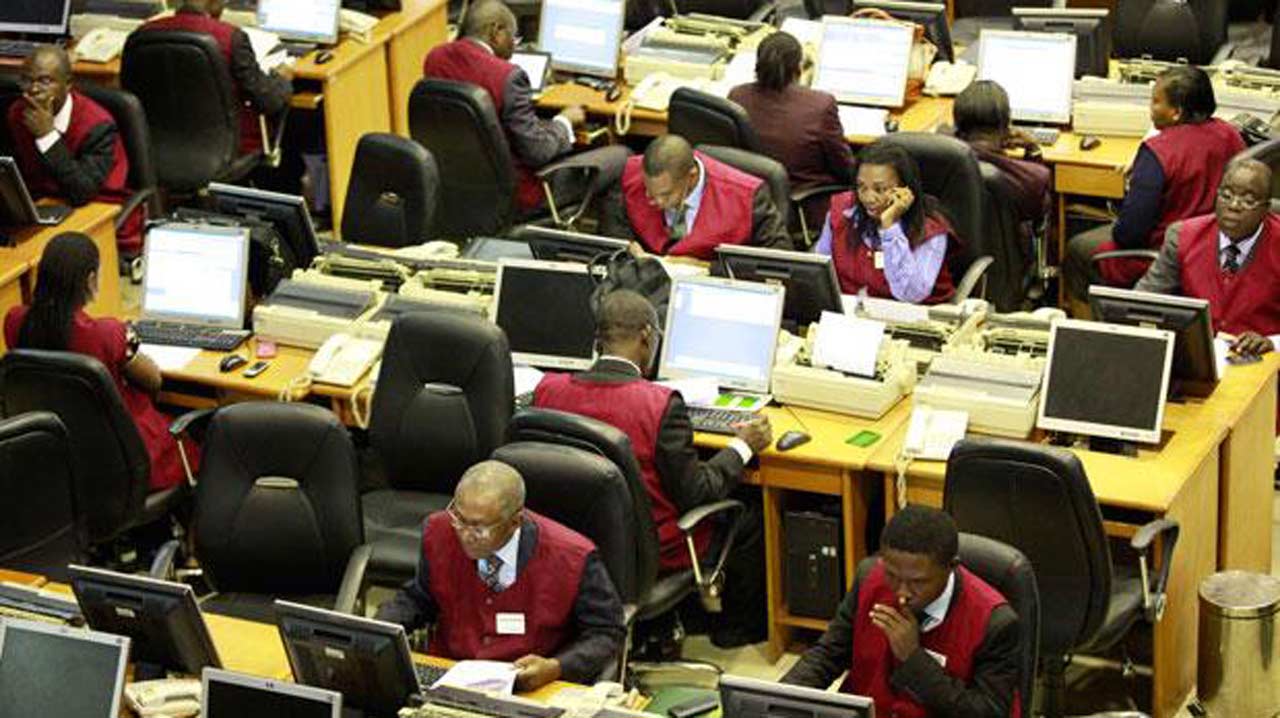
As the market enters earnings season this month, some companies trading their shares on the Nigerian Stock Exchange (NSE) have announced their closed periods.
Business Post reports that a closed period is the time frame between the completion of financial statements of a company listed on the stock exchange and the release of these results to the investing public.
The period normally lasts about two months and according to the market rules, insiders, who are majorly people with sensitive information about the firm that could trigger the price of the stock at the market, are prevented from trading on the company’s share.
The reason for this is to stop any insider from using the vital information in his possession to affect the price of the stock, especially to his advantage.
On September 30, 2018, most firms listed on the NSE ended their third quarter and by the NSE rules, they should release their results on or before October 31, 2018 to the investing public.
Last week, some companies announced their closed periods as well as meeting of their boards to consider the Q3 results before releasing them to the exchange.
However, some of them will first get approvals from regulators of their various sectors, especially for banks and insurance companies, before releasing them to the NSE and the general public.
Last Friday, Access Bank informed the NSE that its board would meet on Tuesday, October 30, 2018, to consider and approve the lender’s Unaudited Financial Statements.
The financial institution also declared a “closed period in respect of transaction on its securities from October 6, 2018 to such date as will be subsequently announced in compliance with Rule 17.2 of the Amendment to the Listing Rules of the NSE.”
“Accordingly, no director, employee, person discharging managerial responsibility, adviser of the company and their connected persons may directly or indirectly, deal in the securities of the company in any manner during the closed period,” the notice said.
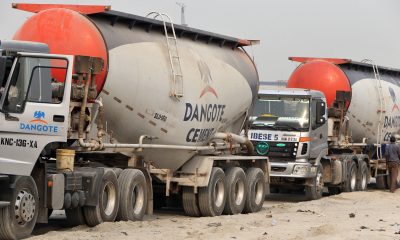
Also last week, Dangote Cement, another firm trading its equities on the NSE, disclosed that it has entered a closed trading period from October 4, 2018 until 24 hours after the release of its financial statements for the period ended September 30, 2018.
Dangote Cement explained that the closed period was “application to directors, senior manager and other interested parties may at any time possess sensitive information that may materially affect the price of the securities of the company.”
On its part, Berger Paints said its Board of Directors would be meeting on Thursday, October 25, 2018, to consider the company’s 2018 Q3 Unaudited Financial Statements (Accounts) and consequently declared “a closed period from Wednesday, October 10, 2018 till October 26, 2018, being 24 hours after the Accounts are to be filed with the Nigerian Stock Exchange (NSE), in line with Rules 17.17 & 17.18 of Part 2 (Issuer’s Rules) of the NSE’s Rule Book (2015).”
For Chemical and Allied Products (CAP) Plc, a meeting of its board has been fixed for Friday, October 19, 2018 to consider and approve the financial results for the third quarter ended September 30, 2018.
The firm announced a closed period from October 4 to 31, 2018 and barred any of its employees, directors and others from trading on its shares at the stock market until “24 hours after the release of the unaudited financial results for the period ended September 30, 2018 to the NSE.”









By Adedapo Adesanya
The Federal Inland Revenue Service (FIRS) has issued a statement providing further clarifications following comments and reports on the recent memorandum of understanding between Nigeria and France on taxation.
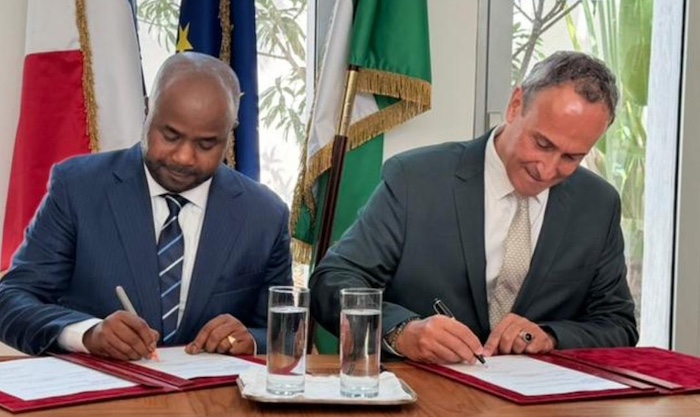
The MoU, signed on December 10, 2025, at the French Embassy in Abuja by the chairman of FIRS, Mr Zacch Adedeji and French Ambassador, Mr Marc Fonbaustier, on behalf of France’s Direction Générale des Finances Publiques (DGFiP), focuses on key areas, including digital transformation, workforce development, information exchange, transfer pricing, and tackling base erosion and profit shifting.
However, the MoU has been met with resistance from opposition coalition party African Democratic Congress (ADC) as well as Northern elders, which both raised serious questions about transparency, national sovereignty and the safety of Nigerian consumers’ data.
In response, the tax authority, which will become known as Nigerian Revenue Service (NRS) from next year, emphasised that the deal does not grant France access to Nigerian taxpayer data, digital systems, or any element of the country’s operational infrastructure.
“All existing Nigerian laws on data protection, cybersecurity, and sovereignty remain fully applicable and strictly enforced. The NRS, like its predecessor, FIRS, places the highest premium on national security and maintains rigorous standards for the protection of all taxpayer information.”
It said similar MoUs are signed by tax administrations around the world to promote collaboration, knowledge sharing, and the adoption of global best practices.
“The DGFIP is among the world’s most advanced tax authorities, with over a century of institutional experience and deep expertise in digital transformation, taxpayer services, governance, and public finance.
“This partnership simply enables Nigeria to learn from that experience. It is advisory, non-intrusive, and entirely under Nigeria’s control.
“Contrary to misconceptions, the MoU does not displace local technology providers, FIRS and the emerging Nigeria Revenue Service (NRS) continue to work closely with Nigerian innovators such as NIBSS, Interswitch, Paystack, and Flutterwave. The MoU does not include the provision of technical services; it is limited to knowledge sharing, institutional strengthening, workforce development, policy support, and best-practice guidance.
“We welcome robust public engagement on tax reforms, but such conversations must reflect the actual content and purpose of the agreement. Rather than undermining Nigeria’s sovereignty, this MoU strengthens it by helping to build a modern, capable, globally competitive tax administration one firmly in command of its systems, data, and strategic direction.
“FIRS remains committed to transparency, professionalism and partnership that advance Nigeria’s long-term economic development,” it said in a statement.

By Adedapo Adesanya
The Nigerian Upstream Petroleum Regulatory Commission (NUPRC) has issued permits to 28 companies under Nigerian Gas Flare Commercialisation Programme (NGFCP), a scheme that aims to end routine gas flaring to cut carbon emissions and use some of the gas to generate power.
Gas flaring is the controlled burning of natural gas that is released during oil extraction. The initiative marks a major step toward ending flaring and monetising wasted gas.
The projects could capture 250 to 300 million standard cubic feet per day (mmscfd) of gas currently flared, cut about 6 million tonnes of CO₂ annually, and unlock nearly 3 gigawatts of power generation potential, an NGFCP document showed.
Nigeria expects the initiative to attract up to $2 billion in investment and create more than 100,000 jobs. It could also produce 170,000 metric tonnes of LPG annually, providing clean cooking access for 1.4 million households.
The permits follow a competitive bid round that awarded 49 flare sites to 42 bidders after the programme was restructured post-COVID-19 and the Petroleum Industry Act.
Speaking on this, Mr Gbenga Komolafe, head of the NUPRC, during the presentation of the certificates to the 28 companies said, “The NGFCP is a pillar in our quest to eliminate routine flaring, reduce emissions, and enhance Nigeria’s global credibility in energy transition commitments.”
The programme aligns with Nigeria’s Energy Transition Plan and aims to turn flare gas from an environmental liability into an economic asset.
The 28 companies have signed key agreements, including Connection, Milestone Development and Gas Sales Agreements, and now qualify for permits to access flare gas.
Producers will benefit from reduced liabilities, improved Environmental, Social, and Governance (ESG) performance and alignment with the government’s decarbonisation agenda.
Development partners, including Power Africa, KPMG, World Bank’s Global Gas Flaring Reduction initiative, USAID and financiers, have supported the programme with technical and commercial frameworks.
Mr Komolafe said while the permits mark a milestone, engineering, construction and financing must begin in earnest.
“The real work starts now,” the official added. “This programme will create economic, industrial and environmental value while strengthening Nigeria’s energy transition.”

By Adedapo Adesanya
Three bellwether stocks lifted the NASD Over-the-Counter (OTC) Securities Exchange by 0.62 per cent on Friday, December 12 with the NASD Unlisted Security Index (NSI) jumping by 22.20 points to 3,600.43 points from 3,578.23 points.
In the same vein, the market capitalisation of the trading platform increased by N13.28 billion to close at N2.154 trillion from the previous day’s N2.140 trillion.
During the session, Central Securities Clearing System (CSCS) Plc went up by N2.53 to close at N39.71 per share compared with the previous day’s N37.18 per share, Geo-Fluids Plc added 35 Kobo to its price to finish at N5.00 per unit versus Thursday’s closing price of N4.65 per unit, and FrieslandCampina Wamco Nigeria Plc appreciated by 23 Kobo appreciation to sell at N60.23 per share versus N60.00 per share.
It was observed that yesterday, the price of Golden Capital Plc went down by N1.05 to N9.45 per unit from N10.50 per unit, and UBN Propertiy Plc declined by 21 Kobo to N2.01 per share from the N2.22 per share it was traded a day earlier.
There was a significant improvement in the level of activity for the day, as the volume of transactions increased by 6.2 per cent to 37.4 million units from the previous day’s 35.2 million units, the value of trades went up by 265.1 per cent to N4.9 billion from N1.4 billion, and the number of deals soared by 13.80 per cent to 33 deals from 29 deals.
Infrastructure Credit Guarantee Company (InfraCredit) Plc ended the last trading day of this week as the most active stock by value on a year-to-date basis with 5.8 billion units valued at N16.4 billion, the second spot was taken by Okitipupa Plc with 178.9 million units traded for N9.5 billion, and third space was occupied by a new comer in MRS Oil Plc with 36.1 million units worth N4.9 billion.
InfraCredit Plc also finished the session as the most active stock by volume on a year-to-date basis with 5.8 billion units transacted for N16.4 billion, followed by Industrial and General Insurance (IGI) Plc with 1.2 billion units valued at N420.3 million, and Impresit Bakolori Plc with 537.0 million units sold for N524.9 million.









-
 Feature/OPED6 years ago
Davos was Different this year
-
Travel/Tourism9 years ago
Lagos Seals Western Lodge Hotel In Ikorodu
-

 Showbiz3 years ago
Estranged Lover Releases Videos of Empress Njamah Bathing
-
 Banking7 years ago
Sort Codes of GTBank Branches in Nigeria
-

 Economy3 years ago
Subsidy Removal: CNG at N130 Per Litre Cheaper Than Petrol—IPMAN
-

 Banking3 years ago
First Bank Announces Planned Downtime
-

 Banking3 years ago
Sort Codes of UBA Branches in Nigeria
-

 Sports3 years ago
Highest Paid Nigerian Footballer – How Much Do Nigerian Footballers Earn