
Economy
Fidelity Bank, Skye Bank, Unity Bank, Others Risk Sanctions


By Modupe Gbadeyanka
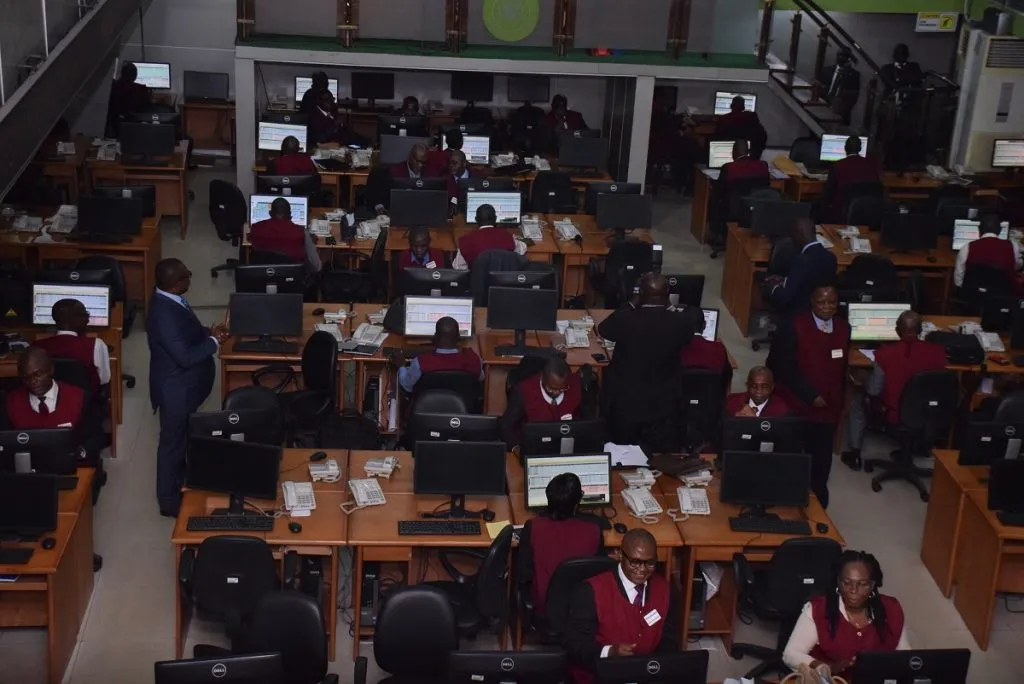
Not less than 28 companies trading their shares on the Nigerian Stock Exchange (NSE) risk being sanctioned by the regulator for failing to meet post-listing requirements, timely release of operational reports and financial statements.
According to The Nation, the firms include three commercial banks, a microfinance bank, three mortgage bankers, five insurance companies, one investment management firm and 15 other firms in various non-financial sectors.
The defaulting firms include Unity Bank Plc, Skye Bank Plc, Fidelity Bank Plc, Fortis Microfinance Bank Plc, Staco Insurance Plc, African Alliance Insurance Plc, Goldlink Insurance Plc, UNIC Insurance Plc, International Energy Insurance, Aso Savings & Loans Plc, Resort Savings & Loans, Union Homes Savings & Loans Plc, and Deap Capital Management & Trust Plc.
Others include R.T Briscoe Plc, Smart Products Nigeria Plc, Afromedia Plc, Roads Nigeria Plc, Nigerian German Chemical Plc, Thomas Wyatt Nigeria Plc, Golden Guinea Breweries Plc, Anino International Plc, Juli Plc, Ekocorp Plc, Union Dicon Salt Plc, FTN Cocoa Processors Plc, Evans Medical Plc, Omatek Ventures Plc and Dn Tyre & Rubber Plc.
The companies failed to submit their interim report and accounts for the period ended June 30, 2018. Such default is marked out by the Exchange as a corporate governance failure, which attracts monetary fines, “naming and shaming” tag, suspension of shares from trading and delisting in incurable cases of default.
It was gathered that 20 of the firms missed the regulatory deadline of July 30, while Fidelity Bank, which audits its half-year results, missed the August 29 deadline.
Under the rules, a late submission attracts a fine of N100,000 daily for the first 90 calendar days of non-compliance, another N200,000 per day for the next 90 calendar days and a fine of N400,000 per day thereafter until the date of submission.
With these, late submission under the first instance of 90 days could attract N9 million, the additional 90 days will attract N18 million while such delay beyond the first 180 days to the next 180 days could attract as much as N72 million, bringing fines payable by a defaulting company within a year to N99 million.
The list of sanctions shows fines ranging from a low of N0.1 million to as high as N51.4 million. Companies had been fined more than N400 million and N500 million in 2016 and 2017 respectively for failure to submit accounts within scheduled periods.
There are 15 companies currently under suspension for failure to meet scheduled submission of financial statements. Forty one monetary fines have so far been placed on companies in 2018, more than 38 monetary fines slammed on companies in 2017.
The monetary fines become almost automatic after the expiration of the deadline. According to the rules, notwithstanding that a company takes the required steps during the cure periods or later complies with the provisions of the rules, any company that defaults in filing its accounts within the stipulated periods shall be liable to pay the applicable penalties, except the affected company had received waiver or extension of time by the Exchange.
Under the rules, quoted companies are required to file their unaudited quarterly accounts with the NSE not later than 30 calendar days after the relevant quarter. Where the company chooses to audit its quarterly accounts, it is required to file such accounts not later than 60 calendar days after the relevant quarter. For annual audited accounts, companies are required to file their audited annual report and accounts with the Exchange not later than 90 calendar days after the relevant year end.
In addition to the monetary fines, a defaulting company will be tagged with the “Below Listing Standard” (BLS) or any other sign or expression to indicate that the company has failed to submit its accounts within the stipulated period and this tag shall remain for as long as the company fails to file its accounts.
Where a company fails to file its accounts after the expiration of the first 90 days, the NSE will send such a company a “second filing deficiency notification” within two business days after the end of the first 90 days.
In addition, the Exchange will suspend trading in the company’s shares and notify the Securities and Exchange Commission (SEC) and the market within 24 hours of the suspension.
Where a company fails to also file its accounts after the second additional period of 90 days, bringing the default days to 180, days, the Exchange may take further appropriate actions including cautioning shareholders that the company’s listing is under threat of delisting and eventual delisting.
The rules also empower the Exchange to delist a company within the first 90 days where the NSE determines that granting extended period is not necessary, especially where there are proven issues of financial fraud, gross corporate governance abuses and other illegalities.
In a more rigorous naming and shaming practice, a defaulting company is expected to within three business days of receipt of the second filing deficiency notification and suspension of trading in its securities, to inform the Exchange in writing of the status of the accounts, and issue a press release, of not less than half a page, in at least two national daily newspapers, with the company’s web address indicated in the newspaper publication, and posted on the company’s website disclosing the status of the relevant accounts, reason for the delay in submission, and the anticipated filing date. An electronic copy of the publication shall be filed with the Exchange on the same day as the publication. The suspension of trading in the company’s shares shall only be lifted upon submission of the relevant accounts in line with the requirements of the NSE.
According to the report, the stock market regulatory agency plans to “apply relevant rules” in dealing with the defaulters.



By Aduragbemi Omiyale
The pre-registration training and examination for capital market operators (CMOs) for the second quarter of 2026 has been postponed.
Business Post gathered that the new date for the exercise is now Monday, June 15, 2026.
This information was disclosed by the Securities and Exchange Commission (SEC) through a circular on Monday, June 8, 2026.
The Nigerian capital market regulator stated that this postponement has also resulted in the extension of the deadline for registration to Friday, June 12, 2026.
In the notice today, the SEC expressed its regret for the inconvenience this action may cause operators, who had prepared for the initial date of the training and examination.
“Further to the recent circular on Q2 2026 Pre-registration Training and Examination, the Securities and Exchange Commission (SEC) hereby informs all eligible applicants for the Q2 2026 Pre-registration Training and Examination that the commencement date has been postponed to Monday, June 15, 2026.
“Registration on the designated portal has also been extended to Friday, June 12, 2026. All other conditions contained in the circular remain unchanged.
“The commission regrets any inconvenience this postponement may cause and appreciates the understanding of all applicants,” the disclosure noted.
By Aduragbemi Omiyale
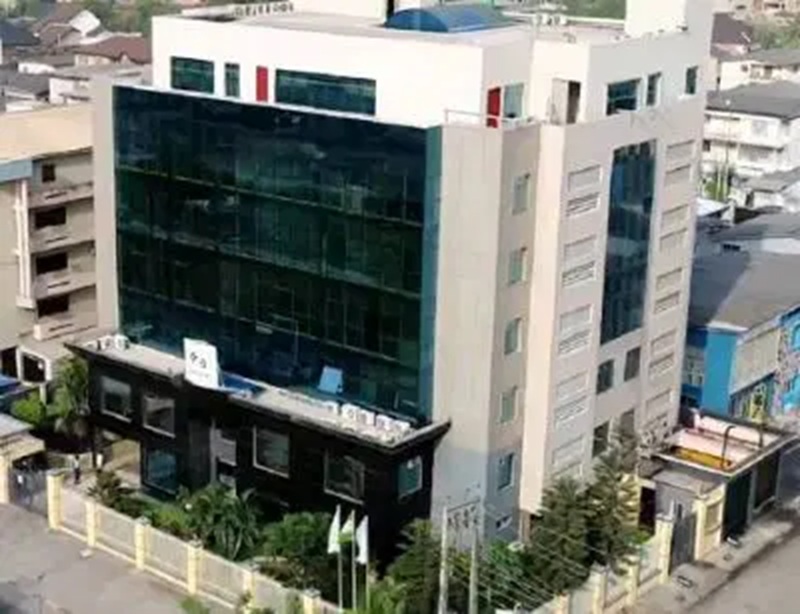
One of the leading healthcare firms in Nigeria, Fidson Healthcare Plc, has listed additional shares on the Nigerian Exchange (NGX) Limited.
The new stocks absorbed into the stock market were 600 million units, raising the total issued and fully paid-up shares of Fidson to 3,000,000,000 ordinary shares of 50 Kobo each from 2,400,000,000 ordinary shares of 50 Kobo each.
The fresh equities came from the company’s rights issue of 600,000,000 ordinary shares of 50 Kobo each at N35.00 per share.
They were issued to existing investors on the basis of one new ordinary share for every existing four ordinary shares held as of the close of business on Wednesday, November 12, 2025.
Confirming the development, the regulator in a notice said, “Trading licence holders are hereby notified that an additional 600,000,000 ordinary shares of 50 Kobo each of Fidson Healthcare Plc were on Tuesday, June 2, 2026, listed on the daily official list of Nigerian Exchange Limited.
“The additional shares arose from the company’s rights issue of 600,000,000 ordinary shares of 50 Kobo each at N35.00 per share on the basis of one new ordinary share for every existing four ordinary shares held as at the close of business on Wednesday, November 12, 2025.
“With the listing of the additional 600,000,000 ordinary shares, the total issued and fully paid-up shares of Fidson Healthcare Plc have now increased from 2,400,000,000 to 3,000,000,000 ordinary shares of 50 Kobo each.”
By Modupe Gbadeyanka
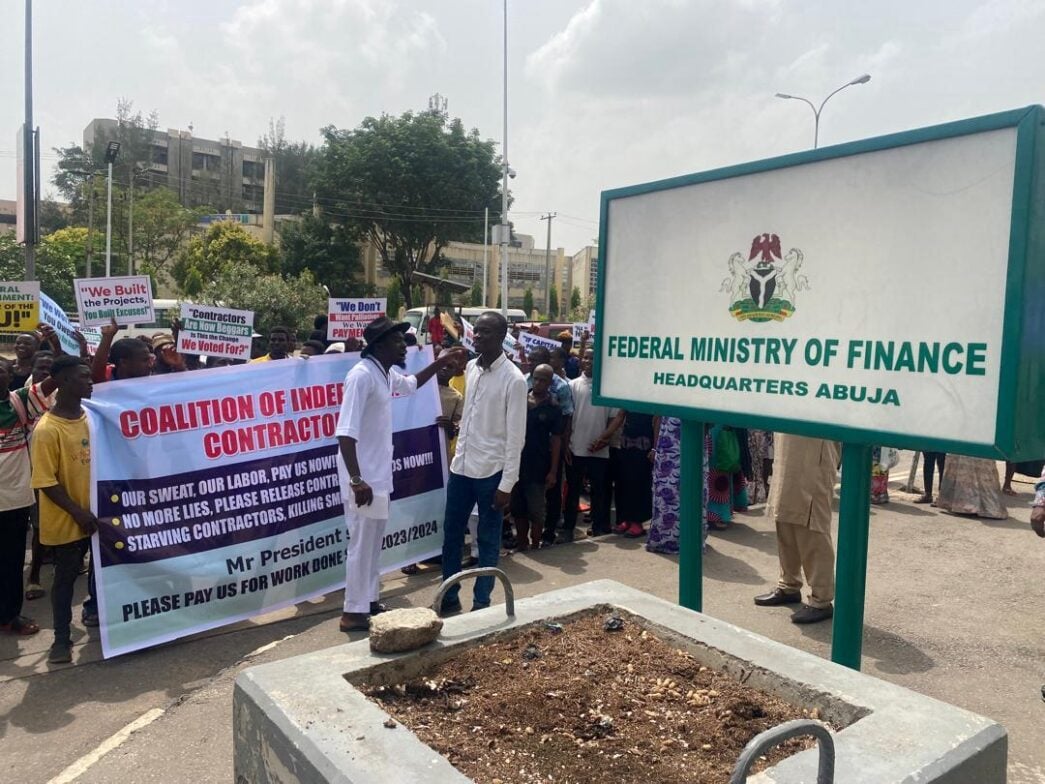
This news will surely excite local contractors with verified claims of N100 million or less, as the federal government has approved their payments.
This approval for the disbursement was given by the Minister of Finance and Coordinating Minister of the Economy, Mr Taiwo Oyedele.
This followed a verification and reconciliation exercise designed to ensure only validated claims qualify for payment.
The beneficiaries cover contractors across multiple ministries, departments and agencies. The release of the funds is expected to enable contractors to return to project sites, pay workers, settle suppliers and meet outstanding financial commitments.
In an announcement on Monday, the Federal Ministry of Finance also said this latest batch of payments would ease liquidity pressure on small businesses and accelerate economic activity nationwide.
It was noted that the payments for verified claims of N100 million below were strategically done to spread economic impact broadly rather than concentrate disbursements among a handful of large firms.
The payments form part of a broader push to clear inherited contractor obligations, with over N700 billion verified in recent months.
“For many beneficiaries, the release of funds represents more than a financial transaction. It provides the certainty needed to sustain operations, preserve jobs, complete ongoing projects, and contribute to economic recovery and growth,” the ministry said in a statement.
-
 Feature/OPED6 years ago
Davos was Different this year
-
Travel/Tourism10 years ago
Lagos Seals Western Lodge Hotel In Ikorodu
-

 Showbiz3 years ago
Estranged Lover Releases Videos of Empress Njamah Bathing
-
 Banking8 years ago
Sort Codes of GTBank Branches in Nigeria
-

 Economy3 years ago
Subsidy Removal: CNG at N130 Per Litre Cheaper Than Petrol—IPMAN
-

 Banking3 years ago
Sort Codes of UBA Branches in Nigeria
-

 Banking3 years ago
First Bank Announces Planned Downtime
-

 Sports3 years ago
Highest Paid Nigerian Footballer – How Much Do Nigerian Footballers Earn
1 Comment