
Economy
Abuja, Lagos, Abia Contribute 99% to Nigeria’s $5.5b Capital Importation in Q2

By Modupe Gbadeyanka
Last week, the National Bureau of Statistics (NBS) revealed in a report that the total value of capital importation into Nigeria stood at $5.5 billion in the second quarter of 2018.
According to the report, this was a decrease of 12.53 percent compared with Q1 2018, but a 207.62 percent increase compared with the second quarter of 2017.
It was disclosed that the decline recorded in the second quarter was as a result of a decline in Portfolio and Other Investments, which declined by 9.76 percent and 24.07 percent respectively.
The largest amount of capital importation by type was received through Portfolio investment, which accounted for 74.7 percent ($4.1 billion) of total capital importation, followed by Other Investment, which accounted for 20.5 percent ($1.1 billion) of total capital, and then Foreign Direct Investment FDI, which accounted for 4.7 percent ($261.4 million) of total capital imported in the second quarter.
However, an analysis of the report by Business Post showed that out of the $5.5 billion of the nation’s capital importation for the period under review, Abuja, Lagos and Abia States contributed 99.28 percent, while the remaining 34 states of the federation added a meagre 0.72 percent to the total value.
According to the stats office, the Federal Capital Territory (FCT) Abuja, at $2.6 billion, maintained its lead among recipients of capital import in the second quarter of 2018 after surpassing Lagos in the fourth quarter of 2017.
This represented 46.21 percent of the total capital importation into Nigeria in the quarter under review.
Abuja was followed by Lagos, which received the second largest amount of capital inflow of $1.7 billion or 30.08 percent of the total.
When compared with the preceding quarter, however, the capital inflow into Abuja and Lagos, declined by 28.13 percent and 37.80 percent respectively.
Furthermore, Abia State received $1.3 billion, accounting for 22.99 percent of the total capital importation in the quarter.
In all, Abuja, Lagos, and Abia together represented more than 99 percent of the total capital import in the second quarter.
The NBS said in its report that foreign capital investment in Akwa Ibom and Ogun States recorded $16.10 million and $12.74 million respectively, a decline of 63.09 percent and 48.05 percent, over the previous quarter.
Enugu State, which only had marginal foreign inflow previously, recorded $1.31 million in the second quarter and became the eighth top destination in Nigeria to attract foreign capital investment.





By Dipo Olowookere
The Nigerian Exchange (NGX) Limited managed to close higher by 0.18 per cent after an intense battle with the bears, which wanted to take control.
Data from the local stock exchange showed that investor sentiment was weak during the session after a negative market breadth index influenced by 38 depreciating stocks, which outnumbered the 32 appreciating stocks.
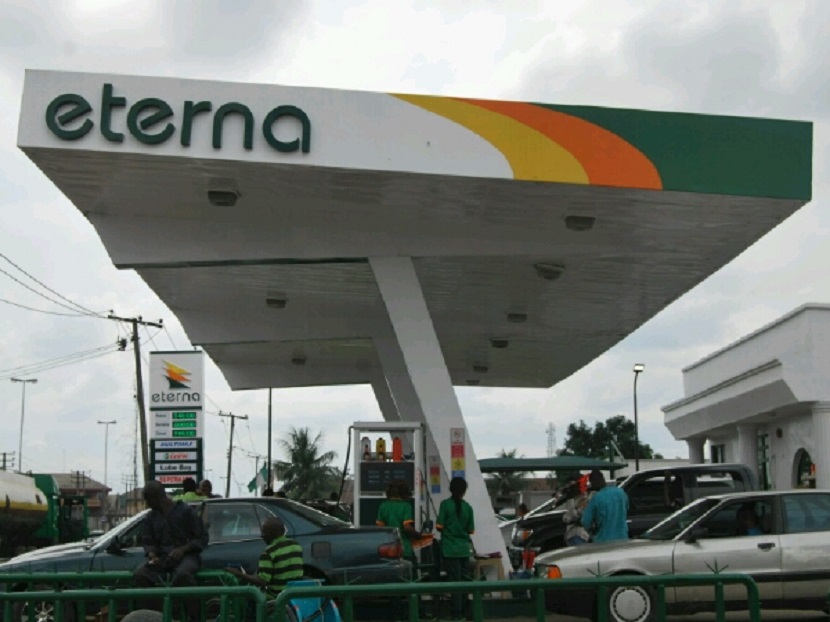
Eterna and NPF Microfinance Bank gained 10.00 per cent each to sell for N38.50 and N7.15 apiece. Premier Paints rose by 9.92 per cent to N13.30, Custodian Investment appreciated by 9.71 per cent to N76.80, and Fortis Global Insurance chalked up 9.68 per cent to trade at N1.36.
On the flip side, Tripple G lost 9.94 per cent to settle at N4.26, Multiverse declined by 9.91 per cent to quote at N20.45, Jaiz Bank decreased by 7.41 per cent to N10.00, Honeywell Flour went down by 7.11 per cent to N20.90, and Dangote Sugar crashed by 7.10 per cent to N69.40.
Customs Street witnessed a bit of profit-taking yesterday, with the insurance counter losing 1.63 per cent and the energy space declining by 0.16 per cent.
These losses were offset by the 0.51 per cent jump recorded by the banking index, the 0.10 per cent growth achieved by the consumer goods segment, and the 0.03 per cent rise posted by the industrial goods sector.
Consequently, the All-Share Index (ASI) grew by 343.93 points to 196,807.15 points from 196,463.22 points, and the market capitalisation gained N221 billion to settle at N126.318 trillion compared with the preceding session’s N126.097 trillion.
Trading data revealed that 634.0 million shares worth N29.1 billion exchanged hands in 66,286 deals on Thursday versus the 805.3 million shares valued at N38.4 billion traded in 71,312 deals on Wednesday, representing a fall in the trading volume, value, and number of deals by 21.27 per cent, 24.22 per cent, and 7.05 per cent apiece.
Jaiz Bank topped the activity chart with 137.5 million equities sold for N1.4 billion, GTCO transacted 45.5 million shares worth N5.4 billion, Access Holdings exchanged 29.7 million stocks valued at N774.8 million, Sovereign Trust Insurance traded 27.1 million shares for N70.6 million, and Zenith Bank sold 24.3 million equities valued at N2.2 billion.

By Adedapo Adesanya
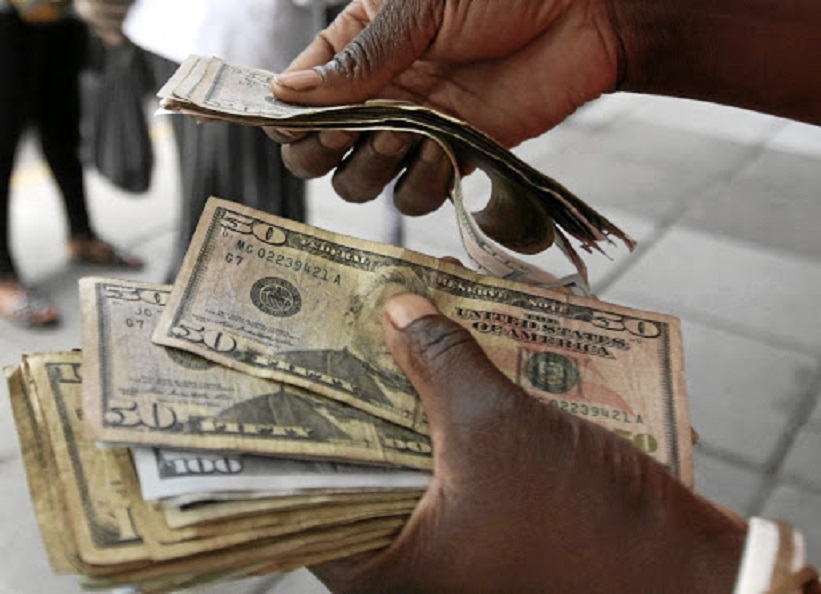
The value of the Nigerian Naira further depreciated against the United States Dollar in the black market segments of the currency market on Thursday by N15, closing at N1,405/$1 compared with the previous day’s value of N1,390/$1.
Information gathered by Business Post showed that the domestic currency was under pressure yesterday as a result of a renewed spike in the demand for the American currency as political activities gear up for next year’s general elections.
Also, at the GTBank forex counter, the local currency weakened against the greenback during the session by N13 to trade at N1,398/$1 compared with Wednesday’s closing price of N1,385/$1.
Similarly, the Naira lost 36 Kobo or 0.03 per cent against the Dollar in the Nigerian Autonomous Foreign Exchange Market (NAFEX) on Thursday to finish at N1,387.45/$1 versus the N1,387.09/$1 it was transacted at midweek.
However, it appreciated against the Pound Sterling in the same market window by N2.72 to N1,852.38/£1 from N1,855.10/£1 and gained N5.41 on the Euro to settle at N1,609.86/€1 versus N1,615.27/€1.
The successive depreciation of the Naira suggests foreign payments continue to grow faster than total US Dollar volume.
This may trigger intervention from the Central Bank of Nigeria (CBN).
Nigeria is projected to be one of the beneficiaries of the current oil price windfall, following Brent crude trading above $85 per barrel, according to experts.
As for the cryptocurrency market, assets were in negative territory ahead of the key jobs report for February in the US, as traders rapidly cut bets on any more Federal Reserve rate cuts in the first half of 2026.
Some analysts noted that the US central bank will keep rates steady not only at this month’s meeting but in April as well.
Dogecoin (DOGE) went down by 5.4 per cent to $0.0928, Ethereum (ETH) dipped by 2.5 per cent to $2,080.46, Solana (SOL) depreciated by 2.4 per cent to $89.12, Cardano (ADA) also slumped 2.4 per cent to $0.2692, and Bitcoin (BTC) lost 2.1 per cent to sell for $71,229.83.
Further, Litecoin (LTC) declined by 1.9 per cent to close at $55.64, Ripple (XRP) shrank by 1.7 per cent to sell at $1.40, and Binance Coin (BNB) slipped 1.3 per cent to $648.77, while the US Dollar Tether (USDT) and the US Dollar Coin (USDC) remained unchanged at $1.00 apiece.

By Adedapo Adesanya
Brent crude hit $85.41 per barrel after it chalked up $4.01 or 4.93 per cent on Thursday, extending a rally triggered by the US-Israel war with Iran.
The US West Texas Intermediate crude, on its part, settled at $81.01 per barrel, its highest since July 2024, after increasing by $6.35 or 8.51 per cent yesterday.
The escalating US-Israeli war with Iran continues to disrupt supplies and shipping, driving some major producers in the Middle East to reduce output.
The crisis around the Strait of Hormuz has become a severe stress test for both Gulf crude suppliers and their key buyers.
Around 300 oil tankers remained inside the Strait of Hormuz after vessel traffic in and out of the chokepoint nearly halted following the outbreak of the war.
Despite repeated assurances from the US that the waterway was never formally blocked, satellite tracking suggests that no oil or product tankers transited the strait since March 1.
The disruption immediately placed the world’s largest importers under pressure as the strait is the world’s busiest oil transit chokepoint through which the equivalent of 20 per cent of global daily oil consumption passes.
Analysts noted that crude oil supplies from Iraq and Kuwait could start shutting down within days if the Strait of Hormuz remains closed, potentially cutting 3.3 million barrels per day by day eight of the conflict.
An oil tanker anchored off Kuwait reported a large explosion and a subsequent leak from a cargo tank, raising environmental worries.
Iraq, the second-largest crude producer in the Organisation of the Petroleum Exporting Countries (OPEC), has cut output by nearly 1.5 million barrels per day due to a lack of storage and an export route, while Qatar, the biggest liquefied natural gas producer in the Gulf, declared force majeure on gas exports on Wednesday.
A drone strike hit oil infrastructure in Bahrain, adding to concerns about the vulnerability of Gulf refining assets as regional tensions escalate. Damage to a refinery can tighten product markets almost immediately, pushing up prices for petrol, diesel, and jet fuel.
Already, some oil refineries in the Middle East, China and India have shut their crude units.









-
 Feature/OPED6 years ago
Davos was Different this year
-
Travel/Tourism10 years ago
Lagos Seals Western Lodge Hotel In Ikorodu
-

 Showbiz3 years ago
Estranged Lover Releases Videos of Empress Njamah Bathing
-
 Banking8 years ago
Sort Codes of GTBank Branches in Nigeria
-

 Economy3 years ago
Subsidy Removal: CNG at N130 Per Litre Cheaper Than Petrol—IPMAN
-

 Banking3 years ago
Sort Codes of UBA Branches in Nigeria
-

 Banking3 years ago
First Bank Announces Planned Downtime
-

 Sports3 years ago
Highest Paid Nigerian Footballer – How Much Do Nigerian Footballers Earn