
Feature/OPED
The NSE, Oscar Onyema Foundation and Corporate Governance

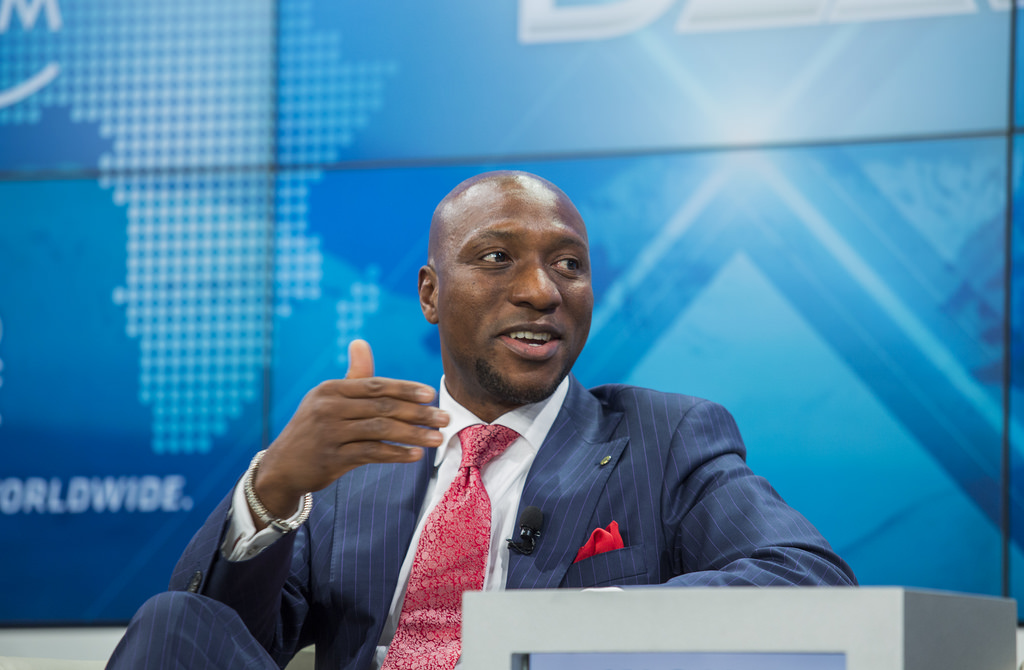
By Olufemi Awoyemi
“Ethics is knowing the difference between what you have a right to do and what is right to do.” – Potter Stewart.
The mandate given to the newly constituted executive management of the NSE post-Ndi Okereke-Onyuike was to develop, grow and implement an exchange driven by, and able to hold itself to the best possible standards of governance and to exercise extreme caution where any appearance of or circumstance may present itself.
The exchange has been executing this mandate without incident till Friday, August 17, 2018 when it supervised the launch of a private foundation of the CEO at its office, including organizing a bell ringing session; an activity hitherto reserved for departing CEOs.
This is an isolated case but one that indicates acquiescence, if not support from the NSE Council – the mandate keepers. Mr Oscar Onyema is thoughtful, professional and a gentleman who has every right to pursue socially uplifting causes. It is a good thing to do but not sufficient to meet the highest standards of corporate governance; in so far as he holds the position of the CEO of the exchange.
I believe that this was an honest mistake devoid of ulterior motives yet has however thrown up obvious conflicts arising from the use of the exchange in the launch and promotion of the foundation. The related issues, impact and implications arising therefrom and related to now forms the subject of this memo to the market.
That said, when it comes to how and what Oscar Onyema, the NSE Council and indeed the foundation should decide next on this matter, sovereignty over decision-making does not rest with commentators and independent analysts like me; they rarely do. It will be one in which the parties will have to make in the best interest of the market – as they wish to be remembered.
It is my expectation that pedigree, intent and value orientation(s) will kick in and corrective action will be taken to make this a non-issue.
Context Matters
Market operators know the story of Ndi Okereke-Onyiuke’s 2008 outing under the aegis of “Africans for Obama Campaign”, the fund-raising that followed, and the ensuing governance issues raised concerning the director-general’s role and that of the Nigerian Stock Exchange (NSE) as an institution.
Students of Nigerian corporate governance history will equally recall that Ndi’s mistake here was to repeat the May 2005 act by then President Obasanjo to invite and receive donations into the Olusegun Obasanjo Presidential Library (OOPL) project which was launched in Abeokuta with the goal of raising N7 billion for the project, while he was still in office.
It would appear that the Nigerian Stock Exchange hasn’t grasped that history lesson fully. Instead, the exchange seems to be acting out the same script, the consequence of which would indicate sadly that there is no institutional memory or sustained desire to elevate the governance environment in our markets beyond where it bottomed out.
To “mobilise and sensitise Africans about the Obama policies and message”, Ndi Okereke-Onyuike, OON, then Director-General/CEO of the Nigeria Stock Exchange in 2008 organized and caused to be held an August 11, 2008 glamorous fundraiser where business leaders and high-society elites paid up for tables. This generated a whole lot of heat and enquiry for which she was cleared of any wrongdoing because no Nigerian laws were broken. That said, the fact that US laws prohibited overseas donations ab-initio made the purpose, positioning and promotion of the fundraiser and the associated role of the exchange a continuing corporate governance concern, especially on matters bothering on conflict of interest and of roles.
To demonstrate and deepen democracy in Nigeria, then President Obasanjo initiated and caused to be incorporated on November 12, 2002 the Olusegun Obasanjo Presidential Library Foundation and subsequently held a fundraiser on Saturday, May 14, 2005 for the said presidential library. Donors to this project included oil companies, financial institutions, business leaders and high-society elite.
Good Intentions Actualized Should Matter & Be Encouraged In Our Society
The referenced saga above exemplifies Oscar’s predicament with the launch on Friday, August 17, 2018 at the Exchange, of the ONO Foundation, which for all intents and purpose speaks to our common humanity and response to the plea for private sector leaders to play a structured role in helping to build a better society.
Babatunde Folawiyo, a well-regarded business leader and chairman, board of trustees, ONO Foundation, echoed the message from Oscar Onyema when he said “the foundation is borne out of an understanding that the society of our dreams cannot materialize if its future (the children and the youth) are not properly trained, inspired and equipped to be the catalyst and springboard of change and growth”.
Good Intentions, Bad Optics For Governance
The reasoning for the foundation is not a problem and should not be a subject of a debate. The issue however is with the launch signaling, timing, linkage to the exchange and role of the principal progenitor in current status. It is all about corporate governance which according to Advocate Johan Myburgh “is not a matter of right or wrong; it is more nuanced than that.” The nuance is exemplified in the optics.
This was an Oscar Onyema who was the CEO of the NSE but decided to seat for the exams of the Chartered Institute of Stockbrokers (CIS), passed and thus conferred esteem upon the practice members. He is, and has always been committed to market best practice and this is the threshold with which the current optics is being viewed.
The deployment of socially uplifting projects in pursuit of the common good seldom succeed when deployed under a cloud of ethical and governance challenges. Instead of saluting Oscar however for the launch as he did it, we may unfortunately end up seeing him as a conspicuous victim here of his own good track record to date on the subject of best practice and higher standards corporate governance.
There must be a more cogent explanation for the role of the exchange beyond rules, conventions and privileges given what we know of the man and his service pedigree. I am not aware of any known case of any wrongdoing against the CEO but believe that the elimination of ‘incestuous relationships’ is critical to the functioning of the exchange CEO in the discharge of the CEO’s responsibilities.
Oscar N. Onyema OON is the CEO of the Nigerian Stock Exchange (NSE), a position he was employed to on 4 April 2011; and for which he is currently serving a second five-year term. He has over twenty years working experience in the United States of America‘s financial markets and the Nigerian information technology sector. Onyema is also the Chairman of the Central Securities Clearing System (CSCS) Plc, a fellow and member of the Governing Council of the Chartered Institute of Stockbrokers of Nigeria (CIS), the President of the African Securities Exchanges Association (ASEA), a Global Agenda Council member of the World Economic Forum (WEF), member of the Board of Trustees of the Investors’ Protection Fund (IPF), and he serves on the boards of all subsidiaries of The Exchange, National Pension Commission of Nigeria, FMDQ OTC PLC.
In his work coverage, he had served as the senior vice president and chief administrative officer at American Stock Exchange (Amex), which he joined in 2001 and has the unique distinction of being the first person of colour to hold that position, and was instrumental in integrating the Amex equity business into the New York Stock Exchange (NYSE) Euronext equity business after the latter’s acquisition of Amex in 2008. He then managed the NYSE Amex equity trading business, which he helped position as a premier market for small and mid-cap securities.
Oscar, an alumnus of Harvard Business School where he completed the Advanced Management Program, is no slouch and he knows his onions.
It is this level of responsibility, engagement and exposure that defines minimum expectations and professional conduct which makes it all the more baffling why he would allow his name to be associated with, or involved in the implied, if not apparent conflict of role situation, the launch of the Oscar N. Onyema Foundation (ONO) at the premises of the exchange presents.
The Nigerian Stock Exchange (as a self-regulatory organization), has done a lot of work in the areas of corporate governance and has adopted best practices as a key element in achieving its vision and mission. This is well articulated and demonstrated by its governing board – the National Council of the Exchange – who regards corporate governance as fundamentally important to the discharge of its responsibilities and its conduct in all its dealings with its stakeholders.
It would thus stand to reason therefore that any appearance of conflict will be an issue to be addressed under risks associated with the executive committee’s mandate.
Identifying Risks And Concerns
This Friday escapade and the questions it threw up, ought to have been an issue which the governing council ought to have addressed its minds to prior to the event; and immediately afterwards vis-à-vis the obvious corporate governance implications arising therefrom, in a clime like ours and at a time like this; especially when juxtaposed against our recent history of an incestuous relationship-biased regulatory environment, and the steps needed to restore confidence in the financial market system, nay the capital market.
The fact that, three or more years after, the board of the Securities & Exchange Commission (SEC) of Nigeria has not been officially constituted illuminates actions taken by a SRO operating in a governance challenged environment more clearly.
Taking together, a common view of the ONO foundation profile the existence or implied infusion of a real or perceived conflict of interest or/and role situation on face value; at the minimum.
An attempt to articulate and decouple the two roles the CEO of the exchange seeks to play here is both a matter of precedence and corporate governance ethos at the exchange.
The primary concerns relate to the determination of the following:
As an employee of the exchange, was there a need for, and was a request made, and an approval granted by the Council of the Exchange.
Was there an approval for the CEO to serve as a trustee and board member of a privately funded foundation named after him?
Would having a foundation bearing his name and having some aspects of its objects similar to undertaking by the exchange’s CSR plan have led to a consequential review of best efforts (including for example the mentoring program)?
Would conducting such a launch in the exchange and deploying its resources in the public engagements require an approval? and
Did the council consider it fit and proper to approve the hosting of a bell ringing session for the CEO, an otherwise revered activity reserved as a sending-off gesture by the exchange for deserving executives; especially when such administrative approvals were vested in the CEO (the beneficiary in this case)?
Is it an allowable practice for a serving CEO to hold a board/trustee position in a private entity (including an NGO with related parties on board) while in office?
Are there provisions for handling co-board positions with directly related party(ies) of a listed entity in the code and are there waivers for this?
Are there disclosures of a conflict of interest or role requirements for:
The exchange’s CEO where such a proposition presents itself?
Any member with direct or indirect dealings with the exchange?
The elimination of safeguards or wall between the exchange and the foundation?
What advisory will the NSE provide to firms who approach it seeking guidance in deciding which social cause (CSR) is priority to the exchange between NSE’s CSR activities (corporate cancer funding, schools program etc) and the ONO foundation’s programs?
Would the duplicitous representation not serve to convey and deliver an “unintended consequence” on stakeholders involved with the exchange, who would feel the pressure and compulsion to “support” the CEO’s foundation as part of ‘good relationship management?
Would such support contributions not qualify as in-kind benefits or/and possibly a vehicle for the inducement of a principal officer of the exchange?
Under what circumstance is such a practice allowable for other executive committee members who may also be so motivated to pursue such socially beneficial cause(s)?
A review of these possible scenarios and best practice cases guided us to reaching a position, if not a conclusion – that this was a bad precedence and one that the market and principals need to work together on by elevating thought to resolve along the lines of institution building.
Legality And Capital Market Governance
As a collective, we seem to have come a long way from the 2008 discourse level which by 2014 had produced an NSE well aware of the need for a higher standard of corporate governance as Oscar Onyema himself brilliantly espoused in Corporate Governance: Ideas & Changes in the Nigerian Capital Market
Nigerians have since risen up and humiliated their political class over its handling of financial conduct, and particularly of the level of impairment evident in the regulators ability to rise above the numerous incestuous relationships they are often cluttered with.
Indeed and sadly, the generality of the public have come to accept and see nothing terribly unusual about their sense of powerlessness and alienation from the responsibility imperative of regulators, which it has been proven collectively, brought us to the state where we felt a wholesome change was need in our markets in 2010.
If we cannot change behaviour at the level of the sovereign, we can at least do this effectively at the level of industry and thus help provide teachable lessons for the development of the culture required to raise governance standards in the country and create a veritable example for listed entities.
This is one of such unique opportunities.
Moving on from here would require more than compliance with existing rules, conventions, laws and statutes – it requires setting new standards beyond rules to help us untangle roles and relationships.
Conflict of Interest – Overcoming Potential Impediments
Conflict of interest is difficult to define, yet it often appears obvious to many people who think they know it when they see it. If ever there was an issue that captures this sentiment, this foundation launch offers us an opportunity to discuss the grey areas inherent in our codes and how we should walk through them.
The legal definition of conflict of interest, usually set out in conventions, rules and laws governing non-profit entities and indeed SRO’s, is very specific and covers relatively few situations. Most conflicts fall into the ‘grey area’ where ethics and public perception are more relevant than statutes or precedents.
For this purpose, conflict of interest is therefore placed in the background to raise the much informed argument about the ‘conflict of roles’ which arises whenever the personal or professional responsibilities of a market-based entity and board member appear to be potentially at odds with the best interests and objectives of the market as a fair and level playing space.
Such possible areas of conflict (in roles/interest) can be narrowed down to the following ‘cultural’ issues, viz:
Conflict by association – linkage of the exchange to the foundation;
Conflict arising from relationship with board members;
Conflict arising from professional responsibility;
Conflict arising from precedence; and
Conflict arising from related parties and entanglement.
It is obvious that there is so much to unpack here. I must however crave the markets indulgence to draw a close on this memo on the premise established – i.e. that the appearance of a conflict of interest is a minimum criteria for council oversight in the affairs of the NSE.
While it is my hope and expectation that responsible parties singled out here will respond and take appropriate actions; it comforts me to leave you with the words of Bishop Desmond Tutu, from whom we may draw the inspiration needed to act in the circumstance, viz:
“We must not allow ourselves to become like the system we oppose. We cannot afford to use methods of which we will be ashamed when we look back, when we say, ‘…we shouldn’t have done that.’ We must remember, my friends, that we have been given a wonderful cause. The cause of freedom! And you and I must be those who will walk with heads held high. We will say, ‘We used methods that can stand the harsh scrutiny of history.’”
Olufemi Awoyemi is the Founder and Chief Executive Officer of Proshare Nigeria Limited.



By Blaise Udunze
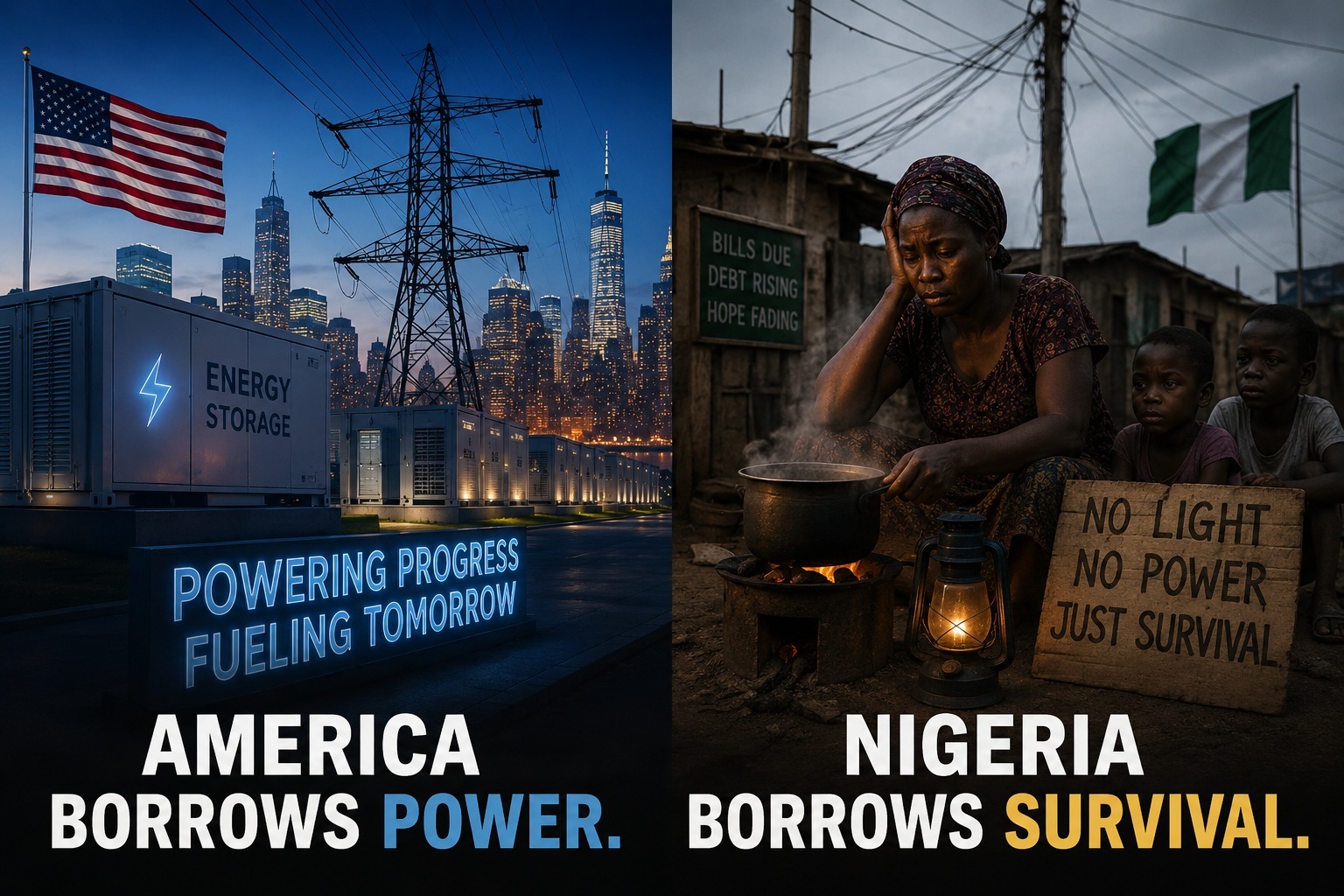
Findings show that the United States owes more than $36 trillion while Nigeria owes over N159.28 trillion, with external debt now standing at approximately $51.8 billion. At first glance, when comparing the debt profiles of the world’s largest economy and Africa’s largest economy, it may seem misplaced. America can borrow almost indefinitely because it issues the world’s reserve currency. Nigeria cannot. Yet both countries are confronting a similar worry. This has led to asking, when does debt cease to be a tool for development and become a permanent feature of national survival?
The difference is that while America may be testing the limits of how much debt a superpower can carry, Nigeria is testing how much debt a fragile developing economy can sustain before it begins to mortgage its future.
The latest proposal by the federal government to secure another $1.25 billion World Bank facility under the Nigeria Actions for Investment and Jobs Acceleration Programme has once again reignited a debate that refuses to disappear. What appears to be far from the daily lived experience of Nigerians over the years is having government officials insisting that the loan will support investment, expand access to finance, improve electricity, enhance digital services, and create jobs. According to the claims, these are worthy objectives. But Nigerians have heard similar promises before.
The more important question is no longer whether Nigeria should borrow. Virtually every modern economy borrows. The real question which calls for critical concern is what exactly Nigeria is borrowing for, and why the benefits of decades of borrowing remain largely invisible in the everyday lives of millions of citizens. This is where the national conversation becomes uncomfortable.
Funny enough, over the years, successive governments have justified borrowing as a necessary response to development deficits. Yet despite rising debt levels, many Nigerians struggle to identify corresponding improvements in their lived experiences. This justification has kept many wondering as the roads remain dilapidated, public hospitals are overwhelmed, and the electricity supply also remains unreliable. Talk of the public education system, this has continued to deteriorate badly, and unemployment remains stubbornly high. Inflation has eroded incomes, with the cost of cooking gas hitting N2,400 per kg, while businesses struggle under the weight of high operating costs.
If borrowing is supposed to finance development, where is the development? The concern becomes even more urgent and highly alarming when viewed against the backdrop of Nigeria’s worsening fiscal position. According to the Debt Management Office, public debt has climbed to over N159 trillion. With this outrageous figure, more troubling is the fact that debt servicing now consumes an alarming share of government revenue, which has continued to cripple economic growth and compromise the future. This development caught the attention of the Nigerian Economic Summit Group, as it recently noted that Nigeria’s debt-service-to-revenue ratio remains among the highest in the world. In simple and practical terms, this implies that the government is spending an increasingly large portion of what it earns paying creditors rather than investing in infrastructure, healthcare, education, security, or economic expansion.
This is the hallmark of a debt trap. The danger is not necessarily that Nigeria will default tomorrow. The danger is that the nation becomes trapped in a vicious cycle where governments borrow to finance deficits, then borrow again to service existing obligations, and then borrow even more to cover the consequences of previous borrowing. That cycle is already becoming visible.
Come to think of it, President Bola Tinubu’s administration has boldly defended borrowing as necessary to support reforms, cushion economic shocks, and stimulate growth. Yet critics have continued to point to the fact that since May 2023, borrowing has accelerated significantly.
According to economic analyst Dele Oye, the current administration has added approximately N65.9 trillion to Nigeria’s debt stock within just two years, a figure that exceeds several multiples of what Nigeria accumulated during its first five decades after independence.
Whether one agrees with the politics surrounding that claim is secondary. The underlying concern remains valid since debt is growing far faster than the visible capacity of the economy to generate sustainable revenue. This is why comparisons with the United States are useful.
America’s debt is enormous, but debt sustainability is not determined by the size of debt alone. It is determined by economic productivity. The United States supports its debt burden through a diversified economy, deep capital markets, technological innovation, globally competitive corporations, advanced research institutions, and an unmatched ability to attract global investment.
Debt is not what sustains America. Productivity does. Unlike Nigeria, it continues to rely heavily on crude oil revenues, a narrow tax base, volatile foreign exchange earnings, and a fragile manufacturing sector. The critical difference is that every dollar borrowed by Nigeria therefore carries greater risks than every dollar borrowed by the United States.
When America borrows, it borrows largely in its own currency. When Nigeria borrows externally, it exposes itself to exchange-rate risks that can dramatically increase repayment costs whenever the naira weakens, as this calls for utmost caution. Every currency depreciation effectively inflates the burden of external obligations. What appears manageable today can become overwhelming tomorrow. This reality makes Nigeria’s current debt trajectory particularly concerning, which is the truth.
The World Bank itself has raised concerns about governance risks and structural weaknesses within Nigeria’s fiscal architecture. Even more troubling are recent revelations indicating that more than N34.5 trillion was reportedly deducted through pre-distribution mechanisms before revenues reached the Federation Account between 2023 and 2025. According to the findings, approximately 41 per cent of government revenues were removed as first-line charges before distribution.
Whichever way it is viewed, perhaps as fiscal leakages, weak oversight, or institutional inefficiency, the implications are profound and of critical concern. If we must begin to tell ourselves the factual truth, a nation cannot continue borrowing aggressively while simultaneously failing to maximise the value of revenues it already generates.
This brings us to the central question confronting Nigeria today. The point is, are these loans building future productive capacity, or are they merely financing continuity?
Borrowing can be justified when it funds projects that expand economic output. Investments in power generation, transport infrastructure, agriculture, industrialisation, technology, and education can create long-term growth that eventually pays for the debt itself. In such cases, debt becomes a bridge to prosperity.
But it must be known that borrowing to fund recurrent expenditure, sustain bloated government structures, finance consumption, cover inefficiencies, or service previous debts transforms borrowing into a treadmill. The irony here is that the country runs harder every year but remains trapped in the same place. Unfortunately, much of Nigeria’s fiscal reality increasingly resembles the latter.
The tragedy is that this debt burden is not abstract. It is already affecting ordinary Nigerians. The adverse implication and critical point are that every naira directed toward debt servicing is a naira unavailable for schools, hospitals, security, electricity, or social protection. Every external loan increases future repayment obligations. Every missed opportunity to invest borrowed funds productively transfers today’s policy failures to future generations.
The consequences are visible everywhere. Businesses face prohibitively high borrowing costs. Today in Nigeria, it is no longer news that manufacturers struggle with energy expenses, which adversely affect the citizens. The same applies to youth unemployment, which remains widespread. Also, infrastructure deficits persist. Another critical issue is that states remain heavily dependent on monthly allocations from the federal level. With the developments, economic growth remains too weak to significantly improve living standards.
The result is a contradiction in which debt rises while prosperity stagnates. This is perhaps the greatest lesson Nigeria must learn from America’s debt experience.
The debate should not focus exclusively on how much debt a nation carries. The more important progressive question is whether the economy is productive enough to sustain that debt.
What every Nigerian should know is that Nigeria as a country cannot borrow its way to prosperity because it must first strengthen the foundations that generate sustainable growth. With the lingering challenging surrounding the borrowing and the mountain of debts, one key fact is that it cannot rely indefinitely on external creditors while neglecting domestic productivity. Also, it cannot continue to depend on oil revenues while failing to broaden its tax base. Another loose end that has been a critical matter is that it cannot expect debt-financed development without strong institutions, transparency, accountability and effective project execution.
The solutions are neither mysterious nor impossible. This entails that Nigeria must aggressively expand domestic revenue mobilisation without suffocating businesses and ensure it digitises tax administration, eliminates leakages, enforce fiscal responsibility laws. Also, it must reduce the cost of governance, strengthen public procurement systems, while ensuring that every borrowed naira and kobo is linked to measurable economic outcomes.
Equally important, the government must rebuild public trust. The truth is that citizens are more willing to support reforms when they can see tangible results. Some of the developments in the past that have continued to erode public trust are when subsidy savings are announced, people expect better roads, improved healthcare, reliable electricity, and enhanced security. When new loans are obtained, they expect visible projects and measurable returns, but the reverse has been the case. Those at the helm of affairs of this country must understand that transparency is not merely good governance; it is an economic necessity. History offers a warning.
In 2006, under the leadership of Olusegun Obasanjo, Nigeria celebrated its exit from the Paris Club debt burden after securing one of Africa’s most significant debt relief achievements. Not too long but for a brief period, the country stood relatively free from the crushing obligations that had constrained development for decades. Two decades later, that achievement appears increasingly distant.
The danger is not simply that Nigeria is borrowing. The danger is that borrowing is becoming normalised as a substitute for difficult reforms.
A nation can borrow to build industries or borrow to pay bills. It can borrow to create future wealth or borrow to postpone present challenges. One path expands prosperity; the other compounds dependency.
America’s debt mountain demonstrates that even wealthy nations are not immune to the consequences of structural borrowing. Nigeria’s debt burden demonstrates how much more dangerous that reality becomes when economic productivity fails to keep pace. Borrowing can buy time. It cannot buy prosperity.
Sooner or later, every nation must generate the economic value necessary to justify the debts it accumulates. Nigeria’s future will depend not on how much it can borrow, but on how effectively it can produce, innovate, industrialise, and grow.
That is the lesson hidden underneath America’s debt mountain. It is also the lesson Nigeria ignores at its own peril.
Blaise, a journalist and PR professional, writes from Lagos and can be reached via: bl***********@***il.com

By Osasikemwen Ighile
In today’s volatile economic climate, saving money is no longer just a prudent habit—it is a strategic necessity. The constantly rising living costs, inflationary pressures, and currency fluctuations have redefined what it means to be financially secure. The difference now lies not in whether people save, but in how they save.
Reports from the National Bureau of Statistics (NBS) highlight this shift, showing inflation in Nigeria climbing from 22.41% in May 2023 to a peak of 34.80% by late 2024. While temporary cooling occurred in early 2025, the overarching trend underscores a stark reality – cash that isn’t generating interest is rapidly losing its purchasing power.
For many Nigerians, the instinct to put money aside remains strong, but without structure and strategy, those savings often fail to deliver real value and results. Money kept idle may offer liquidity and accessibility, but may not preserve value effectively over time. To achieve financial growth, saving must evolve from passive storage to intentional planning.
For generations, informal saving methods such as keeping cash at home or participating in contribution schemes like ajo or esusu have served as accessible financial tools. While these systems encourage discipline and community trust, they come with clear limitations in a modern economy. Physical cash steadily loses value due to inflation, meaning what seems sufficient today may purchase far less in the near future. Easy access to such funds also increases the likelihood of impulsive spending, weakening long-term financial discipline. More importantly, money kept outside formal financial systems does not grow. It earns no interest, gains no value, and misses the compounding effect that drives wealth accumulation. Contribution schemes, while helpful for short-term goals, are often rigid and do not generate returns—they help rotate money, but not multiply it.
To build and maintain a meaningful financial backbone, savings must be aligned with purpose. An emergency fund, for instance, remains the foundation of financial stability, but leaving it in low-yield accounts limits its potential. Placing such funds in flexible savings options that offer daily interest based on the terms and conditions allows individuals to manage access while still earning modest returns. For funds that are not immediately needed, fixed savings or deposits provide a stronger pathway to growth.
By committing money for a defined period in interest-bearing savings accounts, savers can benefit from interest rates that may assist in preserving value over time, subject to prevailing economic conditions, while also reducing the temptation to spend impulsively. Many individuals report that setting clear savings goals and maintaining disciplined saving habits can improve confidence in managing personal finances.
Saving with clear goals further strengthens financial discipline. When individuals align their savings with specific needs such as rent, education, or business capital, and automate contributions, they remove the uncertainty and inconsistency that often derail financial plans. Over time, this approach builds both confidence and stability.
The difference between merely saving money and actually growing it becomes more evident over time. Funds placed in interest-bearing accounts benefit from compounding and gradually increase in value, while idle cash continues to lose purchasing power. What appears safe on the surface may, in reality, be diminishing.
The emergence of tech-enabled financial platforms like FairMoney has made structured saving more accessible, offering individuals secure and transparent ways to save and manage their funds. FairMoney MFB operates under the oversight of the Central Bank of Nigeria (CBN) and is insured by the Nigeria Deposit Insurance Corporation (NDIC), subject to applicable coverage, limited and regulatory conditions, providing an added layer of confidence.
Ultimately, financial security is not determined solely by income but by how effectively available resources are managed and grown. Intentional saving is about making money work with clarity, discipline, and purpose. In an uncertain economic environment, that shift from simply keeping money to adopting a structured savings approach can form an important component of long-term financial planning.
Osasikemwen Ighile is the Brand Manager for FairMoney Microfinance Bank
By Mannir U. Ringim (PhD)
Long before the satellite forecasts and the seasonal advisories, the African farmer learned to read the sky. He watched the colour of the clouds, the behaviour of the birds, the first scent of rain on hot ground, and he planted accordingly. For generations, that knowledge was reliable enough to feed nations. Today, it is faltering not because the farmer has forgotten how to read the signs, but because the signs themselves have changed. The rains that once came in April now arrive in May, or not at all. The harmattan lingers. The river that once flooded every decade now floods twice in five years. Nature is still sending its signals; they have become harder and crueller to read.
Today, the world marks World Environment Day. This year’s theme, “Inspired by Nature. For Climate. For Our Future,” will be examined in Baku and echoed in boardrooms and headlines across the world. It is a worthy conversation, but the people who live that theme most literally will not be in any of those rooms. They are the smallholder farmers of northern Nigeria and the wider Sahel, the rice growers of the Niger basin, the cassava, cocoa, and oil palm households from Cross River to the forests of the coast. It is a Nigerian story, but not only a Nigerian one: the same signals are being read across West Africa, and in the last decade, the reading has grown harder.
I want to make a single argument on this day of World Environment Day, and although it begins in the field, it ends in the boardroom: in our part of the world, agricultural finance is climate finance. The most direct, most local and most consequential form of climate action available to the region’s financial sector is not a distant carbon market or an offset scheme negotiated abroad. It is the decision to put serious, patient and intelligent capital into the hands of the people working the most climate-exposed asset we possess — our land. Get that decision right, and we address food security, rural livelihoods and climate resilience in a single motion. Get it wrong, and we will keep treating three faces of one crisis as though they were unrelated problems.
The signals from the land
To understand why this matters, it helps to travel the land as those of us in business banking do. Across the Sahel, the desert is not a metaphor; it advances year upon year over farmland that fed families in living memory. Lake Chad — once one of Africa’s great freshwater bodies, shared by Nigeria, Niger, Chad and Cameroon — has retreated to a fraction of its former size, carrying fishing and farming livelihoods with it. In the middle belts, the rains have turned violent and unpredictable, and a single night of flooding can erase a season’s labour and a year’s income. Along the coast and the eroding river valleys, gully after gully swallows farms, homes and roads. These are not isolated misfortunes; they are the local expressions of a global phenomenon, and the people absorbing them first are the people who feed everyone else.
This is the part of the climate story we too often misfile. We log the late rains under “agriculture,” the flood under “disaster relief,” the rising cost of a meal under “the economy,” and we reserve the word “environment” for tree-planting campaigns. But these are not separate ledgers. The farmer who cannot plant because the rains failed, the trader who charges more because the harvest shrank, the young person who leaves the village because the farm no longer pays — all are responding to the same signal. In our region, climate change announces itself first as an agricultural event. We will not manage it as an environmental one until we are willing to finance it as an economic one.
A paradox of capital
Here lies a contradiction we have tolerated for far too long. Agriculture employs more people than any other sector in Nigeria and across much of West Africa, and contributes a substantial share of national output. By any honest measure, it is the foundation of the real economy, and yet, for decades, it has drawn only a single-digit share of total bank lending, which is a fraction of its weight in jobs, in food, and in stability. We have built financial systems that are, in effect, under-invested in the very sector that sustains them.
The reasons are familiar to every banker. Agriculture has long been judged too risky, too seasonal, too informal and too hard to collateralise. A farmer’s income arrives once or twice a year, not monthly; his balance sheet consists of a few hectares, some livestock, and a great deal of practical knowledge. No conventional credit model was built to value it. So, capital did the rational short-term thing: it stayed away, or lent briefly and expensively, on terms that suited the lender’s calendar rather than the crop’s. That caution made sense in a stable climate. In a changing one, it is self-defeating because the farmer who cannot borrow cannot adapt. He cannot buy the drought-tolerant seed, install the modest irrigation that frees him from relying on a single rainy season, or afford the storage that keeps a good harvest from spoiling before the market. We have been asking our most climate-exposed citizens to face the hardest conditions in memory with the least capital available to them. That is not prudence; it is a slow failure of both economics and adaptation, and the bill arrives at every table as more expensive food.
Risk is also a design problem
If there is good news here, it is that much of what we call “agricultural risk” is not a law of nature. It is a design problem, and design problems can be solved. The past few years have produced a genuinely more sophisticated toolkit, and the institutions willing to use it are finding the sector far more bankable than the old assumptions allowed. It begins with lending that fits the farmer rather than forcing the farmer to fit the facility: cash-flow facilities structured around the crop cycle, disbursing at planting and falling due after harvest. Value-chain and anchor-borrower models, in which a credible off-taker sits between the bank and thousands of smallholders, solve the scale, collateral, and market access problems at a single stroke. Warehouse-receipt systems let stored grain serve as collateral, so a farmer need not sell everything at harvest, when prices are lowest, merely to raise cash.
Around that core sits an expanding set of instruments: input and mechanisation finance to lift yields; irrigation finance to break the dependence on the rains; cold-chain and storage finance to attack the staggering share of what we grow that is still lost after harvest, losses that are, in their own quiet way, as much an environmental cost as an economic one, since every wasted tonne is water, land, fuel and labour spent for nothing. Weather-index insurance can pay out automatically when rainfall falls below a threshold, turning an uninsurable risk into a priced one, and the spread of mobile technology and farm-level data — satellite imagery, mapping, digital payment histories — is finally giving lenders an evidence-based way to assess the smallholder they once treated as invisible. None of this is theoretical; each instrument is already in use somewhere in the region today. The task is not to invent new tools but to deploy the existing ones at scale, and with discipline.
Here, agricultural finance and the climate agenda converge, because the instruments that make farming bankable are, almost without exception, the ones that make it resilient. Irrigation is an adaptation. Drought-tolerant seed is an adaptation. Healthier soils, smarter water use, agroforestry that holds back the desert, storage that wastes less — these are not optional “green” extras; they are the difference between a farm that survives a harsher climate and one that does not. The point lands with particular force in West Africa, among the most climate-vulnerable yet least climate-financed regions on earth. The global conversation has turned decisively to climate finance — Azerbaijan, this year’s World Environment Day host, carried that agenda as president of COP29 — but climate finance is not only something that happens at altitude. Its most grounded form, for us, is the facility that enables a cooperative to drill a borehole or build a warehouse. The local reality is how the global ambition gets delivered.
Shared risk, shared frontier
None of this can rest on the banks alone, and it should not. The risks are real, and the most durable way to manage them is to share them among the actors who each hold a piece of the solution. Governments set the frameworks, build rural infrastructure, and provide the guarantees that make long-tenor lending viable. Development finance institutions, the African Development Bank chief among them, with their long-standing ambition to feed the continent, bring the patient, blended capital that crowds in commercial lenders rather than out. Insurers price the weather risk that banks should not carry alone. Agritech firms and aggregators supply data and market linkages. Banks bring structure, reach, governance and capital. Nigeria has tried versions of this before — the Agricultural Credit Guarantee Scheme and the Anchor Borrowers’ Programme among them, and the experience taught us both the promise of public-private agricultural finance and the discipline it demands: such partnerships work only when they are designed with rigour, governed transparently, and judged by outcomes rather than by money disbursed.
For those of us whose responsibilities include the public sector, the most valuable role a bank can play is often not as lender of last resort but as honest broker, aligning the ambitions of government, the capital of development partners, and the needs of the farmer into structures that actually move money to the field, and the prize is larger than risk management. It is tempting, faced with advancing desert and shrinking water, to speak of the Sahel and the rural North only in the language of crisis. However, that language is incomplete and self-fulfilling. The same regions hold vast arable land, established value chains in grains, livestock and horticulture, and one of the youngest workforces on earth. When a young person can finance an irrigated dry-season crop, or a women’s cooperative can secure inputs and a guaranteed buyer, agriculture stops being a fallback and becomes a future. That shift — from relief to investment, from managing decline to financing growth — is the single most powerful contribution finance can make to the regions on the climate front line. It is also good business: the young and the underserved are not a market to be pitied, but the largest growth opportunity in African banking.
Where we choose to stand
At Union Bank, this is not a new conviction. An institution that has banked Nigerian communities for more than a century has watched the relationship between people and land change in real time and has come to regard agricultural finance not as a niche or an act of charity, but as national infrastructure — and, increasingly, as climate infrastructure. The question we put to ourselves is not whether agriculture is worth financing, but how to finance it in a way that builds resilience rather than extends credit, and how to do so at the scale the moment now demands.
The campaign behind this year’s World Environment Day speaks of the signals the Earth is sending us, and the signals we choose to send back. It is an apt frame for a banker. For too long, the signal our financial system sent the farmer was a quiet, discouraging one: you are too risky, too small, too far away to be worth our capital. The farmer heard it clearly, and many of his children left the land. We can now send a different signal.
“For Climate” and “For Our Future” are not phrases to be admired from a distance. For Nigeria and its neighbours, there are decisions to be made at home in how we price risk, where we direct capital, and whether we are finally willing to stand behind the people who have been reading nature’s signals all along. The most meaningful climate commitment our financial sector can make this World Environment Day is not a statement; it is a willingness to finance the land that feeds us, intelligently and at scale. The moment, as the campaign rightly insists, is now. Now for climate — and, just as urgently, now for the farmer.
Mannir U. Ringim is Executive Director, Business Banking at Union Bank of Nigeria, with responsibility for the Public Sector and the Bank’s Northern, South-South and South-East businesses.
He is versatile in spearheading new business development, cultivating partnerships,
and fostering healthy stakeholder relationships, with a focus on driving business growth and achieving revenue milestones.
Mannir’s educational qualifications include a PhD in Economics (focus on Financial Inclusion) from Bayero University, Kano, and Bachelor of Science and Master of Science degrees in Economics from the same institution. He also holds executive certifications from INSEAD Business School in Singapore, Kellogg School of Management in Chicago, and Euromoney in London, reflecting his dedication to continuous growth and excellence. Mannir has been an Honorary Senior Member of the Chartered Institute of Bankers of Nigeria (HCIB) since 2015.
-
 Feature/OPED6 years ago
Davos was Different this year
-
Travel/Tourism10 years ago
Lagos Seals Western Lodge Hotel In Ikorodu
-

 Showbiz3 years ago
Estranged Lover Releases Videos of Empress Njamah Bathing
-
 Banking8 years ago
Sort Codes of GTBank Branches in Nigeria
-

 Economy3 years ago
Subsidy Removal: CNG at N130 Per Litre Cheaper Than Petrol—IPMAN
-

 Banking3 years ago
Sort Codes of UBA Branches in Nigeria
-

 Banking3 years ago
First Bank Announces Planned Downtime
-

 Sports3 years ago
Highest Paid Nigerian Footballer – How Much Do Nigerian Footballers Earn