

Feature/OPED
The NSE, Oscar Onyema Foundation and Corporate Governance

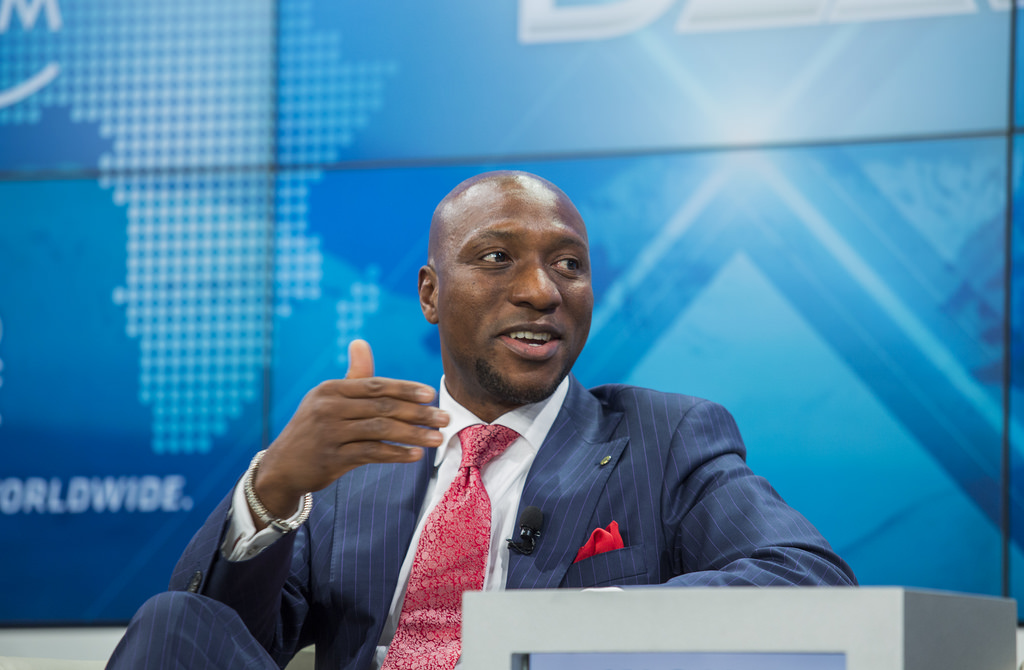
By Olufemi Awoyemi
“Ethics is knowing the difference between what you have a right to do and what is right to do.” – Potter Stewart.
The mandate given to the newly constituted executive management of the NSE post-Ndi Okereke-Onyuike was to develop, grow and implement an exchange driven by, and able to hold itself to the best possible standards of governance and to exercise extreme caution where any appearance of or circumstance may present itself.
The exchange has been executing this mandate without incident till Friday, August 17, 2018 when it supervised the launch of a private foundation of the CEO at its office, including organizing a bell ringing session; an activity hitherto reserved for departing CEOs.
This is an isolated case but one that indicates acquiescence, if not support from the NSE Council – the mandate keepers. Mr Oscar Onyema is thoughtful, professional and a gentleman who has every right to pursue socially uplifting causes. It is a good thing to do but not sufficient to meet the highest standards of corporate governance; in so far as he holds the position of the CEO of the exchange.
I believe that this was an honest mistake devoid of ulterior motives yet has however thrown up obvious conflicts arising from the use of the exchange in the launch and promotion of the foundation. The related issues, impact and implications arising therefrom and related to now forms the subject of this memo to the market.
That said, when it comes to how and what Oscar Onyema, the NSE Council and indeed the foundation should decide next on this matter, sovereignty over decision-making does not rest with commentators and independent analysts like me; they rarely do. It will be one in which the parties will have to make in the best interest of the market – as they wish to be remembered.
It is my expectation that pedigree, intent and value orientation(s) will kick in and corrective action will be taken to make this a non-issue.
Context Matters
Market operators know the story of Ndi Okereke-Onyiuke’s 2008 outing under the aegis of “Africans for Obama Campaign”, the fund-raising that followed, and the ensuing governance issues raised concerning the director-general’s role and that of the Nigerian Stock Exchange (NSE) as an institution.
Students of Nigerian corporate governance history will equally recall that Ndi’s mistake here was to repeat the May 2005 act by then President Obasanjo to invite and receive donations into the Olusegun Obasanjo Presidential Library (OOPL) project which was launched in Abeokuta with the goal of raising N7 billion for the project, while he was still in office.
It would appear that the Nigerian Stock Exchange hasn’t grasped that history lesson fully. Instead, the exchange seems to be acting out the same script, the consequence of which would indicate sadly that there is no institutional memory or sustained desire to elevate the governance environment in our markets beyond where it bottomed out.
To “mobilise and sensitise Africans about the Obama policies and message”, Ndi Okereke-Onyuike, OON, then Director-General/CEO of the Nigeria Stock Exchange in 2008 organized and caused to be held an August 11, 2008 glamorous fundraiser where business leaders and high-society elites paid up for tables. This generated a whole lot of heat and enquiry for which she was cleared of any wrongdoing because no Nigerian laws were broken. That said, the fact that US laws prohibited overseas donations ab-initio made the purpose, positioning and promotion of the fundraiser and the associated role of the exchange a continuing corporate governance concern, especially on matters bothering on conflict of interest and of roles.
To demonstrate and deepen democracy in Nigeria, then President Obasanjo initiated and caused to be incorporated on November 12, 2002 the Olusegun Obasanjo Presidential Library Foundation and subsequently held a fundraiser on Saturday, May 14, 2005 for the said presidential library. Donors to this project included oil companies, financial institutions, business leaders and high-society elite.
Good Intentions Actualized Should Matter & Be Encouraged In Our Society
The referenced saga above exemplifies Oscar’s predicament with the launch on Friday, August 17, 2018 at the Exchange, of the ONO Foundation, which for all intents and purpose speaks to our common humanity and response to the plea for private sector leaders to play a structured role in helping to build a better society.
Babatunde Folawiyo, a well-regarded business leader and chairman, board of trustees, ONO Foundation, echoed the message from Oscar Onyema when he said “the foundation is borne out of an understanding that the society of our dreams cannot materialize if its future (the children and the youth) are not properly trained, inspired and equipped to be the catalyst and springboard of change and growth”.
Good Intentions, Bad Optics For Governance
The reasoning for the foundation is not a problem and should not be a subject of a debate. The issue however is with the launch signaling, timing, linkage to the exchange and role of the principal progenitor in current status. It is all about corporate governance which according to Advocate Johan Myburgh “is not a matter of right or wrong; it is more nuanced than that.” The nuance is exemplified in the optics.
This was an Oscar Onyema who was the CEO of the NSE but decided to seat for the exams of the Chartered Institute of Stockbrokers (CIS), passed and thus conferred esteem upon the practice members. He is, and has always been committed to market best practice and this is the threshold with which the current optics is being viewed.
The deployment of socially uplifting projects in pursuit of the common good seldom succeed when deployed under a cloud of ethical and governance challenges. Instead of saluting Oscar however for the launch as he did it, we may unfortunately end up seeing him as a conspicuous victim here of his own good track record to date on the subject of best practice and higher standards corporate governance.
There must be a more cogent explanation for the role of the exchange beyond rules, conventions and privileges given what we know of the man and his service pedigree. I am not aware of any known case of any wrongdoing against the CEO but believe that the elimination of ‘incestuous relationships’ is critical to the functioning of the exchange CEO in the discharge of the CEO’s responsibilities.
Oscar N. Onyema OON is the CEO of the Nigerian Stock Exchange (NSE), a position he was employed to on 4 April 2011; and for which he is currently serving a second five-year term. He has over twenty years working experience in the United States of America‘s financial markets and the Nigerian information technology sector. Onyema is also the Chairman of the Central Securities Clearing System (CSCS) Plc, a fellow and member of the Governing Council of the Chartered Institute of Stockbrokers of Nigeria (CIS), the President of the African Securities Exchanges Association (ASEA), a Global Agenda Council member of the World Economic Forum (WEF), member of the Board of Trustees of the Investors’ Protection Fund (IPF), and he serves on the boards of all subsidiaries of The Exchange, National Pension Commission of Nigeria, FMDQ OTC PLC.
In his work coverage, he had served as the senior vice president and chief administrative officer at American Stock Exchange (Amex), which he joined in 2001 and has the unique distinction of being the first person of colour to hold that position, and was instrumental in integrating the Amex equity business into the New York Stock Exchange (NYSE) Euronext equity business after the latter’s acquisition of Amex in 2008. He then managed the NYSE Amex equity trading business, which he helped position as a premier market for small and mid-cap securities.
Oscar, an alumnus of Harvard Business School where he completed the Advanced Management Program, is no slouch and he knows his onions.
It is this level of responsibility, engagement and exposure that defines minimum expectations and professional conduct which makes it all the more baffling why he would allow his name to be associated with, or involved in the implied, if not apparent conflict of role situation, the launch of the Oscar N. Onyema Foundation (ONO) at the premises of the exchange presents.
The Nigerian Stock Exchange (as a self-regulatory organization), has done a lot of work in the areas of corporate governance and has adopted best practices as a key element in achieving its vision and mission. This is well articulated and demonstrated by its governing board – the National Council of the Exchange – who regards corporate governance as fundamentally important to the discharge of its responsibilities and its conduct in all its dealings with its stakeholders.
It would thus stand to reason therefore that any appearance of conflict will be an issue to be addressed under risks associated with the executive committee’s mandate.
Identifying Risks And Concerns
This Friday escapade and the questions it threw up, ought to have been an issue which the governing council ought to have addressed its minds to prior to the event; and immediately afterwards vis-à-vis the obvious corporate governance implications arising therefrom, in a clime like ours and at a time like this; especially when juxtaposed against our recent history of an incestuous relationship-biased regulatory environment, and the steps needed to restore confidence in the financial market system, nay the capital market.
The fact that, three or more years after, the board of the Securities & Exchange Commission (SEC) of Nigeria has not been officially constituted illuminates actions taken by a SRO operating in a governance challenged environment more clearly.
Taking together, a common view of the ONO foundation profile the existence or implied infusion of a real or perceived conflict of interest or/and role situation on face value; at the minimum.
An attempt to articulate and decouple the two roles the CEO of the exchange seeks to play here is both a matter of precedence and corporate governance ethos at the exchange.
The primary concerns relate to the determination of the following:
As an employee of the exchange, was there a need for, and was a request made, and an approval granted by the Council of the Exchange.
Was there an approval for the CEO to serve as a trustee and board member of a privately funded foundation named after him?
Would having a foundation bearing his name and having some aspects of its objects similar to undertaking by the exchange’s CSR plan have led to a consequential review of best efforts (including for example the mentoring program)?
Would conducting such a launch in the exchange and deploying its resources in the public engagements require an approval? and
Did the council consider it fit and proper to approve the hosting of a bell ringing session for the CEO, an otherwise revered activity reserved as a sending-off gesture by the exchange for deserving executives; especially when such administrative approvals were vested in the CEO (the beneficiary in this case)?
Is it an allowable practice for a serving CEO to hold a board/trustee position in a private entity (including an NGO with related parties on board) while in office?
Are there provisions for handling co-board positions with directly related party(ies) of a listed entity in the code and are there waivers for this?
Are there disclosures of a conflict of interest or role requirements for:
The exchange’s CEO where such a proposition presents itself?
Any member with direct or indirect dealings with the exchange?
The elimination of safeguards or wall between the exchange and the foundation?
What advisory will the NSE provide to firms who approach it seeking guidance in deciding which social cause (CSR) is priority to the exchange between NSE’s CSR activities (corporate cancer funding, schools program etc) and the ONO foundation’s programs?
Would the duplicitous representation not serve to convey and deliver an “unintended consequence” on stakeholders involved with the exchange, who would feel the pressure and compulsion to “support” the CEO’s foundation as part of ‘good relationship management?
Would such support contributions not qualify as in-kind benefits or/and possibly a vehicle for the inducement of a principal officer of the exchange?
Under what circumstance is such a practice allowable for other executive committee members who may also be so motivated to pursue such socially beneficial cause(s)?
A review of these possible scenarios and best practice cases guided us to reaching a position, if not a conclusion – that this was a bad precedence and one that the market and principals need to work together on by elevating thought to resolve along the lines of institution building.
Legality And Capital Market Governance
As a collective, we seem to have come a long way from the 2008 discourse level which by 2014 had produced an NSE well aware of the need for a higher standard of corporate governance as Oscar Onyema himself brilliantly espoused in Corporate Governance: Ideas & Changes in the Nigerian Capital Market
Nigerians have since risen up and humiliated their political class over its handling of financial conduct, and particularly of the level of impairment evident in the regulators ability to rise above the numerous incestuous relationships they are often cluttered with.
Indeed and sadly, the generality of the public have come to accept and see nothing terribly unusual about their sense of powerlessness and alienation from the responsibility imperative of regulators, which it has been proven collectively, brought us to the state where we felt a wholesome change was need in our markets in 2010.
If we cannot change behaviour at the level of the sovereign, we can at least do this effectively at the level of industry and thus help provide teachable lessons for the development of the culture required to raise governance standards in the country and create a veritable example for listed entities.
This is one of such unique opportunities.
Moving on from here would require more than compliance with existing rules, conventions, laws and statutes – it requires setting new standards beyond rules to help us untangle roles and relationships.
Conflict of Interest – Overcoming Potential Impediments
Conflict of interest is difficult to define, yet it often appears obvious to many people who think they know it when they see it. If ever there was an issue that captures this sentiment, this foundation launch offers us an opportunity to discuss the grey areas inherent in our codes and how we should walk through them.
The legal definition of conflict of interest, usually set out in conventions, rules and laws governing non-profit entities and indeed SRO’s, is very specific and covers relatively few situations. Most conflicts fall into the ‘grey area’ where ethics and public perception are more relevant than statutes or precedents.
For this purpose, conflict of interest is therefore placed in the background to raise the much informed argument about the ‘conflict of roles’ which arises whenever the personal or professional responsibilities of a market-based entity and board member appear to be potentially at odds with the best interests and objectives of the market as a fair and level playing space.
Such possible areas of conflict (in roles/interest) can be narrowed down to the following ‘cultural’ issues, viz:
Conflict by association – linkage of the exchange to the foundation;
Conflict arising from relationship with board members;
Conflict arising from professional responsibility;
Conflict arising from precedence; and
Conflict arising from related parties and entanglement.
It is obvious that there is so much to unpack here. I must however crave the markets indulgence to draw a close on this memo on the premise established – i.e. that the appearance of a conflict of interest is a minimum criteria for council oversight in the affairs of the NSE.
While it is my hope and expectation that responsible parties singled out here will respond and take appropriate actions; it comforts me to leave you with the words of Bishop Desmond Tutu, from whom we may draw the inspiration needed to act in the circumstance, viz:
“We must not allow ourselves to become like the system we oppose. We cannot afford to use methods of which we will be ashamed when we look back, when we say, ‘…we shouldn’t have done that.’ We must remember, my friends, that we have been given a wonderful cause. The cause of freedom! And you and I must be those who will walk with heads held high. We will say, ‘We used methods that can stand the harsh scrutiny of history.’”
Olufemi Awoyemi is the Founder and Chief Executive Officer of Proshare Nigeria Limited.




By Blaise Udunze
Nigeria’s refining crisis is one of the country’s most enduring economic contradictions. Africa’s largest crude oil producer, strategically located on the Atlantic coast and home to over 200 million people, has for decades depended on imported refined petroleum products. This illogicality has drained foreign exchange, weakened the naira, distorted investment incentives, and hollowed out state institutions. Instead of catalysing industrialisation, Nigeria’s oil wealth became a mechanism for capital flight, rent-seeking, and institutional decay.
With the challenges surrounding the refining of crude oil, the establishment of Dangote Refinery signifies an important historic moment. The refinery promises to reduce fuel imports to a bare minimum, sustain foreign exchange growth, ensure there is constant fuel domestically, and strategically position Nigeria as a regional exporter of refined oil products if functioned at full capacity. Dangote Refinery symbolises what private capital, technology, and ambition can achieve in Africa following years of fuel queues, subsidy scandals, and global embarrassment.
Nigerians must have a rethink in the cause of celebration. Nigeria’s refining problem is not simply about capacity; it is about systems. Without addressing the policy failures and institutional weaknesses that made Dangote an exception rather than the rule, the country risks replacing one failure with another, this time cloaked in private-sector success.
For a fact, Nigeria desperately needs the emergence of Dangote refinery, and its success is in the national interest. Hence, this is not an argument against the Dangote Refinery. But history warns that structural failures are not solved by scale alone. Over the year, situations have shown that without competition and strong institutions, concentrated market power, whether public or private, can undermine price stability, energy security, and consumer welfare.
The Long Silence of Refinery Investments
Perhaps the most troubling question in Nigeria’s oil history is why none of the global oil majors like Shell, ExxonMobil, Chevron, Total, or Agip has built a major refinery in Nigeria for over four decades. These companies operated profitably in Nigeria, extracted their crude, and sold refined products back to the country, yet never committed capital to domestic refining.
Over the period, it has been shown that policy incoherence has been the cause, not a matter of technical incapacity, such as price controls, resistant licensing processes, subsidy arrears, frequent regulatory changes, and political interference, which made refining an unattractive investment. Importation, by contrast, offered quick returns, lower political risk, and guaranteed margins, often backed by government subsidies.
Nigeria carelessly designed a system that rather rewarded importers and punished refiners. Dangote did not succeed because the system improved; he succeeded despite it. His refinery exists largely because of the concessions from the government, exceptional financial capacity, political access, and a willingness to absorb risks that institutions should ordinarily mitigate. This raises a deeper concern; when institutions fail, progress becomes dependent on extraordinary individuals rather than predictable systems.
The Tragedy of NNPC Refineries
If private investors stayed away, Nigeria’s state-owned refineries should have filled the gap. Instead, the Port Harcourt, Warri, and Kaduna refineries became monuments to mismanagement. Records have shown that between 2010 and 2025, Nigeria reportedly wasted between $18 billion and $25 billion, over N11 trillion, just for Turn Around Maintenance and rehabilitation. Kaduna Refinery alone is estimated to have consumed over N2.2 trillion in a decade.
Despite these expenditures, output remained negligible. This was not merely a technical failure but a governance one. Contracts were poorly monitored, accountability was absent, and consequences were nonexistent. In functional systems, such outcomes trigger investigations, sanctions, and reforms. In Nigeria, the cycle simply repeated itself, eroding public trust and deepening dependence on imports.
Where Is BUA?
Dangote is not the only Nigerian conglomerate to announce refinery ambitions. In 2020, BUA Group unveiled plans for a 200,000-barrels-per-day refinery. Years later, progress remains unclear, timelines have shifted, and execution appears stalled.
This pattern is revealing. When multiple large investors struggle to translate plans into reality, the issue is not ambition but environment. Refinery projects in Nigeria appear viable only at a massive scale and with extraordinary political leverage. Smaller or mid-sized players are effectively crowded out, not by market forces, but by systemic dysfunction.
Policy Failure and the Singapore Comparison
Nigeria often aspires to emulate Singapore’s refining and petrochemical success. The comparison is instructive. Singapore has no crude oil, yet built one of the world’s most sophisticated refining hubs through consistent policy, investor protection, infrastructure planning, and regulatory certainty.
Nigeria chose a different path: price controls, subsidies, weak contract enforcement, and politically motivated policy reversals. Refineries became tools of patronage rather than productivity. Capital exited, infrastructure decayed, and import dependence deepened. The outcome was predictable.
The Cost of Import Dependence
For years, Nigeria spent billions of dollars annually importing petrol, diesel, and aviation fuel. This placed constant pressure on foreign reserves and the naira. Petrol subsidies alone were estimated at N4-N6 trillion per year, often exceeding national spending on health, education, or infrastructure.
Even after subsidy removal, legacy costs remain: distorted consumption patterns, weakened public finances, and entrenched interests built around importation. These interests did not disappear quietly.
Who Really Benefited from the Subsidy?
Although framed as pro-poor, fuel subsidies disproportionately benefited importers, traders, shipping firms, depot owners, financiers, and politically connected intermediaries. Smuggling across borders meant Nigerians subsidised fuel consumption in neighbouring countries.
Ordinary citizens received marginal relief at the pump but paid far more through inflation, deteriorating infrastructure, and underfunded public services. The subsidy system functioned less as social protection and more as elite redistribution.
The Traders’ Dilemma
Why did major fuel marketers like Oando invest in refineries abroad but not in Nigeria? Again, incentives explain behaviour. Importation offered faster returns, lower capital requirements, and political insulation. Domestic refining demanded long-term investment under unstable rules.
In an irrational system, rational actors optimise accordingly. Importation thrived not because it was efficient, but because policy made it so.
FDI and the Confidence Problem
Sustainable Foreign Direct Investment follows domestic confidence. When local investors, who best understand political and regulatory risks, avoid long-term industrial projects, foreign investors take note. Capital flows to environments with predictable pricing, rule of law, and policy consistency.
Nigeria’s challenge is not attracting speculative capital, but building conditions for patient, productive investment.
Dangote and the Monopoly Question
Dangote Refinery deserves credit. But scale brings power, and power demands oversight. If importers exit and no competing refineries emerge, Dangote could dominate refining, pricing, and supply. Nigeria’s experience with cement, where domestic production rose but prices soared due to limited competition, offers a cautionary tale.
Markets function best with competition. Without it, price manipulation, supply risks, and weakened energy security become real dangers, especially in countries with fragile regulatory institutions.
The Way Forward: Competition, Not Replacement
Nigeria does not need to weaken Dangote; it needs to multiply Dangotes. The goal should be a competitive refining ecosystem, not a replacement of a public monopoly with a private monopoly.
This requires transparent crude allocation, open access to pipelines and storage, fair pricing mechanisms, and strong antitrust enforcement. State refineries must either be professionally concessional or decisively restructured. Stalled projects like BUA’s should be unblocked, and modular refineries should be supported.
The Litmus Test
Nigeria’s refining crisis was decades in the making and cannot be solved by one refinery, however large. Dangote Refinery is a turning point, but only if embedded within systemic reform. Otherwise, Nigeria risks trading one form of dependency for another.
The true test is not whether Nigeria can refine fuel, but whether it can build fair, open, and resilient institutions that serve the public interest. In refining, as in democracy, excessive concentration of power is dangerous. Competition remains the strongest safeguard.
Blaise, a journalist and PR professional, writes from Lagos and can be reached via: [email protected]

By Linda Saunders
Intro: In many small businesses, the owner often starts out as the bookkeeper, the customer-service desk, the IT technician and the person who steps in when a delivery goes wrong. With so many balls up in the air – and such little room for error – one dropped ball can derail the entire day and trigger a chain of problems that’s hard to recover from. Unlike larger companies that have the luxury of spreading the load across dedicated teams and systems, SMEs carry it all on a few shoulders.
South Africa’s SME sector carries significant weight, contributing around 19% of GDP and a third of formal employment, according to the latest available Trade & Industrial Policy Strategies (TIPS) 2024 review. That is causing persistent constraints, including tight margins, erratic demand, high administrative load, and limited internal capacity.
This is not unique to South Africa. Many smaller businesses across the continent still rely on manual processes. It is common to find sales records kept separately from customer notes, or inventory data that is updated only occasionally. The result is slow turnaround times, duplicated effort and a lack of visibility across the business. Given that SMEs have such a huge influence on national economies, accounting for over 90% of all businesses, between 20-40% of GDP in some African countries, and a major source of employment, providing around 80% of jobs, these operational constraints have a broad impact on economies.
What has changed in recent years is that digital tools once seen as the preserve of larger companies have become more attainable for smaller operators. They do not remove the structural challenges SMEs face, but they can ease the load. Better systems do not replace judgement, experience or customer relationships; they simply give small companies more room to work with.
Cloud-based systems, automation and integrated customer-management tools have become more affordable and easier to deploy. They do not remove the structural pressures facing small businesses, but they can ease the operational load and create more space for productive work.
Doing more with the teams SMEs already have
Small teams often end up wearing several hats. One person might take customer calls, update stock records, handle service issues and manage follow-ups. When demand rises, these manual processes become harder to sustain. Local surveys regularly point to this strain, showing that smaller companies spend significant portions of the week on paperwork, compliance and routine administrative tasks – work that adds little value but cannot be ignored.
This is where automation is proving useful. Routine tasks such as onboarding new customers, checking documents, routing queries to the right person, logging interactions and sending follow-ups can now run quietly in the background. In larger companies, whole departments handle this work. In small businesses, the same burden has traditionally fallen on one or two people. When these processes run reliably without constant attention, a business with 10 employees can manage busier periods without rushed outsourcing or slipping service standards.
The point is not to replace staff, but to reduce the operational drag that limits what small teams can deliver. Structured workflows give SMEs a level of steadiness they have rarely had the time or money to build themselves.
Using better data to make better decisions
A second constraint facing SMEs is disorganised information. When customer details are lost in email, sales notes in chat groups, stock figures in spreadsheets and queries in separate systems, decisions depend on whatever information happens to be at hand. Forecasting becomes guesswork, and early warning signs are easy to miss.
Putting all this information in a single place changes the quality of decision-making. When sales, service and stock data can be viewed together, patterns become easier to spot: which products are moving, which customers are becoming less active, where delays tend to occur, and which periods consistently drive higher demand.
Importantly, SMEs do not need corporate analytics teams for this. Modern CRM platforms can organise information automatically and surface basic trends. For retailers preparing for 2026, this can help avoid over – or under – stocking. For service businesses, it can highlight customers who may be at risk of leaving, prompting earlier intervention. In competitive markets, having clearer information is a practical advantage.
Building a foundation before the pressure arrives
Rapid growth can be as destabilising for SMEs as an economic downturn. When orders increase, manual processes quickly reach their limit. Errors are more likely, staff become overwhelmed and the customer experience suffers. Many small businesses only upgrade their systems once these problems appear, by which time the cost, both financial and reputational, is already significant.
Putting basic workflow tools and a unified customer record in place early provides a useful buffer. Tasks follow the same steps every time, reducing inconsistency. Customers reach the right person more quickly. Staff spend less time checking or re-entering information and more time on work that matters. These small operational gains compound over time, especially during busy periods.
This is not about chasing every new technology. It is about avoiding a common pattern in the SME sector: when demand rises, systems buckle, and growth becomes more difficult.
Confidence matters as much as capability
Smaller companies understandably worry about risk when adopting new systems. Data protection, monitoring, and compliance can feel daunting without an IT department. The advantage of modern platforms is that many of these protections, like encryption, audit trails, and event monitoring, are built in. Transparent design also helps SMEs understand how automated decisions are made and how customer data is handled.
This reassurance is important because SMEs should not have to choose between improving their operations and protecting their customers’ information.
2026 will reward readiness
Technology will not replace the qualities that give SMEs their edge: personal service, flexibility, and the ability to respond quickly to customer needs. What it can do is relieve the administrative load that prevents those strengths from being fully used.
SMEs that invest in simple automation and better data practices now will enter 2026 with greater capacity and clearer insight. They won’t be competing with larger companies by matching their resources, but by removing the disadvantages that have traditionally held them back.
In the year ahead, the most competitive businesses will not be the biggest; they’ll be the ones that prepared early for the year ahead.
Linda Saunders is the Country Manager & Senior Director Solution Engineering for Africa at Salesforce
By Cyprian Rono
Africa’s quest to trade with itself has never been more urgent. With the African Continental Free Trade Area (AfCFTA) gaining momentum, governments are working to deepen intra-African commerce. The idea of “One African Market” is no longer aspirational; it is emerging as a strategic pathway for economic growth, job creation, and industrial competitiveness. Yet even as infrastructure and regulatory reforms advance, one fundamental question remains; how will Africa finance its cross-border trade, across markets with diverse currencies, regulations, and standards?
Today, only 15 to 18 percent of Africa’s internal trade happens within the continent, compared to 68 percent in Europe and 59 percent in Asia. Closing this gap is essential if AfCFTA is to deliver prosperity to Africa’s 1.3 billion people.
A major constraint is the continent’s huge trade finance deficit, which exceeds USD 81 billion annually, according to the African Development Bank. Small and medium-sized enterprises (SMEs), which provide more than 80 percent of the continent’s jobs, are the most affected. Many struggle with insufficient collateral, stringent risk profiling and compliance requirements that mirror international banking standards rather than the realities of African business.
To build integrated value chains, exporters and importers must operate within trusted, predictable, and interconnected financial systems. This requires strong pan-African financial institutions with both local knowledge and continental reach.
Homegrown trade finance is therefore indispensable. Pan-African banks combine deep domestic roots with extensive regional reach, making them the most credible engines for financing trade integration. By retaining financial activity within the continent, homegrown lenders reduce exposure to external shocks and keep liquidity circulating locally. They also strengthen existing regional payment infrastructure such as the Pan-African Payment and Settlement System (PAPSS), developed by the Africa Export-Import Bank (Afreximbank) and backed by the African Continental Free Trade Area (AfCFTA) Secretariat, enabling faster, cheaper and seamless cross-border payments across the continent.
Digital transformation amplifies this advantage. Real-time payments, seamless Know-Your-Customer (KYC) verification, automated credit scoring and consistent service delivery across markets are essential for intra-African trade. Institutions such as Ecobank, operating in 34 African countries with integrated core banking systems, demonstrate how such digital ecosystems can enable continent-wide commerce.
Platforms such as Ecobank’s Omni, Rapidtransfer and RapidCollect, together with digital account-opening services, make it much easier for traders to operate across borders. Rapidtransfer enables instant, secure payments across Ecobank’s 34-country network, reducing delays in regional trade, while RapidCollect gives cross-border enterprises the ability to receive payments from multiple African countries into a single account with real-time confirmation and automated reconciliation. Together, these solutions create an integrated digital ecosystem that lowers friction, accelerates payments, and strengthens intra-African commerce.
Trust, however, remains a significant barrier. Cross-border commerce depends on the confidence that partners will honour contracts, deliver goods as promised, pay on time, and present authentic documentation. Traders often lack reliable information on potential partners, operate under different regulatory regimes, and exchange documents that are difficult to verify across borders. This heightens the risk of fraud, non-payment, and contractual disputes, discouraging businesss from expanding beyond familiar markets.
Technology is closing this trust gap. Artificial Intelligence enables lenders to assess risk using alternative data for SMEs without formal credit histories. Distributed ledger tools make shipping documents, certificates of origin, and inspection reports tamper-proof. In addition, supply-chain visibility platforms enable real-time tracking of goods and cross-border digital KYC ensures that both buyers and sellers are verified before any transaction occurs.
Ecobank’s Single Trade Hub embodies this trust infrastructure by offering a secure digital marketplace where buyers and sellers can trade with confidence, even in markets where no prior relationships exist. The platform’s Trade Intelligence suite provides customers instant access to market data from customs information and product classification tools across 133 countries.
Through its unique features such as the classification of best import/export markets, over 25,000 market and industry reports, customs duty calculators, and local and universal customs classification codes, businesses can accurately assess market opportunities, anticipate trends, reduce compliance risks, and optimise supply chains, ultimately helping them compete and grow in regional and global markets.
SMEs need more than financing. Many operate in cash-heavy cycles where suppliers and logistics providers require upfront payment. Lenders can support these businesses with advisory services, business intelligence, compliance guidance, and platforms for secure partner verification, contract negotiation, and secure settlement of payments. Trade fairs, industry forums, and partnerships with chambers of commerce further build the trust networks needed for cross-border trade.
Ultimately, Africa’s path toward meaningful trade integration begins with financial integration. AfCFTA’s promise will only be realised when enterprises can trade with confidence, knowing that payments will be honoured, partners verified, and disputes resolved. This requires collaboration between banks, regulators, and trade institutions, alongside harmonised financial regulations, interoperable payment systems, and continent-wide verification networks.
Africa can no longer rely on external actors to finance its trade. Its economic transformation depends on strong, trusted, and digitally enabled African financial institutions that understand Africa’s unique risks and opportunities. By building an African-led trade finance ecosystem, the continent can unlock liquidity, reduce dependence on external currencies, empower SMEs, and retain more value locally. Africa’s trade revolution will accelerate when its financing is driven by African institutions, African systems, and African ambition.
Cyprian Rono is the Director of Corporate and Investment Banking for Kenya and EAC at Ecobank Kenya








-
 Feature/OPED6 years ago
Davos was Different this year
-
Travel/Tourism9 years ago
Lagos Seals Western Lodge Hotel In Ikorodu
-

 Showbiz3 years ago
Estranged Lover Releases Videos of Empress Njamah Bathing
-
 Banking7 years ago
Sort Codes of GTBank Branches in Nigeria
-

 Economy3 years ago
Subsidy Removal: CNG at N130 Per Litre Cheaper Than Petrol—IPMAN
-

 Banking3 years ago
First Bank Announces Planned Downtime
-

 Banking3 years ago
Sort Codes of UBA Branches in Nigeria
-

 Sports3 years ago
Highest Paid Nigerian Footballer – How Much Do Nigerian Footballers Earn