

Economy
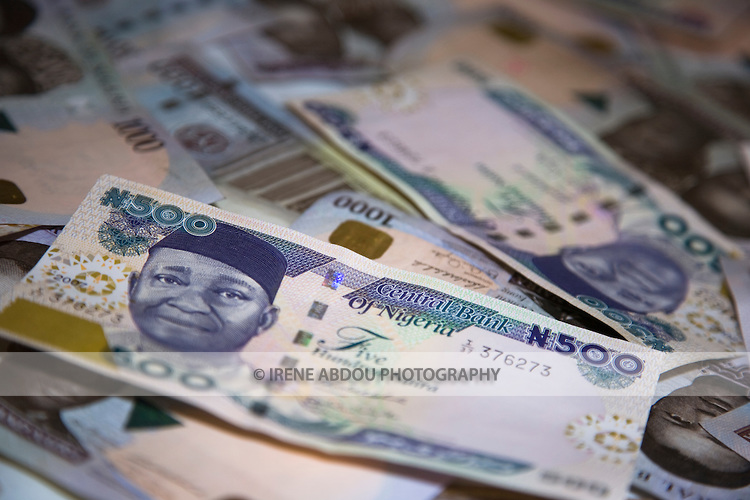
T-Bills Market Rebounds as Money Market Rates Shed 1.3%

By Dipo Olowookere
The treasury market traded bullish on Tuesday to reverse the bearish mood recorded at the market the previous day.
Business Post reports that bargain hunting embarked upon yesterday by investors at the market subdued the selloffs of Monday.
At the close of transactions, the prevailing buying pressure compressed the average yields by 0.03 percent to 12.16 percent.
However, activities at the treasury market are expected to be muted on Wednesday as market participants focus on sale of the government securities via the primary market auction.
The Central Bank of Nigeria (CBN), which will conduct the exercise today, will offer N3.38 billion worth of 91-day bill, N10 billion worth of 182-day bills and N20 billion worth of 364-day bills to investors.
According to analysts at Zedcrest Research, the stop rates are expected to clear between 10.50-11 percent, 10.90-11.20 percent and 11.50-12.00 percent for the 91-, 182- and 364-day bills respectively.
Meanwhile, the average money market rates declined on Tuesday by 1.31 percent to settle at 10.78 percent in the absence of liquidity tightening activities by the CBN.
While the Open Buy Back (OBB) rate reduced to 10.38 percent from 11.45 percent, the overnight (OVN) rate declined to 11.17 percent from 12.42 percent.
However, the funding rates are expected to remain stable today as there is no anticipated significant pressure on system liquidity.







By Aduragbemi Omiyale
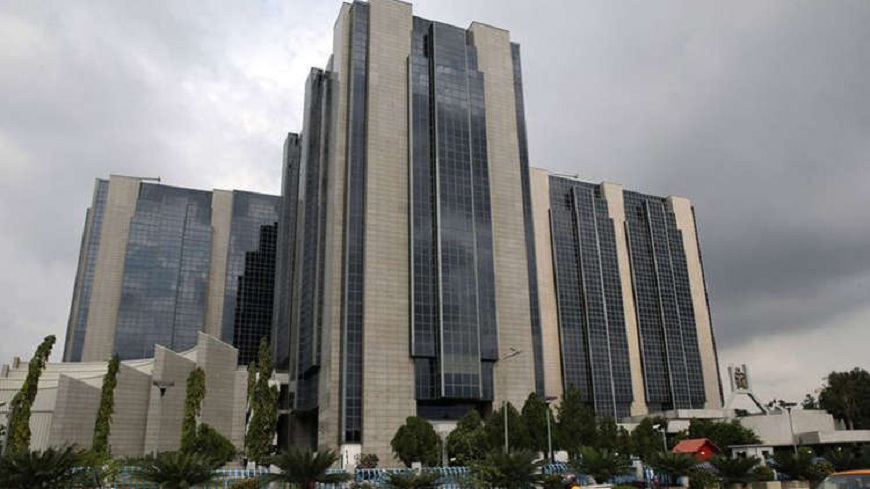
The N6.3 billion shares of Ellah Lakes Plc converted from debt to equity have been listed on the Nigerian Exchange (NGX) Limited.
Instead of paying its creditors N6.3 billion loans in cash, Ellah Lakes triggered the option of paying back in equities.
According to a notice from NGX Regulation Limited on Tuesday, the company gave the creditors a total of 2,252,142,858 ordinary shares of 50 Kobo at a unit price of N2.80, amounting to N6.306 billion.
The listing of these additional stocks of Ellah Lakes has raised its total issued and fully paid-up shares to 6,110,316,536 ordinary shares of 50 Kobo each from 3,858,173,678 ordinary shares of 50 Kobo each.
“Trading licence holders are hereby notified that additional 2,252,142,858 ordinary shares of 50 Kobo each of Ellah Lakes Plc were today, Tuesday, June 23, 2026, listed on the daily official list of Nigerian Exchange Limited.
“The additional shares listed on NGX arose from Ellah Lakes Plc’s conversion of N6,306,000,000.00 debt-to-equity.
“With this listing of the additional 2,252,142,858 ordinary shares, the total issued and fully paid-up shares of Ellah Lakes Plc has now increased from 3,858,173,678 to 6,110,316,536 ordinary shares of 50 Kobo each,” the circular signed by Bonaventure Onwuji for the Head of Issuer Regulation Department stated.


By Adedapo Adesanya
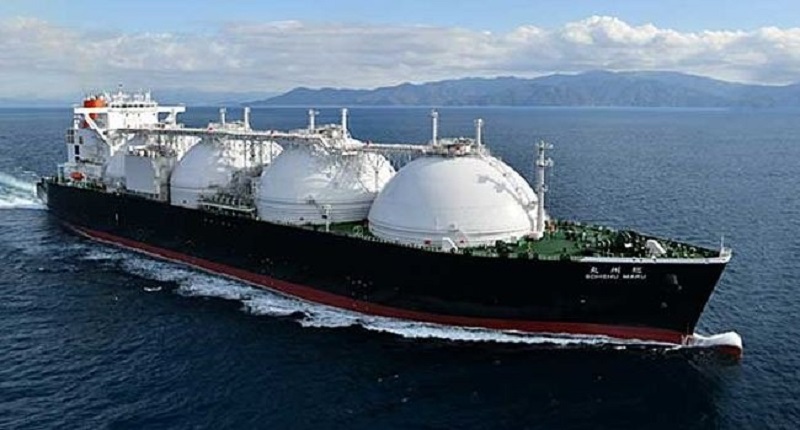
The Federal Ministry of Petroleum Resources has conscripted the Department of State Services (DSS), the Economic and Financial Crimes Commission (EFCC), and the Nigeria Police Force to address the hoarding and diversion of Liquefied Petroleum Gas (LPG), also known as cooking gas, to neighbouring countries.
A statement by the Nigerian Midstream and Downstream Petroleum Regulatory Authority (NMDPRA) on Monday stated that the move followed the recent increase in LPG (cooking gas) prices and developed coordinated measures to improve supply, affordability, and market stability across the country.
Business Post reports that in recent weeks, prices of the fuel have gone as high as N2,400 per kg in some areas in Lagos and Ogun State, but have since dropped to around N1,900 and N2,000 in the last few days.
In a statement by the Nigerian Midstream and Downstream Petroleum Regulatory Authority (NMDPRA) on Monday, the meeting also brought together other key government officials, regulators, producers, marketers, terminal operators, and industry associations to examine factors contributing to rising LPG prices and agree on practical interventions to strengthen the value chain.
Speaking at the engagement, the Permanent Secretary, Ministry of Petroleum Resources, Mrs Patience Oyekunle, described LPG as a critical energy source for households and an important component of Nigeria’s energy transition agenda.
She noted that rising LPG prices are putting additional pressure on household budgets and increasing the cost of essential goods, stressing the need for collective action to improve access to affordable cooking gas.
While speaking at the meeting, the Minister of State for Petroleum Resources (Gas), Ekperikpe Ekpo, stated that President Bola Tinubu is concerned about the impact of rising LPG prices on Nigerians and has directed relevant agencies to take proactive steps to address the situation.
He emphasised that increased supply must be supported by efficient logistics, improved infrastructure, and transparent pricing mechanisms to ensure consumers benefit from interventions across the sector.
The chief executive of the NMDPRA, Mr Rabiu Umar, noted that high landing costs continue to influence cooking gas prices but expressed optimism that ongoing measures across the value chain would begin to ease market pressures in the coming weeks.
He added that the authority is working with producers and other stakeholders to increase domestic supply, strengthen market oversight, and support interventions that will improve availability.
By Adedapo Adesanya
The Nigerian National Petroleum Company (NNPC) Limited and Dangote Refinery imported a total of 38,000 barrels per day of petrol in May 2026 as the country returned actively to the importation of the fuel.
According to a report by Argus, gasoline (petrol) deliveries to Nigeria were a four-month high of 57,000 barrels a day in the review month.
This came after import permits were issued for the second quarter and market participants flagged maintenance works at independently-owned Dangote’s 700,000 barrels per day Lekki refinery.
The platform reported that petrol exports from Nigeria were 23,000 barrels per day, of which Dangote carried out 65 per cent of the product at 15,000 barrels per day.
This meant Nigeria returned to net gasoline importer status in the month, after net exporting 49,000 barrels per day in April and 6,000 barrels per day in March, citing Kpler data.
The sole destination of all Nigeria’s petrol imports in May came from Europe. A breakdown showed that Nigeria got 37 per cent (21,000 barrels per day) from Norway, Italy provided 16 per cent (9,000 barrels per day), and France covered 14 per cent (8,000 barrels per day).
Out of the 57,000 barrels per day of product brought into the country, Dangote Refinery bought 27,000 barrels per day while the state-owned NNPC brought in 11,000 per day.
Argus, citing Kpler, said the buyer or buyers of the remaining 19,000 barrels per day. These were likely independent marketers who were issued import licenses during the month.
This means Dangote remains the top petrol producer and importer in the country. The refinery owner brought in 29,000 barrels per day of the 67,000 barrels per day total petrol imports in January-May.
According to the Argus report, Nigerian petrol imports have been elevated so far in June, with license holders likely to exercise their allocations before expiry at month-end. AA Rano has landed 56,000 barrels per day, and NNPC has imported 121,000 barrels per day. The 177,000 barrels per day of petrol cargo arrivals in June to date are three times higher than in May and up from 140,000 barrels per day in June 2025.

-
 Feature/OPED6 years ago
Davos was Different this year
-
Travel/Tourism10 years ago
Lagos Seals Western Lodge Hotel In Ikorodu
-

 Showbiz3 years ago
Estranged Lover Releases Videos of Empress Njamah Bathing
-
 Banking8 years ago
Sort Codes of GTBank Branches in Nigeria
-

 Economy3 years ago
Subsidy Removal: CNG at N130 Per Litre Cheaper Than Petrol—IPMAN
-

 Banking3 years ago
Sort Codes of UBA Branches in Nigeria
-

 Banking3 years ago
First Bank Announces Planned Downtime
-

 Sports3 years ago
Highest Paid Nigerian Footballer – How Much Do Nigerian Footballers Earn