
World
Russia Reaffirms Commitment to Help Solve Endless Conflicts in Africa

By Kester Kenn Klomegah
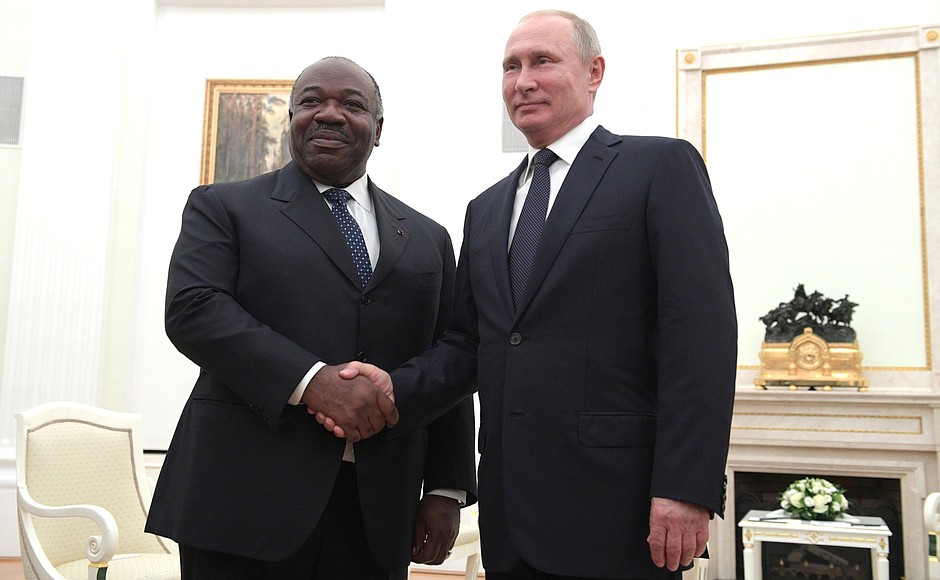
On July 14, 2018, Russian President, Mr Vladimir Putin, warmly received two African leaders, Gabonese Ali Bongo Ondimba and Sudanese Omar al-Bashir, within the framework of the 2018 FIFA World Cup.
The two were on a three-day working visit part of which was to attend in the FIFA World Cup final match between France and Croatia at Luzhniki Stadium in Moscow. Together 12 presidents, prime ministers and many high-ranking representatives of foreign states attended the final match.
While meeting them separately in the Kremlin, Putin reaffirmed Russia’s role in and support for solving endless conflicts specifically in Central African Republic (CAR) and in Sudan, and other regional conflicts in parts of Africa. The meetings were also to consolidate the existing diplomatic relations.
Despite its significant mineral deposits and other resources, such as uranium reserves, crude oil, gold, diamonds, cobalt, lumber and as well as significantly large arable land, the CAR is among the ten poorest countries in the world.
Nearly 90% is among the most impoverished of the estimated population of around 4.6 million as of 2016. CAR has been engulfed in political and ethnic conflict.
“There is naturally a lot of work to do for us, including the regional settlement in Central Africa. We know that Gabon takes the most active part in this, making a significant contribution to this joint work,” he stressed at the meeting with Ali Bongo.
In this context, Gabon is now chairing the Economic Community of Central African States and this community or regional organization is directly involved in settling the conflict in the Central African Republic.
Gabon bordered by Equitorial Guinea to the west, Cameroon to the north and Republic of Congo on the east and south, and the Gulf of Guinea to the west. Since its independence from France in 1960, Gabon has had three presidents.
Abundant petroleum and foreign private investment have helped make Gabon one of the most prosperous countries in sub-Sahara Africa. Gabon’s economy is dominated by oil. Oil revenues constitute roughly 46% of the government’s budget, 43% of the gross domestic product (GDP), and 81% of exports.
During the meeting, Ali Bongo argued that “Russia is a huge country, which has enormous capabilities and which can, of course, contribute a lot to the continent. Everyone talks about Africa today, from most various angles. The continent is rich in resources, and we observe how many major states fight each other to gain access to these resources.”
From above statement, Ali Bongo was encouraging the Kremlin authorities, flex muscles to face risks and high competition, in order to raise Russia’s economic profile on the continent to match with its global status. As already known, African countries have seriously adopted “economic diplomacy” and are looking to find pragmatic solutions to issues relating to infrastructure development, foreign trade and investment cooperation.
The transcript posted to Kremlin official website did not say anything about oil business, but understandably, Russia seeks to cooperate in this sphere.
The Kremlin press service said that trade between Russia and Gabon doubled in 2017 to $47.7 (from $29.1 in 2016). Last October, Russia’s oil giant Rosneft signed a profile protocol of understanding with Gabon’s Oil and Hydrocarbon Ministry.
In June 2017, Zarubezhneft and the Gabonese oil company signed a Memorandum of Understanding – a framework agreement on key aspects of cooperation, including joint exploration of deposits and construction of oil and gas facilities in Gabon.
In his discussion with Putin, Al-Bashir noted that Russia and Sudan relations really demonstrated positive dynamics. “As for the economic sphere, we are developing a programme to share information and opinions on how we can develop these relations. Russian companies, including those producing mineral resources, actively work in Sudan. There will also be a meeting devoted to the agricultural sphere in September,” the Sudanese leader said.
Sudanese leader hopes to start tourist exchanges soon. He also encourages the participation of Russian oil and gas companies so that they would work in Sudan.
There are positive shifts in the military-technical sphere and in military cooperation. “We see big exchanges between specialists of Russia and Sudan. A big number of Russian specialists work in our country and this is why we highly praise the role that your country plays in preparing Sudanese military personnel,” Al-Bashir told Putin.
In fact, Putin and Al-Bashir last met and had a comprehensive business discussion November 2017 in Sochi. According to Kremlin website, the two sides have signed agreements and memos of understanding in the field of oil, gold mining, the peaceful use of nuclear power, higher education, external relations and agriculture.
In Sochi, Al-Bashir affirmed that Sudan is opening its doors for all countries and companies to invest in the country, indicating that Russian, Chinese and Arab companies are now operating in Sudan.
Interestingly, Al-Bashir has offered to help Russia in Africa. “Sudan has extensive ties in Africa and can help Russia develop relations with African countries. Sudan may become Russian’s key to Africa. We are a member of the African Union,” he promised Putin.
“We have great relations with all African nations and we are ready to help. We are also interested in developing relations with BRICS,” he concluded assertively. The BRICS group of emerging economies comprises Brazil, Russia, India, China and South Africa. South Africa will host a summit of BRICS countries on July 26-27.
Despite the fact that bilateral relations between Russia and with both Gabon and Sudan still below expectation, the three leaders Putin, Ali Bongo and Al-Bashir in their separate discussions expressed high optimism to take practical effective steps working towards its growth and sustainability.
It is worthy to note that Africa, indeed, has emerged as a playground for foreign powers especially Asian powers including China, India and Japan; each with its economic interests in the region and trying to expand its influence in strategic ways. In principle, all three leaders (Putin, Ali Bongo and Al-Bashir) have agreed that relations, in anyway, be developed in all directions between their individual states and Russia. *Kester Kenn Klomegah writes about Russia, Africa and BRICS.


World
Online African Women Conference: From Adaptation in Russia to Issues of Health and Spirituality

By Kestér Kenn Klomegâh
Women, generally, are fighting for their own empowerment in society. Gender equality dominates their activities, flexing their feminine muscles for higher positions, with men, in diverse professional aspects, including politics and entrepreneurial spheres of activity.
Such consistent struggle was backed by a collective declaration, worldwide observing March 8 as International Women’s Day. Until today, March 8 commemorates women’s fight for equality and liberation along with the women’s rights movement. In addition, the March 8 celebration focuses on issues such as gender equality, reproductive rights, and violence and abuse against women.
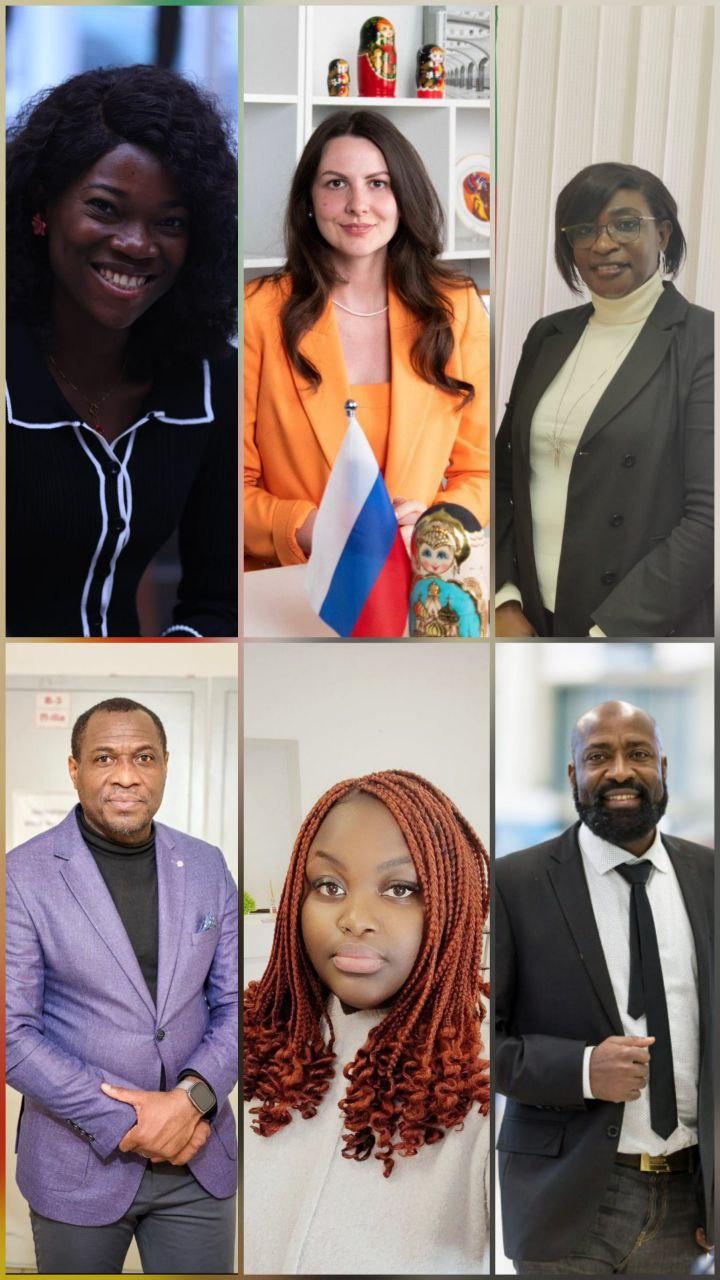
On the eve of March 8, the Cameroonian Diaspora (Diaspocam) and the “African Business Club” together with Russian women’s organisations, held a special online conference under the theme: “How to Succeed as a Woman in Russia”, which brought together over a hundred participants from different regions, including Africa.
The discussion was dedicated to the challenges of adaptation, career prospects, health, and spiritual security of a fast-growing number of young African women living in the Russian Federation. The conference was moderated by Louis Gouend, a specialist in business communications between Russia and Africa, President of the African Business Club, and an expert of the Council of Russia-Africa Cooperation under the State Duma, lower chamber of Russian legislators.
Louis Gouend congratulated the women participants while extending to them good health, wisdom, and new achievements. The main goal of the conference was to create a space of trust and exchange views on the full spectrum of women’s multidisciplinary approach to questions.
On adaptation and legislation: Alina Andrukh, Director of the International Department, spoke on the topic “Global Adaptation of Foreign Citizens in Russia.” She thoroughly examined educational trajectories for women, employment opportunities, and new legislative realities that foreign women need to consider when building a career in the Russian Federation.
The speaker further placed special emphasis on how to avoid getting into trouble, complying with Russian laws, and protecting one’s rights.
Health Without Barriers and Support Centres: One of the most anticipated speeches was given by Ekaterina Glok, a midwife by profession. In her presentation on “The Health of an African Woman in Russia,” she touched upon the delicate topics of reproductive and sexual health. The expert gave practical advice on how to overcome the language barrier and shyness when visiting a gynaecologist, and explained the specifics of the Russian healthcare system for foreign patients.
Ekaterina, however, reminded the women of the importance of regular medical check-ups: visiting a doctor, at least, once a year is necessary even in the absence of complaints. She informed the participants about the existence of support centres for women and single mothers, where they can turn to in difficult life situations. Additionally, the speaker announced her upcoming working missions in the Republic of Cameroon, planned for May 2026, and gave many practical tips on maintaining women’s health.
Social and Cultural Challenges – Warning About Dangers: An important block of questions concerning safety and conscious motherhood was highlighted by Mme Zima épouse Ndong Toung Celestine Charlotte, Cultural Advisor at the Embassy of Cameroon. She had a frank conversation, warning the girls about scammers and dishonest individuals offering attractive working conditions, behind which often lie indecent earnings and dangerous situations.
The Advisor reminded that for those who came to Russia to study, education should remain their main priority. She urged lady students to be vigilant, not to give in to dubious offers, and to postpone questions of pregnancy and starting a family to a later period, after completing their studies. She touched upon the legal and moral aspects of unwanted pregnancy, calling on the girls to engage in conscious life planning.
Economic Independence and Earning Opportunities: Luciana Tchami, a member of the executive bureau of Diaspocam, a non-profit social organisation, presented a report on “Women’s Capabilities: Professions and Part-Time Jobs for Young Women in Russia.” She gave examples of successful strategies for earning money and building a career within the conditions of the Russian labour market that are accessible to foreign students and young professionals.
The speaker detailed specific areas of work: young women can take short-term training courses and work in beauty salons (manicure, pedicure); many cafes and restaurants offer convenient part-time jobs. Luciana also mentioned specialised websites with attractive conditions for job seekers and opportunities for remote work: becoming a freelancer and helping with tasks online, for online stores, and in other areas.
Spiritual Support: A Reminder of a Woman’s Value. The conference concluded with Pastor Gustave Mbeng, responsible for charity at Diaspocam. His prayer-speech was dedicated to women’s rights and spiritual awakening. As a pastor, Mbeng reminded the participants that woman is the last and most ideal creation of God, perfect in all parameters of the universe. He emphasised that women are more beautiful and harmonious than men, and urged the girls to take care of themselves and not to distance themselves from God, so that there would be fewer difficulties and questions in life.
Pastor Gustave further paid special attention to the theme of preserving life. He took a stand against abortion, reminding that every child is a creation of God, and in the eyes of the Almighty, there is no such concept as abortion. If pregnancy does occur, it is important to preserve the child’s life and trust in God’s providence.
Technical organisation, moderation, translation and coordination of the conference were provided by Iness Zengue Abeng, President of the Association of International Students “Russia-Africa,” and Belle-Grâce Euphrasie, Dean, who acted as interpreter during the online event.
Conclusion and Future Plans: At the end, Louis Gouend extended gratitude to all participants, speakers, and presenters for the warm and trusting atmosphere.
The conference was held in an open dialogue format on the”Yandex Telemost” platform, which allowed women from different parts of Russia to ask questions live and receive moral support. Following the meeting, the organisers decided to hold such an online gathering, including organising a series of meetings not only for women but also for foreigners living in Russia.
The topics of future conferences will aim at education, open discussions, and debate on issues important for Africans in the Russian Federation: knowing one’s rights, being able to avoid unpleasant situations, behaving correctly in difficult life circumstances, and preserving cultural and spiritual identity.
Until now, prejudice and reactionary attitudes have denied full-fledged civic rights to millions of women, who are considered as workers, mothers, family partners, and citizens worldwide. Nevertheless, International Women’s Day, with its chequered history, is a public holiday in several countries. The United Nations observes the holiday in connection with a particular issue, campaign, or theme in women’s rights across the world.
By Kestér Kenn Klomegâh
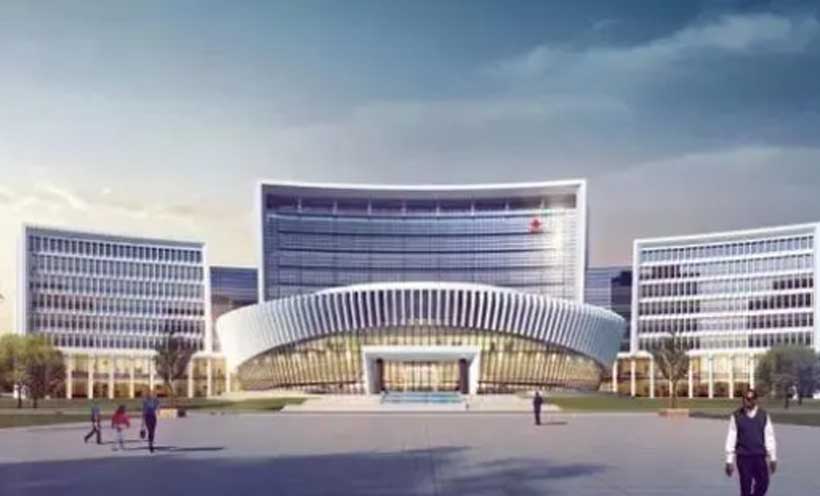
Beijing’s decades-long policy decision to expand Chinese presence in Africa has, largely, transcended into gifting buildings. The African Union and Africa’s CDC to Zimbabwe’s parliamentary village, Ghana’s Foreign Ministry headquarters, and Egypt’s sports stadium, among many others, are classic examples. Following all these, China will hand over the new headquarters of the Economic Community of West African States (ECOWAS) in mid-March 2026.
Since the turn of the 21st century, China has risen to become Africa’s geopolitical partner, addressing concrete infrastructural projects across the continent. As is well-known, Beijing does so, with the sole aim of spending thousands of dollars to gain strategic control of the continent’s critical resources.
In an official news release, the regional bloc’s president, Dr Omar Alieu Touray, said that the new headquarters complex in Abuja, Nigeria, which will house the Commission, Parliament, and Court of Justice of the Economic Community of West African States (ECOWAS), will be operational in March 2026.
Built on a 7-hectare site along the road to Abuja airport, the building is currently completed. Known as the ‘Eye of West Africa,’ the new ECOWAS headquarters complex is entirely funded and built by the People’s Republic of China through the China International Development Cooperation Agency (China Aid).
It is a modern and functional administrative building, designed to meet the needs of the West African organisation. It will provide services to create a favourable working environment for the community’s staff members. The new complex comprises a main administrative building with three restaurants/cafeterias, banking rooms, a crèche, a gym, and three blocks containing 899 workstations: block A (central) has 11 floors, and blocks B and C have eight floors each.
It also includes a multipurpose building with security facilities, shops, a water tank, and archive rooms, as well as car parks with a total capacity of 702 parking spaces, a 720-seat auditorium, two committee rooms, a conference room, an equipment room, guard posts, and a helipad.
The new ECOWAS headquarters complex is seen as a symbol of the strengthening cooperation between China and the regional organisation. It is part of a technical and institutional partnership aimed at further supporting ECOWAS’ operational capacities, as well as part of ongoing cooperation between the two parties.
Accordingly, the headquarters complex will enable greater operational efficiency, reduced costs, and increased staff productivity. ECOWAS has expressed deep gratitude and sincere appreciation to China for its commitment and support to the regional organisation through the construction, seen as a ‘symbol of Beijing’s steadfast commitment to West African integration.’
By Dipo Olowookere
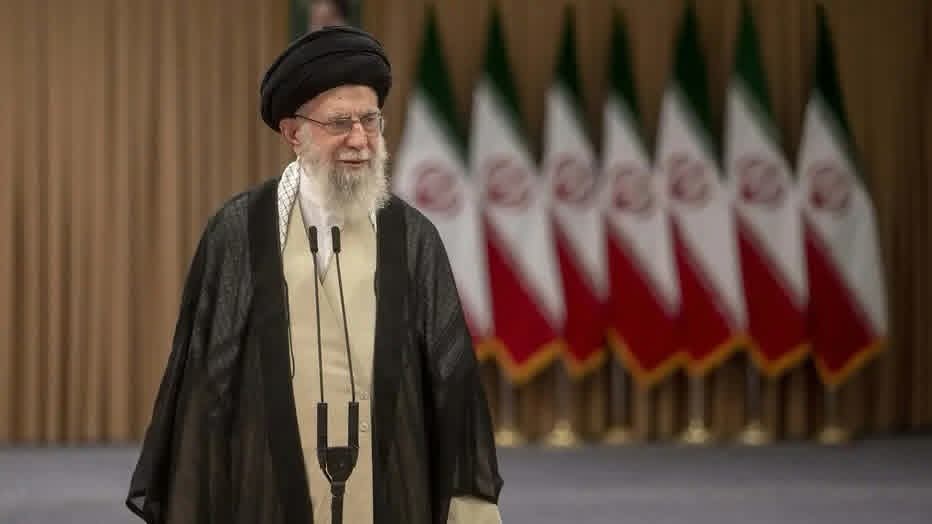
Iranian Supreme Leader, Mr Ayatollah Ali Khamenei, has died after coordinated airstrikes carried out by the United States and Israel on Tehran on Saturday morning.
His death was confirmed on Sunday morning by Iranian state media, which also disclosed that his daughter and grandchild were among those killed in the bombardment, which destroyed his compound.
Mr Khamenei was killed during a meeting with top leaders of the Middle East country yesterday, including the Defence Minister Amir Nasirzadeh and Revolutionary Guard commander Mohammad Pakpour, who reportedly died too.
His elimination has sparked mixed reactions, with some Iranians on the streets celebrating his demise, and others condemning the joint air strikes.
The President of the United States, Mr Donald Trump, described the late Iranian leader as “one of the most evil people in history,” expressing satisfaction at the action, which he said was “successful,” as it represented justice for both Iranians and Americans.
Meanwhile, Tehran has vowed to further respond to the attacks after initially firing missiles at six neighbours, including Qatar, Saudi Arabia, Kuwait, UAE, Bahrain, and Jordan.
Flight operations in the region have been disrupted because of the retaliatory action of Iran over the weekend, though most of the missiles were intercepted.






-
 Feature/OPED6 years ago
Davos was Different this year
-
Travel/Tourism10 years ago
Lagos Seals Western Lodge Hotel In Ikorodu
-

 Showbiz3 years ago
Estranged Lover Releases Videos of Empress Njamah Bathing
-
 Banking8 years ago
Sort Codes of GTBank Branches in Nigeria
-

 Economy3 years ago
Subsidy Removal: CNG at N130 Per Litre Cheaper Than Petrol—IPMAN
-

 Banking3 years ago
Sort Codes of UBA Branches in Nigeria
-

 Banking3 years ago
First Bank Announces Planned Downtime
-

 Sports3 years ago
Highest Paid Nigerian Footballer – How Much Do Nigerian Footballers Earn