
Economy
Nigeria Has $1.92b in Excess Crude Account—Minister

By Modupe Gbadeyanka
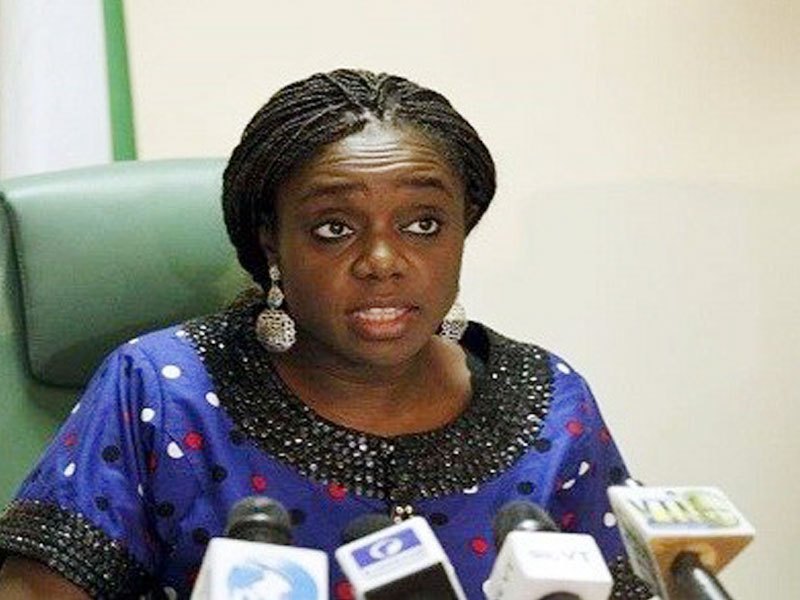
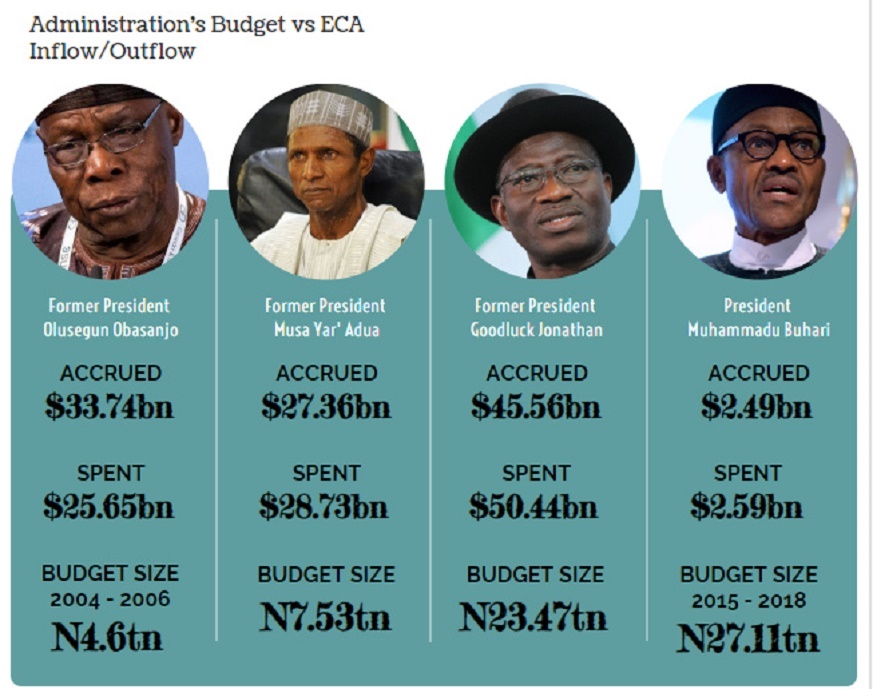
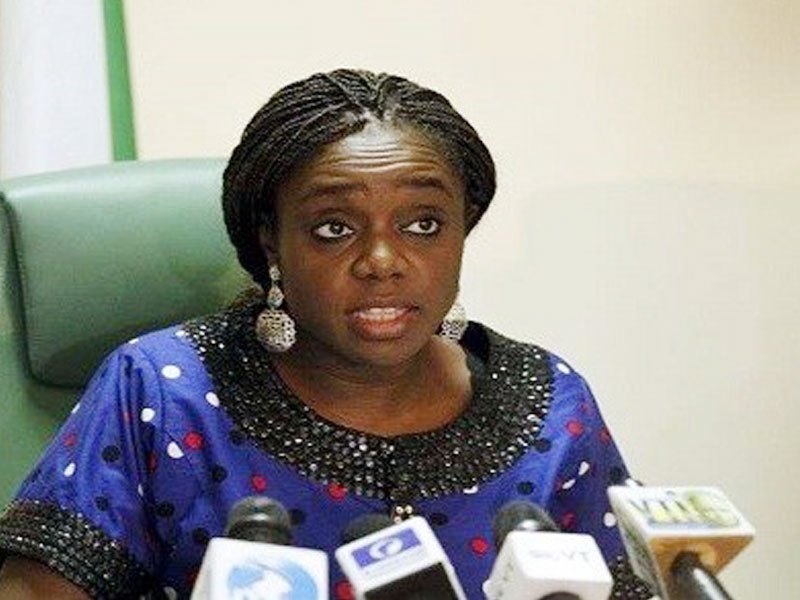
Minister of Finance, Mrs Kemi Adeosun, on Thursday disclosed that the balance left in the nation’s Excess Crude Account (ECA) is $1.916 billion.
Addressing journalists in Abuja yesterday, Mrs Adeosun said with oil price at $76 per barrel in the spot market and Bonny Light at about $78, government wanted to be saving aggressively into the ECA because the window of relatively high oil price might not last.
She said while the ECA has $1.916 billion, the Stabilisation Fund has N18.892 billion, and the Natural Resources Fund, N133.715 billion.
According to her, an additional credit of $80.6 million was saved into the ECA by federal government in May 2018.
Mrs Adeosun, who spoke with newsmen at the end of the National Economic Council (NEC) meeting on Thursday, said the council has appointed a committee of Kaduna, Kogi, Ebonyi and Lagos State Governors to review the administration and operation of the Stabilisation Fund Account.
On the Federation Account and Allocation Committee (FAAC) meeting which ended in deadlock on Wednesday as a result of inability of the Nigerian National Petroleum Corporation (NNPC) to properly reconcile its accounts, the Minister said efforts were underway to resolve the issues.
“Remember that the FAAC figures have to be formally accepted by the federation account committee and we were simply not comfortable with the quantum of some of the deductions made and, therefore, we could not approve those figures,” the Minister said.
According to her, the NNPC is run like a business and it was proper for the state-owned oil agency to give proper account of its expenditure.
She said President Muhammadu Buhari and Vice President Yemi Osinbajo have been briefed of outcome of the inconclusive meeting, expressing confidence that another meeting should be conveyed very soon.
“In my capacity as the chairman of FAAC, I briefed governors on the deadlock that we have got currently in the Federation Account and explained what happened. There was quite an extensive debate on what to do.
“For the purpose of this briefing, we operate the NNPC as a business. We have invested public capital in that business; and we have expectations of return. And when that return falls lower than our expectations, then the owners of this business, which in this case are the Federal Government and states, need to act.
“So, that was what caused the deadlock yesterday (Wednesday) and we really felt the figures the NNPC was proposing for FAAC were unacceptable. We felt that some of the costs couldn’t be justified, and so we have decided that rather than approve the accounts, we will go back and do further work,” Mrs Adeosun said.
She told newsmen further that, “Further negotiations and interactions are going on with the NNPC as we speak. However, we did brief both Mr President and Mr Vice President on the deadlock and asked for their support and their forbearance in this, because the consequence of this is that salaries might well be delayed in many states as a result of this.
“But we feel that in order to get to the accurate figures that we need, we have asked for forbearance and the governors and the Federal Government are all in agreement that we need to get to the bottom of those figures.”
“So, even as we speak, there is an interface going on among the Commissioners of Finance Forum, Ministry of Finance, Office of the Accountant-General, the CBN and the NNPC. We hope to be able to convene FAAC within the next few days,” she noted.
She said, “Based on oil price and oil quantity, you can calculate what you are expecting to see in the Federation Account and if the figure is less, then the right question that any stakeholder must ask is why.
“So, we have been going back and forth with the NNPC to try and understand these figures before we can accept them.





By Adedapo Adesanya
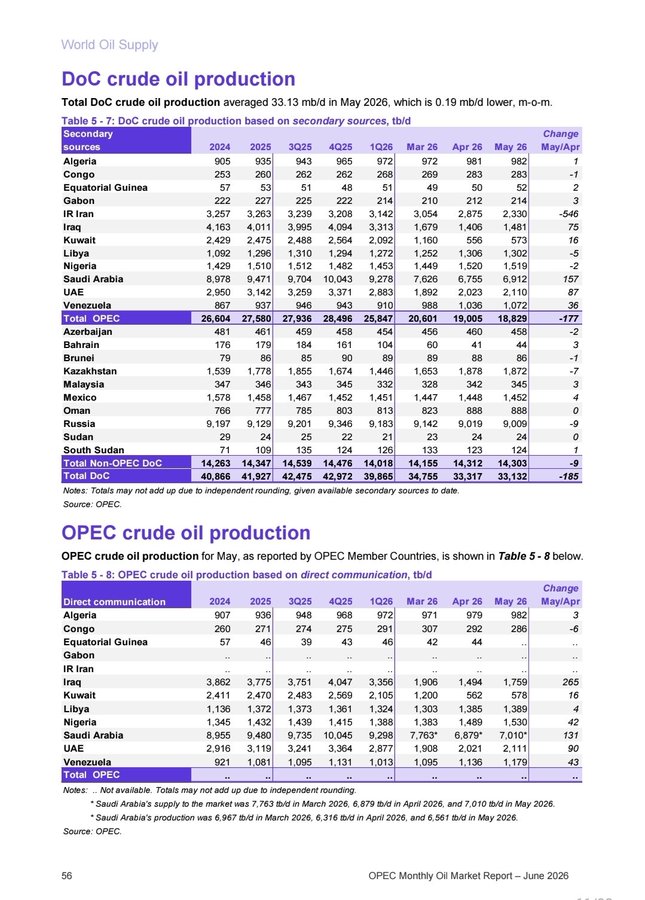
Nigeria produced about 1.530 million barrels of crude oil per day in May 2026, beating its Organisation of Petroleum Exporting Countries (OPEC) quota by 42,000 barrels per day. In the preceding month, the country only produced 1.489 million barrels per day.
In the latest OPEC’s Monthly Oil Market Report (MOMR), it was also revealed that Iraq in April supplied 1.494 million barrels per day while in May, it produced 1.759 million barrels per day, an increase 265,000 barrels per day; Saudi Arabia, 6.879 million barrels per day in April, 7.010 million barrels per day in May, an increase of 131,000 barrels per day; United Arab Emirate (UAE), 2.021 million barrels per day in April and in May 2.111 million barrels per day, an increase of 90,000 barrels per day while Venezuela, 1.136 million barrels per day in April and 1.179 million barrels per day in May, an increase of 43,000 barrels per day.
Using secondary sources, Nigeria’s production decreased from 1.520 million barrels per day in April to 1.519 million barrels per day; Saudi Arabia, 6.755 million barrels per day in April and 6.912 million barrels per day in May; UAE, 2.023 million barrels per day in April, 2.110 million barrels per day in May; and Venezuela, 1.036 million barrels per day in April and 1.072 million barrels per day in May.
Nigerian Upstream Petroleum Regulatory Commission (NUPRC), in a statement by its Head, Media and Corporate Communications, Mr Eniola Akinkuotu, confirmed that Nigeria, in May, met 102 per cent of OPEC quota as production hit an 11-month high.
According to it, Nigeria’s oil production witnessed an upswing in May 2026, averaging 1,530,354 barrels of crude oil and 170,446 barrels of condensates per day, bringing the total combined production to 1, 700, 800 barrels per day and consolidating Nigeria’s position as Africa’s largest oil producer.
It stated that the average crude oil production recorded in May represents 102 per cent of Nigeria’s 1.5mbpd of production quota allocated by OPEC.
It explained that production performance during the review period remained robust, with combined crude oil and condensate output ranging between a low of 1.51 million barrels per day and a peak of 1.86 million barrels per day.
The organisation added that the May 2026 production figures represented the highest recorded by Nigeria since July 2025, when output surged to 1,712,282.
NUPRC said: “In strict crude oil terms (excluding condensates), the 1.53 million barrels recorded in May 2026 represents the highest Nigeria has witnessed since January 2025 when crude oil production hit 1.538 mbpd.”
“On a month-on-month basis, production rose by 2.77 per cent in May 2026 as against 1.48mbpd in April. The broader production trend over the last five months has also remained positive.
“Combined crude oil and condensate output increased from 1.48 mbpd in February to 1.54 mbpd in March, 1.66 mbpd in April, and then 1.7 mbpd in May, underscoring sustained growth in Nigeria’s hydrocarbon production levels.
“Among production streams, Bonny Terminal led the pack with a total blend of 293,870 bpd, closely followed by Forcados Terminal at 289,900 bpd. Qua Iboe ranked third with 173,360 bpd, while Escravos Oil Terminal contributed 135,470 bpd. Odudu (Amenam Blend) completed the top five production streams, accounting for 63,250 bpd during the month under review.”
The commission attributed the rise in production to a sustained positive momentum as operations remained stable throughout the reporting period with no significant pipeline or facility outages recorded.

By Adedapo Adesanya
The NASD Over-the-Counter (OTC) Securities Exchange broke a three-day losing streak after it gained 1.04 per cent on Thursday, June 11, on the back of a strong showing by Central Securities Clearing System (CSCS) Plc.
The Nigerian securities depository company recorded a N5.61 growth during the session to finish at N83.93 per share compared with the previous day’s N78.32 per share.
The rise in the share price of the company overpowered the losses printed by three other securities at the close of business.
Consequently, the market capitalisation of the trading platform went up by N26.68 billion to N2.617 trillion from N2.590 trillion, and the NASD Unlisted Security Index (NSI) closed higher by 44.89 points to 4,375.01 points from 4,330.12 points.
Yesterday, Nitrox Industrial Gases Plc declined by N2.38 to N21.48 per unit from N23.80 per unit, UBN Property Plc went down by 13 Kobo to N1.98 per share from N2.11 per share, and MRS Oil Plc dropped 10 Kobo to close at N158.00 per unit, in contrast to Wednesday’s closing price of N158.10 per unit.
The volume of securities transacted by investors during the session significantly went up by 2,558.6 per cent to 3.1 million units from 117,374 units, and the value of securities traded improved by 463.1 per cent to N68.5 million from the preceding session’s N12.2 million, while the number of deals moderated by 37.2 per cent to 27 deals from 43 deals.
At the close of business, Great Nigeria Insurance (GNI) Plc was the most traded stock by value on a year-to-date basis, with 3.4 billion units traded for N8.4 billion, followed by Infrastructure Credit Guarantee (Infracredit) Plc with 2.3 billion units transacted for N6.5 billion, and CSCS Plc with 65.9 million units sold for N4.5 billion.
GNI Plc remained the most traded stock by volume on a year-to-date basis, with 3.4 billion units exchanged for N8.4 billion, followed by Infracredit Plc with 2.3 billion units valued at N6.5 billion, and Resourcery Plc with 1.1 billion units worth N415.7 million.


By Dipo Olowookere
The key performance indices of the Nigerian Exchange (NGX) Limited moderated by 0.05 per cent on Thursday as a result of selling pressure by investors.
The sell-offs were mainly from the consumer goods and banking sectors, which contracted by 0.23 per cent and 0.17 per cent, respectively.
It was observed that the insurance counter closed higher by 0.73 per cent, the energy index appreciated by 0.10 per cent, and the industrial goods space was up by 0.09 per cent.
However, they could not prevent the bourse from crumbling at the close of business.
As a result, the All-Share Index (ASI) shrank by 113.47 points to 244,738.74 points from 244,852.21 points, and the market capitalisation slipped by N73 billion to N156.970 trillion from N157.043 trillion.
International Energy Insurance crashed by 10.00 per cent to N7.11, May and Baker stumbled by 8.51 per cent to N43.00, Tripple Gee contracted by 8.47 per cent to N4.00, Abbey Mortgage Bank slumped by 7.69 per cent to N11.40, and AXA Mansard dipped by 6.67 per cent to N12.60.
Conversely, Consolidated Hallmark improved by 10.00 per cent to N8.25, Learn Africa surged by 10.00 per cent to N11.00, Nigerian Enamelware was elevated by 10.00 per cent to N40.70, University Press chalked up 10.00 per cent to finish at N5.50, and ABC Transport gained 8.25 per cent to end at N7.80.
A total of 31 stocks were on the gainers’ chart, and 33 stocks were on the losers’ table, indicating a negative market breadth index and bearish investor sentiment.
On the activity chart, market participants bought and sold 1.7 billion equities valued at N52.8 billion in 49,807 deals, in contrast to the 1.2 billion equities worth N38.8 billion traded in 54,193 deals at midweek. This showed that the trading volume was up by 41.67 per cent, the trading value was up by 36.08 per cent, and the number of deals was down by 8/09 per cent.
The most active stock yesterday was FCMB with a turnover of 584.7 million units worth N5.9 billion, Access Holdings sold 579.8 million units for N14.0 billion, UBA exchanged 107.0 million units valued at N4.6 billion, NGX Group transacted 49.1 million units worth N6.7 billion, and AIICO Insurance traded 30.1 million units for N134.2 million.
-
 Feature/OPED6 years ago
Davos was Different this year
-
Travel/Tourism10 years ago
Lagos Seals Western Lodge Hotel In Ikorodu
-

 Showbiz3 years ago
Estranged Lover Releases Videos of Empress Njamah Bathing
-
 Banking8 years ago
Sort Codes of GTBank Branches in Nigeria
-

 Economy3 years ago
Subsidy Removal: CNG at N130 Per Litre Cheaper Than Petrol—IPMAN
-

 Banking3 years ago
Sort Codes of UBA Branches in Nigeria
-

 Banking3 years ago
First Bank Announces Planned Downtime
-

 Sports3 years ago
Highest Paid Nigerian Footballer – How Much Do Nigerian Footballers Earn