

Banking
How Safe Are Customer Deposits at FCMB?

By Dipo Olowookere
A bank is a financial institution that accepts deposits, which could be in form of cash or valuables, from the public with intention of keeping them safe for the owners.
However, when an institution that is supposed to be the safest place to keep valuables is riddled with stories of alleged fraudulent activities, then one must begin to wonder if the hard-earned deposits in their care are still safe.
Early this year, a report by the Nigeria Deposit Insurance Corporation (NDIC) had revealed that the number of employees of banks operating in Nigeria involved in malpractices in the financial sector increased in 2017 to 320 from 231 in 2016.
The report also documented other miscellaneous crimes such as fraudulent transfers/withdrawals, cash suppression, unauthorised credits, fraudulent conversion of cheques, diversion of customer deposits, diversion of bank charges, presentation of forged or stolen cheques, among others.
It had disclosed that the 22 licensed commercial banks and four merchant banks rendered 286 returns on dismissed/terminated staff as a result of fraud and forgeries during the year under review.
NDIC had said out of the 26,182 fraud cases reported by the 26 licensed banks, 320 cases were attributable to internal collaboration by bank staff.
The report relied on a total of 286 responses received from 26 banks during the period under review.
“The 286 responses received from banks in 2017 cited 26,182 cases of fraud and forgeries which is 56.30% higher compared to 16,751 cases reported in 2016.
“Similarly, the amount involved in the fraudulent activities documented increased by N3.33 billion from the N8.68 billion reported in 2016 to N12.01 billion in 2017 or 38%.
“However, the Expected/Actual loss slightly decreased by N24.42 million or 1.03% from N2.39 billion in 2016 to N2.37 billion in 2017,” Head of Communications and Public Affairs Unit of NDIC, Mr Mohammed Kudu Ibrahim, had said.
On fraudulent activities in the online-banking and ATM/card-related fraud-types, Mr Ibrahim said it constituted 24,266 or 92.68 percent of all the reported cases, resulting in N1.51 billion or 63.66 percent loss in the industry in 2017.
In recent times, there have been unpalatable news stories coming out from First City Monument Bank (FCMB), a mid-tier lender in Nigeria.
Recently, it was reported that eight members of staff of the bank were declared wanted by police in Lagos over the disappearance of N600 million from accounts of customers of FCMB.
The Divisional Police Office, Lion Building, Campbell Street at the Lagos Island had urged members of the public with information of the fleeing suspects to get in touch with the nearest police station or call 08033068667 and 08182465467.
The names of the bankers declared by the police were Linda Natufe Chekwube, Matthew Akpan Benny, Juwon Faromoh, Oluwasoji Ajetumobi, Ogunlaja Olasukanmi Ganiyu, Oshiojum Chibuzor Wilson, Akanaga Christian Chika and Nelson Omuzagha.
Recall that on January 19, 2018, two officials of the bank identified as Walter Ekomaye and Ebenezer Adelowo, were arraigned for allegedly making illegal withdrawal of N23 million from customers’ accounts and stealing N17.5 million from Automated Teller Machine (ATM) deposits.
In another case, a staff of FCMB known as Adejare Sonde was arraigned recently over the theft of N124 million from a depositor’s account.
Operatives of the Economic and Financial Crimes Commission (EFCC), in Ibadan Zone, arraigned the suspect before Justice A. A. Akinyemi of the State High Court sitting in Abeokuta, Ogun State, on a 12-count charge bordering on stealing, forgery and uttering.
Sonde was accused of using his position as the account officer to a micro-finance bank to steal N124 million from the customer’s account.
The petitioner explained that Sonde, as account officer of the customer, allegedly collected cash from the micro-finance bank on several occasions totalling N124 million which were not credited into the customer’s account.
Further investigations revealed that the defendant (Sonde) allegedly doctored emails which he sent to the micro-finance bank as monthly statements of account, while there was no remittance in the account.
Few weeks ago, a Federal High Court sitting in Lagos ordered FCMB and United Bank for Africa (UBA) Plc to appear before it to explain their roles in an alleged N131.2 million fraud charge.
Justice Hadiza Rabiu-Shagari gave the order during the trial of four accused persons, who were arraigned before her court by the Force Criminal Intelligence and Investigation Department (FCIID), Alagbon-Ikoyi, Lagos.
The four accused persons are: Honourable Anthony Alaka, (a.k.a General, a former member of the House of Representatives, representing Eti-Osa Federal Constituency, Saidi Oke, Bashir Mohammed: and Alhaji Umar Ali.
The four accused persons were arraigned on charges bordering on conspiracy and fraud to the tune of N131.2 million.
Also charged with the accused persons are two firms: Grantland Investment Nigeria Limited and Abroad Development Foundation.
At the resumed trial of the accused persons, the fraud victim, Austin Albert Ugochukwu, had informed the court the suspected fraudsters, carried out the alleged act through the three banks.
Consequently, the prosecutor, Dr Iman E., asked the court to summon the banks so that they can come and explain their roles in the alleged alleged fraud.
Upon the request of the prosecutor, Justice Rabiu-Shagari, summoned the banks and ordered that hearing notice should issue to them.
Narrating his ordeal before the court, the fraud victim, Ugochukwu, told the court how each of the accused persons induced him to give them the sum of N350 million in exchange for $1 million, and how they reneged only to give him $29, 900, 000.
In his evidence before the court, the victim said: “I transferred the sum of N350 million from my Bank account, to Grantland Investment Nigeria Limited, domiciled in UBA and FCMB, belonging to Alhaji Umar (fourth defendant), from my account. And since the money was paid, the fourth defendant refused to pick my calls, it was then I told my account officer to place post-no-debit order on the account, so that they would not be able to access the money.
“I was surprised, when the fourth defendant who have not being picking my calls, quickly called and said he was with the General (first accused) and was confirming the Dollars cash, and wanted to transfer the N350 million into the account of Grantland investment Limited, before General will allow him to bring the $1 million to me, but my account has been restricted, and told me to lift the restriction, so that he can come to me with the dollars”.
Ugochukwu said he refused the fourth accused person plea, but later yielded due to the intervention of one Dr. Cyraicus Anyawu, who is now at large, whom he said convinced him in Ibo language, and that he later called his account officer to lift the restriction.
He also told the court that after he lifted the restriction on his account, the second accused, Saidi Oke, only came to him with $29,199, USD, and promised to come on the next day with the balance of $870,100, but to his surprise, the second accused called and told him that he was at the Ikoyi office of the Economic and Financial Crimes Commission (EFCC), where a petition was written against him and seller of the Dollars.
Ugochukwu further told the court that while the other accused were arrested except first accused, they told him that he had been defrauded and he collapsed upon hearing that, and that when he regained his consciousness, they told him to withdraw the matter if he wanted to get his money back.
He also told the court how the men of Inspector-General of Police Monitoring Team (IGP monitoring) mounted pressure on the Area ‘J’ Command, Lagos, to transfer the matter to them in order to frustrate it, but added that the first accused, Honourable Alaka, who had been elusive while the case was in Lagos, was arrested.
These are few of the many negative stories of FCMB in the public domain, giving the financial institution a bad perception, which is might not merit.
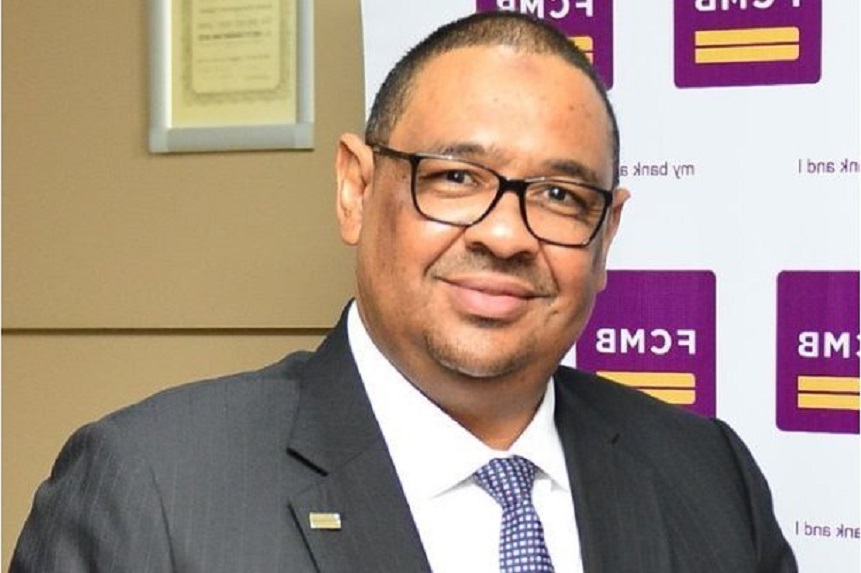
FCMB, led by Mr Adam Nuru, prides itself as one of the most reliable financial institutions in Nigeria, but issues like these leave many to doubt this claim.
Apart of cases of fraud, which have made some depositors of the lender to continue to wonder how safe their monies are, there are reports and allegations that the bank treats its workers like slaves, a claim Business Post has not independently verified and would not want to subscribe to.
However, one key question some may have asked is what FCMB is doing to ensure its bank is not a safe haven for fraudsters in banker’s clothes.
Business Post reached out to the management of FCMB on the issues raised in this piece.
In his reaction, Head of Media Relations at FCMB, Mr Louis Ibe, said “from all indications, no customer has shown any fear about the safety of his or her deposit and there’s no inquiry from any other person either, on the rumoured allegation in the Social Media you mentioned.”
He further said the financial institution was growing stronger, “reporting a gross revenue ofN169.9 billion” in the 2017 financial year.
“Going by the audited results, the Group recorded a profit before tax (PBT) of N11.5 billion, while profit after tax (PAT) was N9.4billion. Following these, the financial institution has recommended a dividend of 10 kobo per share to be paid to shareholders.
“And in demonstration of the enhanced confidence of customers in FCMB, deposits grew to N689.9 billion as at the end of December 2017, an increase of 5 percent, from N657.6 billion in the corresponding year.
“The Group’s capital adequacy ratio also improved to 16.9 5 percent from 16.7 5 percent, just as asset base increased to N1.19 trillion, compared to N1.17 trillion at the end of 2016. Non-interest income as at the end of 2017 was N32 billion, while loans and advances stood at N649.8 billion.”
According to him, “in spite of the reduction in the headline numbers, the Group’s performance for the year 2017 witnessed an improvement in core operating performance over the previous year after adjusting for the significant foreign exchange revaluation income enjoyed in 2016.
“In line with the repositioning strategy of the Group for better performance, the key drivers of the performance include increase in income from our non-banking activities, lower impairment charges from the Bank and its subsidiaries, and improved operating efficiencies through more pervasive use of technology.”
Mr Ibe further said in his reaction that, “In November 2017, FCMB completed the acquisition of an additional 60 5 percent stake in Legacy Pension Managers Limited, which increased FCMB’s stake from 28.2 5 percent to 88.2 5 percent, thereby making Legacy a subsidiary of FCMB.
“The acquisition helps achieve further diversification of service offerings and, consequently, earnings within the FCMB Group, which will be felt from the 2018 financial year.”
“FCMB Microfinance Bank Limited, the Group’s dedicated group lending and financial inclusion vehicle, commenced operations as a state microfinance bank in January 2017.
“The business will be the key driver of FCMB’s informal and agricultural sectors (particularly small-holder farmers) drive across the country. These two sectors account for over 40% of the country’s gross domestic product (GDP),” he added.
“Following these developments, FCMB Group Plc’s operating companies are now divided along three business groups – Commercial and Retail Banking (First City Monument Bank Limited, Credit Direct Limited, FCMB (UK) Limited and FCMB Microfinance Bank Limited); Investment Banking (FCMB Capital Markets Limited and CSL Stockbrokers Limited); and Asset & Wealth Management (Legacy Pension Managers Limited, First City Asset Management Limited and CSL Trustees Limited),” Mr Ibe noted.
The bank’s spokesman disclosed that “barring any unforeseen circumstances, we see improved operating performance in 2018 based on the improving macro-economic and capital markets environment, declining cost of funds for the bank, and the growing contributions of asset and wealth management following last year’s acquisitions.”




By Modupe Gbadeyanka
About N2 billion is expected to be used to finance renewable energy products for customers by the end of 2026 in an effort to accelerate Nigeria’s clean energy transition.
To meet this goal, Sterling Bank is launching Sterling Solar Financing Hubs inside StarTimes retail outlets to embed on-the-spot solar financing at the point of purchase.
From the N2 billion earmarked for this initiative, N600 million has already been used up.
Under this programme, customers can now walk into participating outlets, select their preferred solar solution, receive financial guidance from dedicated Sterling Solar Financing Advisors, and begin the financing process immediately, subject to the bank’s credit assessment.
The first phase of the rollout commenced this July with five Solar Financing Hubs across Lagos, located in Lekki, Ikeja, Festac, Surulere, and Victoria Island.
The network will expand rapidly to 46 StarTimes outlets nationwide before the end of the third quarter of 2026, with a view to extending the model to more than 200 StarTimes locations nationwide.
Both parties have promised to continue working together to democratise access to clean energy financing, empowering more Nigerians to solarise their homes and businesses while contributing to a greener future.
“Sterling exists to enrich lives, and we believe that access to clean, reliable energy should be within everyone’s reach. Through this partnership with StarTimes, we are democratising access to solar by bringing financing directly to the point of need, enabling more families and businesses to transition to sustainable energy without the burden of prohibitive upfront costs. This is about unlocking opportunity, improving livelihoods, and powering Nigeria’s future,” the Divisional Head of Renewable Energy and Mobility at Sterling Bank, Mr Darlington Nwankwo, said.
Also commenting, the Vice President of StarTimes Nigeria, Mr Eric Xiao, said, “With the rollout of the Sterling Solar Financing Hubs, we are doing more than just selling solar products; we are building a sustainable energy ecosystem. By integrating StarTimes’ extensive service network with Sterling Bank’s professional financial services, we are significantly lowering the barrier for Nigerian households and small businesses to access clean energy.
“Moving forward, we will continue to deepen this partnership, ensuring that more Nigerians can enjoy reliable, affordable, and smart energy solutions, ultimately turning our vision of energy accessibility into a reality for all.”

By Modupe Gbadeyanka
The Nigeria Business Summit Regional Tour of Stanbic IBTC Bank made a detour to Jogor Centre, Ibadan, Oyo State, on Wednesday, July 15, 2026, to empower Micro, Small, and Medium Enterprises (MSMEs).
The event brought together business leaders, development partners and government representatives to discuss pathways for sustainable enterprise development across the South-West.
Participants engaged in practical masterclasses on export opportunities; access to finance and business growth strategies; gaining actionable insights into market expansion; trade documentation; credit readiness; financial record-keeping; and structured financing solutions designed to support long-term business success.
The Head of Enterprise Banking at Stanbic IBTC Bank, Ms Olajumoke Bello, informed participants that the programme is part of the lender’s commitments to supporting MSMEs through practical business education, strategic partnerships and improved access to growth opportunities.
The Executive Director of Business and Commercial Banking at Stanbic IBTC Bank, Mr Remy Osuagwu, on his part, said, “Our ambition is to be more than a financial institution to Nigerian businesses. We want to be a trusted growth partner, providing the financing, business insights and advisory support entrepreneurs need to build sustainable enterprises and unlock new opportunities.”
Similarly, the chief executive of Stanbic IBTC Bank, Mr Wole Adeniyi, who reinforced the company’s commitment to enterprise development, highlighted the importance of providing businesses with the right support structures to enable sustainable growth and long-term competitiveness.
“At Stanbic IBTC, we believe that sustainable economic growth depends on the success of small and growing businesses. That is why we are focused on providing access to finance, practical advisory support and the connections businesses need to move from ambition to scale,” he stated.
The Oyo State Commissioner for Investment, Trade, Cooperatives, and Industry, Professor Soliu Adelabu, said the initiative was designed to support businesses and strengthen the state’s entrepreneurship ecosystem, praising the bank for its support for traders, entrepreneurs, and artisans in the state.
The Permanent Secretary in the Oyo State Ministry of Women Affairs and Social Inclusion, Mrs O.M. Shotonwa-Roagess, highlighted the importance of strategic partnerships in expanding economic opportunities for women and vulnerable groups across Oyo State. She noted that the ministry remains open to collaborating with organisations such as Stanbic IBTC, development partners and the private sector to drive financial inclusion, entrepreneurship and sustainable economic empowerment.
The Nigeria Business Summit Regional Tour forms part of Stanbic IBTC’s broader commitment to empowering entrepreneurs through capacity building, financial inclusion and strategic business support, helping enterprises unlock new opportunities for growth and long-term success.
The Ibadan leg built on the momentum of previous tour stops in Katsina and Aba.


By Adedapo Adesanya
The Governor of the Central Bank of Nigeria (CBN), Mr Yemi Cardoso, says Nigeria anticipates remittances from citizens living abroad to increase by two-thirds in 2026 as it seeks to bolster its foreign-exchange reserves to $1 billion monthly.
“We are expecting that by the end of the year, we will hit about a billion Dollars a month from diaspora remittances,” he said at the 14th Annual BusinessDay CEO Forum in Lagos on Thursday, themed From Stability to Shared Prosperity.
Mr Cardoso said remittances are expected to be boosted from more than $600 million currently, banking on the CBN’s deliberate target at remittances to diversify reserve sources beyond oil earnings.
According to him, the apex bank engaged Nigerians abroad, banks and international partners to identify barriers to official remittance flows.
He said the lender subsequently reviewed policies to ensure easier movement of funds into and out of the country.
Mr Cardoso described the approach as providing free entry and free exit for foreign exchange.
He said the reforms helped double diaspora inflows within one year and exceeded initial expectations, also projecting annual remittances could reach about $8 billion if the current momentum was sustained, adding that the development reflected growing confidence in Nigeria’s financial system and foreign exchange market.
Mr Cardoso said reforms introduced by the apex bank had restored stability in the foreign exchange market and improved investors’ confidence.
He identified exchange rate unification as one of the central bank’s major achievements under the reforms programme.
According to him, replacing multiple exchange rate windows with a market-driven system eliminated distortions and improved transparency.
Mr Cardoso said improved foreign exchange liquidity and stronger reserves were among the gains from the reforms.
He said Nigeria’s net external reserves had risen from about $3 billion at the start of the reforms to above $40 billion currently, noting that gross external reserves had grown to about $52 billion, representing about 10 months of import cover.
According to him, the reserves are designed to shield the economy from external shocks and excessive market volatility.
He said the reserves were not meant for routine interventions or day-to-day exchange rate management.
