
Technology
Gemalto Shines at Homeland Security 2018 Biometric Rally

By Modupe Gbadeyanka
It was a good outing for Gemalto as its Facial Recognition Solution performed well at the 2018 biometrics rally sponsored by the US Department of Homeland Security’s (DHS) Science and Technology Directorate (S&T) in conjunction with the National Institute of Standards and Technology (NIST).
Twelve companies were chosen out of a pool of applicants to showcase their facial recognition technology to address the growing challenge of traveller identification and automated border control.
Each company also had to meet several listed requirements such as time restraints, unmanned operation, and limited physical footprint. They were also evaluated in three categories: efficiency, satisfaction, and effectiveness.
The 2018 rally was done at the Maryland Test Facility (MdTF) which provides a controlled environment for laboratory evaluation and operational scenario-based testing of various biometric entry and exit concepts of operation under simulated airport conditions.
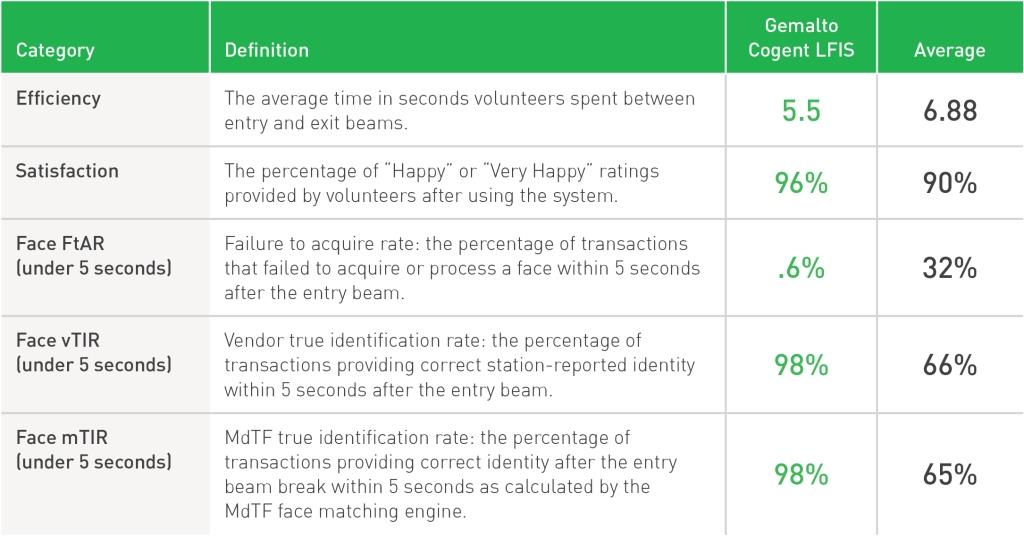
Gemalto created a solution using Live Face Identification System (LFIS) as the core technology to meet the 2018 biometric rally requirements, and the solution outperformed the average range for most metrics in addition to a 99.44 percent successful acquisition rate in less than 5 seconds compared to the average of 65 percent.
Gemalto, also known as ‘Castle’ in the anonymized results shared by the sponsors performed exceptionally well. Gemalto’s solution had the leading result for FtAR (see table) for both under 5 and 20 seconds and Face vTIR (see table) for under 5 and 20 seconds.
Regarding Face mTIR and efficiency metrics Gemalto was one of only 2 vendors to meet the goal.
Facial recognition is positioned to grow over 20 percent a year from 2016 to 2022¹ over a broad spectrum of use cases.
In addition to security at the border, LFIS can improve the traveller’s experience from curb to gate to curb by introducing self-service bag drop, speeding up security lines and even enabling biometric boarding. The technology is hardware and camera agnostic and can be used with enrolment and document verification as well. The technology can be used for other business cases where a biometric identity check is required to verify access to secure premises.
“We’re thrilled with the outstanding results our solution achieved at the 2018 rally,” said Neville Pattinson, senior vice president of Federal Government Sales for Gemalto. “Given the success of LFIS, we see this as a secure and efficient solution for government entities to interact with citizens. It can also revolutionize the air, land and sea passenger, international border, and security checkpoint experiences with increased security and added convenience to travellers.”



By Modupe Gbadeyanka
As part of its commitment to celebrating and rewarding creativity, Facebook has updated its guidance, with clear definitions of what counts as original and unoriginal content.
In a message on Monday, the social media platform said it was offering content creators new tools to report impersonation.
Launched last year, the content protection tool is expanding beyond detecting reel matches across Meta platforms to now also flag potential impersonation.
Creators can take action on content theft and easily submit impersonation reports all in one place.
Facebook, in the statement received by Business Post, said creators can check for access to content protection in their professional dashboard or apply for access here.
The platform also disclosed that in 2025, it removed over 20 million accounts impersonating large content creators, and impersonation reports related to large content creators dropped by 33 per cent.
Further, Facebook is deprioritising unoriginal content by making sure they do not perform well on its platform.
It noted that content that is duplicated from other sources or makes low-value changes to someone else’s content may see significantly reduced reach, and accounts that primarily post unoriginal content may lose eligibility for recommendations and monetisation.
It was emphasised that “these changes provide creators who post original content with greater reach and monetisation opportunities, provide stronger protections for their work, and reduce the reach of unoriginal content.”


By Dipo Olowookere
A new high-density appliance that enables enterprises to scale cloud-managed physical security without forcing cloud-only storage or infrastructure replacement has been launched by a global leader in enterprise physical security software, Genetec.
The product, Cloudlink 2210, was designed for complex, enterprise-scale deployments and supports multiple workloads, including video management, access control, and intrusion detection, in a single appliance. By consolidating these workloads into one appliance, it reduces system sprawl, simplifies management in large-scale environments, and lowers operational overhead.
Unlike solutions that separate workloads across multiple proprietary systems, Genetec Cloudlink 2210 is built on an open architecture that supports a wide range of third-party devices, including cameras, access control systems, and intrusion panels. This enables organisations to modernise at scale within a unified, cloud-managed model designed to preserve architectural flexibility, while securely integrating existing hardware, maintaining business continuity, and reducing migration risks.
The company disclosed that Cloudlink 2210 also supports hundreds of connected devices per appliance and provides up to 240 TB of local storage per unit, making it well-suited for deployments with high device density and long retention policies. The Cloudlink 2210 is ideal for enterprise environments where uptime and local retention requirements are operational priorities because its design minimises dependence on cloud storage, helping organisations control long-term storage costs while maintaining the performance and availability required in enterprise environments.
The new product also incorporates hardware-level resiliency to support strict uptime and retention requirements. RAID-protected storage and redundant system components help ensure data protection and OS availability. Security workloads continue operating locally, independent of cloud connectivity, allowing deployments to maintain continuity even during network disruptions. Dual network interfaces provide redundancy and support network isolation to strengthen cybersecurity.
It scales by adding units as requirements grow, enabling organisations to increase device counts and storage capacity without redesigning their infrastructure. Centralised cloud management maintains visibility and control across deployments.
Genetec Cloudlink 2210 is part of the broader Genetec approach to deployment flexibility. The cloud-managed appliance portfolio enables organisations to operate on premises, in the cloud, or across hybrid environments based on their operational and regulatory requirements. By combining high-performance local processing and storage with centralised cloud operations and management, Cloudlink 2210 supports scalable, cloud-managed deployments without compromising control or performance.
The Product Director for Unified Solutions at Genetec Incorporated, Mr Christian Chenard Lemire, said, “Enterprises don’t want to choose between innovation and operational certainty.
“With Cloudlink 2210, we’re redefining what cloud-managed physical security looks like at scale by giving organisations the freedom to modernise on their own terms, control long-term costs, and maintain the resiliency and continuity their most critical environments demand.”
By Modupe Gbadeyanka
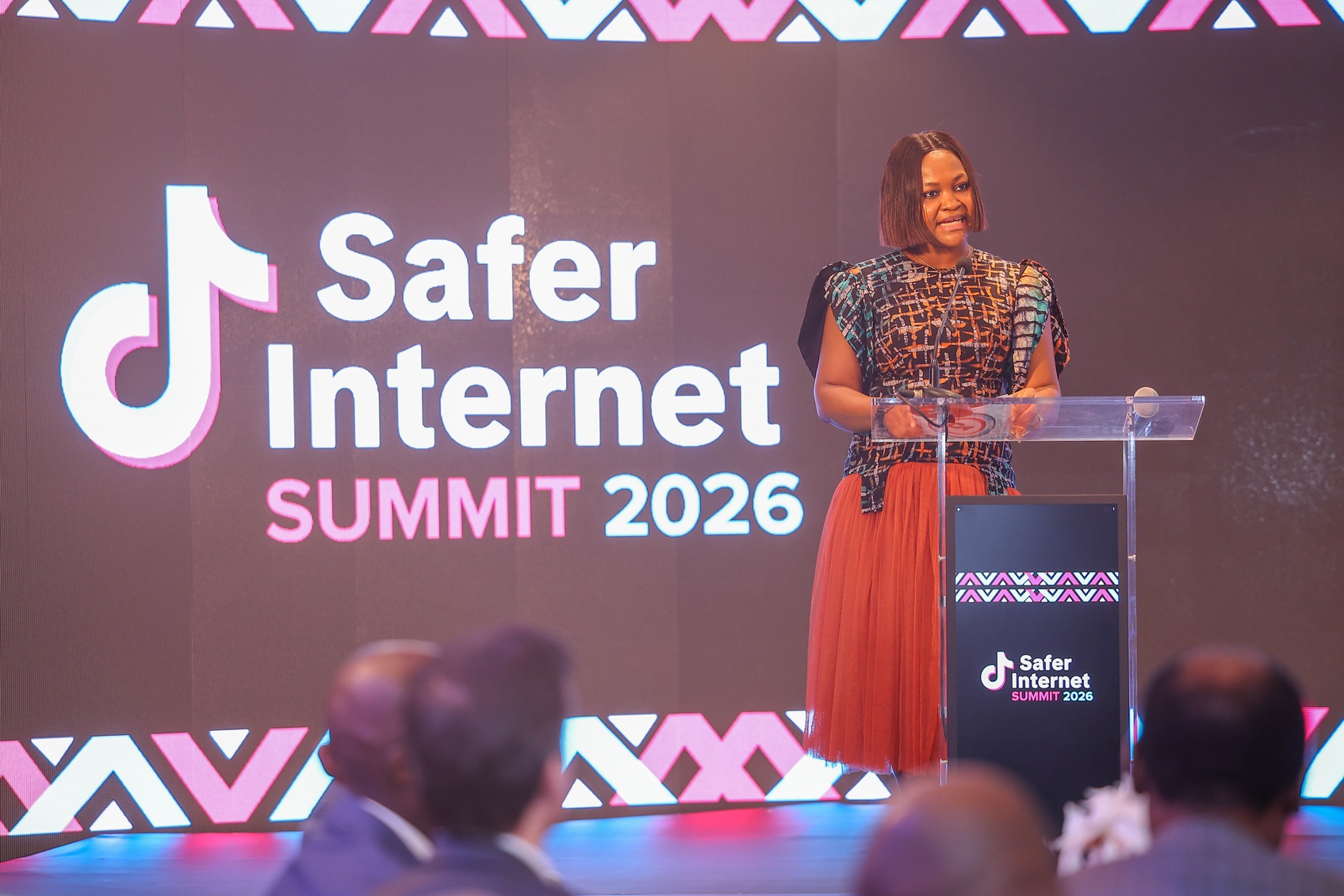
An additional $200,000 will be invested in Artificial Intelligence (AI) media literacy initiatives across Sub-Saharan Africa, TikTok announced during its third annual Sub-Saharan Africa Safer Internet Summit in Nairobi, Kenya.
The platform hosted government officials, regulators, online safety partners and industry leaders for the event, reinforcing its commitment to collaborative approaches to online safety.
The funds will be provided in ad credits to help support local organisations in the region to expand AI media literacy.
This investment builds on the company’s initial $2 million AI Literacy Fund, launched in November 2025, which awarded 20 global non-profits to create content that boosts public understanding of AI.
In Sub-Saharan Africa, TikTok initially supported three organisations to advance digital literacy and combat misinformation.
“With the rapid advancement of AI, we are committed to educating our community online, so they feel empowered to have responsible experiences with AI, whether that’s as viewers or creators.
“We are partnering with trusted local organisations that communities already know and rely on, because their expertise and deep local connections are essential to making AI literacy programs truly impactful,” the Global Head of Partnerships, Elections and Market Integrity at TikTok, Mr Valiant Richey, stated.
Earlier, the Head of Government Relations and Public Policy for Sub-Saharan Africa at TikTok, Ms Tokunbo Ibrahim, said, “As we host the 3rd Annual Safer Internet Summit here in Kenya, our mission is clear: to share learnings, insights, tackle common challenges and collaboratively advance actionable solutions that protect citizens online.
“By bringing together a diverse coalition of policymakers, tech innovators, and creators, we are ensuring that the conversations we have at this Summit are all-inclusive and lead to a more resilient digital landscape.”
The summit featured expert panels and discussions on critical topics, including TikTok’s Trust and Safety efforts, protecting young people online, and policy frameworks for responsible AI governance.
A key highlight of the event was showcasing how TikTok uses AI to transform how people share their creativity and discover new passions, while ensuring the community remains safe through transparent and responsible AI practices.
The platform also shared more about how recent advancements in AI are helping the platform moderate content faster and more consistently at scale, by improving automated moderation and empowering human teams with better moderation tools.
With over 100 million pieces of content uploaded daily to TikTok, these advances, which work alongside human moderation teams, are helping get violative content down faster, reducing the likelihood of the community seeing it.
According to the latest Community Guidelines Enforcement Q3 2025, TikTok removed over 14 million videos across Sub-Saharan Africa, with 96.7 per cent detected and removed proactively using automated technology, underscoring TikTok’s commitment to proactive moderation and swift action.













-
 Feature/OPED6 years ago
Davos was Different this year
-
Travel/Tourism10 years ago
Lagos Seals Western Lodge Hotel In Ikorodu
-

 Showbiz3 years ago
Estranged Lover Releases Videos of Empress Njamah Bathing
-
 Banking8 years ago
Sort Codes of GTBank Branches in Nigeria
-

 Economy3 years ago
Subsidy Removal: CNG at N130 Per Litre Cheaper Than Petrol—IPMAN
-

 Banking3 years ago
Sort Codes of UBA Branches in Nigeria
-

 Banking3 years ago
First Bank Announces Planned Downtime
-

 Sports3 years ago
Highest Paid Nigerian Footballer – How Much Do Nigerian Footballers Earn