Connect with us

Economy

Micro-pension Scheme will Deepen Asset Accumulation in Nigeria–Stanbic IBTC Pension Managers

Published

on

By Dipo Olowookere

Managing Director of Stanbic IBTC Pension Managers Limited, Mr Eric Fajemisin, has backed measures taken by the National Pension Commission (PENCOM) to sustain growth of the Nigerian pension industry.

According to him, micro pension scheme, multi-fund investment structure and Pension account transfer window, to mention but a few, are among initiatives capable of putting the sector in stronger footing going forward.

Stanbic IBTC Pension Managers Limited is the biggest pension fund administrator (PFA) in the country.

From Sunday, July 1, 2018, the new multi-fund structure announced by the industry regulator would become operational.

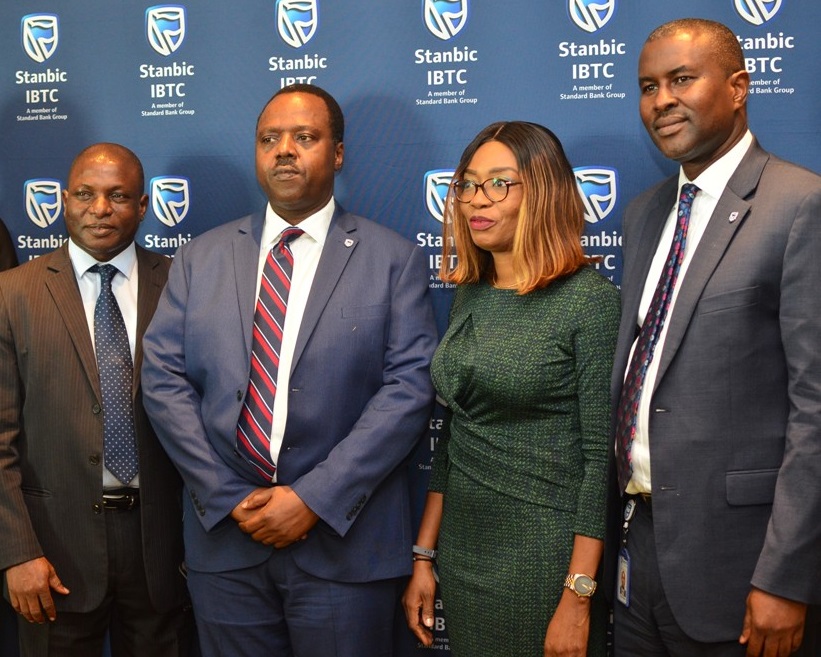
Speaking at a media interactive session in Lagos on Monday, May 28, 2018, Mr Fajemisin said such reforms and innovations are necessary to maintain the strength and depth of Nigeria’s Contributory Pension Scheme (CPS).

Mr Fajemisin noted that the Retirement Savings Account (RSA) Multi-Fund Investment structure, which replaces the “one-size-fits-all” arrangement that puts all active contributors into one RSA Fund, would resolve the challenge of asset-liability risk management faced by the operators.

According to him, the micro-pension scheme will help in deepening asset accumulation in the country, and provide the crucial capital required for investment in critical sectors of the economy.

As an initiative designed to cover an estimated 70 percent of Nigeria’s working population in the informal sector, the scheme offers enormous benefits to the society and ensure improved standard of living for the elderly, guarantee the safety of funds and may provide access to other incentives, such as mortgage facilities and health insurance., regardless of challenges associated with its seamless implementation.

By aligning the age and risk profile of RSA holders to match the four funds, contributors would have a better chance to earn improved returns on their investments in proportion to their risk appetites.

The different categories of the multi-funds structure are Fund 1, Fund 2, Fund 3 and Fund 4. Fund I is targeted at people of 49 years and below who in the quest for higher returns are willing to take more risks. Fund 2 is aimed at people who are aged 49 years and below and still working but are satisfied with moderate returns and levels of risks. Fund 3 targets people 50 years and above but still working and have very low risk appetite. In Fund 4 are retirees who have the lowest risk profile of all categories.

Among its other benefits include improved standard of living for the elderly, safety of funds and access to other incentives, such as mortgage facilities and health insurance. In addition are flexible contribution remittances, the opportunity to make withdrawal prior to retirement and the enhancement of financial inclusion in the country.

On the proposed pension transfer window, which allows a RSA holder to switch PFA once a year, the Stanbic IBTC Pension helmsman said it would deepen the democratic space in the pension industry as well as encourage healthy competition, resulting in further transparency and accountability, which would in turn enhance efficiency, innovation and service delivery.

Mr Fajemisin also reviewed the 2014 Pension Reform Act and the impact on the CPS. On the enabling law, he said the introduction of more stringent penalties for erring operators and directors, especially as it relates to mismanagement of funds, has engendered greater corporate governance, making it almost impossible to misapply pension funds by anyone.

By increasing the contributions of the employer and employee to 10 and 8 percent respectively, Mr Fajemisin said the Act has ensured the availability of more benefits to contributors at retirement. In addition, the Act makes the non-remittance of employees’ contribution by the employer an offence which the regulator can prosecute in court.

Amongst its provisions, which expanded its coverage, private sector organizations with just three employees or more are required to register under the scheme; while the law also compels an employer to open a Temporary Retirement Savings Account (TRSA) on behalf of an employee that fails to open a Retirement Savings Account within three months of being employed.

The PFA’s Head of Business Development, Mrs Nike Bajomo, said the company is already reaching out to its over 1.6 million RSA holders nationwide to create awareness about commencement of the multi-fund structure with effect from July 1, 2018. She said the PFA will continue to engage various stakeholders on developments in the industry to ensure the provisions of the CPS are fully harnessed to the benefit of all. Such platforms as the employers’ forum, preretirement seminars, among other initiatives Stanbic IBTC Pensions organises yearly, are fashioned to ensure regular engagement and to drive awareness.

Backed by the experience and expertise of Stanbic IBTC Group, a member of the over 155-year-old Standard Bank Group Mrs Bajomo said the PFA will not relent in providing excellent services to its RSA holders and Nigerians. Stanbic IBTC Pension Managers Limited, she said, has over 1.6 million RSA holders nationwide, with assets under management in excess of N2 trillion. It pays approximately N1.3 billion to over 37,000 retirees monthly and over N279 billion has been paid to retirees since the PFA commenced operations in 2006, Bajomo added.

Stanbic IBTC Pension Managers Limited is a subsidiary of Stanbic IBTC Holdings, a member of Standard Bank Group, a full service financial services group with a clear focus on three main business pillars – Corporate and Investment Banking, Personal and Business Banking and Wealth Management. Standard Bank Group is the largest African financial institution by assets. It is rooted in Africa with strategic representation in 20 countries on the African continent. Standard Bank has been in operation for over 155 years and is focused on building first-class, on-the-ground financial services institutions in chosen countries in Africa; and connecting selected emerging markets to Africa by applying sector expertise, particularly in natural resources, power and infrastructure.


Dipo Olowookere is a journalist based in Nigeria that has passion for reporting business news stories. At his leisure time, he watches football and supports 3SC of Ibadan. Mr Olowookere can be reached via [email protected]

1 Comment

Leave a Reply

Your email address will not be published. Required fields are marked *

Economy

Guinness Delights Investors With N7 Interim Dividend as H1’26 Profit Soars 53%

Published

on

guinness nigeria

By Aduragbemi Omiyale

One of the nation’s top brewers, Guinness Nigeria Plc, is paying an interim dividend of N7 per share to its shareholders for the period ended June 30, 2026.

The funds should, on August 10, 2026, hit the bank accounts of investors whose names appear in the Register of Members as of the close of business on Wednesday, July 29, 2026, a regulatory note from the organisation disclosed.

The firm has informed shareholders who have yet to complete the e-dividend registration to download the Registrar’s E-Dividend Mandate Activation Form, which is also available on its website, so as not to be left out of the cash reward for the first half of this year.

In the first six months of 2026, Guinness Nigeria grew its net profit by 53.33 per cent to N25.3 billion from N16.5 billion in the same period of 2025, amid improved top line and better management of administrative, marketing and distribution costs.

The revenue for the period under consideration rose to N265.0 billion from N237.0 billion, boosted by domestic sales of its products, which accounted for N260.9 billion compared with N237.0 billion a year earlier. The balance was from its export sales. This showed that over 98 per cent of the company’s earnings are from sales in Nigeria.

In the first half of the year, Guinness Nigeria improved its gross profit to N97.5 billion from N89.4 billion in the same period of 2025, as its finance income, arising from financial assets and others, stood at N1.2 billion compared with N110.7 million in H1 of 2026.

Continue Reading

Economy

FG Seeks Stronger Domestic Capital to Drive Nigeria’s Economic Growth

Published

on

Stronger Domestic Capital

By Adedapo Adesanya

The federal government has reaffirmed its commitment to mobilising domestic capital to finance Nigeria’s long-term development, saying stronger local investment will be critical to accelerating economic transformation and attracting private sector participation.

The Minister of Finance and Coordinating Minister of the Economy, Mr Taiwo Oyedele, stated this while speaking at the 6th Annual General Assembly of the Association of Nigerian Development Finance Institutions (ANDFI) in Abuja on Thursday.

The Minister’s remarks were contained in a statement on Friday, July 24, by his Senior Special Assistant on Communications and Press Secretary, Mrs Maryann Duke.

Addressing the conference with the theme, Unlocking Domestic Capital for Development Financing, Mr Oyedele said Nigeria must harness its domestic financial resources and strengthen institutions that can channel capital into productive sectors of the economy.

He noted that despite increasingly difficult global financing conditions, the country possesses substantial domestic savings, institutional assets and private capital that can be leveraged to fund infrastructure, industrialisation, agriculture, housing, innovation and other critical sectors.

According to the minister, domestic capital should not be viewed as an alternative to foreign investment but as the foundation for attracting sustainable international investment.

“Our focus is to build an economy where confidence leads capital. By strengthening macroeconomic stability, deepening our financial markets and empowering development finance institutions to catalyse private investment, we are unlocking Nigeria’s enormous domestic potential to finance inclusive and sustainable growth,” Mr Oyedele said.

He said the federal government’s ongoing economic reforms under the Renewed Hope Agenda are beginning to deliver positive outcomes, including improved investor confidence, stronger external reserves, enhanced revenue generation and renewed international confidence in Nigeria’s economy.

The Minister identified five priority areas for unlocking domestic capital, including expanding investment opportunities for households, deepening institutional capital through pension and insurance assets, strengthening credit enhancement mechanisms, broadening local currency financing through the capital market, and building stronger development finance institutions capable of attracting larger volumes of private investment.

Mr Oyedele also called on development finance institutions to move beyond conventional lending by helping to structure bankable projects, reduce investment risks, support policy reforms and create financing ecosystems that encourage greater private sector participation.

He reaffirmed the Federal Government’s commitment to working with development finance institutions, financial regulators, investors and development partners to develop a financing framework that will support businesses, create jobs, accelerate industrialisation and promote inclusive economic growth across the country.

Continue Reading

Economy

Organized Private Sector Raises Concerns Over Proposed Hike in Pension Contributions

Published

on

organised private sector of nigeria

By Modupe Gbadeyanka

The plan by the National Pension Commission (PenCom) to increase mandatory pension contributions and introduce an additional 3 per cent mandatory annual contribution equivalent to 3 per cent of the total wage bill is not going down well with the Organised Private Sector in Nigeria.

This group comprises the Manufacturers Association of Nigeria (MAN), the National Association of Chambers of Commerce, Industry, Mines and Agriculture (NACCIMA), the Nigeria Employers’ Consultative Association (NECA), the Nigerian Association of Small and Medium Enterprises (NASME), the Nigerian Association of Small Scale Industrialists (NASSI), and 25 sectoral employer associations.

In a statement made available to Business Post, the group described the proposal as a “Greek gift” to Nigerian workers because of the prevailing economic conditions in the country.

OPS argued that under the Pension Reform Act 2014, Nigeria’s minimum pension contribution already stands at 18 per cent of an employee’s monthly emoluments, comprising 10 per cent from the employer and 8 per cent from the employee.

“This is broadly comparable with the OECD average effective mandatory pension contribution rate of 18.8 per cent at the average-wage level in 2024.

“Nigeria’s existing contribution rate therefore cannot reasonably be regarded as inadequate, based on contribution percentages alone.

“Any proposal for an increase must be supported by Nigeria – specific actuarial evidence demonstrating that the current rate is insufficient and that a higher rate would not undermine employment, wages, compliance and enterprise sustainability,” it noted.

OPSN said the government’s attention should be directed toward reining in inflation, preserving workers’ immediate cash flow, and promoting business sustainability to create decent jobs and improve welfare.

It also asked for a detailed assessment to determine the likely effects of the proposal on employment costs, wage growth, recruitment, job security, investment, production costs, inflation, business formalisation and MSME sustainability.

The group stated that while the private sector is not entirely opposed to future adjustments, any increase must be the product of constructive, transparent social dialogue among all critical stakeholders and delayed until broader economic stability is achieved.

It stressed that no adjustment should be introduced without adequate consideration of its impact on existing jobs, future recruitment, inflation rate and the capacity of businesses to remain competitive and sustainable.

Also commenting on the matter in Lagos, the Director-General of NECA, Mr Adewale-Smatt Oyerinde, described the proposed hike as both premature and counterproductive, noting that, “The OPSN supports efforts aimed at strengthening Nigeria’s pension system and improving retirement outcomes for workers.

“However, announcing that contribution rates will increase while consultations are still ongoing risks prejudging the outcome of the process and reducing subsequent stakeholder engagements to a mere formality.”

He stressed that previous adjustments to pension contribution rates were preceded by extensive engagement among government, employers, organised labour and other relevant stakeholders.

“Any proposed adjustment must be supported by credible actuarial, economic and employment-impact assessments. It must also emerge from genuine and transparent social dialogue. Retirement security should not be pursued in a manner that threatens the businesses and jobs upon which the pension system itself depends,” he submitted.

On his part, the DG of MAN, Mr Segun Ajayi-Kadir, said, “Businesses are already contending with high energy costs, elevated interest rates, exchange-rate volatility, multiple regulatory obligations, weak consumer demand and rising production expenses. Imposing an additional statutory payroll cost without a comprehensive impact assessment will place further pressure on already struggling enterprises.”

He explained that higher employment costs could compel businesses to slow recruitment, postpone wage reviews, reduce staff strength, increase outsourcing, suspend expansion plans or pass additional costs to consumers through higher prices.

“The proposed increase may directly raise the existing employee contribution, but its wider consequences could still be borne by workers through weaker wage growth, reduced employment opportunities, job losses and higher prices of goods and services,” he added

The DG of NACCIMA, Mr Sola Obadimu, in his submission, warned against imposing additional financial levies on a struggling business environment, saying, “At a time when businesses are struggling to recover from prolonged economic pressures and the Federal Government is implementing reforms intended to improve competitiveness, imposing another statutory financial obligation on employers could undermine the benefits of those reforms.”

He maintained that government policies must be properly coordinated and evaluated based on their cumulative impact on businesses.

“A reform cannot be considered successful merely because it promises improved retirement benefits. Its impact on employment, investment, wage growth, prices, compliance and business survival must also be carefully considered,” he stated.

The DG of NASSI, Mr Ifeanyi Oputa, while speaking on the issue, stressed that micro, small and medium-sized enterprises would be disproportionately affected by any increase in mandatory employer pension contributions.

“MSMEs operate with narrow margins and limited access to affordable finance. Many are still struggling with rising energy costs, declining purchasing power, multiple levies and increasing operating expenses. An additional statutory burden could threaten their survival and discourage them from employing workers formally,” he said.

Mr Oputa warned that the proposal could also deepen non-compliance and push more businesses and workers into informal employment arrangements outside the pension system.

“A policy intended to strengthen the pension system must not produce the opposite result by shrinking the number of formal employers and contributors,” he added.

Continue Reading