

Banking
Sterling Bank May Change Operational Structure to Boost Performance

By Dipo Olowookere
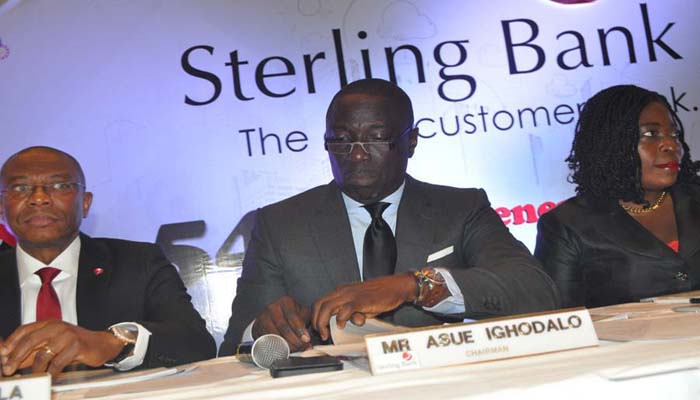
Chairman of Sterling Bank Plc, Mr Asue Ighodalo, has hinted that the financial institution may change its operational structure into a holding entity.
Mr Ighodalo gave this indication at the Annual General Meeting (AGM) of the lender held in Lagos on Thursday.
He said this is one of the plans being considered by the management to reposition the company as a top class organisation in the country.
According to him, the new structure will allow its different subsidiaries operate under a parent company.
At the moment, only three banks operate under holding company structure and they are including First Bank of Nigeria (FBN) First City Monument Bank (FCMB) and Stanbic IBTC Bank Plc, while Ecobank Transnational Incorporated-a pan-African holding company is the parent company for Ecobank brand.
Speaking at the AGM, Mr Ighodalo said the bank remains committed to delivering solutions that satisfy stakeholders’ needs and objectives while also providing adequate financial returns to shareholders.
He pointed out that retaining a substantial amount of profit generated to strengthen available capital will be in the long-term best interest of shareholders.
“As a business, we will continue to innovate with focus on key growth sectors of the Nigerian economy that will enrich lives and grow the bottom-line.
“We will also continue to leverage on our areas of strength to drive sustainable growth and deliver superior returns to our esteemed shareholders,” he said.
On his part, Managing Director of Sterling Bank Plc, Mr Abubakar Suleiman, said the bank’s 2017 financial year performance highlighted its underlying institutional strength despite delicate operating conditions.
He said, “We will continue to execute the plans to drive efficiency across the business under the three pillars of agility, digitization and specialization in the new financial year.
“These pillars will propel us toward sustainable growth by enhancing our ability to innovate; solidify our retail funding base; strengthen our enterprise-wide risk management framework and drive excellent service delivery across all channels to enhance customer experience.”
Business Post reports that under the banking regulatory regime introduced by the Central Bank of Nigeria (CBN) in 2010, banks were required to concentrate fully on core banking functions.
The model required banks to either sell all non-core banking businesses or form a holding company to hold such non-core banking businesses including activities such as insurance, asset management and capital market operations. Most banks opted to sell or divest from non-core commercial banking businesses.











By Adedapo Adesanya
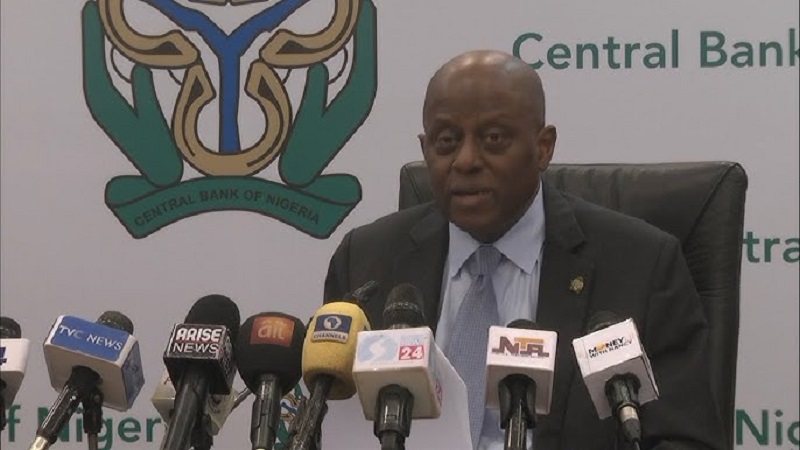
The operating licences of all legacy Bureau De Change (BDC) operators who failed to meet the new licensing requirements have been revoked by the Central Bank of Nigeria (CBN).
This happened after the central bank streamlined the BDCs to 82 in order to sanitise the foreign exchange (FX) market in the country.
The latest development was revealed by the apex bank in its Frequently Asked Questions document on the current reform of the bureau de change, published on its website on Tuesday.
According to the document, the CBN has now enforced the final cutoff, declaring that any BDC that did not meet the requirements by the end of November is no longer recognised.
“The guidelines provided a transition timeline of six months from the effective date, 3 June 2024, with a deadline of 3 December 2024, for all existing BDCs to meet the requirement of the new Guidelines or lose their licence(s). However, the management of the CBN graciously extended this deadline by another six months, which ended 3 June 2025, to give ample time for as many legacy BDCs desirous of meeting the new requirements to do so.
“Consequently, any legacy BDC that failed to meet the requirements of the new Guidelines as of 30 November 2025 has ceased to be a BDC, as its licence no longer exists. Please visit the CBN website for the updated list of existing BDCs in Nigeria,” the apex bank said.
According to the CBN, before its latest decision, an extended compliance window was granted under the revised BDC Guidelines. Existing operators were initially given six months, June 3 to December 3, 2024, to satisfy the new regulatory conditions.
The CBN later granted an additional six-month extension, which elapsed on June 3, 2025, to allow more operators to align with the updated standards.
The new measures form part of broader efforts by the CBN to strengthen transparency, compliance, and stability within Nigeria’s foreign exchange market.
The new CBN regulatory framework for BDCs, introduced in February 2024, mandated BDC operators to meet higher capital requirements. Tier-1 operators are required to meet a minimum capital requirement of N2bn, while Tier-2 operators must meet N500m as MCR.
The bank added that it would continue to receive applications on its Licensing, Approval and Requests Portal from prospective promoters, and those that meet the criteria will be considered for a license.
However, the CBN said it reserves the right to discontinue the licensing of BDCs at any time.

By Modupe Gbadeyanka
A non-bank credit card issuer, 03 Capital, has introduced a travel card designed to unlock the N95 billion festive spending boom in Nigeria.
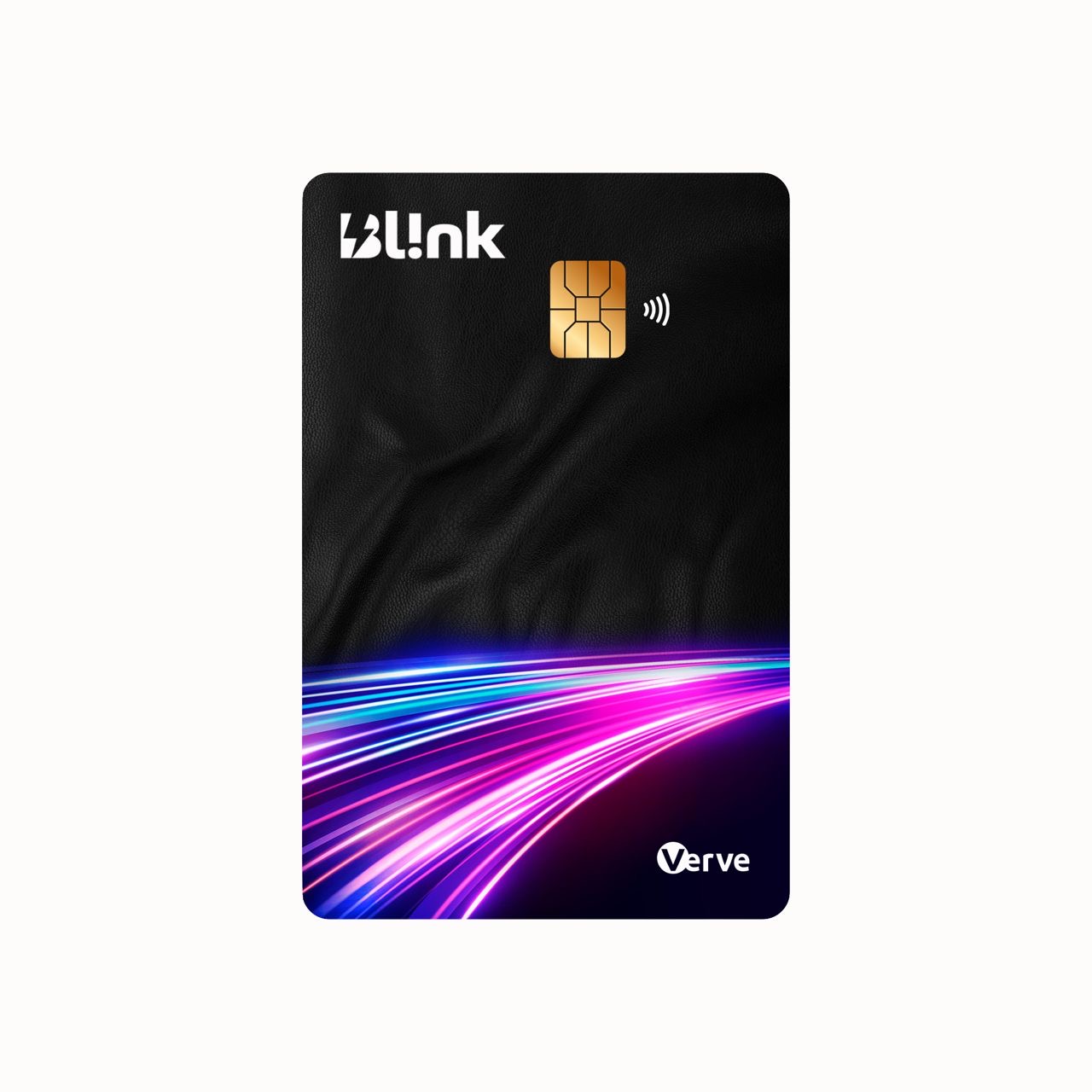
The new initiative, known as the 03 Capital Blink Travel Card, promotes economic participation among returning Nigerians, expatriates, and tourists.
A statement from the financial technology (fintech) firm is available instantly to use at over 40 million merchants and ATMs nationwide.
The Blink Card, to be issued in both digital and physical form, is loaded with currency from any foreign bank card, converted to Naira, enabling transactions to be completed in the local currency.
The card offers tap-to-pay and cash withdrawals at over 40 million merchants and ATMs nationwide, making it the ideal solution for visitors to Nigeria.
It also avails Nigerians in the Diaspora to spend like locals when they return to their country of origin.
Payments for goods and services can be completed via the virtual Blink Card, linked to the O3Cards app. Funds can also be transferred instantly to all local banks and other financial institutions.
According to the World Bank, remittance inflows account for approximately 5.6 per cent of Nigeria’s gross domestic product (GDP), and the resultant spending power is unlocked when the Diaspora returns home for the festive period.
In December 2024, about N95 billion was injected into the Nigerian economy by inbound passengers – 90 per cent being diasporic Nigerians – spending on short-let accommodation and hotels, events and hospitality, nightlife and dining, and vehicle rentals. The launch of the Blink Card promises to spur this spending further, providing a significant boost to local businesses.
Blink Cards are available for collection at all Nigerian international airports, offering an immediate and hassle-free route to financial empowerment for people arriving in the country.
Blink Card carriers benefit from increased convenience, flexibility, and safety by not needing to carry large amounts of physical cash, while the ability to pre-load cards promotes smarter budgeting practices.
“We are excited to launch the Blink Card to promote greater economic participation among visitors to Nigeria.
“The card removes the needless friction and costs involved in legacy foreign exchange and cash payment processes, offering a quicker and more transparent option for spending in the country.
“As Nigerians begin travelling home for Christmas – combined with the regular traffic of arriving tourists, expatriates, and businesspeople – this is the perfect time to launch a solution catering to the financial needs of visitors, tapping into the seasonal spending boom which provides an annual lifeline for local economies and SMEs,” the chief executive of 03 Capital, Abimbola Pinheiro, stated.
By Modupe Gbadeyanka
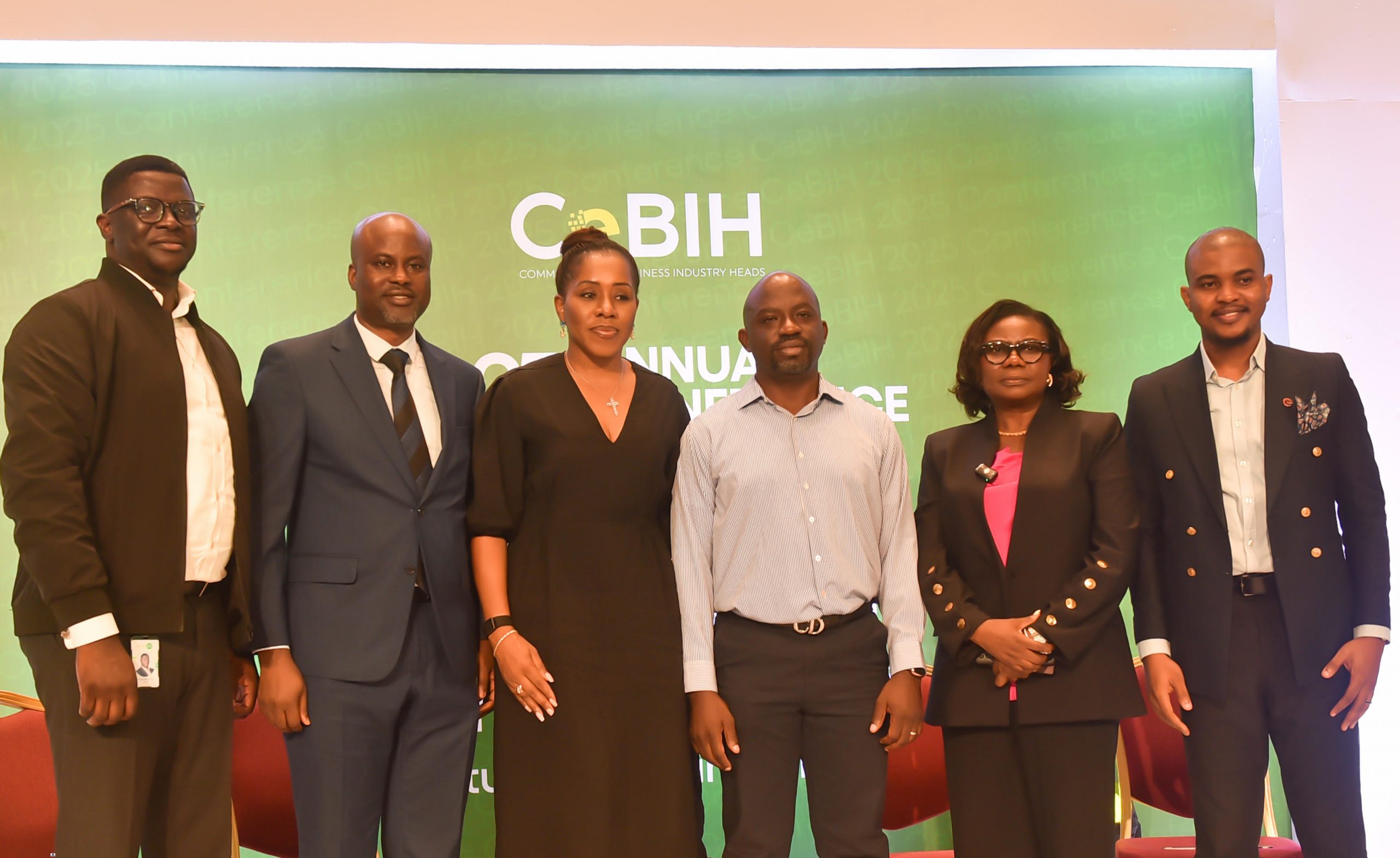
Technology leaders from across Nigeria’s digital finance ecosystem recently converged on Eko Convention Centre in Lagos to explore pathways for expanding credit access to underserved communities.
It platform for this was the 2025 Committee of e-Business Industry Heads (CeBIH) Annual Conference themed Reimagining Financial Inclusion through Cultural Shifts in Consumer Credit. Interswitch was a returning gold sponsor.
At a high-impact panel session titled Alternative Credit Scoring for the Underserved, moderated by Wunmi Ogunbiyi of the CeBIH Advisory Council, the Divisional Head of Product Management and Solution Delivery at Verve International, a subsidiary of Interswitch Group, Mr Ademola Adeniran, examined how alternative data and digital intelligence can unlock credit for millions excluded by conventional financial models.
“For us, this conversation goes beyond technology. It is about designing credit systems that truly reflect African realities.
“Millions transact daily outside traditional banking frameworks, and alternative credit scoring enables us to recognise that economic activity and responsibly convert it into access to finance.
“At Verve and Interswitch, we are committed to building the digital infrastructure that makes this inclusion scalable and sustainable,” Mr Adeniran stated.
Also, the Vice President for Sales and Account Management, Digital Infrastructure and Managed Services at Interswitch Systegra, Ms Robinta Aluyi, stressed the importance of African-led solutions in addressing the continent’s financial challenges, noting that sustainable progress must be rooted in local realities.
Interswitch’s strength, she said, lies in the fact that it was built on the continent, for the continent, with solutions designed to serve individuals, small businesses, enterprises, and government institutions across every layer of the payment value chain.
She also emphasized the company’s purpose-driven approach to building the infrastructure that powers Africa’s digital economy and enabling secure money movement on a scale.
“Interswitch helps people navigate their daily lives with greater ease. We make transactions flow safely and reliably. We do this by connecting banks, supporting secure and reliable payments, and strengthening the entire value chain of digital finance.
“Today, we hold a significant portion of the market, and that achievement reflects the deep trust our banking and fintech partners place in our platforms. We continue to deliver because the ecosystem has worked with us every step of the way,” Ms Aliyu said.
There were also contributions from Munachimso Duru, Head, Products, Partnership and Innovation, Afrigopay Financial Services Limited; Damola Giwa, Country Manager, Visa West Africa; Nike Kolawole, representing Aisha Abdullahi, Executive Director, Credit and Portfolio Management, CREDICORP; and Ifeanyi Chukuwekem, Head, Corporate Strategy Department, eTranzact, offering a broad industry perspective on the future of responsible credit delivery.










-
 Feature/OPED6 years ago
Davos was Different this year
-
Travel/Tourism9 years ago
Lagos Seals Western Lodge Hotel In Ikorodu
-

 Showbiz3 years ago
Estranged Lover Releases Videos of Empress Njamah Bathing
-
 Banking7 years ago
Sort Codes of GTBank Branches in Nigeria
-

 Economy3 years ago
Subsidy Removal: CNG at N130 Per Litre Cheaper Than Petrol—IPMAN
-

 Banking3 years ago
First Bank Announces Planned Downtime
-

 Banking3 years ago
Sort Codes of UBA Branches in Nigeria
-

 Sports3 years ago
Highest Paid Nigerian Footballer – How Much Do Nigerian Footballers Earn