
Economy
Naira Trades Flat Despite CBN’s $210m to Foreign Currency Market

By Modupe Gbadeyanka
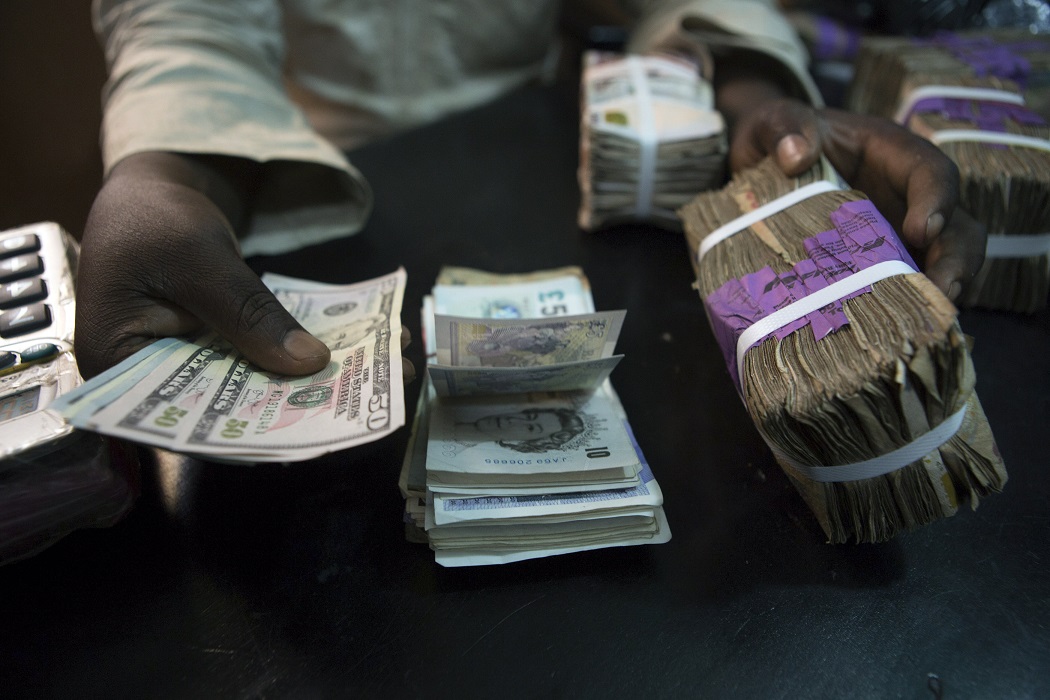
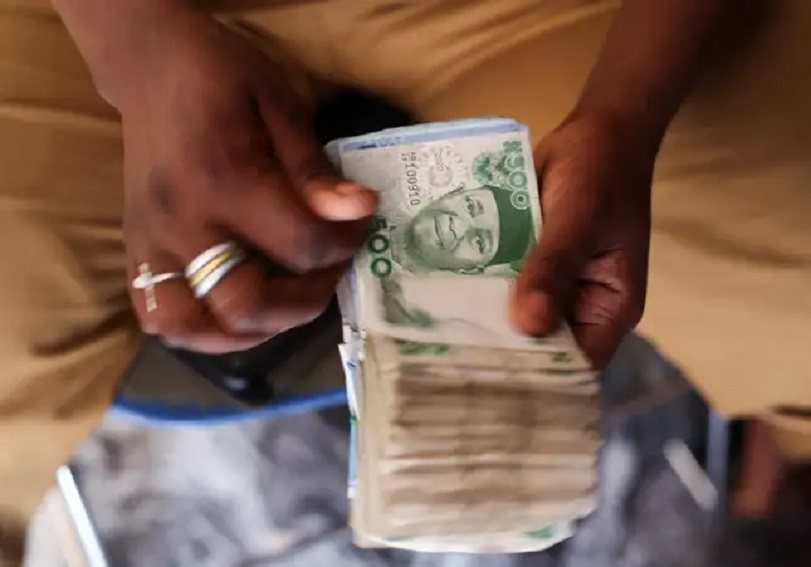
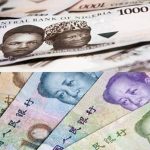
The local currency has remained flat at N362 per Dollar despite the $210 million released to the foreign exchange (forex) market by the Central Bank of Nigeria (CBN).
On Tuesday, the central bank injected $210 million into the inter-bank forex market in a bid to boost liquidity in the system.
However, the Naira has remained unchanged at the parallel market, trading at N362/$ since the latest intervention.
Business Post reports that in the latest injection, the CBN sold $100 million to dealers in the wholesale sector, while those in the Small and Medium Enterprises (SMEs) and Invisibles segments received $55 million each.
Spokesman of the apex bank, Mr Isaac Okorafor, who confirmed the disbursement in a statement issued in Abuja, disclosed that the continued interventions in the interbank foreign exchange market was mainly to ensure sustained liquidity and stability in the market.
He said the support has impacted the market positively and guaranteed a stable exchange rate for the Naira, which has since stabilised the foreign exchange market.
He reiterated that the Bank’s interventions had reduced the country’s import bills and boosted its foreign reserves.
Business Post reports further that the local currency has traded flat against the Euro at the black market, selling at N430 since Tuesday when the intervention was made.
However, the Naira, which was sold at N500 to the Pound Sterling on Tuesday, closed at N498 on Wednesday.






By Adedapo Adesanya
Oil prices fell in the later session of Monday after initially crossing the $100 per barrel mark as the escalating Iran war by the United States and Israel squeezed world energy supplies, boosted the Dollar, and dampened hopes of interest-rate cuts.
Earlier, Brent crude futures climbed to a high of $119.50 per barrel, and the US West Texas Intermediate (WTI) to $117.48 a barrel. However, it dropped later after US President Donald Trump suggested that the US conflict with Iran could soon wind down.
Data gathered by Business Post showed that the price of the Brent crude grade dropped 5.4 per cent to $87.68 per barrel, and the US WTI lost 7.4 per cent to trade at $84.21 a barrel.
President Trump is expected to review a set of options to tame oil prices, reflecting White House worries that the surge in oil prices will hurt US businesses and consumers ahead of the November midterm elections, when the ruling Republicans are hoping to retain control of Congress.
Reuters reported that the US is discussing with counterparts from the Group of Seven major economies a possible joint release of crude oil from strategic reserves. It also reported they are weighing other options, including restricting US exports, intervening in oil futures markets, waiving some federal taxes and lifting requirements under a US law called the Jones Act that domestic fuel must move only on US-flagged ships.
The Trump administration officials are also exercising diplomatic pressure on Gulf allies to help restore production and shipping of oil.
Market analysts have warned that Gulf producers are only able to sustain normal production for roughly 25 days if the Strait is completely blocked.
The expanding US-Israeli war with Iran led some major Middle Eastern oil producers to cut supplies due to fears of prolonged disruption to shipping through the Strait of Hormuz chokepoint.
Oil-driven inflation fears and delayed rate-cut expectations likely strengthened US yields and the Dollar, outweighing safe-haven demand.
The recent 10-day conflict in Iran is beginning to ripple through the global aviation industry, threatening what had been a strong outlook for aircraft demand.
JP Morgan has warned that Iran’s oil production could be slashed in half and oil exports could virtually stall if the US-Israel seize Iran’s Kharg Island, worsening the ongoing global oil shock. The island is regarded as the backbone of Iran’s oil infrastructure, handling approximately 90 per cent of its crude exports.

By Dipo Olowookere
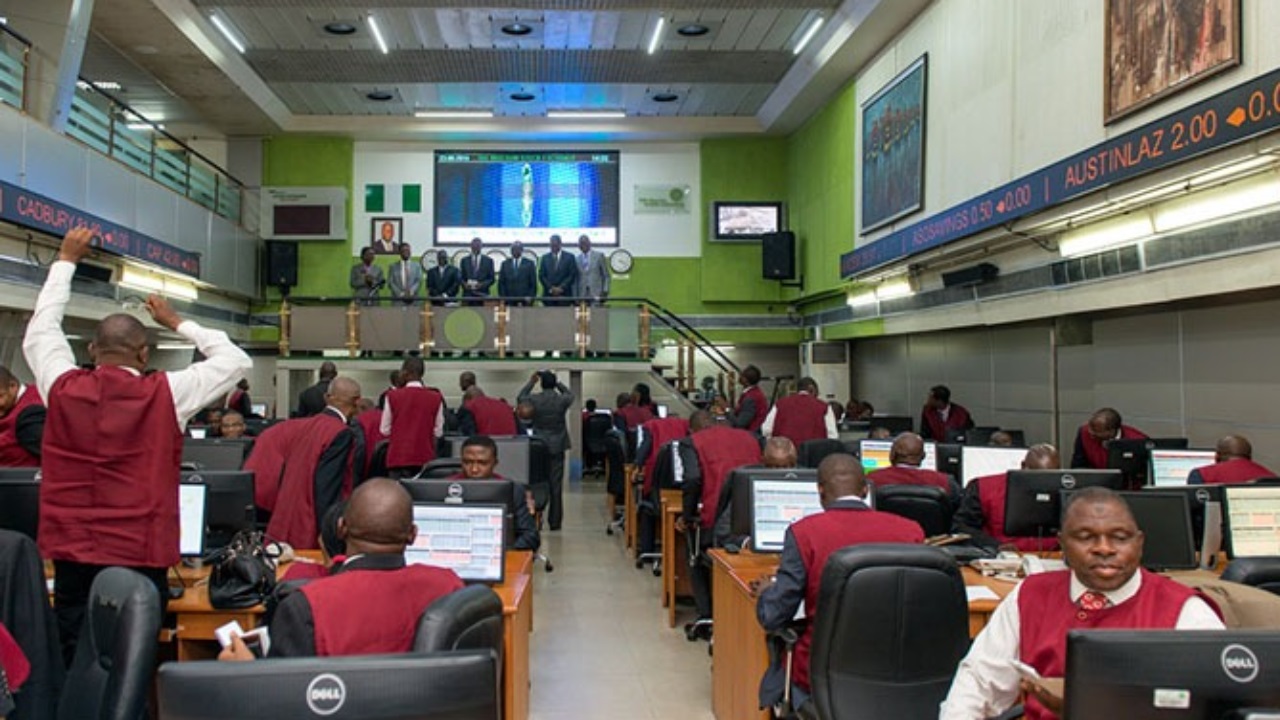
The Nigerian Exchange (NGX) Limited ended its first trading session of this week on a positive note after it improved by 0.12 per cent on Monday.
Buying pressure across key sectors of Customs Street influenced the growth achieved yesterday despite the global instability triggered by the war in Iran by the United States and Israel.
Energy stocks on the local bourse have continued to benefit from the crisis, which has raised the price of crude oil above $100 per barrel.
The energy index was up by 2.07 per cent during the session, and the consumer goods sector appreciated by 0.58 per cent, while the insurance and banking indices depreciated by 3.05 per cent and 0.99 per cent, respectively.
When the closing gong was struck on Monday, the All-Share Index (ASI) increased by 228.82 points to 197,196.97 points from 196,968.15 points, and the market capitalisation garnered N147 billion to settle at N126.584 trillion compared with last Friday’s N126.437 trillion.
The trio of Conoil, Legend Internet, and Omatek advanced by 10.00 per cent each to N185.90, N7.04, and N2.42 apiece, as NGX Group chalked up 9.97 per cent to trade at N166.00, and Oando appreciated by 9.96 per cent to N54.65.
Conversely, Aluminium Extrusion shrank by 10.00 per cent to N13.95, SCOA Nigeria declined by 9.90 per cent to N30.95, RT Briscoe lost 9.87 per cent to finish at N10.87, Sunu Assurances crashed by 9.81 per cent to N4.32, and Union Dicon lost 9.76 per cent to settle at N14.80.
The most active stock for the session was Fortis Global Insurance with 120.4 million units worth N174.1 million, Access Holdings exchanged 32.2 million units valued at N818.5 million, Chams traded 28.3 million units for N110.5 million, Zenith Bank transacted 25.3 million units worth N2.4 billion, and Japaul sold 21.6 million units valued at N82.1 million.
At the close of trades, market participants bought and sold 762.5 million shares for N31.2 billion in 86,488 deals during the session, in contrast to the 586.2 million shares valued at N30.6 billion traded in 62,699 deals in the preceding session, implying a spike in the trading volume, value, and number of deals by 30.08 per cent, 1.96 per cent, and 37.94 per cent apiece.
By Adedapo Adesanya
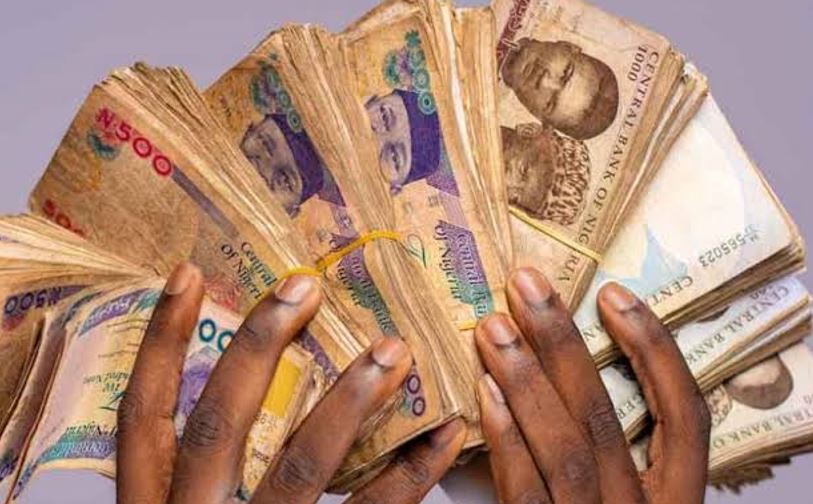
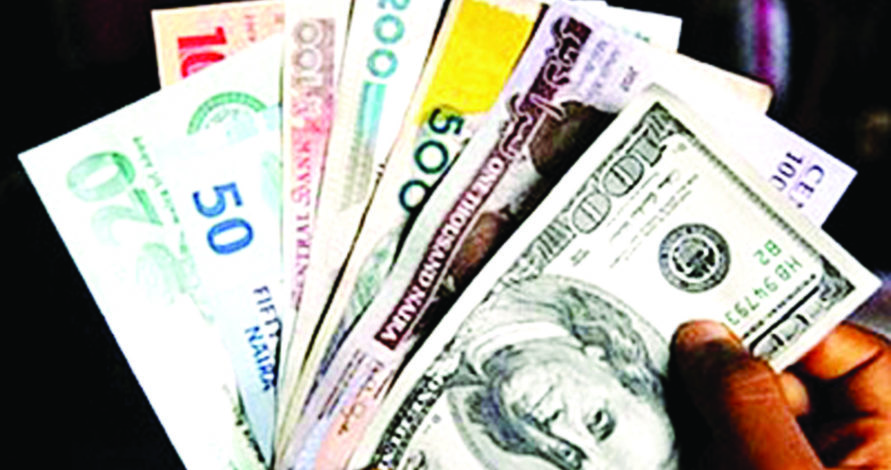
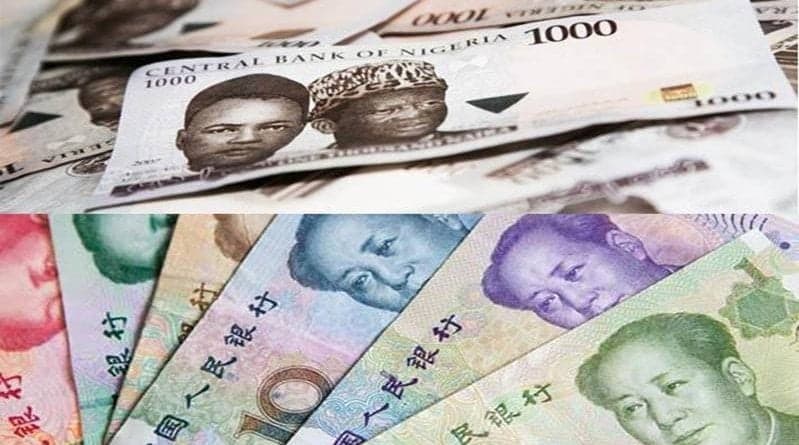
The Naira halted two consecutive weeks of depreciation in the Nigerian Autonomous Foreign Exchange Market (NAFEX) on Monday, March 9, by remaining unchanged at N1,393.26/$1.
However, against the Pound Sterling, it further depreciated by N3.07 yesterday to trade at N1,863.06/£1 compared with last Friday’s value of N1,859.99/£1, and lost 65 Kobo against the Euro to close at N1,612.14/€1 versus the preceding session’s rate of N1,611.49/€1.
In the black market, the Nigerian Naira crashed against the Dollar yesterday by N10 to quote at N1,415/$1 compared with the N1,405/$1 it was exchanged in the previous trading session, and at the GTBank FX desk, it weakened by N9 to sell for N1,419/$1 versus the previous value of N1,410/$1.
The Naira’s performance comes as rising demand for foreign payments is outpacing supply, heightening worries that the domestic currency is entering the threshold it hasn’t traded in over two months.
Despite this, there appears to be a rise in foreign exchange inflows into the country’s currency market, with data from Coronation Merchant Bank showing that in the past week, FX inflows into the market have strengthened. As of the end of last week, total FX inflows into the Nigerian market settled at $1.26 billion, representing an increase of 17.76 per cent compared with $1.07 billion recorded in the previous week.
In the cryptocurrency market, tensions that have spurred higher energy prices and reignited inflation fears, which could potentially delay Federal Reserve rate cuts, eased after US President Donald Trump said the war with Iran could be over soon. This led to crypto and equity markets adding to gains following the comments.
Solana (SOL) appreciated by 5.6 per cent to $86.05, Ethereum (ETH) expanded by 5.5 per cent to $2,024.18, Bitcoin (BTC) added 4.6 per cent to sell for $68,802.86, Binance Coin (BNB) gained 4.1 per cent to trade at $639.78, and Cardano (ADA) jumped 3.3 per cent to $0.2582.
Further, Dogecoin (DOGE) grew by 2.9 per cent to $0.0914, Litecoin (LTC) went up by 2.8 per cent to $54.10, and Ripple (XRP) improved by 2.4 per cent to $1.37, while the US Dollar Tether (USDT) and the US Dollar Coin (USDC) traded flat at $1.00 each.









-
 Feature/OPED6 years ago
Davos was Different this year
-
Travel/Tourism10 years ago
Lagos Seals Western Lodge Hotel In Ikorodu
-

 Showbiz3 years ago
Estranged Lover Releases Videos of Empress Njamah Bathing
-
 Banking8 years ago
Sort Codes of GTBank Branches in Nigeria
-

 Economy3 years ago
Subsidy Removal: CNG at N130 Per Litre Cheaper Than Petrol—IPMAN
-

 Banking3 years ago
Sort Codes of UBA Branches in Nigeria
-

 Banking3 years ago
First Bank Announces Planned Downtime
-

 Sports3 years ago
Highest Paid Nigerian Footballer – How Much Do Nigerian Footballers Earn