
General
Kano, Adamawa to Operationalize, Adopt FOI Act

By Destiny Ugorji
Two Northern Nigerian States, Kano and Adamawa, have expressed their readiness to adopt and operationalize the Freedom of Information (FOI) Act 2011.
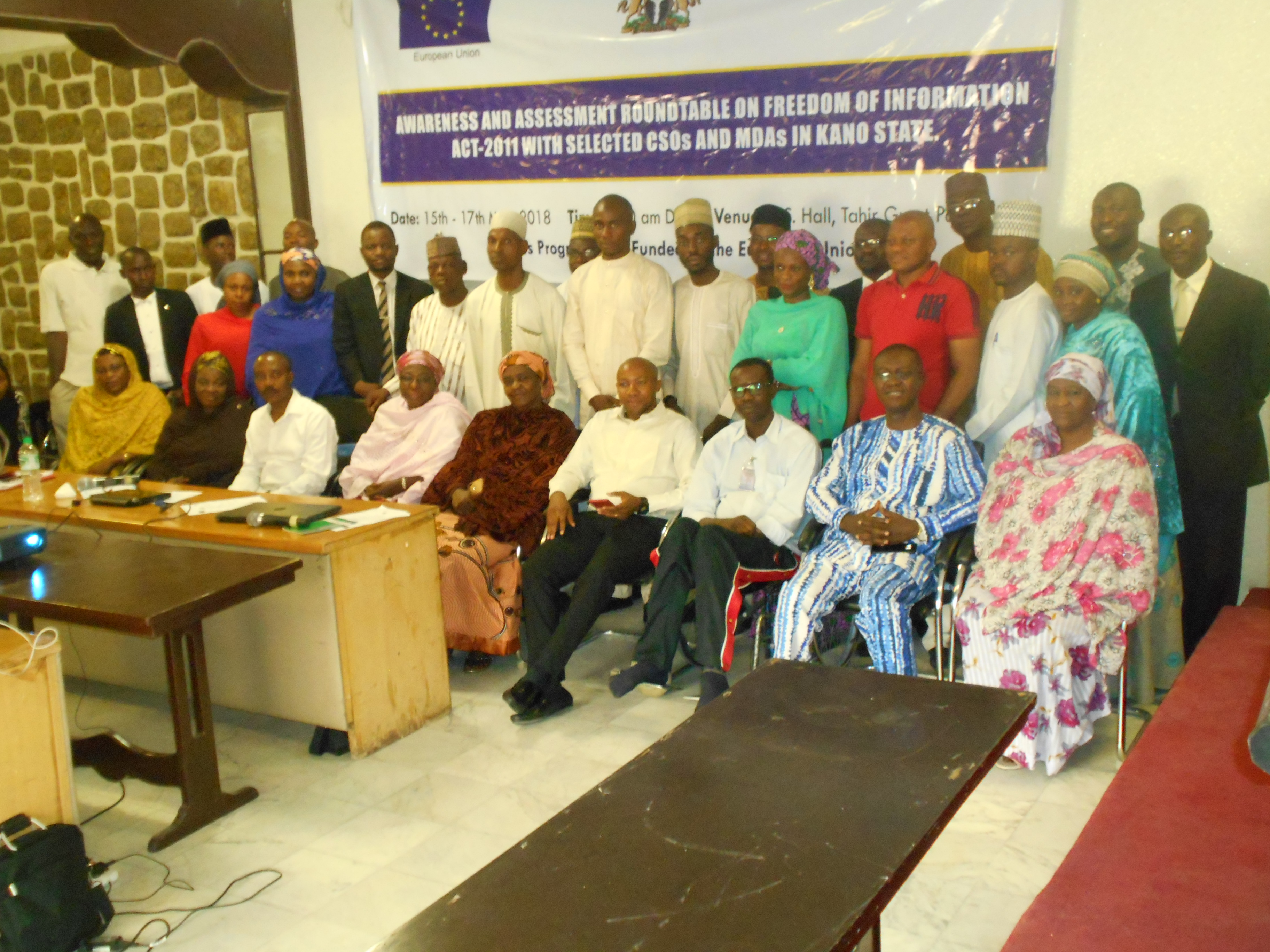
Kano State Head of Civil Service, Alhaji Mohammad Auwal Na’iya, made the state government’s position known while delivering a goodwill message on Thursday at an FOI Assessment and Awareness joint Roundtable of Ministries, Departments and Agencies (MDAs) and Civil Society organisations in the State.
According to him, the Kano state government is in the process of adopting the Freedom of Information Act, with a view to empowering the citizens to participate actively in governance.
“Kano State government is committed to transparency and accountability and is in the process of adopting the Freedom of Information law in the State. The state government has initiated a number of processes to promote transparency, accountability and prudence in governance.
“The Kano State government has agreed to adopt and implement the Freedom of Information Act through the Open Government Partnership (OGP) process which the State has signed unto. The adoption of the FOI Act in the State is being subjected to wide consultation and will go through the legislative process and passed into law”, he disclosed.
Adding his voice, Executive Chairman, Kano State Public Complaints and Anti-Corruption Commission (PCACC) Alhaji Muhuyi Magaji Rimingado further highlighted the efforts of the present administration in the state to entrench transparency and accountability.
“The government of Alhaji Abdullahi Umar Ganduje in Kano State is doing so much to ensure that governance is transparent. We are interested in the implementation of the FOI Act in Kano State and the government at the highest level in the state is committed to it, since it will promote openness in governance. The State has signed up to the Open Government Partnership, which is a transparency initiative. Access to Information is one of the pillars of the OGP and we are committed to it. The present administration created the Public Complaints and Anti-corruption Commission, among other reformatory initiatives. The present administration is sincere and wants the citizens to participate actively in the business of governance.”
The Roundtable was a 3-day event, organized by the Freedom of Information Coalition, Nigeria (FOICN) and Media Initiative against Injustice, Violence and Corruption (MIIVOC), with support from the European Union, through the Rule of Law and Anti-Corruption (RoLAC) Programme, managed by the British Council.
The event which took place at Tahir Guest Palace Hotel, Kano, had participants drawn from state and non-state actors in the state. The primary objective was to assess the level of awareness and implementation of, and compliance with the Freedom of Information (FOI) Act, 2011 in the State.
In his presentations on: Understanding the Freedom of Information Act 2011 and Making Requests for Information Under the Freedom of Information Act, Chairman, Board of Governors, Freedom of Information Coalition, Nigeria, Dr, Walter Duru described the Freedom of Information Act as a veritable tool for the entrenchment of transparency in the state, even as he called on stakeholders to collaborate to ensure its effective implementation.
He commended the Kano State government for committing to FOI implementation, even as he urged Civil Society organisations in the state to take advantage of the development to participate actively in governance, by testing the Act in the state.
Also, in his presentation on: What is Freedom of Information and its importance, Secretary, Board of the Freedom of Information Coalition, Nigeria, Ayode Longe described freedom of Information as the bedrock and foundation of all human rights, urging citizens to participate actively in the drive towards the operationalization of the FOI Act in the state.
Earlier in his presentation, Anti-corruption Programme Manager of the ROLAC programme, Mr. Emmanuel Uche described the Freedom of Information Act as central to every anti-corruption initiative, even as he commended the Kano State government for embracing the Act.
He reiterated the readiness of the ROLAC programme to support further steps that will enhance FOI implementation in the state and beyond.
The roundtable recorded various sessions, comprising presentations, situation assessment through administration of questionnaires, feedback through questions and comments and viewing of a video on how members of a rural Indian community called Rajasthan successfully used the country’s FOI law to hold their elected officials to account for funds that they administered, and the ripple effect it had in the State which entrenched transparency.
Other highlights of the Roundtable are the development of Action Points, outlining next steps, interactive sessions, advocacy visits and a Communique issued at the end of the event. Other important persons at the event are: Anti-corruption programme officer, Pwanakei Dala, head of ROLAC Kano Office, Ibrahim Bello, among others.
Kano is one of the four focal states of the RoLAC programme. The other three are: Adamawa, Lagos and Anambra states.
Similarly, the Adamawa State government has expressed its readiness to operationalize the Freedom of Information Act in the state.
Adamawa state Attorney General and Commissioner for Justice, Mr. Bala Sanga disclosed this while delivering a goodwill message during a similar Roundtable for Ministries, Departments and Agencies, as well as Civil Society Organisations in Adamawa state, recently.
He affirmed that the FOI Act was germane to democracy and good governance, even as he described the present Adamawa state government as transparent. He emphasized that government officials serve the people and should therefore be accountable to them.
“The present Adamawa state government is transparent and willing to do things right. We are in total support and willing to operationalize the Freedom of Information Act in the state. Apart from the FOI Act, public officials have a responsibility to be transparent. If public officials have nothing to hide, then they have nothing to fear about an access to information law.”
He further promised to advise the state Executive Council to ensure the operationalization of the Freedom of Information Act in the State, even as he urged the organisers of the event to transmit the Action Points from the meeting to his office for necessary actions.
The next port of call for the FOI Assessment Roundtable is Anambra State, expected to hold in the next two weeks. The FOI Assessment Roundtable is a prelude to further interventions aimed at pursuing the vigorous implementation of the FOI Act, with a view to entrenching transparency in governance, while empowering citizens to take advantage of the Act to hold the government accountable.






By Adedapo Adesanya
Ikeja Electricity Distribution Company has described as malicious and misleading a widespread publication currently circulating online alleging impropriety about its chief executive, Ms Folake Soetan, and its board chairman, Mr Kola Adesina.
The management of the DisCo noted that a publication attributed to ‘Nigerian Global Business Forum’ defamed its CEO and the chairman of the IKEDC board.
The company said, “The publication, attributed to yet to be verified individuals and organisation, is clearly intended to misinform the public and bring the company and its leadership into disrepute through fabricated claims, the DisCo observed.”
Ikeja Electric noted that its investigation so far revealed that the ‘Nigerian Global Business Forum’ is an unregistered organisation with no recognised legal or corporate existence locally or abroad.
According to the energy firm, the signatories, “Dr Alaba Kalejaiye” and “Musa Ahmed,” have no verifiable professional credentials or established public profiles, and the publication contains false and misleading statements regarding Ikeja Electric’s operations, safety record, and financial practices.
The organisation said it had instructed its legal advisers to conduct a thorough forensic investigation and to initiate defamation proceedings against the authors, publishers, and any persons or entities found responsible for sponsoring or disseminating this malicious publication.
Ikeja Electric said it operates within a strict framework of accountability and remains committed to transparency and service improvement, warning it will not tolerate coordinated disinformation campaigns aimed at undermining public confidence and tarnishing its corporate integrity.
“Ikeja Electric remains steadfast in its mandate to deliver reliable power while upholding the highest standards of corporate governance and customer excellence.
Members of the public are advised to disregard the false publication in its entirety,” it said in a statement.

By Aduragbemi Omiyale
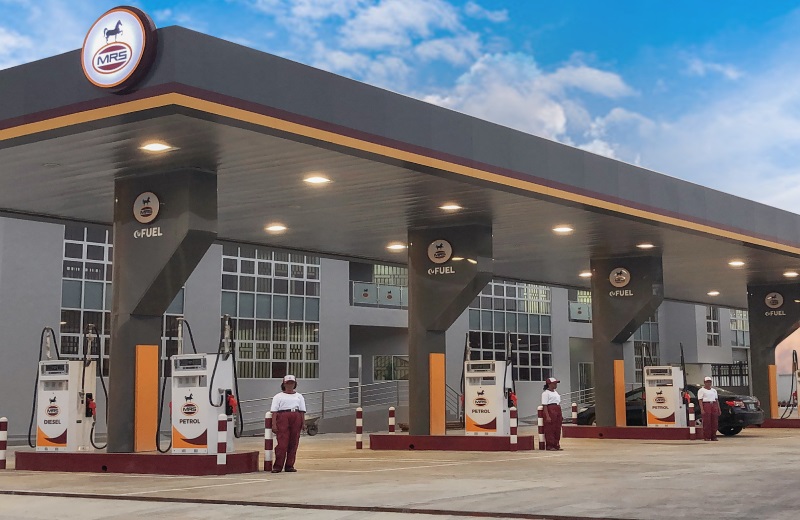
Nigerians may be forced to purchase premium motor spirit (PMS), commonly known as petrol, for almost N1,000 per litre if marketers choose to go for the costly coastal evacuation and not the cheaper gantry loading, the Dangote Petroleum Refinery has cautioned.
Though the company clarified that marketers were free to choose their preferred mode of evacuation, it emphasised that the implication of adopting the coastal loading was that consumers would pay more for the product because of the extra costs.
According to Dangote Refinery, “Coastal logistics can add approximately N75 per litre to the cost of petrol, which, if passed on to consumers, would push the pump price of PMS close to N1,000 per litre.”
The firm noted that its “world-class gantry facility” has 91 loading bays capable of loading up to 2,900 tankers daily.
Operating on a 24-hour basis, the facility can evacuate over 50 million litres of Premium Motor Spirit PMS, 14 million litres of Automotive Gas Oil (diesel) and other refined products each day, it added, urging marketers and policymakers to prioritise logistics choices that support price stability and consumer welfare.
It stressed that direct gantry evacuation eliminates port charges, maritime levies and vessel-related costs that do not add value to end users, helping to optimise costs, improve distribution efficiency and support price stability.
“Reliance on coastal delivery, particularly within Lagos, may introduce avoidable costs with material implications for fuel pricing, consumer welfare and overall economic wellbeing,” the company stated in a statement.
Based on Nigeria’s average daily consumption of about 50 million litres of PMS and 14 million litres of diesel, the refinery estimated that sustained dependence on coastal logistics could impose an additional annual cost of roughly N1.752 trillion. This cost, it said, would ultimately be borne either by producers or Nigerian consumers.
The refinery also renewed calls for coordinated investment in pipeline infrastructure nationwide, arguing that functional pipelines linking refineries to depots would significantly cut distribution costs, improve supply reliability and strengthen national energy security.
It said domestic refining has already delivered measurable benefits to the Nigerian economy. Since the commencement of operations, the price of diesel has fallen from about N1,700 per litre to N1,100 and currently trades between N980 and N990. Similarly, PMS prices have declined from about N1,250 per litre to between N839 and N900.
It added that increased local supply has sharply reduced fuel importation, eased foreign exchange pressures and improved market stability, contributing to a stronger naira, which recently traded at about N1,385 to the dollar.
By Adedapo Adesanya
The federal government has launched the Nigeria for Women Programme Scale-Up (NFWP-SU), a strategic investment initiative which is expected to target over 25 million Nigerian women nationwide.
In a Friday statement, it was disclosed that President Bola Tinubu this week inaugurated the NFWP-SU programme, declaring the initiative a strategic national investment and unveiling the government’s ambition to expand its reach to over 25 million Nigerian women across the country.
According to the statement, the President, represented by Vice President Kashim Shettima, said the scale-up marks a decisive shift in Nigeria’s development strategy, with women’s economic empowerment, family stability, and social development placed firmly at the centre of national growth.
He stressed that Nigeria cannot achieve sustainable prosperity while half of its population remains structurally constrained.
“Women are not peripheral to national development. They are central drivers of productivity, custodians of family stability, and indispensable partners in our ambition to build a resilient, competitive and prosperous nation,” the President said, noting that empowering women is essential to job creation, food security, financial inclusion and economic diversification under the Renewed Hope Agenda.
President Tinubu described the programme as more than a social intervention, calling it “a strategic investment in Nigeria’s economic infrastructure.”
He said the success of Phase I of the programme, which reached over one million beneficiaries across six states, provided strong evidence that structured, data-driven empowerment models deliver measurable, lasting impact.
Building on that evidence, the President announced a bold national ambition to scale the programme beyond its current targets to reach 25 million women nationwide, creating a sustainable platform for women’s economic inclusion embedded in federal, state and local systems.
He called on development partners, particularly the World Bank, to support the expansion through financing, technical assistance and innovation.
According to the President, the integration of digital platforms such as the Happy Woman App, identity verification and transparent targeting reflects the administration’s insistence on measurable and verifiable public policy.
“The work of the Ministry has shown what focused execution can achieve. This is how public trust is rebuilt and how government resources reach real people with real impact,” he said.
On his part, World Bank Country Director for Nigeria, Mathew Verghis, said the Bank was honoured to co-finance the NFWP-SU with the Federal and State Governments, describing it as fully aligned with the Bank’s new Country Partnership Framework for Nigeria, which prioritises unlocking economic opportunities, strengthening private sector linkages and creating more and better jobs.
Mr Verghis noted that Nigerian women remain disproportionately affected by poverty, with 64.3 per cent living below the lower-middle-income poverty line, despite their critical contributions to agriculture, trade and enterprise.
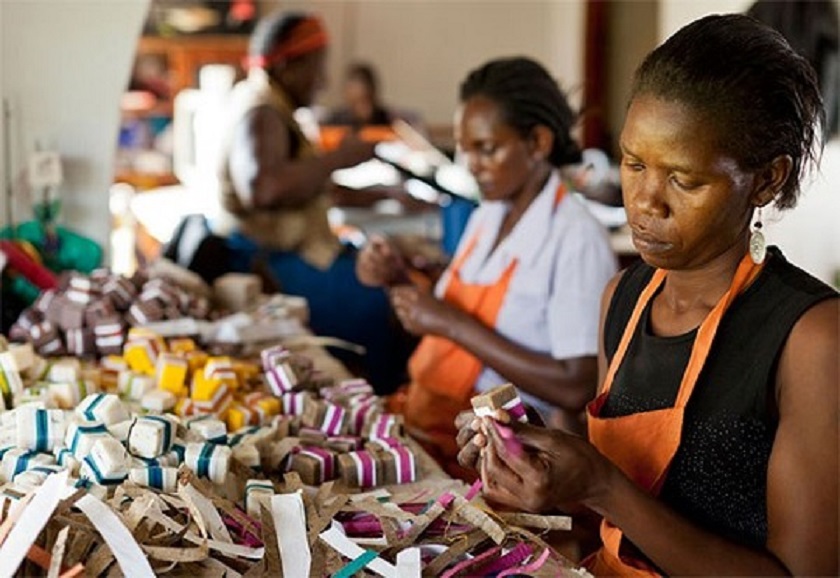
He said the Women Affinity Group (WAG) model promoted under the programme has proven to be a powerful tool for lifting women out of poverty by enabling collective savings, access to credit, financial discipline and enterprise growth.
Citing examples from the field, he explained that over 28,000 WAGs currently empower about 600,000 women across Nigeria, allowing them to save together, lend responsibly, invest in businesses and transition into formal financial services.
He added that scaling such models could unlock enormous economic gains, noting estimates that reducing gender inequality could increase Nigeria’s annual GDP growth by more than 1.25 percentage points, while closing productivity gaps across key sectors could add nearly $23 billion to the economy.
“This is smart economics. When women thrive, communities grow stronger, and economies become more resilient,” Mr Verghis said.
Also speaking at the event, Mr Robert S. Chase, World Bank Practice Manager for Social Protection and Jobs, described the Nigeria for Women Programme Scale-Up as one of the most ambitious gender-focused social and economic interventions currently being implemented in Africa.
He said the programme reflects a strong partnership between Nigeria and the World Bank, anchored on evidence, innovation and a shared commitment to lifting millions of women out of poverty.
Mr Chase noted that the programme’s strength lies in its ability to build sustainable systems rather than short-term relief, particularly through the Women Affinity Groups model, which combines social capital, financial inclusion and access to productive opportunities.
According to him, the scale-up phase demonstrates Nigeria’s readiness to institutionalise women’s empowerment as a core development strategy and not merely a welfare initiative.
The NFWP-SU Phase II is a $540 million programme, co-financed by the World Bank and the Federal and State Governments, expanding implementation to all 36 states and the Federal Capital Territory. It aims to directly reach five million women, generate about 4.5 million jobs, and benefit nearly 19.5 million Nigerians indirectly, while laying the groundwork for the broader expansion to 25 million women.
Under the leadership of Minister Imaan Sulaiman Ibrahim, the Ministry of Women Affairs and Social Development has positioned the programme as the centrepiece of wider social and economic reforms.
In Phase I alone, over 26,500 Women Affinity Groups were formed with more than 560,000 members, who collectively saved over N4.9 billion, expanded businesses, paid school fees and met household health needs.
The model has since attracted international interest, with other countries seeking to understudy Nigeria’s experience.
Beyond economic empowerment, the ministry has linked the programme to digital inclusion, civic identity, child protection and family welfare, while rolling out complementary initiatives in agribusiness, energy access, skills development and protection services.










-
 Feature/OPED6 years ago
Davos was Different this year
-
Travel/Tourism9 years ago
Lagos Seals Western Lodge Hotel In Ikorodu
-

 Showbiz3 years ago
Estranged Lover Releases Videos of Empress Njamah Bathing
-
 Banking8 years ago
Sort Codes of GTBank Branches in Nigeria
-

 Economy3 years ago
Subsidy Removal: CNG at N130 Per Litre Cheaper Than Petrol—IPMAN
-

 Banking3 years ago
Sort Codes of UBA Branches in Nigeria
-

 Banking3 years ago
First Bank Announces Planned Downtime
-

 Sports3 years ago
Highest Paid Nigerian Footballer – How Much Do Nigerian Footballers Earn