

Banking
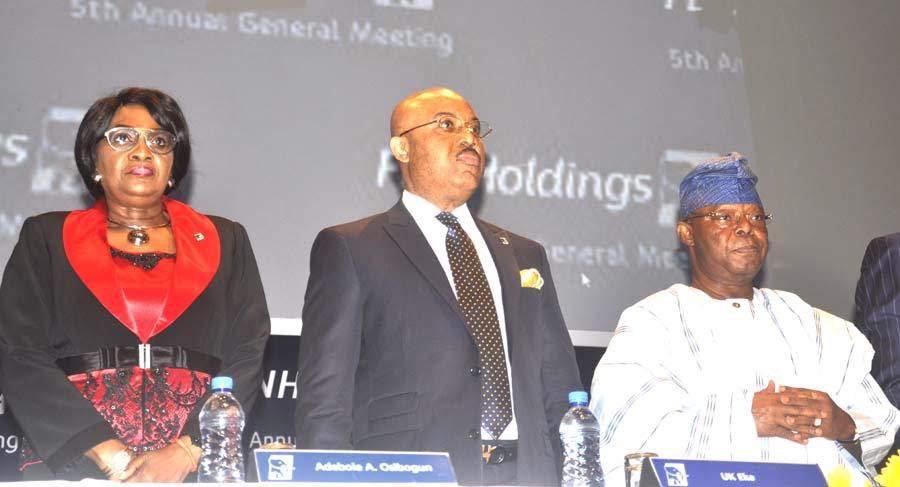
Shareholders Furious Over FBN Holdings High NPL Ratio of 22.8%

By Modupe Gbadeyanka
The board and management of FBN Holdings Plc have been tasked to make efforts within their reach to recover almost all the Non-Performing Loans (NPLs).
Expressing their frustrations at the firm’s Annual General Meeting (AGM) in Lagos on Tuesday, the shareholders said the bad loans were affecting performance of the company.
They said the N150.4 billion reflected in the group’s 2017 financial statements as payment for impairment charges was too high despite being lower than the N226 billion paid in 2016.
As at December 31, 2017, the NPL of FBN Holdings stood at 22.8 percent, which shareholders said was very high.
But responding to this issue, Group Managing Director of FBN Holdings Plc, Mr Urum Kalu Eke, assured shareholders that something would be done to address the NPLs.
He said the company was also worried about the issue because it had affected its performance in the past.
According to him, the management was taking necessary strategies to recover the bad loans, saying these steps were yielding results as seen in the reduction of the NPL to 22.8 percent in 2017 from 24.4 percent.
“Even though we have not recorded a full resolution of our NPLs, we have made significant progress in dealing with a number of these names and more fundamentally, ensured a strong asset quality from recent credits.
“As a result, NPL for the period declined from 24.4 percent in 2016 to 22.8 percent in 2017,” the bank chief said at the meeting.
On his part, Chairman of FBN Holdings Plc, Mr Oba Otudeko, said the institution made significant progress last year.
According to him, the group’s flagship subsidiary, First Bank Nigeria Limited, sustained its leadership position in the e-payment space, emerging as the first financial institution in Nigeria and West Africa to issue 10 million cards to customers.
He added that the bank was recognised as the first financial institution in Nigeria to achieve an electronic transaction volume of 100 million in a month.
Mr Otudeko said FBN Holdings would consolidate on the progress made in the previous year to deliver a strong and sustainable performance that enhances returns to shareholders.
Also at the Tuesday’s event, the shareholders approved the payment of N8.974 billion dividend proposed by the board. This represents 25 kobo per share for the 2017 financial year.
A look at the firm’s performance last year showed that its gross earnings grew by 2.3 percent to N595.4 billion from N581.8 billion in 2016, while its profit before tax appreciated to N56.3 billion from N22.9 billion.
Furthermore, its customer deposits went up to N3.14 trillion from N3.10 trillion in 2016, while the total assets increased to N5.2 trillion from N4.7 trillion two years ago.
Also, the group posted a net-interest income of N331.5 billion against N304.4 billion in 2016, while the non-interest income dropped by 31.3 percent to N113.7 billion from N165.5 billion a year earlier.
The operating income during the year went down to N444.8 billion from N469.9 billion in 2016, while the operating expenses increased by 7.7 percent to N238 billion from N220.9 billion two years ago.
Last year, its impairment charge for credit losses stood at N150.4 billion in contrast to N226 billion in 2016, while the profit after tax went up by 178.8 percent to N47.8 billion from N17.1 billion in 2016.
As at the close of transactions on the floor of the exchange yesterday, shares of the company were traded at N11.50k per share.











By Adedapo Adesanya
The Bank of Agriculture (BOA) has unveiled a strategic roadmap aimed at modernising its operations, expanding grassroots financial inclusion and accelerating agricultural transformation in line with the Federal Government’s food security agenda.
The chief executive of the bank, Mr Ayodeji Sotinrin, disclosed this in a statement issued on Friday that the institution is implementing operational upgrades and forging strategic partnerships to improve the delivery of agricultural intervention programmes and empower smallholder farmers across the country.
According to the statement, the BOA is strengthening its agricultural delivery architecture by expanding collaborations with state-level delivery platforms, licensed input suppliers and international development partners.
A key component of the strategy is a recently signed Memorandum of Understanding with the United Nations Development Programme (UNDP), aligning the bank’s revitalisation agenda with the UN agency’s Integrated Smart States Programme.
The bank said the partnership would help transform Nigeria’s agricultural sector into an investment-ready system capable of attracting blended and climate finance while supporting the One Million Hectare Tree Crop Initiative, described as a presidential priority expected to boost commercial agriculture, job creation and export diversification.
“Our vision for the Bank of Agriculture is to deploy capital in an intelligent, smart, and highly efficient way to reposition the institution as a catalyst for food security and rural prosperity. We are bringing everyone into the financial net, especially the youthful population of farmers in our hinterlands, to create a new, resilient food system for Nigeria,” Mr Sotinrin said.
The bank also disclosed that it had overhauled its verification framework to eliminate fraudulent beneficiaries and ensure interventions reached genuine farmers.
According to the statement, the new credit profiling process incorporates Bank Verification Number checks, Know Your Customer protocols and GPS farm mapping to strengthen transparency and accountability in loan disbursement.
Commenting on the initiative, the National President of the All Farmers Association of Nigeria, Muhammad Magaji, endorsed the verification measures while urging quicker loan disbursement.
“The All Farmers Association of Nigeria recognises the critical role the Bank of Agriculture plays in shielding our farmers from exorbitant commercial interest rates. While we continuously advocate for faster disbursement cycles to match planting seasons, we stand with the BOA on the need for strict verification.
“It is the only way to ensure that these interventions reach the genuine smallholder farmers who actually till the soil, rather than ‘political farmers.’ We remain committed to working closely with the BOA management to fine-tune this delivery framework,” he added.
The BOA further said it is modernising its nationwide operations by deploying digital farmer systems, agency banking models and solar-powered infrastructure across its 110 branches to improve service delivery in rural communities.
It added that recent ICT infrastructure support from the UNDP would strengthen its digital transformation efforts and enable the bank to provide financial and extension services directly to farmers.
The bank said it would continue engaging commodity associations, verified grassroots cooperatives and other agricultural stakeholders through town hall meetings and working groups to identify genuine beneficiaries and support the implementation of the National Agri-food System Investment Plan.

By Adedapo Adesanya
Stakeholders, including industry leaders, regulators, and payment experts, have called for stronger infrastructure, responsible artificial intelligence (AI) adoption, and deeper cross-sector collaboration to unlock the next phase of growth in Nigeria’s digital payments ecosystem.
They made the call during the 2026 Digital Pay Expo held in Lagos on June 17 and 18, 2026. This year’s event focused heavily on the transformative role of AI, cybersecurity, cross-border transactions, and deepening financial inclusion across Africa.
Speaking at the event, Dr Rekiya Yusuf, Director of the Payment System Supervision Department at the Central Bank of Nigeria (CBN), represented by Mr Chika Ugwueze, Deputy Director, stated that Nigeria’s payment ecosystem is rapidly evolving beyond digital adoption into deeper digital transformation.
According to Dr Yusuf, artificial intelligence is emerging as a critical driver of this shift, particularly in real-time fraud detection and expanding access to underserved populations.
“The goal is to make financial transactions seamless. AI is now driving innovation, helping in real-time fraud detection and helping to expand access,” she said.
She noted, however, that important gaps remain, particularly around infrastructure and inclusion. Building a resilient digital market system in the AI era requires reliable connectivity, robust infrastructure, intentional talent development, and sustained capacity building.
Echoing the regulator’s call for robust ecosystem support, Mr Chika Nwosu, Managing Director of PalmPay Nigeria, said trust, access, and practical financial support remain critical to helping small businesses participate more meaningfully in the formal economy.
He noted that while micro, small, and medium enterprises (SMEs) contribute an impressive 40 per cent to Nigeria’s Gross Domestic Product (GDP), limited access to credit and reliable payment infrastructure continues to slow their ability to grow and scale.
To drive true innovation, Nwosu argued that financial inclusion must move beyond simply opening accounts and enabling basic transactions; it requires building a foundation of trust and tangible economic empowerment.
“SMEs contribute 40 per cent of the country’s GDP. For us at PalmPay, we don’t just provide payment solutions to them, we also support them with financial tools they need to expand and create jobs,” he said.
Mr Nwosu further emphasised the importance of digital literacy, noting that a stronger understanding of digital tools and AI-enabled systems will be essential to building long-term trust and participation across the ecosystem.
The discussions at Digital Pay Expo 2026 reflected a growing consensus across the industry: the future of African digital payments will depend on getting the fundamentals right. That means stronger infrastructure, responsible use of AI, better cybersecurity, and closer collaboration between regulators, fintechs, and other ecosystem players.
For PalmPay, the event reinforced the importance of building a payments ecosystem that is more resilient, more secure, and better equipped to support inclusion and growth at scale.
Founded in 2019, PalmPay has expanded its operations across emerging markets, providing digital financial services ranging from payments and savings to credit and merchant solutions, while supporting financial inclusion through smartphone financing and access to digital banking services.

By Aduragbemi Omiyale
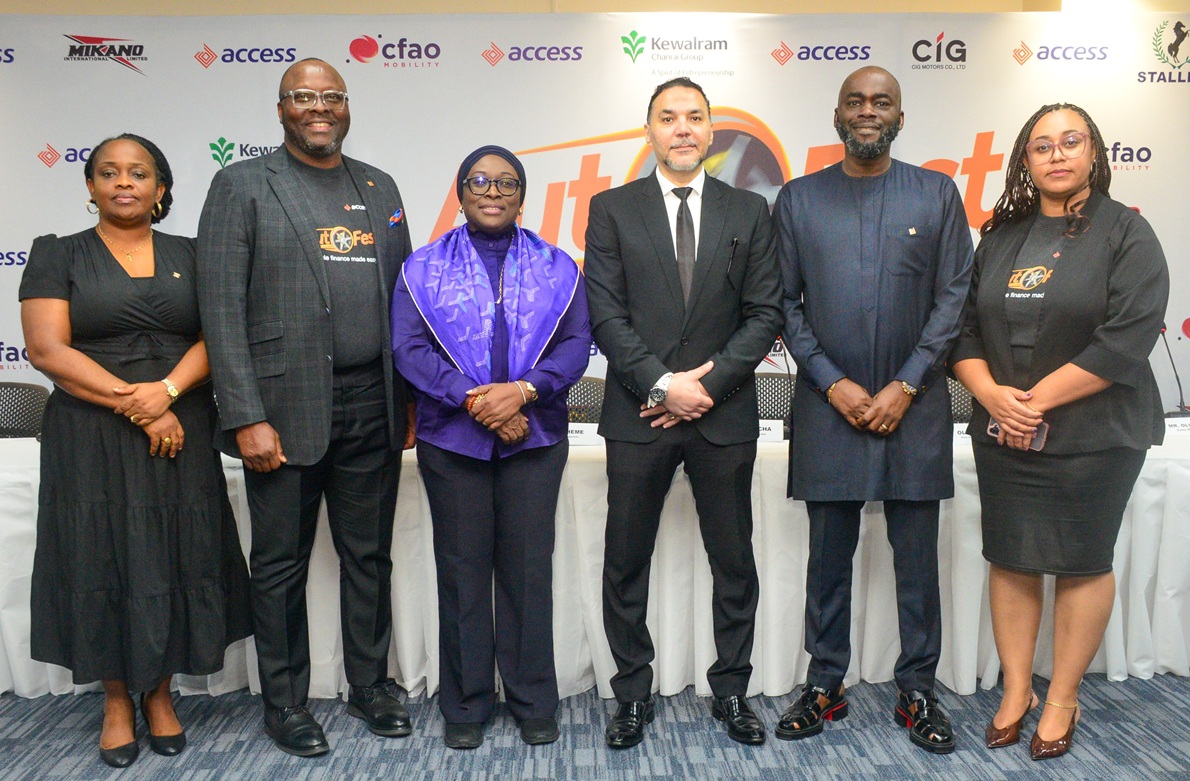
A new vehicle financing initiative designed to allow funding support of up to 90 per cent of a vehicle’s value and repayment tenures of more than four years has been introduced by Access Bank Plc.
This is part of the lender’s vehicle asset financing programme aimed at expanding access to vehicle ownership and mobility services across the country.
Application for the service is through a digital process, the bank’s Executive Director of Corporate and Investment Banking Division, Ms Iyabo Soji-Okusanya, disclosed.
Customers can access vehicles from top distributors like CIG Motors, Mikano Motors, Kewalram Motors, Stallion Motors, Elizade JAC, CFAO and other mobility dealers. They can purchase both new and certified pre-owned vehicles through a single process, she added.
“You apply online, and you go home with the keys to your car already in your pocket,” Ms Soji-Okusanya stated, noting that for businesses, the initiative will provide access to vehicles needed for operations while helping dealers improve inventory turnover and unlock capital tied down in unsold stock.
While explaining how the process works, the Group Head of Access Bank Mobility, Mr Ishmael Nwokocha, said the bank spent the last six months engaging dealers and other stakeholders in the automotive value chain before rolling out the programme.
According to him, Nigeria records annual vehicle sales of about 100,000 units, with only about 10 per cent being brand-new vehicles, while the remaining 90 per cent are pre-owned vehicles, adding that rising vehicle prices have significantly reduced affordability for many Nigerians.
“What are we offering today? Come with 10 per cent equity contribution, and we’ll finance the 90 per cent,” Mr Nwokocha said, noting that customers would also have access to insurance, after-sales services, and a digital loan application process that allows applicants, dealers and the bank to monitor progress.
He said the initiative extends beyond individual consumers to corporate organisations, schools, hospitals and other businesses requiring vehicle fleets, revealing plans to expand financing access to operators in the ride-hailing and transport sectors that are currently outside the formal banking system.
On her part, the Group Head of Product and Segment at Access Bank, Ms Chizoba Iheme, said the bank had put measures in place to support customers who encounter financial difficulties during the repayment period, explaining that affected borrowers could seek loan restructuring rather than risk losing their vehicles immediately.
“So long as the vehicle is still valid, it’s still running on the road, we can look at your finance, and then we’ll repackage your loan,” she said, also clarifying that customers are not required to maintain loans for the full approved tenor and can repay outstanding obligations earlier if they choose.
On the scope of the programme, she said financing is available to individuals, corporates and small businesses seeking vehicles for commercial or operational use.
The Managing Director of CIG Motors, Ms Eniola Olutimilehin, whose company is one of the participating dealers, said the partnership would help connect vehicle buyers with financing while supporting mobility and business operations.
She said the collaboration is expected to improve access to vehicles for individuals and entrepreneurs requiring transportation assets for personal and commercial activities.

-
 Feature/OPED6 years ago
Davos was Different this year
-
Travel/Tourism10 years ago
Lagos Seals Western Lodge Hotel In Ikorodu
-

 Showbiz3 years ago
Estranged Lover Releases Videos of Empress Njamah Bathing
-
 Banking8 years ago
Sort Codes of GTBank Branches in Nigeria
-

 Economy3 years ago
Subsidy Removal: CNG at N130 Per Litre Cheaper Than Petrol—IPMAN
-

 Banking3 years ago
Sort Codes of UBA Branches in Nigeria
-

 Banking3 years ago
First Bank Announces Planned Downtime
-

 Sports3 years ago
Highest Paid Nigerian Footballer – How Much Do Nigerian Footballers Earn