

Economy
Nestle Pays $7.15b to Market Starbucks Products


By Modupe Gbadeyanka
A licensing deal worth $7.15 billion has been sealed between Nestle and Starbucks Corporation, allowing Nestle have the perpetual right to market Starbucks’ consumer and foodservice products globally outside of Starbucks coffee shops, which are not part of the transaction.
“This transaction is a significant step for our coffee business, Nestlé’s largest high-growth category,” said Mr Mark Schneider, CEO, Nestlé.
“With Starbucks, Nescafé and Nespresso we bring together three iconic brands in the world of coffee.
“We are delighted to have Starbucks as our partner. Both companies have true passion for outstanding coffee and are proud to be recognized as global leaders for their responsible and sustainable coffee sourcing. This is a great day for coffee lovers around the world,” he added.
“This global coffee alliance will bring the Starbucks experience to the homes of millions more around the world through the reach and reputation of Nestlé,” President and CEO of Starbucks, Mr Kevin Johnson, stated.
“This historic deal is part of our ongoing efforts to focus and evolve our business to meet the changing consumer needs, and we are proud to work alongside a company that is committed to our shared values,” he added.
Business Post reports that the two companies will work closely together on innovation and go-to-market strategies to bring the best coffee to customers around the world as the deal allows Nestlé to capture exciting new growth opportunities in the rest of the world with Starbucks premium products. As a complete provider of coffee solutions, Nestlé will accelerate growth in out-of-home channels.
However, the agreement is subject to customary regulatory approval and is expected to close by the end of 2018. The agreement excludes Ready-to-Drink products and all sales of any products within Starbucks coffee shops.
As part of this transaction, Starbucks will receive an up-front cash payment of $7.15 billion for a business which generated annual sales of $2 billion.
But the transaction does not include the transfer of any fixed assets, which facilitates a smooth and efficient integration and Nestlé expects this business to contribute positively to its earnings per share and organic growth targets as from 2019.
Nestlé’s ongoing share-buyback program will remain unchanged, the management said, but approximately 500 Starbucks employees will join the Nestlé family to drive performance of the existing business and global expansion. Operations will continue to be located in Seattle.
Meanwhile, notable credit rating company, Moody’s, has rated the Nestlé’s Starbucks deal as “credit negative,” changing its outlook on Nestlé’s Aa2 rating to negative from stable.
It noted that the deal will be fully funded with debt, increasing Nestlè’s reported gross debt by approximately 20 percent.
Moody’s said because Nestle confirmed that its ongoing CHF20 billion share buyback to be completed by 2020 will not be amended following the transaction, the firm’s credit metrics, which are already weak for its current Aa2 rating, will deteriorate.
“We expect Nestlé’s ratio of retained cash flow to net debt to drop to below 20% in 2019 and 2020 from 29 percent in 2017, which is below our 30 percent quantitative guidance for its Aa2 rating, and its ratio of funds from operations to net debt to decline to 36 percent -40 percent from around 56 percent,” Moody’s said in its report obtained by Business Post.
However, Moody’s said in spite of the negative credit implications, the agreement is positive from an industrial standpoint because it will reinforce Nestlé’s position in the coffee segment, which is growing faster and with higher profitability than the group’s average.
In 2017, Nestlé’s powdered and liquid beverage division, which includes coffee, grew by 3.6 percent compared with the group’s consolidated organic sales growth of 2.4 percent and the division’s underlying trading operating margin was 21.9 percent compared with a consolidated 16.4 percent.
The Starbucks’ business included in the agreement generated approximately $2.0 billion of revenue in 2017 and Nestlé could rapidly expand it, especially outside the US given its global distribution platform.
Moreover, the deal does not entail any fixed-asset transfer, which should limit execution risk and reduce integration costs.
The agreement is consistent with Nestlè’s strategy to reach mid-single-digit organic sales growth in 2020 and improve its underlying operating margin to 17.5 percent -18.5 percent by 2020 from 16 percent in 2016, reflecting accelerating organic sales growth via product innovation and renovation; a CHF2.0-CHF2.5 billion cost-savings programme; and the adjustment of the group’s product portfolio by disposing of low-growth, low margin segments and by investing in more attractive ones. Recent transactions include the disposal of the US confectionery business for $2.8 billion in January 2018, the acquisition of Canadian nutritional company Atrium for $2.3 billion in December 2017 and the purchase of a 68 percent stake in premium coffee retailer Blue Bottle Coffee in September 2017. The company is also considering the disposal of Gerber’s life insurance business.









By Adedapo Adesanya
Nigeria Employers’ Consultative Association (NECA) has inaugurated the country’s first Environmental, Social and Governance (ESG) Implementation Guide for Micro, Small and Medium Enterprises (MSMEs) to strengthen business sustainability.
The guide was inaugurated on Tuesday during the 2026 Nigeria Employers’ Summit in Abuja in collaboration with the International Labour Organisation (ILO).
Chairman of the NECA ESG Advisory Board, Mr Femi Jaiyeola, described the guide as a milestone for strengthening the competitiveness and sustainability of Nigerian MSMEs.
He said MSMEs remained the backbone of Nigeria’s economy and required practical tools to compete in an increasingly sustainability-driven global business environment.
Mr Jaiyeola said ESG had evolved beyond regulatory compliance into a strategic business tool for attracting investment, improving competitiveness and enhancing long-term enterprise value.
He said ESG also presented significant opportunities for MSMEs and Nigeria’s economy beyond meeting regulatory obligations.
According to him, the guide comes as regulators, financial institutions and global markets increasingly demand sustainable business practices from enterprises of all sizes.
The official said ESG reporting was expected to become mandatory in Nigeria by 2030, urging MSMEs to begin preparations immediately.
He said the guide provided a practical roadmap to help MSMEs adopt ESG principles progressively while delivering measurable business value and organisational resilience.
According to him, ESG adoption will improve access to finance, strengthen business reputation and expand opportunities in international value chains.
He described the guide as a practical tool that would enable Nigerian MSMEs to compete, grow and thrive in a sustainability-driven economy.
Mr Jaiyeola commended ILO consultants and members of the NECA ESG Advisory Board for supporting the development of the implementation guide.
He recalled that NECA, with ILO support, launched an ESG assessment on Dec. 4, 2025, to strengthen sustainability practices across Nigerian businesses.
According to him, the assessment highlighted the need to integrate MSMEs into Nigeria’s ESG framework because of their contributions to economic growth and employment.
Mr Jaiyeola said the implementation guide was the first designed specifically for MSMEs in Nigeria and, to NECA’s knowledge, across Africa.
He expressed confidence that the guide would help MSMEs understand ESG principles and improve competitiveness in local and international markets.
Mr Jaiyeola disclosed that six NECA officials were undergoing specialised ESG training for SMEs at the ILO International Training Centre in Turin, Italy.
He said the officials would train MSMEs across Nigeria’s six geopolitical zones after completing the programme. According to him, the initiative demonstrates NECA’s commitment to building business capacity for sustainability and global competitiveness.
By Adedapo Adesanya
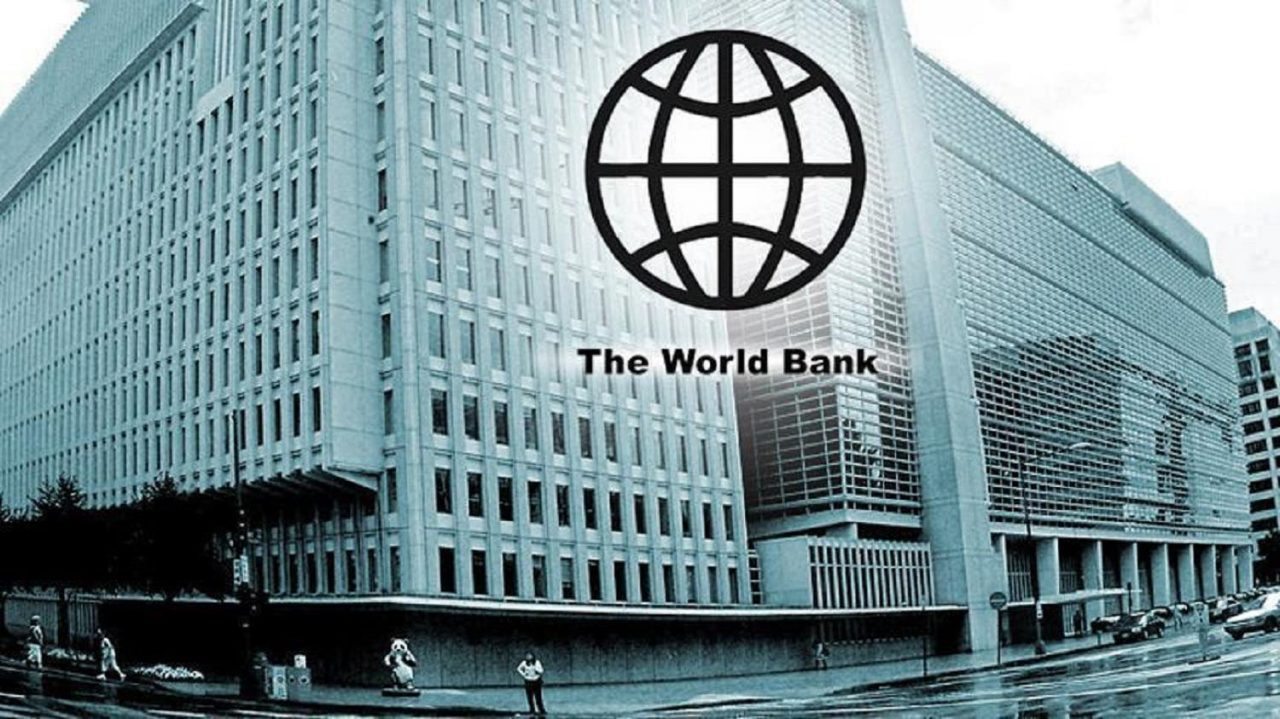
The World Bank has approved $1.25 billion in development financing to help Nigeria spur economic growth and create jobs.
Unveiled under its Nigeria Actions for Investment and Jobs Acceleration programme, the approval was announced on Wednesday alongside the launch of a new Country Partnership Framework for Nigeria, spanning 2026 to 2032.
The global lender, in a statement, noted that the newly endorsed strategy aims to guide its support over the next six years, primarily focusing on creating higher-quality jobs.
The Bretton Woods-based bank said the $1.25 billion Development Policy Financing operation is expected to back reforms aimed at improving Nigeria’s business environment and strengthening long-term economic growth.
According to the statement, the planned reforms include expanding capital markets, updating regulations for the digital economy and e-governance, accelerating electricity sector reforms, reducing trade barriers in line with Nigeria’s commitments under the Economic Community of West African States (ECOWAS) and the African Continental Free Trade Area (AfCFTA), improving access to quality agricultural seeds and increasing domestic revenue generation.
The loan comes amid increased criticism over the rate of borrowing under the Bola Tinubu-led administration, which has seen the country’s debt profile now almost at N160 trillion, as per the latest data from the Debt Management Office (DMO).
The Bank stressed that the new framework is built on Nigeria’s recent macroeconomic reforms, which it noted have successfully driven economic growth, bolstered external reserves, and improved investor confidence.
“The World Bank Group has endorsed a new Country Partnership Framework for Nigeria spanning 2026–2032, setting out a strategy to create more and better jobs at scale by unlocking private sector-led growth,” the bank stated in the statement.
World Bank Country Director for Nigeria, Mr Mathew Verghis, while highlighting the need to convert financial benchmarks into human development, emphasised the core mission of the project.
“Our new Country Partnership Framework provides the strategy for how the World Bank Group will support Nigeria over the coming years, with a strong focus on helping to create more and better jobs, particularly by enabling private sector-led growth.
“The recent macroeconomic gains have been critical to help stabilise the economy. Translating improved macroeconomic conditions into better living standards will require addressing the structural constraints to spur private sector investment and job creation,” Mr Verghis said.

By Adedapo Adesanya
The NASD Over-the-Counter (OTC) Securities Exchange improved by 0.89 per cent on Tuesday, June 30, spurring the market capitalisation to chalk up N22.72 billion to close at N2.580 trillion, in contrast to the preceding session’s N2.557 trillion.
In the same vein, the NASD Unlisted Security Index (NSI) added 37.85 points during the session to settle at 4,2991.41 points from Monday’s 4,261.56 points.
The unlisted securities market gained weight yesterday after finishing with three price losers and gainers, led by Nipco Plc, which improved its share price by N34.24 to N384.00 per unit from N349.76 per unit. FrieslandCampina Wamco Nigeria Plc appreciated by N10.25 to close at N152.01 per share versus N141.76 per share, and Food Concepts Plc soared by 7 Kobo to settle at N2.50 per unit versus N2.43 per unit.
On the flip side, Afriland Properties Plc weakened by N1.57 to N15.17 per share from N16.74 per share, Central Securities Clearing System (CSCS) Plc lost 48 Kobo to trade at N88.00 per unit compared with Monday’s N88.48 per unit, and Geo-Fluids Plc eased by 24 Kobo to N2.37 per share from N2.61 per share.
During the session, the volume of securities traded by market participants moved up by 268.9 per cent to 846,063 units from 229,314 units, while the value of securities dropped 34.9 per cent to N15.99 million from N24.6 million, and the number of deals crashed by 26.5 per cent to 25 deals from 34 deals.
Great Nigeria Insurance (GNI) Plc remained the most active stock by value on a year-to-date basis, with 3.4 billion units worth N8.4 billion, the second spot was occupied by Infrastructure Credit Guarantee (Infracredit) Plc with 2.3 billion units valued at N6.5 billion, and the third spot was taken by CSCS Plc with 68.8 million units traded for N4.7 billion.
GNI Plc also ended the day as the most active stock by volume on a year-to-date basis, with 3.4 billion units exchanged for N8.4 billion, followed by Infracredit Plc with 2.3 billion units transacted N6.5 billion, and Resourcery Plc with 1.1 billion units sold for N415.7 million.

-
 Feature/OPED6 years ago
Davos was Different this year
-
Travel/Tourism10 years ago
Lagos Seals Western Lodge Hotel In Ikorodu
-

 Showbiz3 years ago
Estranged Lover Releases Videos of Empress Njamah Bathing
-
 Banking8 years ago
Sort Codes of GTBank Branches in Nigeria
-

 Economy3 years ago
Subsidy Removal: CNG at N130 Per Litre Cheaper Than Petrol—IPMAN
-

 Banking3 years ago
Sort Codes of UBA Branches in Nigeria
-

 Banking3 years ago
First Bank Announces Planned Downtime
-

 Sports3 years ago
Highest Paid Nigerian Footballer – How Much Do Nigerian Footballers Earn