

Banking
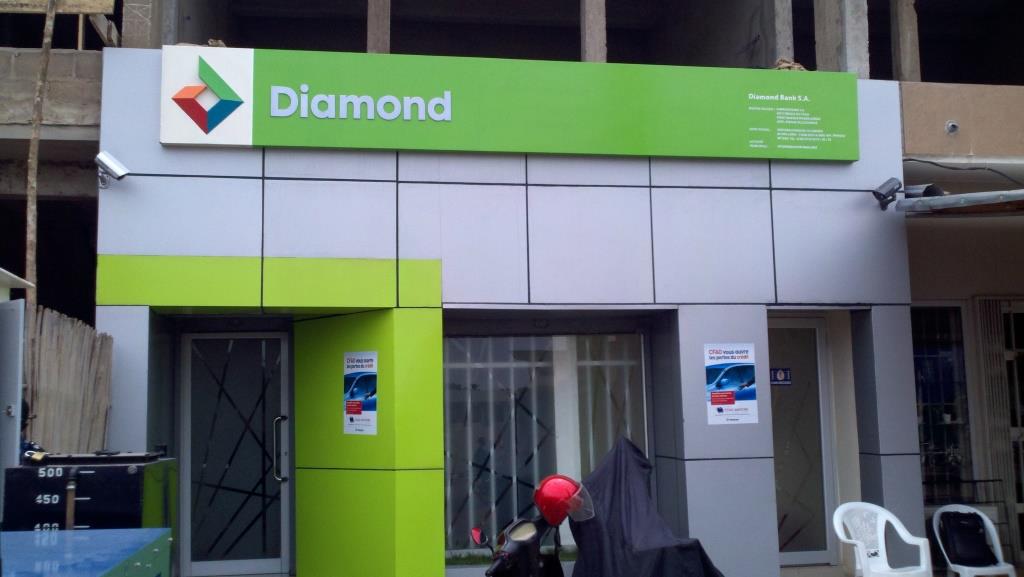
Diamond Bank Shares Shed 5% after Posting Dismal 2017 Results


By Dipo Olowookere
Last Friday, Diamond Bank Plc finally released its audited financial statements for the year ended December 31, 2017.
The results fell short of what the market was expecting and investing public did not hide their feelings about this.
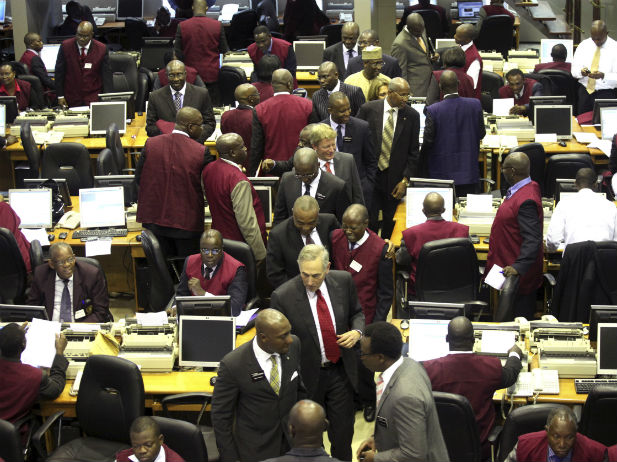
At the close of transactions on the floor of the Nigerian Stock Exchange (NSE) on Friday, the stock suffered 5 percent loss.
A look at the 2017 earnings of Diamond Bank, a tier-two lender in Nigeria, showed that it recorded a loss before tax of N11.6 billion compared with the profit before tax of N3.4 billion it achieved in 2016, while it had loss after tax of N9 billion during the period under review against the profit after tax of N3.5 billion in 2016.
Business Post reports that these losses occurred amid the 3 percent growth recorded in the gross earnings of the lender because as at December 31, 2017, Diamond Bank’s gross earnings stood at N189.6 billion in contrast to N184.1 billion as at December 31, 2016.
The bank said in its financial statements that it raked N145.3 billion as interest income compared with N127.8 billion in 2016, while the interest expense jumped to N47 billion from N31.3 billion, leaving the net interest income at N98.3 billion versus N96.5 billion in 2016.
For its balance sheet, the total assets of Diamond Bank as at December 2017 stood at N1.7 trillion against N2.1 trillion in 2016, while the total liabilities reduced to N1.5 trillion from N1.8 trillion.
The above results did not reflect what investors were expecting especially when its peers like Fidelity Bank, FCMB and Wema Bank had earlier posted fair and positive financial statements.
When the market closed two days ago, the stock dropped to N1.90k per share, losing a total of 9.95 percent of its share value during the week at the NSE.
Business Post reports that with the results the financial institution released last Friday, some investors are already getting worried and do not want to be caught unawares especially with recent sale of the company’s assets outside Nigeria.
This and other factors may make some investors to quickly offload the stock from their portfolio from tomorrow (Monday) and it might not surprise anyone to see Diamond Bank on full offer this week with fears that the shares may drop to about N1.25k because of the disappointment.
However, some investors have expressed optimism that Diamond Bank will get back on its feet, pointing out that the stock is one to look out for because of its positive prospect in the future.
Diamond Bank presently has an EPS of 1.76 and PE of 1.08 with 14.5 billion unit share valued at N27.5 billion.



By Aduragbemi Omiyale
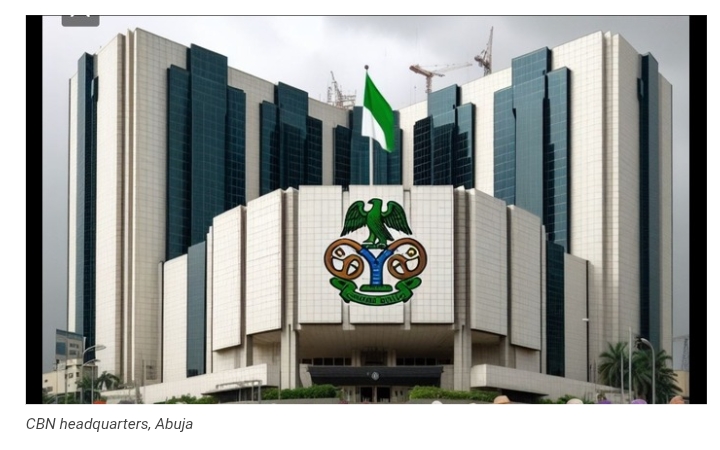
The operating licenses of 46 microfinance banks in the country have been revoked by the Central Bank of Nigeria (CBN).
A statement on Wednesday from the banking sector regulator disclosed that the action followed failure by the affected small lenders to comply with regulatory requirements.
The central bank said it had to enforce its powers under Sections 12 and 13 of the Banks and Other Financial Institutions Act (BOFIA), 2020, to withdraw the licenses of the banks.
“The revocation of the licenses is part of the Bank’s ongoing efforts to safeguard the stability of the financial sector, protect depositors, and ensure that licensed institutions comply with current laws and regulatory requirements,” a part of the circular dated Wednesday, July 1, 2026, and signed by the acting Director of the Corporate Communications Department of the CBN, Mrs Hakama Sidi-Ali, stated.
The apex bank listed five violations by the 46 microfinance banks, including insufficient assets to meet liabilities, closure of operations without the CBN’s approval, inactivity and cessation of financial intermediation, failure to commence operations within 12 months of licence approval, and failure to maintain minimum capital funds unimpaired by losses.
Another part of the notice disclosed that, “The revocation was approved by the Governor of the Central Bank of Nigeria, Mr Olayemi Cardoso, following the banks’ failure to meet the regulatory requirements for continued operation as licensed financial institutions.”
The affected financial institutions are;
| S/NO | MFB | CATEGORY | STATE |
| 1 | Minji-Se Churchill MFB | Tier 1 | Rivers |
| 2 | Merchant MFB | Tier 2 | Abia |
| 3 | Janmaa MFB | Tier 1 | Kwara |
| 4 | Busu MFB | Tier 2 | Niger |
| 5 | Gold MFB | Tier 1 | Lagos |
| 6 | Zain MFB (foremerly Dawakin Tofa MFB) | Tier 2 | Kano |
| 7 | Bompai MFB | Tier 1 | Kano |
| 8 | Ajwa MFB (Formerly Gezawa) | Tier 2 | Kano |
| 9 | NOW NOW DIGITAL MFB | Tier 2 | Kano |
| 10 | Crystabel Microfinance Bank | Tier 1 | Bayelsa |
| 11 | Chanelle MFB | State | Lagos |
| 12 | Abia SME MFB | Tier 1 | Abia |
| 13 | Kamba MFB | Tier 2 | Kebbi |
| 14 | Iwade MFB | Tier 2 | Ogun |
| 15 | Winview MFB | Tier 1 | Abuja |
| 16 | Zuru MFB | Tier 2 | Kebbi |
| 17 | Minjibir MFB | Tier 1 | Kano |
| 18 | Shanono MFB | Tier 2 | Kano |
| 19 | Sumaila MFB | Tier 2 | Kano |
| 20 | Rimin Gado MFB | Tier 2 | Kano |
| 21 | Mwaghavul MFB | State | Plateau |
| 22 | Sycamore MFB | Tier 2 | Kano |
| 23 | TOFA MFB | Tier 2 | Kano |
| 24 | Safegate MFB | Tier 1 | Lagos |
| 25 | Creekline MFB | Delta | Tier 2 |
| 26 | Bestar MFB | Tier 1 | Oyo |
| 27 | Livingspring MFB | Tier 1 | Cross River |
| 28 | Apple MFB | Tier 2 | Ogun |
| 29 | Stanford MFB | State | Uyo |
| 30 | Frontline MFB | Tier 2 | Anambra |
| 31 | Zafec MFB | Tier 2 | Kaduna |
| 32 | Supreme MFB | Tier 1 | Lagos |
| 33 | Bejin-Doko MFB | Tier 2 | Niger |
| 34 | Kanopoly MFB | Tier 1 | Kano |
| 35 | Bellbank MFB formerly Tsanyawa | Tier 2 | Kano |
| 36 | Yeneng MFB | Tier 2 | Plateau |
| 37 | Creditville MFB | Tier 1 | Lagos |
| 38 | MBAG MFB | Tier 1 | Lagos |
| 39 | STRAIGHT SAHARA MFB | Tier 1 | Benue |
| 40 | OURPASS MFB | Tier 2 | Ondo |
| 41 | VERDANT MFB | Tier 1 | Lagos |
| 42 | BASAWA MFB | Tier 2 | Kaduna |
| 43 | CASHA MFB | Tier 2 | Abuja |
| 44 | ESTEEM MFB | Tier 2 | Kano |
| 45 | ENTERPRENEUR MFB | Tier 1 | Lagos |
| 46 | AVANTUS MFB | Tier 2 | Osun |

By Adedapo Adesanya
Nigeria’s newly merged lender, ProvidusUnity Bank, says it hopes to accelerate financial inclusion, strengthen lending capacity, and support Nigeria’s economic growth.
The new bank, made up of Providus Bank and Unity Bank, is set to commence operations as a single unified institution following the successful completion of their business combination and the conclusion of all required regulatory, shareholder, and judicial processes.
A statement from the bank on Sunday stated that the newly formed entity represents a consolidated banking institution positioned to strengthen capitalisation, expand national coverage, deepen financial inclusion, and support Nigeria’s long-term economic ambitions.
The merger brings together Providus Bank’s innovation-driven, customer-centric service model and digital capabilities with Unity Bank’s extensive geographic reach and established market presence, creating a broader platform for retail, SME, and corporate banking services across the country.
The development aligns with ongoing reforms in Nigeria’s financial sector aimed at strengthening institutional resilience, safeguarding depositor confidence, improving competitiveness, and building banks capable of supporting economic transformation.
The bank expressed appreciation to the Central Bank of Nigeria (CBN) for its role in facilitating the transaction and for its commitment to strengthening the banking system. It also acknowledged the support of shareholders, customers, employees, and other stakeholders.
ProvidusUnity Bank said the merger is expected to enhance Nigeria’s financial sector capacity to mobilise investment, support enterprise development, expand access to credit, and contribute to the country’s aspiration of building a trillion-dollar economy.
Earlier this month, the Supreme Court ordered the transfer of all assets, liabilities and undertakings, including real properties, of Unity Bank to Providus Bank in accordance with the approved Scheme of Merger. The merger between the two lenders was challenged by customers and shareholders of the affected banks, Mr Suleiman Abubakar and Mr Mohammed Goni Modu.
The apex court held that the appeal lacked merit and accordingly dismissed it in its entirety, while imposing costs of N10 million in favour of each respondent. As part of the merger arrangements, the apex court approved a consideration of N3.18 per share or 18 Providus Bank shares of 50 kobo each for every 17 Unity Bank shares held by shareholders.
For customers, the new bank said the integration will deliver expanded access, improved service delivery, stronger technology infrastructure, broader banking channels, and a wider national footprint designed to improve consistency and efficiency of services.
It added that customers should expect continuity in service in the immediate term, with gradual access to enhanced products and broader capabilities over time.
For employees, the bank said the transaction represents continuity, opportunity and stability, adding that it remains committed to retaining talent, preserving institutional knowledge and supporting career growth within the new organisation.


By Modupe Gbadeyanka
The need for stronger collaboration to address climate change, advance conservation and equip young people to lead a more sustainable future has been emphasised by Union Bank.
At a symposium organised to commemorate 2026 World Environment Day in partnership with the Nigerian Conservation Foundation (NCF) at the Lekki Conservation Centre in Lagos, the financial institution urged businesses to match their commitments with action and pointed to the decisive role of finance in shaping a greener economy.
“As a bank that has been part of Nigeria’s story for over a century, Union Bank recognises that sustainable development and environmental responsibility must go hand in hand,” the company’s Chief Brand and Marketing Officer, Mrs Olufunmilola Aluko, stated.
“We believe businesses have a role to play not only in what they say, but also in what they do. Banks play an important role because they help determine where capital flows. The choices financial institutions make about what to fund and what to encourage help shape the kind of economy we build. This is a responsibility we take seriously at Union Bank, and it is one of the reasons gatherings like these matter to us,” she added.
In his keynote address, the Director General of NCF, Mr Joseph Daniel Onoja, framed conservation as a matter of human survival, noting that “nature has placed all the models that we need to be able to live well in it.”
“When we talk about nature conservation or environmental conservation, we’re saying human conservation because nature, Mother Earth, will always take care of herself.
“If we don’t take care of it, it will take care of itself by getting rid of us. Now, it is in our best interest to take care of the earth and learn from her, because she has provided everything we need to do so,” he further submitted.
A panel session featuring secondary school students from within and beyond Lagos brought an intergenerational dimension to the day. The students urged businesses and individuals to prioritise climate-conscious investments and cleaner energy sources, and exhibited innovations that turned waste into interior décor and clean energy.
Their work offered a vivid illustration of Sustainable Development Goal 12 on responsible consumption and production, and of the creativity a younger generation brings to the climate conversation.
This year’s World Environment Day theme, Inspired by Nature. For Climate. For Our Future, and the event, reflected a growing global consensus, captured in Sustainable Development Goal 13 on climate action and Sustainable Development Goal 17 on partnerships, that no single institution can meet the climate challenge alone.

-
 Feature/OPED6 years ago
Davos was Different this year
-
Travel/Tourism10 years ago
Lagos Seals Western Lodge Hotel In Ikorodu
-

 Showbiz3 years ago
Estranged Lover Releases Videos of Empress Njamah Bathing
-
 Banking8 years ago
Sort Codes of GTBank Branches in Nigeria
-

 Economy3 years ago
Subsidy Removal: CNG at N130 Per Litre Cheaper Than Petrol—IPMAN
-

 Banking3 years ago
Sort Codes of UBA Branches in Nigeria
-

 Banking3 years ago
First Bank Announces Planned Downtime
-

 Sports3 years ago
Highest Paid Nigerian Footballer – How Much Do Nigerian Footballers Earn