
Banking
Jaiz Bank Targets 11.22% Growth in Return on Equity in 2022


By Modupe Gbadeyanka
Leading non-interest financial institution in Sub Saharan Africa, Jaiz Bank Plc, has promised to sustain year-on-year growth over the next five years.
Managing Director of Jaiz Bank Plc, Mr Hassan Usman, during the presentation of the lender’s Facts Behind the Figures on Wednesday at the Nigerian Stock Exchange (NSE), stated that the company also plans to improve its shareholders’ return during the years under review.
According to him, the return on equity (RoE) is expected to increase to 4.39 percent in 2018 and 4.87 percent in 2019.
He further said Jaiz Bank expects to grow its RoE to 6.92 percent in 2020, 8.79 percent in 2021 and 11.22 percent in 2022.
Mr Usman said during the five-year period, the financial institution will grow its income and profitability with pre-tax profit for the period expected to be about N15.86 billion.
The bank chief disclosed that all these and others would be achieved by expanding its operations across the country by opening more branches.
He said Jaiz Bank will significantly leverage on technology to reach the nooks and crannies of the country and bring the semi-banked and unbanked population into the formal economy.
According to him, the bank has been positioned to sustain its growth trajectory and armed with the necessary resources to achieve these targets.
Mr Usman said the bank’s growth strategy of focussing on the real sector, though painstaking, will ensure sustainable growth and better returns over the years.
He said Jaiz Bank wants to develop small and medium enterprises (SMEs), grow with them and support them not only for profit making but to ensure the country achieves real growth, revealing that the bank would soon start to disburse $20 million financial lifeline to SMEs as part of the commitments of the bank to drive the growth of the real sector of the economy.
Jaiz Bank and Islamic Corporation for the Development of Private Sector (ICD), the development arm of Islamic Development Bank (IDB), had recently signed a $20 million line of agreement to finance SMEs in Nigeria.
“We shall continue to internally develop new customers, new markets and new product for both our physical and virtual channels. We remain committed to continuous up-scaling of our governance mechanism to meet the highest operating standards. Cost efficiency is at the heart of our value creation model. We shall strive to be a low cost operator,” Mr Usman said.
It is five-year growth plan and financial forecast, Jaiz Bank plans to raise its total income to about N81.17 billion while profit after tax is projected at N11.09 billion for the five-year period.
Gross income is expected to rise to N10.07 billion in 2018 and subsequently to N12.59 billion, N15.73 billion, N19.27 billion and N23.51 billion in 2019, 2020, 2021 and 2022 respectively.
Balance sheet of the bank is also expected to increase over the years with total assets projected at N123.61 billion in 2018 and subsequently to N150.5 billion, N182.6 billion, N220.02 billion and N262.80 billion in 2019, 2020, 2021 and 2022 respectively.
Deposit is projected to rise consecutively to N88.55 billion, N113.34 billion, N142.81 billion, N177.09 billion and N216.05 billion in 2018, 2019, 2020, 2021 and 2022 respectively.
Also, shareholders’ fund is projected to rise to N28.6 billion in 2018 and grow consecutively to peak at N35.23 billion by 2022.
In its financial results for the year ended December 31, 2017, the pre-tax profit-margin, which measures the underlining profitability of the company, doubled from 5.5 percent in 2016 to 11 percent in 2017.
The pre-tax profit margin denotes the efficiency of the core operational and administrative cost management, and it is usually taken as a more definitive index of performance than top-line margins.
The report indicated a well-rounded performance as gross earnings rose by 40 percent from N6.18 billion in 2016 to N8.10 billion in 2017.
Gross profit grew by 34 percent to N6.705 billion in 2017 as against N5.003 billion in 2016, while the profit before tax jumped by 160.6 percent from N343.02 million in 2016 to N894.01 million in 2017.
However, the bank’s tax provision leapt by 1,024 percent from N31.75 million in 2016 to N356.89 million in 2017. This moderated the net profit growth to 14.7 percent from N311.27 million in 2016 to N356.89 million in 2017.








By Modupe Gbadeyanka
Some top foreign exhibitors participating in the much-anticipated Ecobank Adire Lagos Experience commencing on Thursday, June 11, 2026, are already in Nigeria.
The four-day event, closing on June 14, will witness participation from notable African fashion brands from Ghana, Sierra Leone, Senegal and the Benin Republic.
Among the international exhibitors confirmed for this year’s edition are Creative Hub Africa and Shades of Class from Sierra Leone, Drame Khadidatou from Senegal, Tampoori from Ghana, and Naylah Collection from the Republic of Benin. Their participation highlights the growing continental appeal of the Ecobank Adire Lagos Experience as a platform for cultural exchange, business collaboration and market access across Africa.
More than 100 exhibitors and vendors, including leading Nigerian brands such as Obida Design Associates, This Is Us, Imani Kids, Ashabi Fads, E25Dresses, Miné by Ejiro Amos Tafiri, Buss Fabrics Store, Aina Aladire and many others, will participate, showcasing the richness of African craftsmanship, innovation and entrepreneurship.
It was gathered that organisers are putting finishing touches to the venue of the exhibition, the prestigious Ecobank Pan African Centre (EPAC) on Victoria Island, Lagos.
All necessary arrangements to ensure a seamless, secure and memorable experience for exhibitors and attendees are being put in place by the bank, further underscoring its commitment to promoting African creativity, entrepreneurship and intra-African trade.
The Head of SMEs, Partnerships and Collaborations at Ecobank Nigeria, Mrs Omoboye Odu, said attendees can look forward to a vibrant showcase of fashion, craftsmanship, art, music, culture and entrepreneurship, with participants drawn from Nigeria and several other African countries.
“We are fully prepared and excited to welcome guests from across Nigeria and the African continent to another edition of the Ecobank Adire Lagos Experience. From exhibition spaces and cultural showcases to networking opportunities and customer engagement activities, every necessary arrangement has been put in place to ensure a seamless and rewarding experience for all attendees,” she stated.
“The Ecobank Adire Lagos Experience continues to evolve as a unique platform that connects creatives, entrepreneurs and consumers from across Africa. Attendees can look forward to exceptional products, interactive sessions, entertainment, cultural exhibitions and valuable opportunities to build relationships, explore new markets and expand their businesses,” Mrs Odu added.
Beyond the exhibition, participants will have opportunities to network, explore business partnerships, discover unique products and experience the diversity and vibrancy of African culture.
The event is open to the public, and visitors can look forward to an immersive experience that seamlessly blends tradition, innovation, fashion, enterprise and entertainment in a grand celebration of Africa’s creative economy.
Over the years, the Ecobank Adire Lagos Experience has grown into one of Nigeria’s foremost platforms for promoting indigenous textile production, supporting small and medium-sized enterprises, and showcasing the ingenuity of African creatives.
The programme has also played a significant role in expanding market access for businesses while preserving and celebrating Africa’s rich cultural heritage.
By Modupe Gbadeyanka
Union Bank of Nigeria has again stressed the importance of education to the nation, saying it is a strategic investment and not a social obligation.
The Chief Brand and Marketing Officer of Union Bank, Ms Olufunmilola Aluko, said this is why the company continues to throw its full weight behind quality educational programmes.
According to her, education is central to the financial institution’s purpose rather than a peripheral cause.
She was speaking in respect to the bank’s partnership with Nigerian Breweries Plc and the Felix Ohiwerei Education Trust Fund for the organisation of the 12th Maltina Teacher of the Year Competition.
The flag off of this year’s programme was held in Lagos on Monday, and it is the third consecutive year Union Bank has served as a partner.
“At Union Bank, we believe education is not a social obligation. It is a strategic investment. A nation that does not invest in its teachers and its learners is borrowing from its own future, and we are in the business of building futures, not mortgaging them,” Ms Aluko stated.
She pointed to Edu360, the bank’s flagship education initiative under the UnionCares platform, as the practical expression of that conviction.
Edu360 spans the full education value chain, from widening access for children in underserved communities and investing in the teachers who multiply learning outcomes, to building digital literacy and STEM capability, and preparing young people for employment or enterprise.
On the role of the financial sector, Ms Aluko challenged her peers to think differently.
“Financial institutions need to stop thinking of ourselves as donors and start thinking of ourselves as ecosystem builders. We can embed financial literacy into school curricula, design products that help parents save for their children’s education, and convene policymakers, educators and the private sector around shared goals. Above all, we can show up consistently, not only when it suits our brand calendars,” she disclosed.
She noted that lasting change requires sustained collaboration between the public and private sectors, and pointed to the strength of the signal sent when institutions commit to teachers at scale, citing the competition’s N100 million grand prize. With twelve editions and more than three hundred teachers recognised to date, she described MTOTY as a model of the consistency Union Bank embodies through Edu360.
Her closing message was directed at educators across the country, stating, “To every teacher in this country, what you do is not small. Your story deserves to be told, and Nigeria needs to know your name.”

By Adedapo Adesanya
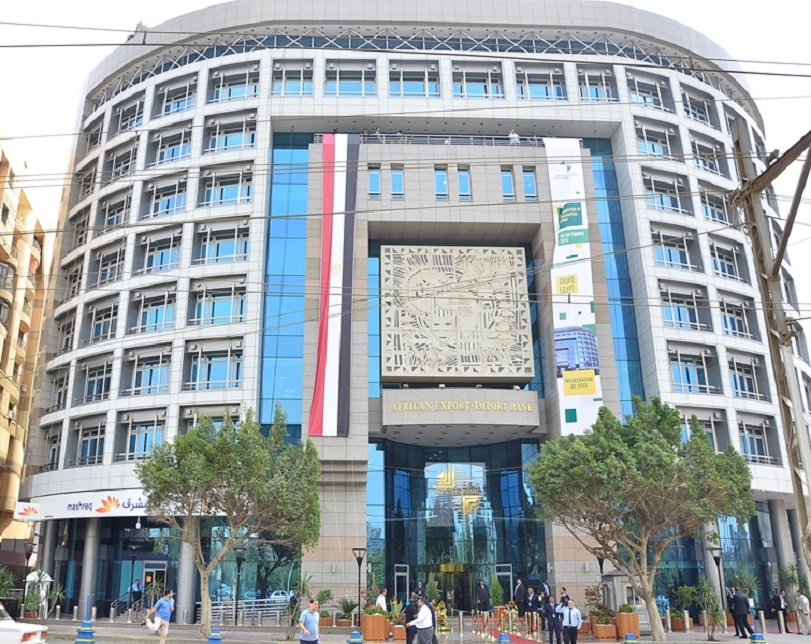
The African Energy Bank (AEB) will now officially launch in September in Abuja after failing to meet its targeted first-half 2026 commencement date, marking a fresh timeline for the continent’s energy financing institution.
The Secretary General of the African Petroleum Producers’ Organisation (APPO), Mr Farid Ghezali, as per Argus Media, acknowledged “several postponements” but said the new deadline is “to make the bank operational in September 2026 in view of the incompressible deadlines from an administrative point of view”.
A planned April start was pushed back to June before APPO members were again mobilised around a third-quarter deadline. At a recent meeting, the Nigerian government reiterated the country’s commitment to the African Energy Bank’s formal commencement of operations.
The bank was established by the APPO and the African Export-Import Bank (Afreximbank) to address the critical financing needs of Africa’s oil, gas and broader energy sectors and mitigate the global funding pressure against hydrocarbon investments in Africa.
The APPO scribe said funding has remained a major challenge even when the Nigerian government said the headquarters of the bank was ready since 2025.
Mr Ghezali called on APPO members to redeem their pledges towards the $500 million start-up capital before the end of June.
Argus quoted sources as saying that 91 per cent of the capital had been raised and that the Nigerian National Petroleum Company (NNPC) Limited and the Nigerian Content Development and Monitoring Board (NCDMB) would make up the balance.
Mr Ghezali said AEB aims to reverse the situation that sees Africa importing more than 60 per cent of its oil products consumption and producing only 12 per cent of global upstream liquids while being home to many of the world’s largest national oil and gas reserves.
He stated that the bank will target the financing of 20–30 LNG, petroleum products pipeline, terminals and refining projects by 2030. Projects that monetise natural gas as a transition fuel will take up 40 per cent of AEB’s loan book, and priority will be given to projects that contribute towards the creation of “500,000 to 1 million direct and indirect jobs in the energy value chain”.
Speaking at a Nigerian energy summit in February, Mr Ghezali said the bank plans to raise $15 billion in its first three years of operations to fund strategic energy projects.
He also unveiled the three-phase road map for the AEB, including “Phase one, which, as I said in the first half of 2026, launches the African Energy Bank platform with 10-pillar projects involving countries such as Nigeria, Angola, and Libya. APPO certification and integration of IOCs such as Shell or ENI.”
“Phase two, in 2027, we plan to start a regional gas-oil trade, integrating the principles of the Bassari Declaration for 15 per cent local content.”
Phase three, reaching 2030, the African Energy Bank will be a true African financial hub, with $200 billion mobilised.”
-
 Feature/OPED6 years ago
Davos was Different this year
-
Travel/Tourism10 years ago
Lagos Seals Western Lodge Hotel In Ikorodu
-

 Showbiz3 years ago
Estranged Lover Releases Videos of Empress Njamah Bathing
-
 Banking8 years ago
Sort Codes of GTBank Branches in Nigeria
-

 Economy3 years ago
Subsidy Removal: CNG at N130 Per Litre Cheaper Than Petrol—IPMAN
-

 Banking3 years ago
Sort Codes of UBA Branches in Nigeria
-

 Banking3 years ago
First Bank Announces Planned Downtime
-

 Sports3 years ago
Highest Paid Nigerian Footballer – How Much Do Nigerian Footballers Earn