

Economy
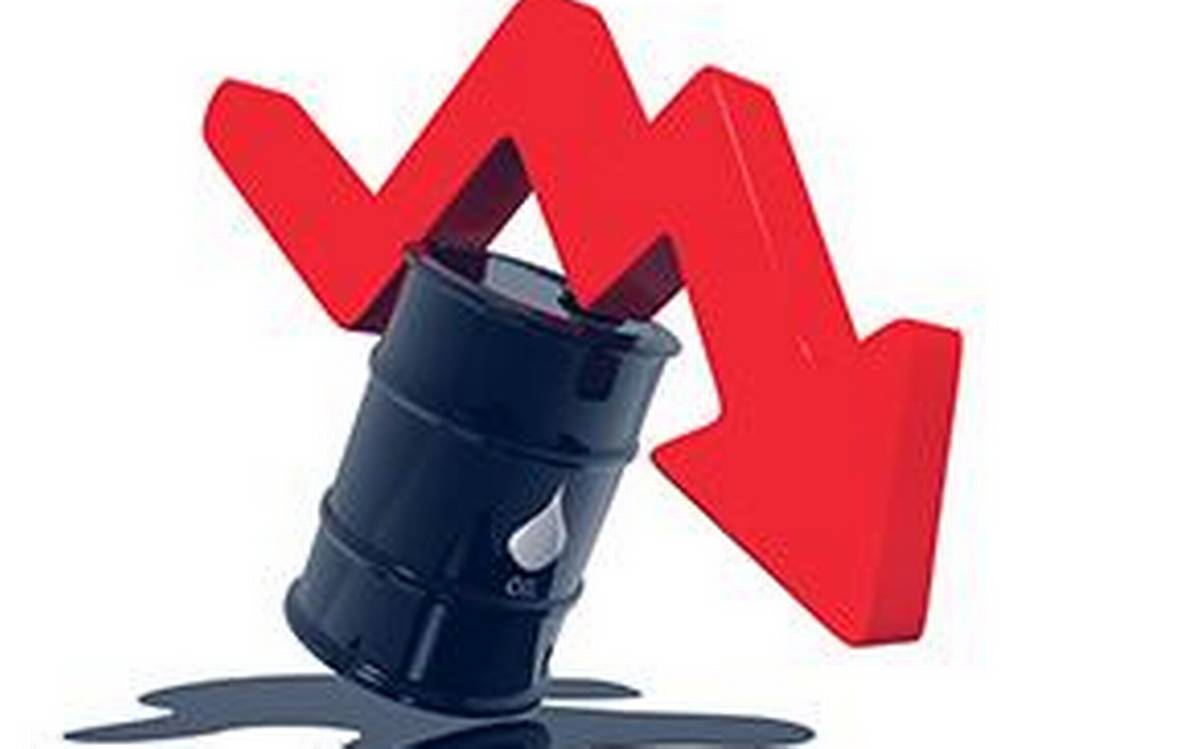
Oil Prices Skyrocket Wednesday after Trump Cancels Iran Deal

By Modupe Gbadeyanka
Prices of crude oil in the global market skyrocketed on Wednesday after President Donald Trump on Tuesday announced the withdrawal of the United States from the nuclear deal his predecessor, Mr Barack Obama, signed with Iran.
Business Post reports that as at the time of filing this report at 10:43am on Wednesday, May 9, 2018, the price of the Brent crude oil was $76.86.
This showed a 56.89 percent year-on-year growth and a 3-1/2-year high. The Brent crude oil futures had at one point touched their highest since November 2014 at $76.75 per barrel.
Yesterday, President Trump cancelled the Iran nuclear deal despite pleas from its allies and announced the “highest level” of sanctions against the OPEC member.
This development is likely to raise the risk of conflict in the Middle East and cast uncertainty over global oil supplies amid an already tight market.
Analysts said the soaring prices were the result of an expected fall in Iranian oil exports.
In China, the biggest single buyer of Iranian oil, Shanghai crude futures hit their strongest in dollar terms since they were launched in late May, above $73.20 per barrel.
“Iran’s exports of oil to Asia and Europe will almost certainly decline later this year and into 2019 as some nations seek alternatives in order to avoid trouble with Washington and as sanctions start to bite,” said Sukrit Vijayakar, director of energy consultancy Trifecta.
Iran re-emerged as a major oil exporter in 2016 after international sanctions against it were lifted in return for curbs on its nuclear program, with its April exports standing above 2.6 million barrels per day (bpd).
That made Iran the third biggest exporter of crude within the Organization of the Petroleum Exporting Countries (OPEC), behind Saudi Arabia and Iraq.
Walking away from the deal means that the United States will likely re-impose sanctions against Iran after 180 days, unless some other agreement is reached before then.
ANZ bank said Mr Trump’s decision “puts into place a scenario that could see the crude oil market tighten significantly in H2 2018 and into next year”.
Several refiners in Asia told Reuters they were already seeking alternatives to supplies from Iran.
“There are worries that Iran’s oil exports could fall by about one million barrels per day (bpd) from current levels,” said Tomomichi Akuta, senior economist at Mitsubishi UFJ Research and Consulting in Tokyo.
“The oil supply/demand balance is roughly in balance now, but it could turn to a complete supply shortage (in case of new supply curbs).
“Oil prices could rise at least $10 per barrel, with Brent approaching near $90,” Akuta said.
All key crude oil futures contracts saw traded volumes jump as speculators took on new positions in the hope of profiting from rising prices, and as refiners hedged to protect themselves from higher feedstock oil prices.
Stephen Innes, head of trading for Asia-Pacific at futures brokerage Oanda in Singapore, said the climb in traded crude futures volumes was so high it was “causing clearing delays”.
Trying to ease market concerns, Saudi Arabia on Wednesday said it would work with other producers to lessen the impact of any shortage in oil supplies.






By Adedapo Adesanya
President Bola Tinubu on Friday presented a budget proposal of N58.47 trillion for the 2026 fiscal year titled Budget of Consolidation, Renewed Resilience and Shared Prosperity to a joint session of the National Assembly, with capital recurrent (non‑debt) expenditure standing at 15.25 trillion, and the capital expenditure at N26.08 trillion, while the crude oil benchmark was pegged at $64.85 per barrel.
Business Post reports that the Brent crude grade currently trades around $60 per barrel. It is also expected to trade at that level or lower next year over worries about oil glut.
At the budget presentation today, Mr Tinubu said the expected total revenue for the year is N34.33 trillion, and the proposal is anchored on a crude oil production of 1.84 million barrels per day, and an exchange rate of N1,400 to the US Dollar.
In terms of sectoral allocation, defence and security took the lion’s share with N5.41 trillion, followed by infrastructure at N3.56 trillion, education received N3.52 trillion, while health received N2.48 trillion.
Addressing the lawmakers, the President described the budget proposal as not “just accounting lines”.
“They are a statement of national priorities,” the president told the gathering. “We remain firmly committed to fiscal sustainability, debt transparency, and value‑for‑money spending.”
The presentation came at a time of heightened insecurity in parts of the country, with mass abductions and other crimes making headlines.
Outlining his government’s plan to address the challenge, President Tinubu reminded the gathering that security “remains the foundation of development”.
He said some of the measures in place to tame insecurity include the modernisation of the Armed Forces, intelligence‑driven policing and joint operations, border security, and technology‑enabled surveillance and community‑based peacebuilding and conflict prevention.
“We will invest in security with clear accountability for outcomes—because security spending must deliver security results,” the president said.
“To secure our country, our priority will remain on increasing the fighting capability of our armed forces and other security agencies by boosting personnel and procuring cutting-edge platforms and other hardware,” he added.


By Aduragbemi Omiyale
The deadline for the recapitalisation of the Nigerian pension industry has been extended by six months to June 2027 from December 2026.
This extension was approved by the National Pension Commission (PenCom), the agency, which regulates the sector in the country.
Addressing newsmen on Thursday in Lagos, the Director-General of PenCom, Ms Omolola Oloworaran, explained that the shift in deadline was to give operators more time to boost the capital base, dismissing speculations that the exercise had been suspended.
“The recapitalisation has not been suspended. We have communicated the requirements to the Pension Fund Administrators (PFAs), and we expect every operator to be compliant by June 2027. Anyone who is not compliant by then will lose their licence,” Ms Oloworaran told journalists.
She added that, “From a regulatory standpoint, our major challenge is ensuring compliance. We are working with ICPC, labour and the TUC to ensure employers remit pension contributions for their employees.”
The DG noted that engagements with industry operators indicated broad acceptance of the policy, with many PFAs already taking steps to raise additional capital or explore mergers and acquisitions.
“You may see some mergers and acquisitions in the industry, but what is clear is that the recapitalisation exercise is on track and the industry agrees with us,” she stated.
PenCom wants the PFAs to increase their capital base and has created three categories, with the first consists operators with Assets Under Management of N500 billion and above. They are expected to have a minimum capital of N20 billion and one per cent of AUM above N500 billion.
The second category has PFAs with AUM below N500 billion, which must have at least N20 billion as capital base.
The last segment comprises special-purpose PFAs such as NPF Pensions Limited, whose minimum capital was pegged at N30 billion, and the Nigerian University Pension Management Company Limited, whose minimum capital was fixed at N20 billion.

By Adedapo Adesanya
Three securities weakened the NASD Over-the-Counter (OTC) Securities Exchange by 0.68 per cent on Thursday, December 18.
According to data, Central Securities Clearing System (CSCS) Plc led the losers’ group after it slipped by N2.87 to N36.78 per share from N39.65 per share, Golden Capital Plc depreciated by 77 Kobo to end at N6.98 per unit versus the previous day’s N7.77 per unit, and FrieslandCampina Wamco Nigeria Plc dropped 19 Kobo to sell at N60.00 per share versus Wednesday’s closing price of N60.19 per share.
At the close of business, the market capitalisation lost N16.81 billion to finish at N2.147 billion compared with the preceding session’s N2.164 trillion, and the NASD Unlisted Security Index (NSI) declined by 24.76 points to 3,589.88 points from 3,614.64 points.
Yesterday, the volume of securities bought and sold increased by 49.3 per cent to 30.5 million units from 20.4 million units, the value of securities surged by 211.8 per cent to N225.1 million from N72.2 million, and the number of deals jumped by 33.3 per cent to 28 deals from 21 deals.
Infrastructure Credit Guarantee Company (InfraCredit) Plc remained the most traded stock by value with a year-to-date sale of 5.8 billion units valued at N16.4 billion, followed by Okitipupa Plc with 178.9 million units transacted for N9.5 billion, and MRS Oil Plc with 36.1 million units worth N4.9 billion.
Similarly, InfraCredit Plc ended as the most traded stock by volume on a year-to-date basis with 5.8 billion units traded for N16.4 billion, trailed by Industrial and General Insurance (IGI) Plc with 1.2 billion units sold for N420.7 million, and Impresit Bakolori Plc with 536.9 million units exchanged for N524.9 million.










-
 Feature/OPED6 years ago
Davos was Different this year
-
Travel/Tourism9 years ago
Lagos Seals Western Lodge Hotel In Ikorodu
-

 Showbiz3 years ago
Estranged Lover Releases Videos of Empress Njamah Bathing
-
 Banking7 years ago
Sort Codes of GTBank Branches in Nigeria
-

 Economy3 years ago
Subsidy Removal: CNG at N130 Per Litre Cheaper Than Petrol—IPMAN
-

 Banking3 years ago
First Bank Announces Planned Downtime
-

 Banking3 years ago
Sort Codes of UBA Branches in Nigeria
-

 Sports3 years ago
Highest Paid Nigerian Footballer – How Much Do Nigerian Footballers Earn