
Economy
Industrial, Banking Stocks Lift NSE Index Slightly by 0.06%

By Modupe Gbadeyanka
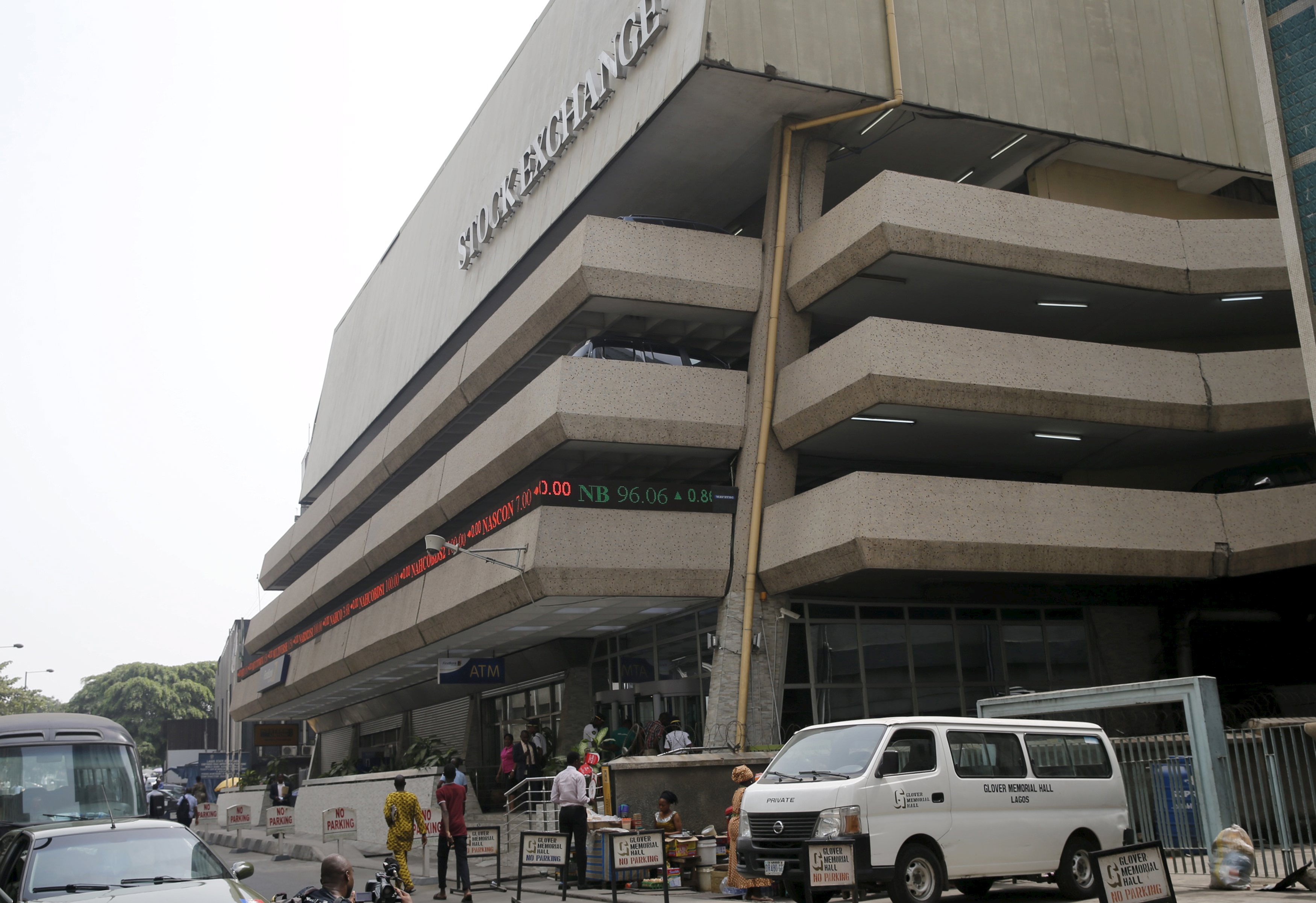
The positive performance recorded by stocks in the industrial and banking sectors provided the needed energy for the Nigerian Stock Exchange (NSE) to open week on a bullish note.
The equity market, at the close of business on Monday, marginally went up by 0.06 percent as a result of gains recorded by the GTBank and Dangote Cement. These two stocks also lifted their respective sectors by 0.43 percent and 0.56 percent.
Business Post reports that the stock market also reacted to the impressive Q1 earnings of some companies released today, whetting investors’ appetite to add more stocks to their portfolios.
By the time market activities were brought to close today, the volume and value of transactions recorded on the floor of the NSE on Monday increased.
A total of 450.5 million shares exchanged hands in 4,699 deals worth N5 billion in contrast to 319.3 million equities traded last Friday in 3,863 deals valued at N2.8 billion.
This was boosted by the huge interest investors had in the shares of Mutual Benefit Assurance, selling a total of 131 million units worth N31.4 million.
It was followed by UBA, which traded 67.8 million shares valued at N781.1 million, and FBN Holdings, which transacted 53.6 million equities worth N670.3 million.
Zenith Bank traded 23.6 million shares for N648.5 million, while Transcorp sold 16.2 million equities worth N27 million.
Business Post reports further that the market breadth ended positive today with 19 price gainers and 18 price losers.
Beta Glass topped the price gainers’ chart with N3.75k added to its share value to settle at N79.25k per share.
It was trailed by Julius Berger, which increased by N1.15k to end at N28.5k per share, and Dangote Cement, which rose by N1 to finish at N246 per share.
CCNN appreciated on Monday by 95k to close at N20.45k per share, while GTBank went up by 65k to end at N45 per share.
On the flip side, Nestle Nigeria suffered the heaviest loss after going down by N16 to end the day at N1599 per share.
Dangote Sugar went down by 90k to close at N20.50k per share, while Dangote Flour depreciated by 70k to end at N13.30k per share.
Also, Flour Mills declined by 70k to finish at N34.50k per share, while Total Nigeria reduced by 40k to settle at N222.20k per share.
A close look at the market indices today showed that the All-Share Index (ASI) increased by 23.12 points to settle at 41,268.01 points, while the market capitalisation added N8.4 billion to finish at N14.949 trillion.
Investors are optimistic the positive result achieved today the market is continued on Wednesday when the trading activities resume on the NSE. The market will remain closed tomorrow as workers stay away from work to mark their day.





By Adedapo Adesanya
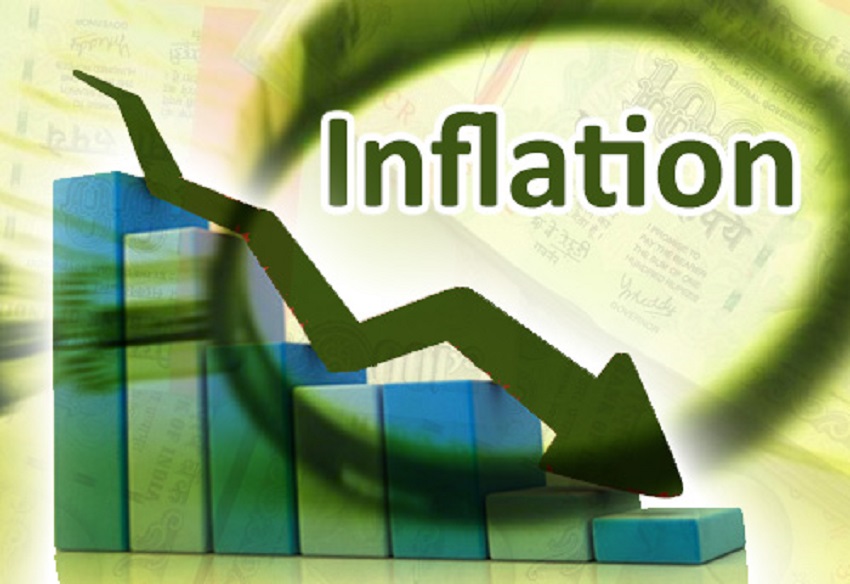
The Lagos Chamber of Commerce and Industry (LCCI) has raised concerns over the month-on-month rise in inflation despite a moderate easing in headline inflation.
Earlier this week, data from the National Bureau of Statistics (NBS) showed Nigeria’s consumer prices moderating slightly to 15.06 per cent year-on-year in February 2026 from 15.10 per cent in January. However, a sharp month-on-month rebound to 2.01 per cent signalled renewed momentum.
LCCI Director-General, Mrs Chinyere Almona, called for deliberate action amid risks such as exchange-rate volatility and food insecurity.
She viewed the drop from 26.27 per cent in February 2025 as cautious optimism but stressed vigilance.
“Addressing high inflation has been crucial, as it has greatly impacted purchasing power, production costs, and consumer demand,” Mrs Almona said.
She flagged imported input costs and domestic issues, such as agricultural insecurity, noting that, “With the potential for exchange-rate volatility… There is a risk of increased costs for imported raw materials, machinery, pharmaceuticals, and food items.”
Mrs Almona advocated prioritising FX stability through non-oil exports, food security through productivity and infrastructure, and energy reforms to ensure reliable power.
“Advancing reforms in the power and energy sectors is crucial for reducing production costs,” she added, alongside transport and port efficiencies.
“Sustaining this trend will require consistent macroeconomic management, structural reforms, and policies aimed at enhancing domestic productivity,” she added.
She noted that with the potential for exchange-rate volatility, there is a risk of increased costs for imported raw materials, machinery, pharmaceuticals, and food items.
“Nigeria has the opportunity to mitigate these external pressures by investing in local refining capacities and ensuring that crude supply meets domestic needs.”
“This could subsequently affect production and consumer prices. Other concerns, such as insecurity in agricultural regions, climate-related disruptions, and high transportation costs, could also challenge food supply and price stability.”
She pointed out that it is vital for the government to undertake deliberate policy actions to maintain the current easing of inflation, saying that “prioritising exchange-rate stability by enhancing foreign exchange liquidity and promoting non-oil export earnings is key.
She emphasised the importance of enhancing efficiency in transportation and trade infrastructure, including port operations, cargo evacuation systems, and digital trade processes, saying that such improvements can notably reduce logistics costs that contribute to consumer prices.
“While the marginal decline in inflation is a positive development, sustaining this trend will require consistent macroeconomic management, structural reforms, and policies aimed at enhancing domestic productivity.
“We must act swiftly to address concerns that may jeopardise the progress made in controlling inflation. Given that month-on-month rates already suggest ongoing inflationary challenges, supply-side interventions are likely to offer more sustainable solutions than imposing price controls on manufacturers and investors,” the LCCI DG explained.
By Adedapo Adesanya
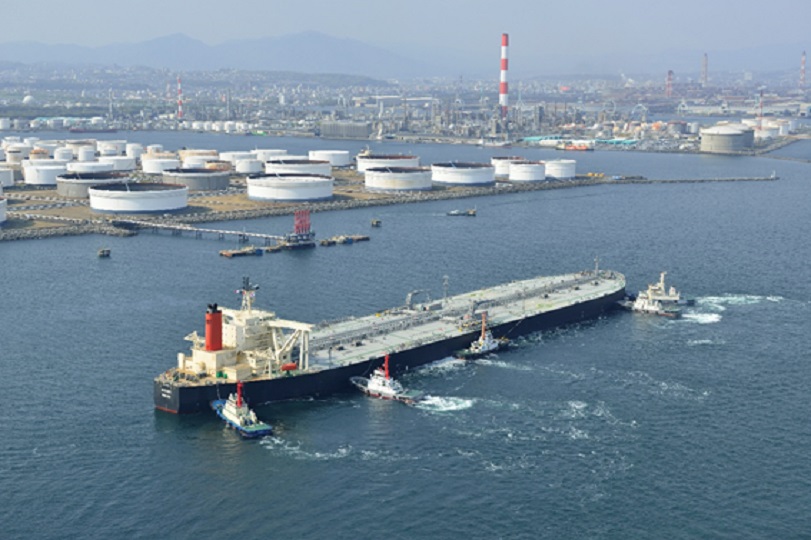
The Shipping Association of Nigeria (SAN) has clarified that a recent upward review of tariffs by shipping line agencies operating in the country was to reflect prevailing economic realities.
SAN clarified in a response dated March 16, 2026, to a letter from the National Association of Government Approved Freight Forwarders (NAGAFF) Trade Advocacy Committee, which had opposed the tariff adjustment approved by the Nigerian Shippers’ Council (NSC), the port economic regulator.
In the letter signed by SAN chairman, Mrs Boma Alabi, the association acknowledged the concerns raised by freight forwarders. It maintained that some of the claims made by NAGAFF did not accurately represent the regulatory process that preceded the approval or the operational realities of international shipping operations in Nigeria.
Mrs Alabi stressed that the tariff adjustment was neither implemented unilaterally by shipping lines nor granted arbitrarily by the regulator.
According to her, the council conducted an extensive review before approving, including detailed cost analysis submitted by shipping line agencies, an assessment of prevailing economic conditions such as inflation and foreign exchange volatility, as well as stakeholder consultations carried out over an extended period.
She added that the review process lasted nearly two years and involved several rounds of regulatory scrutiny before the final approval was granted.
“It is therefore inaccurate to suggest that the approval was granted without due consideration of the statutory regulatory framework,” Mrs Alabi said.
She explained that the adjustment merely represents a partial cost recovery measure, considering the sharp rise in operational costs across the maritime sector in recent years.
Mrs Alabi also clarified that the approval was not granted across the board to all shipping lines, noting that it did not amount to a blanket increase for every operator.
According to her, the adjustment approved by the shippers’ council is modest and significantly lower than Nigeria’s cumulative inflation rate within the same period.
“In practical terms, the adjustment does not represent a real increase in economic terms but rather a limited adjustment intended to partially offset the impact of rising operational costs,” she said.
She listed some of the cost drivers to include increasing port and terminal charges, administrative and regulatory compliance costs, exchange rate fluctuations, and logistics and operational overheads.
Mrs Alabi further noted that the tariff review reflects broader developments across the maritime and logistics sector, where several service providers have adjusted their charges in response to economic pressures.
She pointed out that truck operators, freight forwarders, clearing agents, terminal operators and other logistics service providers have all increased their rates in recent years.
“In this context, it would be unrealistic and inequitable to expect shipping line agencies alone to maintain static rates despite operating under the same economic pressures,” she said.
The SAN chairman also dismissed insinuations that shipping lines exercise collective market dominance, stressing that the global liner shipping industry is highly competitive.
According to her, shipping companies compete independently in freight pricing and service delivery while constantly striving to improve operational efficiency and attract cargo volumes through better service offerings.
She added that several operational challenges cited by NAGAFF – such as port congestion, container return logistics, documentation bottlenecks and operational delays- are systemic issues within the entire port ecosystem and cannot be attributed solely to shipping line agencies.
Mrs Alabi explained that port operations involve multiple stakeholders, including port authorities, terminal operators, customs and regulatory agencies, freight forwarders, and trucking and logistics providers.
She therefore called for collaborative efforts among stakeholders to address the challenges rather than placing responsibility on a single segment of the logistics chain.
On allegations of regulatory infractions, the SAN chairman said the claims referencing laws such as the ICPC Act and the FCCPC Act appear speculative and are not backed by formal regulatory findings.
She maintained that shipping line agencies operating in Nigeria remain under the oversight of several government institutions and continue to comply with all applicable statutory and regulatory requirements.
Mrs Alabi reiterated that the tariff adjustment approved by the Nigerian Shippers’ Council followed a lengthy regulatory process that carefully reviewed cost structures, economic conditions and stakeholder input.
According to her, the decision was aimed at ensuring the sustainability of maritime services while maintaining fairness within the port economic framework.
She added that since the approval was granted by the NCS in its regulatory capacity, the agency is best positioned to address any further concerns regarding the tariff review.

The Covid-19 pandemic brought a different work mode globally that promised freedom: remote work. This new work approach brought along technological innovations that aided the conveniences that accompanied it: the ability to work from anywhere, collaborate across time zones, and build a career without borders. But the one problem nobody warned us about was that getting paid and using that money shouldn’t require a finance degree.
Remote workers in Nigeria sought various avenues to navigate international payments, and one of the solutions that was provided was OneDosh, which has now become the bridge between earning globally and spending locally. Built by global fintech leaders, OneDosh developed solutions to solve these problems.
We will be focusing on how real people are using the platform to simplify their financial lives in this article.
The Payment Waiting Game Nobody Talks About – Chioma’s Story
Chioma works as a social media manager for two U.S. companies and a UK-based startup. Her biggest frustration isn’t the work itself or managing clients across time zones. It’s the anxiety that comes every payment cycle when she wonders if her domiciliary account will receive the wire transfer, or if this will be the month her bank flags the transaction for “verification” that takes weeks to resolve.
She’s had months where a $2,000 payment got stuck in banking limbo for three weeks while her landlord sent messages about rent. The experience taught her that having multiple international clients doesn’t guarantee financial stability when you can’t reliably access your earnings.
OneDosh changed her approach entirely. Now when clients pay her in stablecoins, the money arrives within minutes and she can decide immediately what to do with it, whether to convert to naira for immediate expenses, keep in USD for savings, or split between both. The control matters more than the speed, though the speed helps when bills are due.
When Your Card Works Until It Doesn’t – Tunde’s Story
Tunde learned the hard way that Nigerian debit cards have spending limits that make international subscriptions a constant negotiation. His Adobe Creative Cloud subscription failed three months in a row despite having money in his account. Customer support would apologize, he’d try a different card, and the cycle would repeat until he eventually had to ask a friend abroad to pay for it while he reimbursed them.
The OneDosh visa card solved this specific problem, but more importantly, it eliminated the unpredictability. He uses it for all his international subscriptions now like software tools, cloud storage, freelancing platform fees, without wondering if this will be the month his bank decides the transaction looks suspicious. The card works consistently, which sounds basic until you’ve experienced the alternative.
Naira Volatility and the Dollar Earning Advantage – Blessing’s Experience
For remote workers earning in dollars, the mathematics of currency conversion has become a monthly calculation that affects every financial decision. Blessing, a freelance writer, watches exchange rates the way other people check weather forecasts. A project that pays $500 means something very different in naira depending on when and how she converts it.
Her previous system involved converting everything to naira immediately at the offered rate, rather than exploring other options but felt safer than alternatives she didn’t fully understand. With OneDosh, she keeps her dollar earnings in the Onedosh wallet until she needs them; converting smaller amounts as needed rather than converting everything at once. This helps her manage timing and stay mindful of exchange rates and fees.
The Family Support Reality – Emeka the Tech Bro
Remote work success in Nigeria often means becoming the family member others turn to when emergencies arise. Emeka earns well working for a Canadian tech company, which means he’s frequently sending money to siblings for school fees, parents for medical bills, or extended family for various urgent needs.
Sending support shouldn’t feel complicated or time-consuming. With OneDosh, he can transfer funds seamlessly from wherever he is, with a simple and straightforward process. This flexibility is especially valuable when someone needs access to funds at a critical moment, allowing him to respond quickly and confidently.
“Although he believes this hasn’t made him richer, it certainly has made helping family significantly less stressful and time-consuming, which matters when you’re trying to balance work deadlines with family obligations.”
The Nigerian remote worker experience involves navigating payment systems that weren’t built for how we work now. Blocked transactions, unclear fees, conversion rate losses, spending limits etc are barriers that make earning internationally harder than it needs to be.
OneDosh doesn’t eliminate every challenge remote workers face, but it addresses several major ones directly. The platform works with the reality of Nigerian remote workers rather than pretending those realities don’t exist.
If you’re managing international payments, download the OneDosh app, It is designed to help you handle things more smoothly.











-
 Feature/OPED6 years ago
Davos was Different this year
-
Travel/Tourism10 years ago
Lagos Seals Western Lodge Hotel In Ikorodu
-

 Showbiz3 years ago
Estranged Lover Releases Videos of Empress Njamah Bathing
-
 Banking8 years ago
Sort Codes of GTBank Branches in Nigeria
-

 Economy3 years ago
Subsidy Removal: CNG at N130 Per Litre Cheaper Than Petrol—IPMAN
-

 Banking3 years ago
Sort Codes of UBA Branches in Nigeria
-

 Banking3 years ago
First Bank Announces Planned Downtime
-

 Sports3 years ago
Highest Paid Nigerian Footballer – How Much Do Nigerian Footballers Earn