

Economy
Consider These Critical Risks Before Investing in Stocks This Year


By Dipo Olowookere
Investing in stocks is a profitable business if you understand the market very well, but when you fail to know trends, you might bite your fingers very hard like some did in 2008 during the market crash.
Next year, Nigerians head to the polls to elect new leaders and representatives and the polity is already building up.
Already, happenings in the political scene have been hitting the stock market and as the year runs out, more effect would be felt by the market.
However, analysts at Zedcrest Research have highlighted some political risks that may have huge negative effect on the Nigerian stock market and they are presented below.
The Fixed Income market has been on a rally of late, hinged on renewed interests from both local and offshore clients, due to investors’ expectation of further moderation in inflation rates and a tilt to a more accommodative monetary stance by the CBN, with the recent reduction in its spate of OMO issuances.
Foreign investors have also been attracted by the broader stability in the country’s macro-economic environment, largely hinged on positive developments in oil prices and relative stability in its FX Market.
We however note that there exists some downside risk factors in the broader political and economic space which could spook the wheels of the recent momentum in the markets. The key risk being a possibility of capital reversals by FPI’s in reaction to political risk factors ahead of the 2019 General elections.
Major Risk Factors
1.) Delay in Budget Passage
The delay in the passage of the 2018 budget is being felt negatively as the budget is required by public and private sector stakeholders to plan and manage their economic activities. The 2018 budget which was put at N8.612 trillion and presented to the National Assembly by President Muhammadu Buhari on Nov. 7, 2017, was tagged “Budget of Consolidation’’, but the absence of a budget calendar and lack of coordination amongst the executive and legislature have been the major causes of the delay. While we expect the issues around the budget delay to be resolved soon, a continued delay would however send signals of instability and uncertainty to prospective local and offshore investors.
2.) Regional Conflicts
The Nigerian socio-political climate has been beset by several conflicts in recent times. Notable amongst these include the recent Shiite protests in which large number of supporters of the Shite Leader El-Zakzaky stormed the state capital to protest the continued detention of their Leader. We have also witnessed recent attacks by the Boko-haram sect in the north eastern region which has caused some angst amongst members of the International community.
Most Notable amongst these conflicts however remains the continued killings by rampaging herdsmen across most of the North central and some southern states of the country. We fear that if these conflicts are not properly handled by the Government, they may result in heightened levels of insecurity and an escalation of tensions ahead of the upcoming General elections.
a.) Shiite Protests
There has been escalating tensions in recent times from Members of the Islamic Movement of Nigeria (IMN) in protest of the continued detention of their leader, Ibrahim El-Zakzaky, whom the Nigerian government has kept in custody for over two years, without trial and despite court orders for his release. The protests, which started peacefully on Monday and Tuesday last week turned violent after police forcefully dispersed the protesters. We fear that if this situation is not carefully handled, it might degenerate into a more serious security concern.
b.) Boko-haram Insurgency
Despite claims by the Federal Government of a complete subjugation of the Boko-haram Militant Sect, we have witnessed recent spate of attacks from the terrorist group, which has once again renewed fears of a debilitating security situation in the North-eastern part of the country.
c.) Herdsmen Killings
The Seemingly intractable killings by Fulani herdsmen across most of the Middle belt and southern states, has been one of the most controversial issues facing the current administration, which has drawn a lot of criticisms from both local and foreign governments, politicians and human rights activists. Of utmost concern however is the Federal Government’s seeming inability to find a lasting solution to the menace. We fear that a lack of decisive action by the FGN may result in increased tensions as members of the affected communities may be forced to defend themselves from any future attacks.
3.) Inflationary Threats
Most experts have said that the inflation target of the Central Bank of Nigeria (CBN) would not be feasible, due to the downside risks occasioned by electioneering spending and implementation of minimum wage. Inflationary pressures are likely to resume in the third quarter of the year on the back of waning base effect, increased electioneering spending and the implementation of minimum wage by government.
RECOMMENDATION:
We believe the aforementioned risk factors should be critically monitored by investors, as they may portend for significant reversals in offshore capital flows and an uptrend in fixed income yields if they worsen or do crystallize. We consequently advise investors to exercise caution in their investments ahead of the 2019 General elections, whilst advising a tilt to the shorter end of the Naira yield curve for risk averse investors.










By Adedapo Adesanya
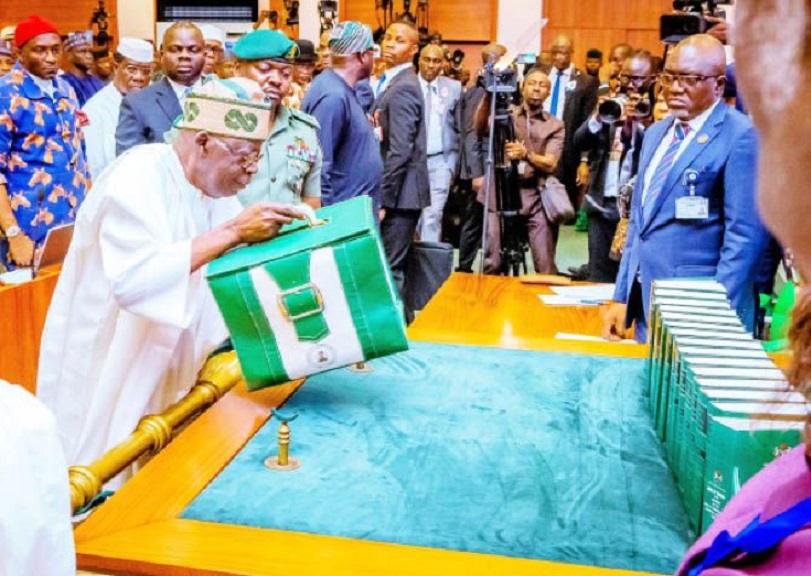
President Bola Tinubu will, on Friday, present the 2026 Appropriation Bill to a joint session of the National Assembly.
The presentation, scheduled for 2:00 pm, was conveyed in a notice issued on Wednesday by the Office of the Clerk to the National Assembly.
According to the notice, all accredited persons are required to be at their duty posts by 11:00 am on the day of the presentation, as access into the National Assembly Complex will be restricted thereafter for security reasons.
The notice, signed by the Secretary, Human Resources and Staff Development, Mr Essien Eyo Essien, on behalf of the Clerk to the National Assembly, urged all concerned to ensure strict compliance with the arrangements ahead of the President’s budget presentation.
The 2026 budget is projected at N54.4 trillion, according to the approved 2026–2028 Medium-Term Expenditure Framework (MTEF) and Fiscal Strategy Paper (FSP).
Meanwhile, President Tinubu has asked the National Assembly to repeal and re-enact the 2024 appropriation act in separate letters to the Senate and the House of Representatives on Wednesday and read during plenary by the presiding officers.
The bill was titled Appropriation (Repeal and Re-enactment Bill 2) 2024, involving a total proposed expenditure of N43.56 trillion.
In a letter dated December 16, 2025, the President said the bill seeks authorisation for the issuance of a total sum of N43.56 trillion from the Consolidated Revenue Fund of the Federation for the year ending December 31, 2025.
A breakdown of the proposed expenditure shows N1.74 trillion for statutory transfers, N8.27 trillion for debt service, N11.27 trillion for recurrent (non-debt) expenditure, and N22.28 trillion for capital expenditure and development fund contributions.
The President said the proposed legislation is aimed at ending the practice of running multiple budgets concurrently, while ensuring reasonable – indeed unprecedentedly high – capital performance rates on the 2024 and 2025 capital budgets.
He explained that the bill also provides a transparent and constitutionally grounded framework for consolidating and appropriating critical and time-sensitive expenditures undertaken in response to emergency situations, national security concerns, and other urgent needs.
President Tinubu added that the bill strengthens fiscal discipline and accountability by mandating that funds be released strictly for purposes approved by the National Assembly, restricting virement without prior legislative approval, and setting conditions for corrigenda in cases of genuine implementation errors.
The bill, which passed first and second reading in the House of Representatives, has been referred to the Committee on Appropriations for further legislative action.

By Adedapo Adesanya
The federal government has imposed an immediate nationwide ban on the export of wood and allied products, revoking all previously issued licenses and permits to exporters.
The announcement was made on Wednesday by the Minister of Environment, Mr Balarabe Lawal, during the 18th meeting of the National Council on Environment in Katsina State.
Mr Lawal said the directive, outlined in the Presidential Executive Order titled Presidential Executive Order on the Prohibition of Exportation of Wood and Allied Products, 2025, became necessary to curb illegal logging and deforestation across the country.
“Nigeria’s forests are central to environmental sustainability, providing clean air and water, supporting livelihoods, conserving biodiversity, and mitigating the effects of climate change,” the Minister said, warning that the continued exportation of wood threatens these benefits and the long-term health of the environment.
The order, published in the Extraordinary Federal Republic of Nigeria Official Gazette No. 180, Vol. 112 of 16 October 2025, relies on Sections 17(2) and 20 of the 1999 Constitution (as amended), which empower the state to protect the environment, forests, and wildlife and prevent the exploitation of natural resources for private gain.
Under the new policy, security agencies and relevant ministries are expected to enforce a total clampdown on illegal logging activities nationwide.
On his part, the Katsina State Deputy Governor, Mr Faruk Lawal Jobe highlighted the state’s history of pioneering socio-economic policies that have influenced national policy. He emphasized the importance of collaboration in addressing environmental challenges across the country.
“Environmental sustainability is critical to achieving growth and improving the quality of life of our people,” he said. “Our administration has prioritised initiatives aimed at combating desertification and promoting afforestation.”
The ban reflects the government’s commitment to safeguarding Nigeria’s shrinking forest cover and addressing climate change, while ensuring sustainable use of natural resources for future generations.
By Adedapo Adesanya
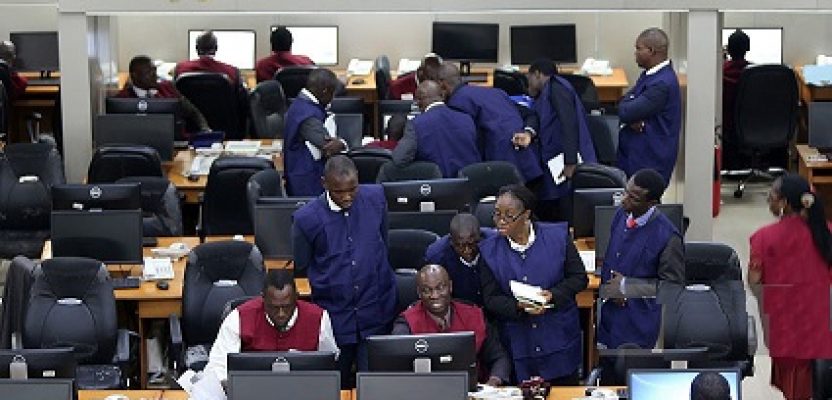
The NASD Over-the-Counter (OTC) Securities Exchange rose by 0.24 per cent on Wednesday, December 17, pulling the Unlisted Security Index (NSI) up by 8.62 points to 3,614.64 points from 3,606.02 points.
In the same vein, the market capitalisation added N4.72 billion to close at N2.164 billion compared with the N2.160 trillion it ended on Tuesday.
The growth was inspired by four securities, which finished on the gainers’ log, neutralising the losses printed by two other securities on the trading platform.
MRS Oil Plc gained N17.90 on Wednesday to end at N196.90 per unit versus N179.00 per unit, NASD Plc appreciated by 59 Kobo to N58.50 per share from N57.91 per share, FrieslandCampina Wamco Nigeria Plc added 15 Kobo to sell at N60.19 per unit versus N60.04 per unit, and Industrial and General Insurance (IGI) Plc rose by 6 Kobo to 64 Kobo per share from 58 Kobo per share.
On the flip side, Golden Capital Plc extended its loss by 76 Kobo to end at N7.75 per unit versus N8.51 per unit, and Central Securities Clearing System (CSCS) Plc slipped by 35 Kobo to N39.65 per share from N40.00 per share.
Yesterday, the volume of transactions increased by 737.3 per cent to 20.4 million units from 2.4 million units, but the value of trades fell by 33.8 per cent to N72.2 million from N109.1 million, and the number of deals slid by 62.5 per cent to 21 deals from 56 deals.
Infrastructure Credit Guarantee Company (InfraCredit) Plc remained the most traded stock by value on a year-to-date basis with 5.8 billion units sold for N16.4 billion, the second position was occupied by Okitipupa Plc with 178.9 million units transacted for N9.5 billion, and the third place was taken by MRS Oil Plc with 36.1 million units worth N4.9 billion.
InfraCredit Plc was also the most traded stock by volume on a year-to-date basis with 5.8 billion units traded for N16.4 billion, followed by IGI Plc with 1.2 billion units valued at N420.7 million, and Impresit Bakolori Plc with 536.9 million units worth N524.9 million.









-
 Feature/OPED6 years ago
Davos was Different this year
-
Travel/Tourism9 years ago
Lagos Seals Western Lodge Hotel In Ikorodu
-

 Showbiz3 years ago
Estranged Lover Releases Videos of Empress Njamah Bathing
-
 Banking7 years ago
Sort Codes of GTBank Branches in Nigeria
-

 Economy3 years ago
Subsidy Removal: CNG at N130 Per Litre Cheaper Than Petrol—IPMAN
-

 Banking3 years ago
First Bank Announces Planned Downtime
-

 Banking3 years ago
Sort Codes of UBA Branches in Nigeria
-

 Sports3 years ago
Highest Paid Nigerian Footballer – How Much Do Nigerian Footballers Earn