
Economy
Has Naira-settled OTC FX Futures Stabilized Naira Exchange Rate?


By Quantitative Financial Analytics Ltd
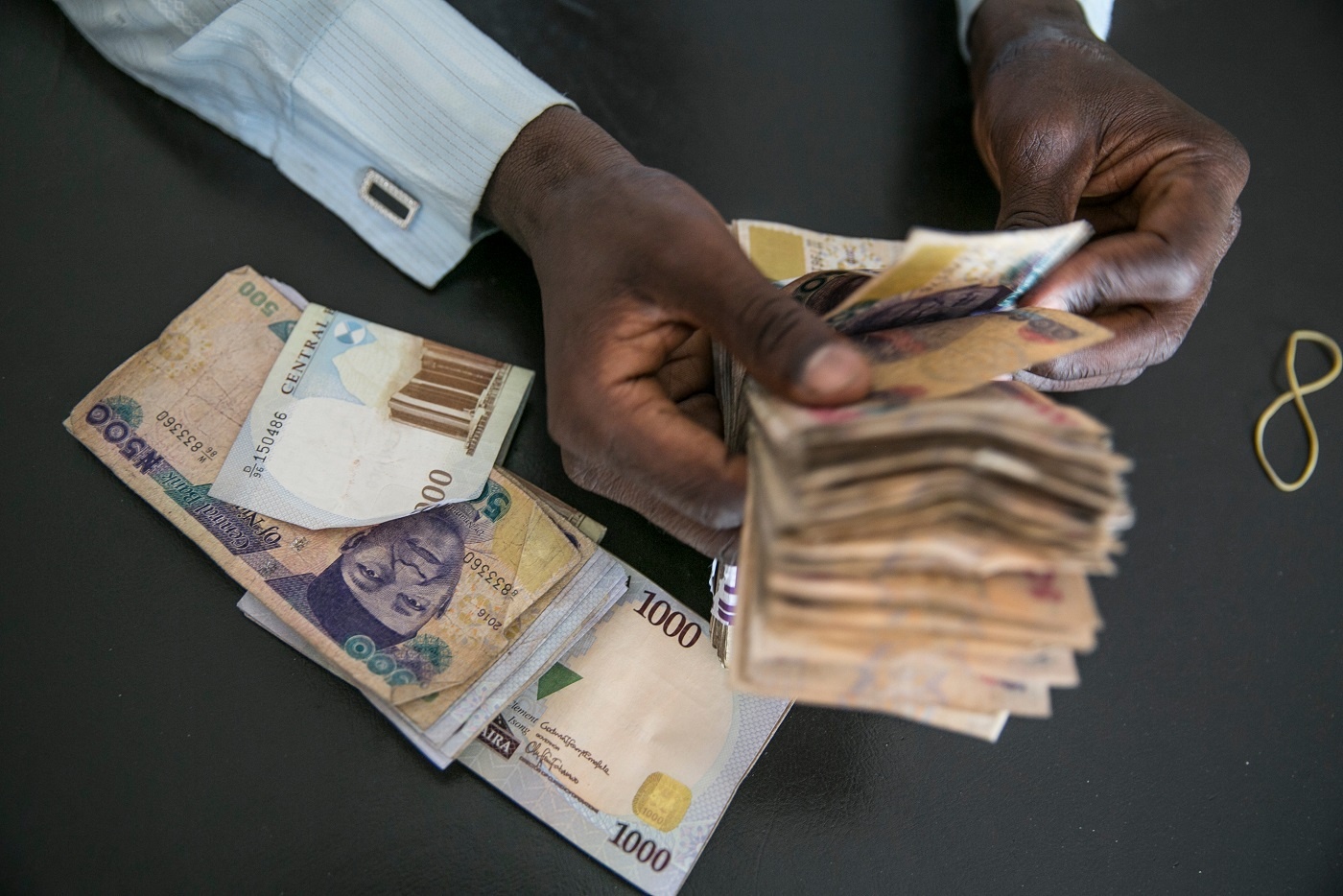
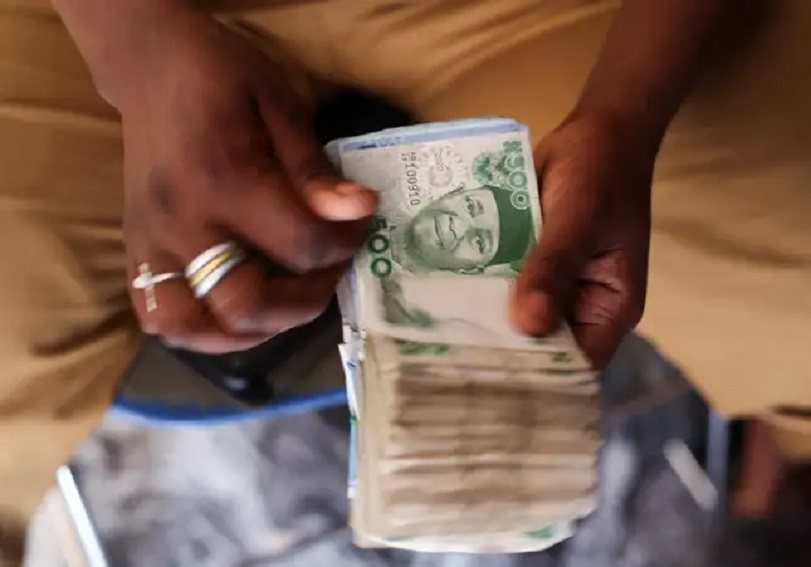
To stem the continued devaluation of the Naira and to breathe some air of stability into the ever-volatile Naira/Dollar relationship, the Central Bank of Nigeria (CBN) introduced some far-reaching measures at different times.
One of such measures was the launching of the Naira-settled OTC FX Futures Market. That “history making” event which commenced on June 27, 2016 made the CBN “the pioneer seller of the Naira-settled OTC FX Futures contracts on the FMDQ OTC Securities Exchange (FMDQ)”.
Before the advent of the Naira-settled OTC FX Futures, various governments in Nigeria had been tinkering with the Naira exchange rate management using different policy driven methodologies at different times.
In 1986, the Exchange Rate Liberalization Policy was introduced and with it, the Naira was devalued officially for the very first time on September 26, 1986 to be specific. From that day till today, the Naira has been heading south.
Economic and financial historians have it that Nigerian governments have tried to manage the exchange rate with the Foreign Exchange (Monitoring & Miscellaneous Provisions) (FEMM) Act of 1995, the two-way Quote System (market making) in the inter-bank FX market in 1996 and the Wholesale Dutch Auction System (WDAS) in 2006.
Unfortunately, it seems none of those worked. It is therefore not surprising that the currency futures market has been put in place as a way to “stabilize” the Naira.
It is now almost two years since the Naira-settled OTC FX Futures market was introduced and the question is ‘how far it has gone in stabilizing the Naira/Dollar exchange rate?’
Though the Naira/Dollar exchange rate continues to remain high, it is a bit comforting that the new FX currency risk exposure management instrument, (the Naira-settled OTC FX Futures), has been able to curb or curtail the speed at which the Naira depreciates relative to the Dollar. At least, for over six months the rate has remained in the N360s to the $.
When used properly, Currency Futures are a veritable instrument of managing foreign currency risk exposure. This works well when there are buyers and sellers and probably not so well when there are buyers with the CBN as the only seller.
By definition, a futures contract is an agreement between two parties where one (the buyer) agrees to buy and the other, (the seller) agrees to sell a given amount of the underlying asset or subject of the contract, at an agreed price on future date.
A futures contract entails a long position by one party and a corresponding short position by another. It does look like the CBN is the seller or the short position party in the Naira-settled OTC FX futures contracts although it is not apparent who the long position parties are.
By their nature, futures are zero sum games. Futures do not involve an initial cash flow, meaning that money does not change hands at the initiation of the contract except where commissions are charged but subsequently, it becomes apparent how much the parties to a contract will pay/receive as the price of the underlying instruments change from day to day.
The method of determining the amount payable/receivable by either party is called marking to market, (the technicalities involved in mark to market calculation will not be part of this discuss).
Market Activity
It is noteworthy to point out that the Currency Futures market in Nigeria has been very active and vibrant since inception although the momentum seems to be reducing as rates converge.
On the date that the market went live, it recoded $26.73 million in open interest. As at April 6, 2018, the open interest had increased to $3,278.43 million, an increase of 12176 percent. This underscores the extent of Nigeria’s dependence on and demand for the dollar, among other implications.
The implication of this is also that, if the CBN is the only party that holds the short positions, it means that the CBN has contracted to sell $3,278.34 million to various parties over a range of period depending on the maturity dates of the contracts.
However, the Naira-settled OTC FX Futures are non-deliverable, meaning that the CBN is not going to sell or deliver $3,278.34 million to the long position holders; rather, the CBN will pay them the difference between the contract price and the NIFEX/NAFEX rate as at the maturity date of each futures contract.
It will be recalled that the first futures contract matured on July 27, 2016, and the CBN had to pay N962.23 million to the long position holder.
For the almost two years of existence of the FX Futures market in Nigeria, 21 of such contracts have matured. Looking at the contract prices of the open trades in relation with the current exchange rate, there is indication that the CBN will be at the paying end of the contracts.
According to analysis by analysts at Quantitative Financial Analytics, the total notional value of all contracts from inception to date is $11.743 billion while total matured contracts stand at $8.464 billion, leaving current outstanding open interest at $3.278 billion.
Out of the matured contracts, the short position holders (probably the CBN) have paid an estimated $503.8 million to the long position holders, according to the analysis.
As said before, currency futures are derivatives, and derivatives are high risk instruments, if used properly, they are beneficial but when misused, they can lead to catastrophe.
To a large extent and in most recent times, the FX currency futures market has helped in stabilizing the Naira Dollar exchange rate although the decreasing momentum arising from convergence of rates may diminish its role in managing the currency risk exposure of Nigerians. We are watching











By Adedapo Adesanya
Nigeria has the potential to produce 1.9 million barrels of crude oil per day, having hit a peak production of 1.86 million barrels per day in May, according to the chief executive of the Nigerian Upstream Petroleum Regulatory Commission (NUPRC), Mrs Oritsemeyiwa Eyesan.
The NUPRC chief said this on Wednesday during a meeting with the chairman of the Nigeria Revenue Service, Mr Zacch Adedeji, at the NRS headquarters in Abuja.
In a statement signed by the agency’s Head of Media and Corporate Communications, Mr Eniola Akinkuotu, it was disclosed that the country’s oil industry has continued to record production growth, noting that crude output reached a peak of 1.86 million barrels per day in May, placing the industry on a stronger recovery path.
The meeting also focused on strengthening collaboration between the two agencies to promote transparency, accountability and efficiency in the collection of oil and gas revenues.
Speaking during the engagement, Mrs Eyesan commended the leadership of the NRS for reforms that culminated in the enactment of the NRS Act and described the transition of revenue collection responsibilities as smooth.
Mrs Eyesan said the process had been seamless. The CCE also highlighted the Commission’s efforts in creating an enabling environment for operators in the oil and gas industry.
“We are here to enable them, enable their businesses, ensure that they survive and succeed. And we want to grow the pie because when you grow the pie, everybody benefits,” she said.
She also disclosed that recent gains in crude production demonstrate that industry reforms and collaborative efforts by stakeholders are beginning to yield positive results.
“We are back to production. We are ramping up now, and we want to continue working. We still recognise the constraints. Infrastructure and asset integrity are major constraints, but we will work on these. Even human capacity in the industry—we see that because we want to grow, we must also grow that capacity to meet the demands,” she said.
The NUPRC boss also pointed out that one of the key targets upon assuming office was the digitisation of NUPRC’s operations, a goal she said has largely been achieved.

By Adedapo Adesanya
The Petroleum Products Retail Outlets Owners Association of Nigeria (PETROAN) has called for an immediate reduction in ex-depot and retail pump prices of petroleum products, as global oil prices dropped below $80 per barrel.
The association’s National President, Mr Billy Gillis-Harry, made the call in a statement signed by PETROAN’s National Public Relations Officer, Mr Joseph Obele.
According to Mr Gillis-Harry, the downward movement in international crude oil prices presents an opportunity for stakeholders in the downstream petroleum sector to pass on the benefits of lower crude costs to Nigerian consumers.
He stressed that prevailing market conditions should be reflected in both ex-depot and retail pump prices to ensure fairness and provide economic relief to Nigerians.
“The recent drop in global crude oil prices offers an opportunity for stakeholders in the downstream petroleum sector to pass the savings on lower crude costs to Nigerian consumers,” he said.
He added that “market realities should be reflected in both ex-depot and retail pump prices in the interest of fairness and economic relief for the public.”
The PETROAN president noted that Brent crude oil prices have fallen to about $77–$78 per barrel following the ceasefire agreement between the United States and Iran and expectations of a gradual normalisation of oil exports through the Strait of Hormuz.
He said market analysts currently project Brent crude to trade between $75 and $82 per barrel next week, while West Texas Intermediate (WTI) crude is expected to remain within the $72 to $79 per barrel range.
Mr Gillis-Harry attributed the decline in crude oil prices to the continued implementation of the U.S.-Iran peace agreement, increased crude exports from the Middle East and concerns over weaker global oil demand.
While acknowledging that fresh supply disruptions, a breakdown in peace negotiations or unexpected production cuts by the Organisation of Petroleum Exporting Countries (OPEC) and its allies could trigger price increases, he maintained that the current outlook for the oil market remains relatively stable to bearish.
The PETROAN president also expressed concern that the landing cost of imported petroleum products appears, in some cases, to be lower than the prices offered by domestic refiners.
“According to him, this development is surprising and underscores the need for a more competitive downstream petroleum market that guarantees consumers access to the most affordable products available,” the statement said.
To address the situation, Mr Gillis-Harry urged the Nigerian Midstream and Downstream Petroleum Regulatory Authority (NMDPRA) to continue issuing import licences to qualified marketers.
He explained that “increased competition among suppliers would help moderate prices, discourage monopolistic tendencies, and ensure a steady supply of petroleum products across the country.”
The PETROAN president maintained that competition remains critical to achieving efficiency and consumer protection in the sector.
“Competition remains one of the most effective mechanisms for driving efficiency, reducing costs, and protecting consumers,” he said.
He added that a competitive market environment would encourage all market participants to review their prices downward in line with prevailing market realities.
PETROAN further called on the Group Chief Executive Officer of the Nigerian National Petroleum Company (NNPC) Limited, Mr Bayo Ojulari, to facilitate discussions with two Chinese firms that have expressed interest in operating the Port Harcourt and Warri refineries.
Mr Gillis-Harry said the successful revival and operation of the facilities under private-sector management could further drive down petroleum product prices.
“If these refineries are successfully revived and operated as private-sector-driven facilities, petroleum product prices are expected to decline further due to improved efficiency and increased domestic refining capacity,” he said.
He noted that the resumption of operations at the Port Harcourt and Warri refineries under competent private management would enhance supply stability, promote healthy competition and ultimately make petroleum products more affordable for Nigerians.
The PETROAN president added that sustained moderation in crude oil prices, combined with stable exchange rates and refining costs, should support lower petrol prices and provide relief to consumers and businesses grappling with economic challenges.

By Aduragbemi Omiyale
The N3.04 billion rights issue of Regency Alliance Insurance Plc is expected to open on Monday, June 22, 2026, and close on Friday, July 3, 2026, with shareholders urged to participate.
The underwriting firm recently signed an agreement on the rights issue, with board members, management, issuing houses, legal advisers, stockbrokers, and other key stakeholders in attendance.
Regency Alliance is offering to shareholders 3,201,000,000 ordinary shares of 50 Kobo each at 95 Kobo per share on the basis of one new ordinary share for every five ordinary shares held.
The purpose of the fresh capital raise is to bolster the company’s solvency ratios, support business growth, and invest in digital infrastructure and new product development.
The insurance company noted that the rights issue provides an opportunity to existing shareholders to subscribe for additional shares in proportion to their current holdings, protecting them from dilution while enabling them to participate in the organisation’s future growth.
“This capital raise will give us the firepower to meet evolving risks, expand our reach, and deepen the promise we make to every policyholder; that Regency Alliance will be there when it matters most,” the acting chairman of Regency Alliance, Mr Wale Taiwo (SAN), stated.
“We are particularly encouraged by the unwavering support of our shareholders who have stood by the company through its growth journey. We urge all eligible shareholders to take advantage of this rights issue and fully exercise their rights.
“By doing so, they will not only protect their investment from dilution but also participate directly in the exciting growth opportunities that lie ahead for Regency Alliance Insurance,” he added.
Also commenting, the Managing Director of the firm, Mr Bode Oseni, said, “Regency Alliance has always prided itself on being agile, customer-focused xd, and financially sound. The proceeds from this rights issue will accelerate our digital transformation, enhance claims efficiency, and enable us to introduce innovative products tailored to SMEs, Gen Z, and other underserved segments across Nigerian and beyond. We are not merely raising capital; we are raising our ambition.”
“We remain optimistic that our shareholders will embrace this opportunity and demonstrate their confidence in the company’s future by taking up their rights. Together, we are building a strong and more competitive insurance institution,” he added.
-
 Feature/OPED6 years ago
Davos was Different this year
-
Travel/Tourism10 years ago
Lagos Seals Western Lodge Hotel In Ikorodu
-

 Showbiz3 years ago
Estranged Lover Releases Videos of Empress Njamah Bathing
-
 Banking8 years ago
Sort Codes of GTBank Branches in Nigeria
-

 Economy3 years ago
Subsidy Removal: CNG at N130 Per Litre Cheaper Than Petrol—IPMAN
-

 Banking3 years ago
Sort Codes of UBA Branches in Nigeria
-

 Banking3 years ago
First Bank Announces Planned Downtime
-

 Sports3 years ago
Highest Paid Nigerian Footballer – How Much Do Nigerian Footballers Earn