
Economy
FSDH Urges MPC to Ease Monetary Policy to Stimulate Growth

By Modupe Gbadeyanka
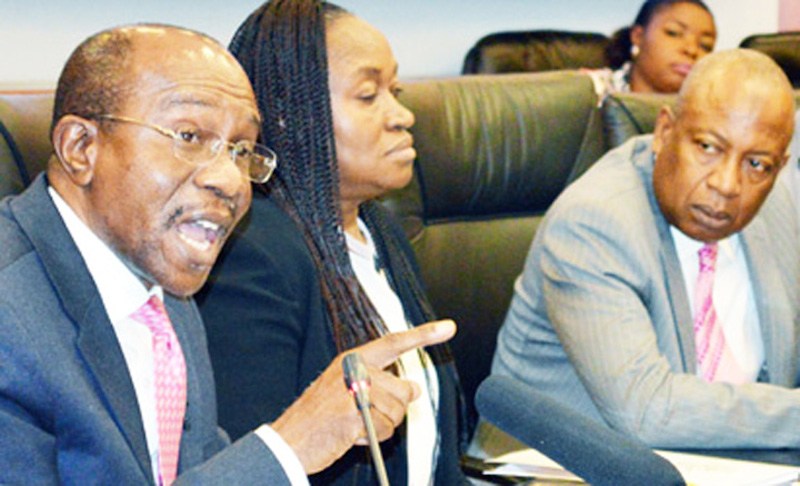
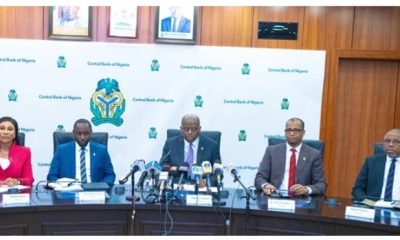
As the Central Bank of Nigeria (CBN) prepares to hold its first Monetary Policy Committee (MPC) meeting of 2018 next week, one of the leading investment firms in the country, FSDH Research, has advised the committee to consider cutting its rates so as to “boost credit creation and stimulate economic growth.”
In a report released on Thursday, analysts at FSDH said they would expect the MPC to consider a drop in either the Monetary Policy Rate (MPR), which is currently at 14 percent, or the Cash Reserve Ration (CRR), presently at 22.50 percent.
The investment company noted that although the GDP growth rate in Nigeria improved further in Q4 2017 at 1.92 percent from 1.40 percent in Q3 2017, the recovery was still very fragile, emphasising that additional monetary policies were required to stimulate a broad-based growth.
“FSDH Research’s analysis of the growth pattern in 2017 shows that two sectors; agriculture and, mining and quarrying were the major drivers of growth. They were the two sectors out of the six largest sectors of the Nigerian economy that recorded growth in 2017. Other leading sectors which are trade, information and communication, manufacturing, and real estate all contracted. Thus, the need for monetary policy easing,” it said.
FSDH Research said looking at the developments in the international market; the economic outlook in the major advanced countries is strong in the short-term to medium-term, necessitating monetary policy normalisation.
It said the outlook of the GDP growth rate remains strong, the unemployment rate is low in most regions and should remain low in the short-term, while inflation rate is trending up.
The Federal Open Market Committee (FOMC) of the United States (U.S) Federal Reserve (The Fed) increased the Federal Funds Rate (Fed Rate) at its March 2018 meeting. The Fed increased the Fed Rate to 1.50 percent – 1.75 percent from 1.25 percent -1.50 percent.
“FSDH Research expects that the FOMC will increase the Fed Rate to 2.25 percent – 2.50 percent by year end. The increase in the interest rate should lead to increase in the yields on the fixed income securities in the advanced markets, with the attendant possible increase in capital flights from the emerging markets,” the report said.
According to FSDH, the increase in the crude oil price and favourable crude oil production in Nigeria have increased capital inflows and also led to favourable trade balance. Consequently, the country’s external reserves (30-Day Moving Average) increased substantially in the last five months, growing to $46.04 billion as at March 26, 2018.
It said this provides additional short-term stability for the value of Naira.
However, FSDH Research recognised the vulnerabilities of the Nigerian economy to the adverse movements in the crude oil prices. Thus the need to stimulate other non-oil sectors to reduce these vulnerabilities, it said.
Continuing, FSDH Research noted that the current strategies of the Debt Management Office (DMO) to reduce the interest expense on the debt of the Federal Government of Nigeria (FGN) were working.
It pointed out that the latest debt figures show that the interest expense on the local debt has dropped in the last few months.
The investment firm also observed a relative increase in the revenue accrued to the FGN from the Federation Account Allocation Committee (FAAC). These two factors have led to a drop in the ratio of the interest expense to the FGN FAAC revenue which stood at 20% in December 2017. Thus the yields on the fixed income securities in the market have dropped substantially in the last six months, it said.
Although FSDH Research said it believes the yields on the NTBs may drop further, it is of the view that the yields on the FGN Bonds may move up gradually from the current level as the FGN starts to borrow to fund the 2018 budget.
It said despite the drop in the yields on fixed income securities in Q4 2017, Nigeria recorded the highest Foreign Portfolio Investments (FPIs) inflows in 2017 during the last quarter.
This, it explained, implies improving confidence on the short-term outlook of the Nigeria economy.
FSDH Research also noted that the growth in money supply as at December 2017 was lower than the CBN’s target for the year.
The broad money (M2) grew by 2.62 percent, lower than the target of 10.29 percent, while the net domestic credit contracted by 2.95 percent as against the target of 17.93 percent. The net credit to the private sector grew marginally by 1.40 percent, lower than the target of 14.88 percent.
It pointed out that the need to curb high inflation rate and maintain stability in the foreign exchange market were the main reasons for the contractionary monetary policy.
FSDH Research said it believes the inflation rate may drop to single digit mid-year, while the exchange rate should remain stable in the short-term.
“Therefore, there is a need for monetary policy easing to boost credit creation and stimulate economic growth,” it averred.
Concluding, FSDH Research said looking at the short-term outlook of the Nigerian economy, it believes the MPC should begin monetary policy easing to signal the end of its monetary policy tightening cycle.
The CBN will hold its first MPC meeting on Tuesday, April 3 and Wednesday, April 4, 2018.
At its last meeting in November 2017, the committee maintained the MPR at 14 percent, with the asymmetric corridor at +200 and -500 basis points around the MPR; and the CRR and Liquidity Ratio (LR) left at 22.50 percent and 30 percent respectively.










By Dipo Olowookere
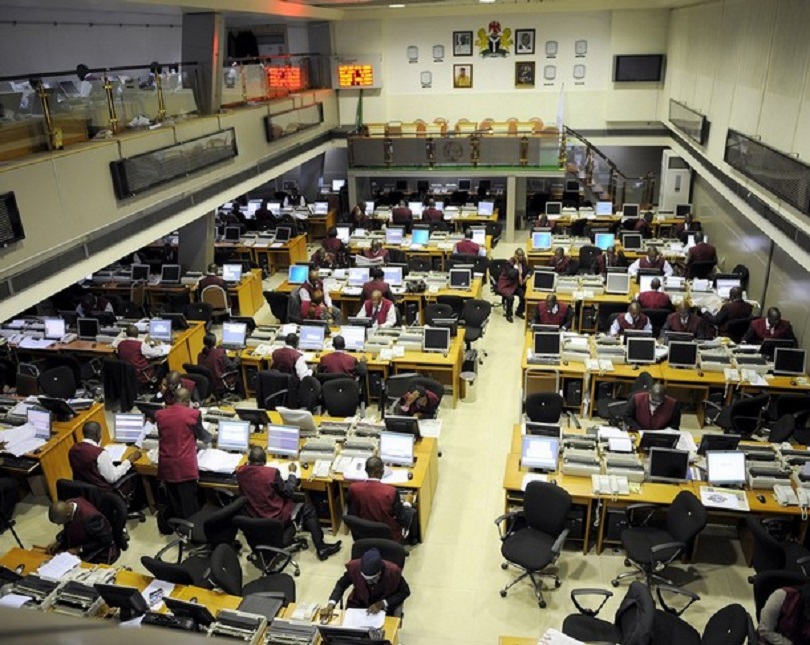
The Nigerian Exchange (NGX) Limited was further pulled back by 0.50 per cent on Tuesday as a result of profit-taking in some heavyweight stocks.
Like the preceding session, the key sectors of Customs Street were depressed yesterday, with the banking index down by 2.82 per cent. The consumer goods declined by 0.52 per cent, the insurance space lost 0.10 per cent, and the energy counter shrank by 0.03 per cent, while the industrial goods segment was flat.
Consequently, the All-Share Index (ASI) eased by 1,437.54 points to 241,984.80 points from 243,422.34 points, and the market capitalisation contracted by N922 billion to N155.204 trillion from N156.126 trillion.
The worst-performing stock was International Energy Insurance, which gave up 10.00 per cent to close at N5.76. Vitafoam dipped by 10.00 per cent to N189.00, Austin Laz crashed by 9.93 per cent to N3.90, SUNU Assurances depleted by 9.82 per cent to N3.58, and Sovereign Trust Insurance lost 8.37 per cent to finish at N2.30.
On the flip side, Conoil gained 9.79 per cent to trade at N213.00, Prestige Assurance also expanded by 9.79 per cent to N1.57, Neimeth jumped 9.74 per cent to N8.45, eTranzact chalked up 9.40 per cent to close at N16.30, and Cornerstone Insurance improved by 9.09 per cent to N5.40.
The bourse witnessed heavy sell-offs in some equities, with Sterling Holdings recording the sale of 100.9 million units worth N782.8 million to lead the activity log. UAC Nigeria transacted 49.4 million units valued at N9.1 billion, Access Holdings sold 28.8 million units for N699.3 million, Zenith Bank exchanged 29.4 million units worth N3.0 billion, and GTCO traded 20.2 million units valued at N2.7 billion.
At the close of transactions, market participants bought and sold 535.5 million shares worth N36.8 billion in 55,123 deals compared with 569.1 million shares valued at N31.4 billion traded in 77,652 deals on Monday. This implied that the trading value went up by 17.20 per cent, while the trading volume and the number of deals went down by 5.90 per cent and 29.01 per cent, respectively.

By Adedapo Adesanya
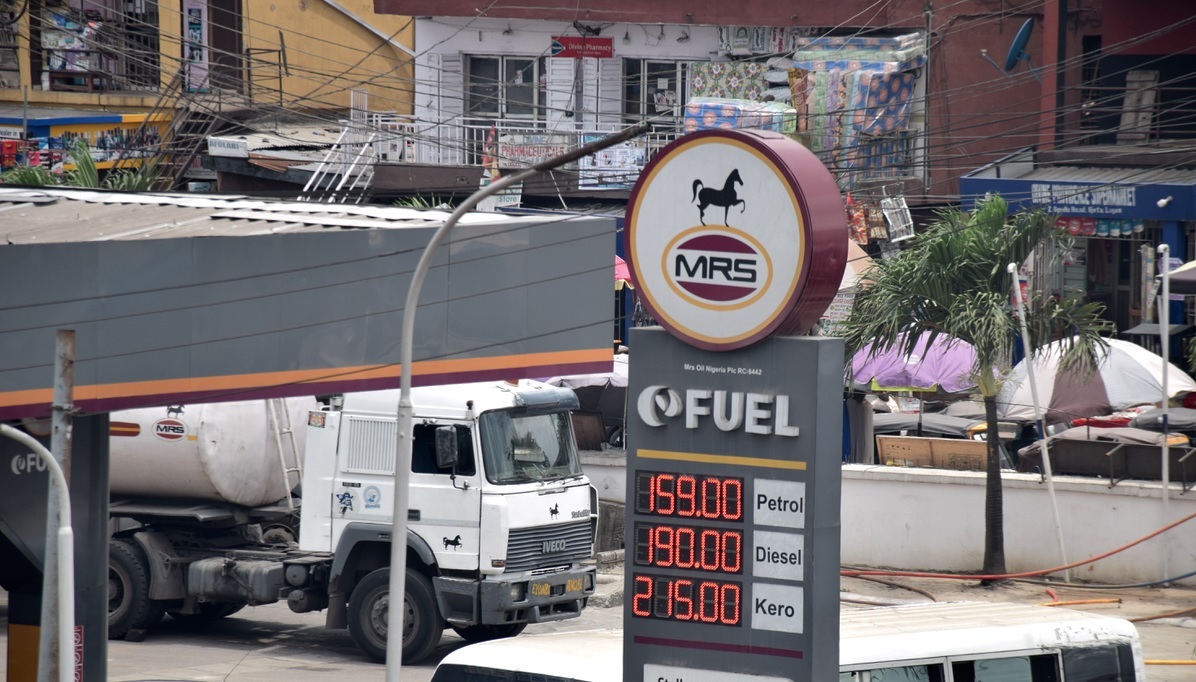
The NASD Over-the-Counter (OTC) Securities Exchange was further down by 0.48 per cent on Monday, June 16, as a result of the losses printed by three bellwethers, led by MRS Oil Plc, which fell by N15.80 to N142.20 per unit from N158.00 per unit.
Further, FrieslandCampina Wamco Nigeria Plc dipped by N2.94 to close at N180.14 per share versus the previous day’s N183.08 per share, and Central Securities Clearing System (CSCS) Plc crumbled by 38 Kobo to N80.24 per share from N80.62 per share.
Consequently, the market capitalisation of the trading platform moderated by N12.55 billion to N2.605 trillion from N2.605 trillion, while the NASD Unlisted Security Index (NSI) weakened by 20.98 points to 4,333.35 points from 4,354.33 points.
During the trading day, the value of transactions surged by 16.5 per cent to N45.6 million from the preceding session’s N39.2 million, and the number of deals soared by 34.8 per cent to 31 deals from 23 deals, while the volume of securities declined by 30.6 per cent to 688,290 units from 992,164 units.
At the close of trades, Great Nigeria Insurance (GNI) Plc remained the most traded stock by value on a year-to-date basis with a turnover of 3.4 billion units valued at N8.4 billion. The second spot was occupied by Infrastructure Credit Guarantee (Infracredit) Plc, with 2.3 billion sold for N6.5 billion, and the third position was taken by CSCS Plc, with 66.9 million units exchanged for N4.6 billion.
GNI Plc also ended the session as the most traded stock by volume on a year-to-date basis, with 3.4 billion units worth N8.4 billion, followed by Infracredit Plc with 2.3 billion units traded for N6.5 billion, and Resourcery Plc with 1.1 billion units transacted for N415.7 million.
By Adedapo Adesanya
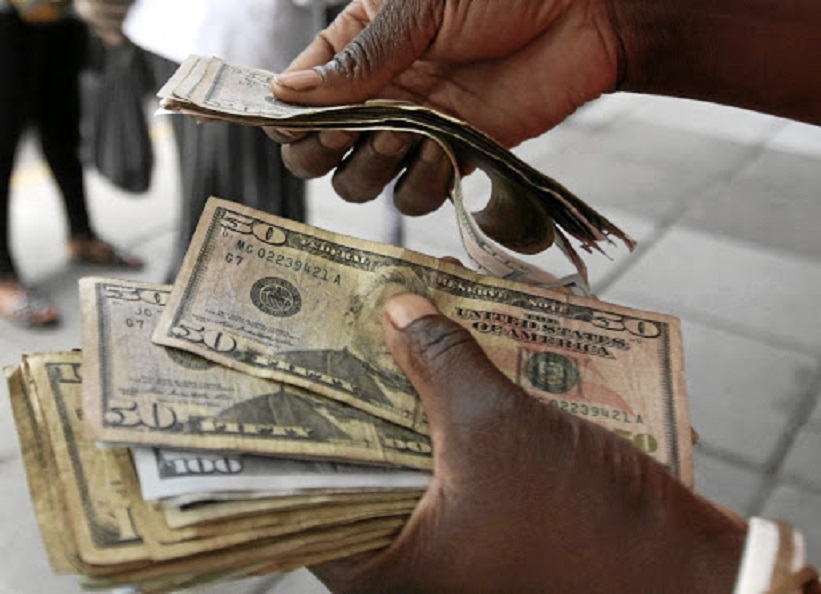
The Naira suffered a 0.55 per cent or 91 Kobo loss against the US Dollar in the Nigerian Autonomous Foreign Exchange Market (NAFEX) on Tuesday, June 16, closing at N1,357.18 /$1 compared with the previous day’s N1,356.27/$1.
It also weakened against the Pound Sterling at the official market during the session by N11.53 to trade at N1,820.39/£1 versus Monday’s rate of N1,808.86/£1, but appreciated against the Euro by N2.06 to quote at N1,573.79/€1 versus the preceding session’s N1,575.85/€1.
In the black market, the Nigerian currency crashed against the Dollar yesterday by N5 to sell for N1,385/$1, in contrast to the N1,380/$1 it was traded a day earlier, and at the GTBank FX desk, it traded flat at N1,373/$1.
Nigeria’s gross external reserves surged to $50.505 billion, the highest international Dollar balance since January 2009, affirming expectations that the local currency will remain along a stable band. The FX reserves position was buoyed by inflows from oil sales.
In its Article IV consultation report on Nigeria, the International Monetary Fund (IMF) said that the Naira remains significantly undervalued despite recent gains from FX reforms. It noted that its Real Effective Exchange Rate (REER) assessment showed the local currency was still trading below levels supported by the country’s economic fundamentals, saying the Naira should have traded around N1,142.04/$1 using the end-of-2025 exchange rate benchmark, or N1,130.88/$1 when calculated using the average exchange rate for the year.
As for the cryptocurrency market, prices showed renewed risk appetite as total 24-hour trading volume jumped 51 per cent to $207 billion, open interest rose 2.4 per cent to $113.41 billion, and liquidations surged 64 per cent to $561 million, with shorts accounting for the bulk of the forced exits, according to Coindesk data.
Cardano (ADA) slid 2.7 per cent to $0.1731, Binance Coin (BNB) slumped 1.6 per cent to $605.80, Ripple (XRP) declined by 1.5 per cent to $1.22, Bitcoin (BTC) fell 0.8 per cent to $65,739.70, Dogecoin (DOGE) also tumbled by 0.6 per cent to $0.0873, and TRON (TRX) depreciated by 0.6 per cent to $0.3166.
However, Ethereum (ETH) grew by 0.5 per cent to $1,795.40, and Solana (SOL) rose by 0.2 per cent to $73.81, while the US Dollar Tether (USDT) and the US Dollar Coin (USDC) remained unchanged at $1.00 apiece.
-
 Feature/OPED6 years ago
Davos was Different this year
-
Travel/Tourism10 years ago
Lagos Seals Western Lodge Hotel In Ikorodu
-

 Showbiz3 years ago
Estranged Lover Releases Videos of Empress Njamah Bathing
-
 Banking8 years ago
Sort Codes of GTBank Branches in Nigeria
-

 Economy3 years ago
Subsidy Removal: CNG at N130 Per Litre Cheaper Than Petrol—IPMAN
-

 Banking3 years ago
Sort Codes of UBA Branches in Nigeria
-

 Banking3 years ago
First Bank Announces Planned Downtime
-

 Sports3 years ago
Highest Paid Nigerian Footballer – How Much Do Nigerian Footballers Earn