
Banking
Slow Economic Expansion Affected Our 2017 Performance—Access Bank

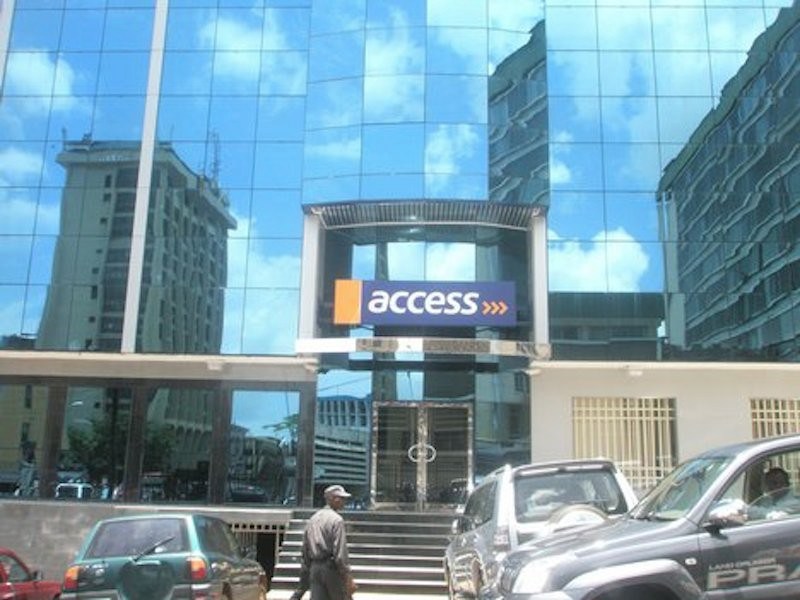
By Dipo Olowookere
Access Bank Plc released its 2017 financial statements to the investing public yesterday and the results were not too impressive.
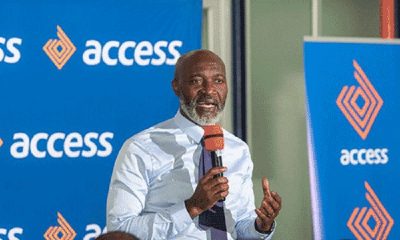
Group Managing Director of Access Bank, Mr Herbert Wigwe, attributed this to the slow economic expansion during the year.
In the financial results, the lender recorded a drop in its profit before tax by 11.36 percent, posting N80 billion in 2017 against N90.3 billion it achieved in 2016.
Also, its profit after tax went down by 13.23 percent from N71.4 billion two years ago to N62 billion last year.
However, the gross earnings appreciated during the period by 20.4 percent to N459.1 billion from N381.3 billion in the corresponding period of 2016.
This was buoyed by the growth recorded in the interest income, 29.35 percent, to finish at N319.9 billion in 2017 against N247.2 billion achieved in 2016.
While commenting on the results, Mr Wigwe said, “Our operating performance in 2017 was impacted by the residual effects of macro-economic conditions of 2016, characterised by slow economic expansion and adverse credit conditions, which resulted in making conservative provisions on our loan book.”
However, he noted that despite the macro and regulatory headwinds, “Our underlying business remained strong as reflected in the gross earnings growth of 20 percent to N459 billion in 2017.”
“We grew our loan book to position it for improved earnings, whilst driving deposit mobilization from targeted segments to diversify our funding base,” the bank chief said.
Mr Wigwe described the year 2017 as “pivotal for the bank, as it concluded its 2013-2017 corporate strategic plan.”
He said, “Its successful implementation was hinged on discipline, hard work, and an unwavering commitment to our set objectives.”
“I am particularly excited about the next phase of the bank’s evolution centred on an integrated global franchise.
“The execution of the 2018-2022 strategy commences with focus on deepening our retail offerings, underpinned by strong digital and payment solutions.
“Throughout the next phase, we will continue to invest in technology as we establish a universal payments gateway with an ecosystem of local and international partnerships,” he disclosed.
Access Bank’s capital and liquidity levels of 22.5 percent and 47.3 percent respectfully remained robust, well above the required regulatory minimum, providing a strong buffer against the macro challenges and room to expand its business.








By Aduragbemi Omiyale
The world’s first ICMA commercial bank-issued Nature Bond has been launched by Ecobank Group to mobilise global capital for the protection of Africa’s natural ecosystems.
The debt instrument, up to $450 million, will be tradable on the London Stock Exchange (LSE), creating a new route for international and African capital to protect Africa’s biodiversity.
The bond will support African farmers, sustainable agriculture businesses and water systems, protecting some of the planet’s most important ecosystems.
Africa is home to some of the world’s most important natural capital, including arable land, tropical forests, freshwater systems and biodiversity across hundreds of millions of hectares. But, until now, private nature capital has not flowed to Africa at the scale the continent’s ecological significance warrants in global ecological resilience. Despite hosting 25 per cent of global biodiversity, Africa receives less than 3 per cent of nature finance.
Ecobank’s Nature Bond is a direct response to this gap. It will support smallholder farmers adopting sustainable agricultural practices, agri-processors with verified deforestation-free supply chains, and water infrastructure protecting freshwater ecosystems relied upon by millions of people.
Unlike many conservation-focused financing vehicles, Ecobank’s Nature Bond channels capital directly through Africa’s real economy — financing businesses and communities whose day-to-day activities shape environmental outcomes at scale.
The investments will be made in 24 markets, with significant deployment in biodiversity-priority countries such as Côte d’Ivoire, Burkina Faso and Ghana. Importantly, 81 per cent of the eligible lending pool is allocated to countries where agricultural land-use change is the primary driver of biodiversity loss, helping direct capital to the areas where it can have the greatest environmental impact.
The framework also incorporates independent monitoring and verification mechanisms, including deforestation screening and supply chain traceability requirements, helping ensure that financed activities deliver measurable nature-positive outcomes. Every eligible loan carries seven independently verified sustainability conditions.
A Nature Bond, under the ICMA secondary designation, requires proceeds to actively contribute to nature-positive outcomes, including transforming economic activities to reduce the drivers of nature loss at scale.
The Nature Bond was designed to reach those that conservation-focused instruments were not designed to serve – farmers, agri-processors and water operators whose daily activities collectively determine ecosystem outcomes.
While green bonds typically finance a broad range of environmental objectives, the Nature Bond designation focuses the use of proceeds specifically on nature-related outcomes, including biodiversity, sustainable agriculture, land use and water infrastructure.
“This transaction is a defining moment for African sustainable finance. Investors did not just support this bond. They demanded more of it, allowing us to increase the size and tighten pricing.
“We are not a bank that simply labels bonds. We have spent four years building the systems, governance and accountability needed to make nature finance credible and scalable in Africa.
“This bond is ultimately about the farmers, cooperatives and communities whose livelihoods depend on healthy ecosystems,” the chief executive of Ecobank Group, Mr Jeremy Awori, stated.
On her part, the Head of Sustainability and ESRM at Ecobank Transnational Incorporated, Ms Rachael Antwi, said, “Nature finance will only scale in Africa if it is practical, measurable and connected to the real economy. This bond is designed to do that by linking international capital to eligible lending for sustainable agriculture and water infrastructure across 24 countries. It reflects the systems and standards Ecobank has built to ensure nature finance supports both environmental resilience and the communities whose livelihoods depend on healthy ecosystems.”
Business Post gathered that the $450 million bond was priced following strong investor demand, with the final orderbook exceeding $1.36 billion, almost 400 per cent of the original target size. The strength of demand enabled Ecobank to increase the transaction by $100 million and tighten pricing by 50 basis points.
The transaction attracted support from both international and African investors, demonstrating Ecobank’s unique ability to mobilise capital across global and African markets.


By Adedapo Adesanya
One of Nigeria’s real estate lenders, Abbey Mortgage Bank Plc, has secured approval from the Central Bank of Nigeria (CBN) to convert into a regional commercial bank, marking a shift from its current status as a primary mortgage institution.
The development was disclosed in a regulatory filing, signalling a strategic change that will see the bank expand into broader commercial banking activities beyond housing finance.
The conversion is expected to take effect later this year, subject to the completion of regulatory and operational requirements, including system upgrades and restructuring.
The move comes amid ongoing changes in Nigeria’s banking sector, where institutions are seeking to strengthen capital bases and diversify operations in response to evolving regulatory and market conditions.
At its recent Annual General Meeting (AGM), its board gave approval to raise N100 billion in additional capital aimed at helping the company achieve its next growth phase.
Shareholders authorised the lender to raise the funds through various funding instruments, including shares, bonds, commercial papers, loans, and other securities, subject to regulatory approvals.
The directors were also allowed to raise fresh equity capital of up to N65.547 billion by way of private placement of 26,562,647,265 ordinary shares of 50 Kobo each at N2.43 per share, subject to regulatory approvals.
In addition, shareholders approved the increase in the company’s issued share capital from N5,076,923,077 divided into 10,153,846,154 of 50 Kobo each to N18,358,246,709.50 by the creation of up to 26,562,647,265 ordinary shares of 50 Kobo each, such new shares to rank pari passu in all respects with the existing ordinary shares in the capital of the bank.
By Adedapo Adesanya
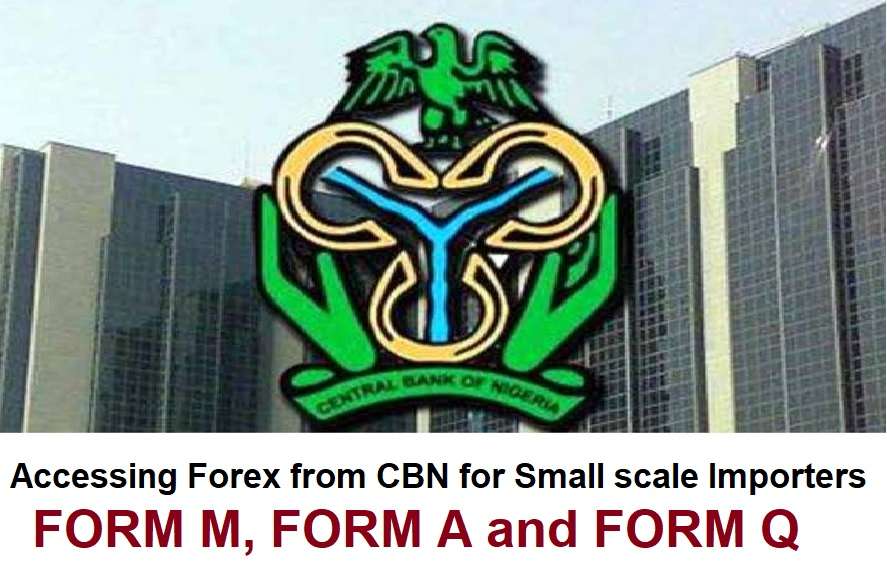
In a significant easing of foreign exchange (FX) procedures, the Central Bank of Nigeria (CBN) has exempted domiciliary account holders from obtaining Form A before making eligible foreign remittances.
The provision is contained in the newly issued Forex Manual (4th Edition), which took effect on June 1, 2026. Under the new framework, customers using funds already held in their domiciliary accounts can make remittances without processing Form A.
The change is expected to shorten processing times for legitimate foreign transfers and reduce paperwork for banks and customers.
Form A remains relevant for certain transactions involving the purchase of foreign exchange through the official market.
The broader manual introduces new measures covering imports, exports, travel allowances, trade finance, and foreign remittances as the CBN seeks to improve transparency and efficiency in the forex market.
The apex bank said the reforms are intended to strengthen market discipline, improve data accuracy, and support confidence in Nigeria’s foreign exchange framework.
Under the revised framework, all import transactions must be backed by a valid Form ‘M’, with strict timelines imposed for the submission of shipping and exchange control documents.
Importers are required to ensure that all documentation is genuine, verifiable, and routed through authorised banking channels, as part of efforts to eliminate trade-based money laundering and illicit capital flows.
The apex bank also standardised the exchange rate for import duty payments, directing that duties be calculated using the prevailing Nigerian Foreign Exchange Market (NFEM) rate published daily by the CBN.
In a move to limit capital flight, the manual caps advance payments for imports at 30 per cent of transaction value and places a ceiling on interest rates for trade-related credit at 0.5 per cent above the Secured Overnight Financing Rate (SOFR), with a maximum tenor of 180 days.
On the export side, the CBN has made it mandatory for all exporters to process Form NXP, regardless of the value of goods.
Export proceeds must be repatriated within 180 days for non-oil exports and 90 days for oil and gas shipments, reinforcing efforts to boost foreign exchange inflows.
The guidelines also introduce stricter inspection requirements, mandating pre-shipment verification and the issuance of Clean Certificates of Inspection before goods can be exported.
Exporters are further required to pay the Nigerian Export Supervision Scheme (NESS) levy, set at 0.5 per cent for non-oil exports and 0.12 per cent for oil and gas exports.
In addition, the manual strengthens oversight of insurance-related forex transactions, restricting foreign currency-denominated policies for residents and requiring regulatory clearance for certain offshore payments.
-
 Feature/OPED6 years ago
Davos was Different this year
-
Travel/Tourism10 years ago
Lagos Seals Western Lodge Hotel In Ikorodu
-

 Showbiz3 years ago
Estranged Lover Releases Videos of Empress Njamah Bathing
-
 Banking8 years ago
Sort Codes of GTBank Branches in Nigeria
-

 Economy3 years ago
Subsidy Removal: CNG at N130 Per Litre Cheaper Than Petrol—IPMAN
-

 Banking3 years ago
Sort Codes of UBA Branches in Nigeria
-

 Banking3 years ago
First Bank Announces Planned Downtime
-

 Sports3 years ago
Highest Paid Nigerian Footballer – How Much Do Nigerian Footballers Earn