
Economy
Continental Free Trade Area May Cripple Nigerian Economy—Labour, Expert


By Dipo Olowookere
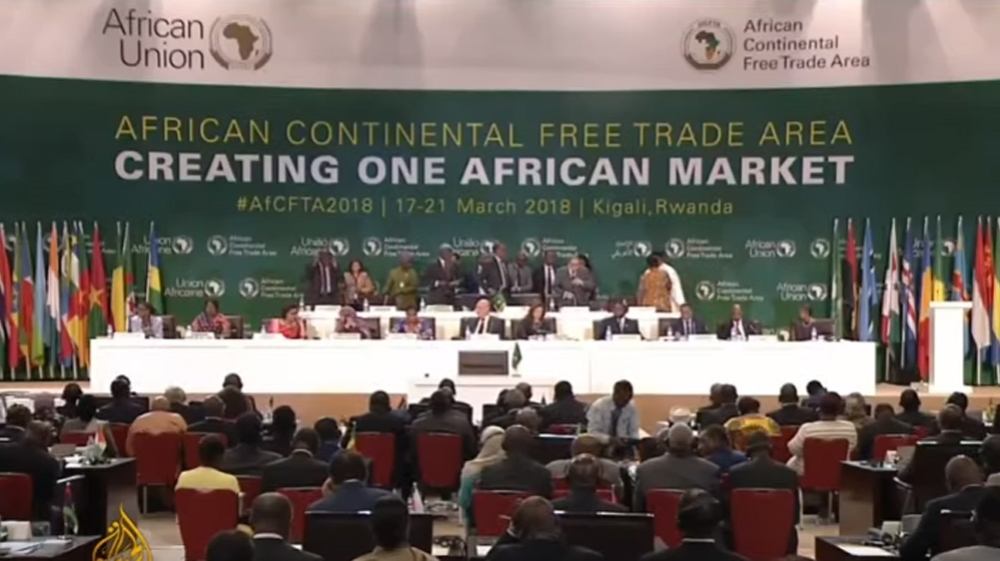
Federal Government has been urged to cautious of the proposed Continental Free Trade Area (CFTA) agreement it plans to sign because of the likely negative impact on private businesses and the nation’s economy.
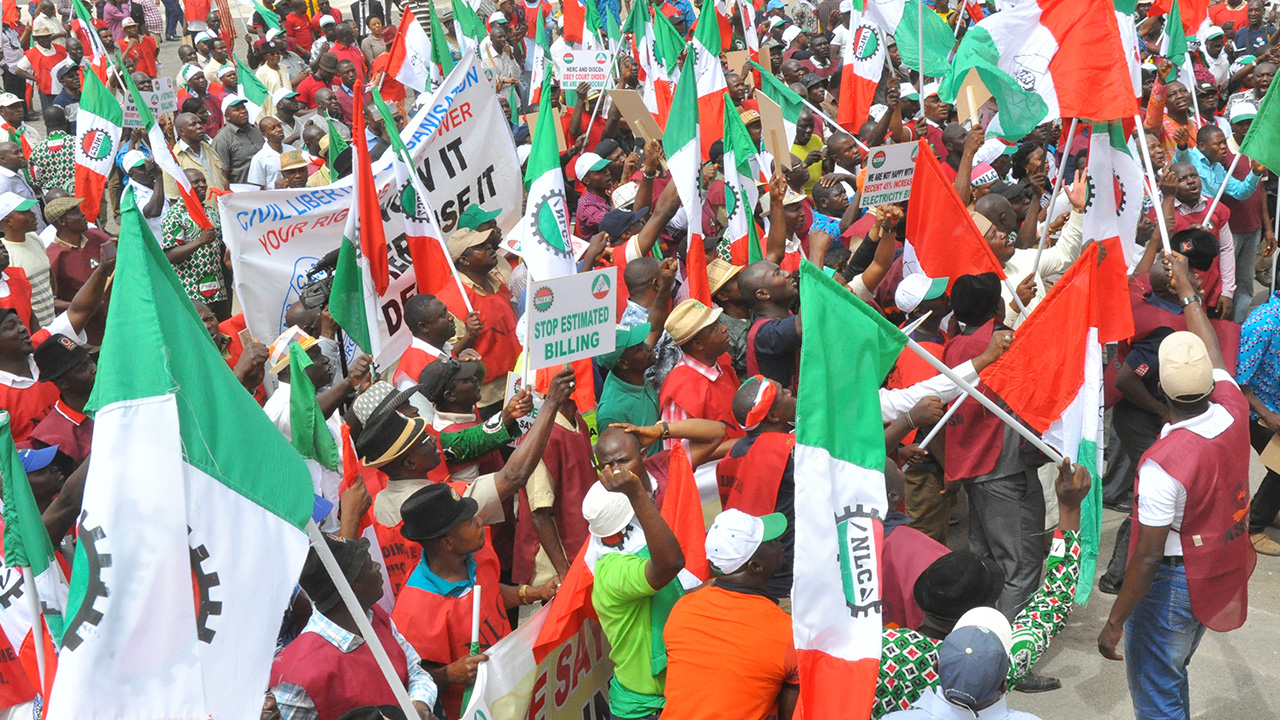
President of the Nigerian Labour Congress (NLC), Mr Ayuba Wabba, appealed to President Muhammadu Buhari not to be cajoled into signing the proposed bill.
Mr Wabba warned that the probable outcome of the policy, if given life, may have a crippling effect on local businesses and attendant effects on jobs.
“We have no doubt this policy initiative will spell the death knell of the Nigerian economy.” the NLC President submitted.
According to some experts, the agreement, which is aimed at liberating the African economy by creating a free trade Area for all 55-member states of the African Union (AU), may end up doing more harm than good because of the sensitivity of the policy and its possible negative impact on the country’s economy and private owned industries especially.
Dr John Isemede, an international trade expert and former Director General of Nigeria Association of Chambers of Commerce Industries Mines and Agriculture (NACCIMMA), stressed that Nigeria will not really gain from the Tree Trade Area if the agreement is signed.
Mr Isemede told newsmen in Lagos that many of Nigeria’s trade agreements had even worked to its disadvantage due to poor export capacity in non-oil and low industrial capacity
“There is a need to review trade agreements and policies at this time because most of the developed countries we see today grew by closing down their borders for a while.
“Take a look at AGOA for instance, for 10 years, only very few exporters have been able to export under the platform due to poor information and lack of proper documentation.
“We have rice mills and farms that are barely functioning, except for the new intervention of the UNIDO and Bank of Industry to empower farmers and this apparently is not enough,” he said.
He advised the Federal Government to look at the critical details involved in the agreement adding that there must be a balance between import and export for a country like Nigeria to benefit from any trade agreements.
Speaking to our correspondent, Mr Emeka Nwasike Nwasike, an investment expert and CEO of Allied Trust Systems Limited said opening the borders of Nigeria will only expose local manufacturing industries in Nigeria which are struggling to survive to undue competition. He added that at a time when other countries are developing policies of protectionism for the growth and survival of its local industry, Nigeria cannot afford to jeopardize the growth of its local industries by allowing a free trade policy.
A leading Consultant and trainer in small business development, Mr Henry Agbebire, said with the high rate of importation from other regions into Africa, the region may soon become a strait for imports against local manufacturing which is a major driver of growth in any economy.
“Although the focus of the CFTA agreement is to increase Africa’s industrial and trade capacity however, nearly 85 percent of the goods traded in Africa come from outside the continent as against the 15 percent produced locally which has led to an annual food import bill of over $35 billion.
“There is therefore a very high possibility that the region would become a conduit for imports against local manufacturing if the free trade zone is allowed operation in Africa and especially in a country like Nigeria.
“No wonder developed countries and neo-liberal institutions such as UNCTAD, TRALAC, UNECA, WTO, DFID, EU USAID, World Bank etc are very enthusiastic to finance the CFTA process because they know that it would open up the African markets to their exports and at the detriment of the growth of local industries.
“According to history, all developed countries today reached their competitive position through a high import protection on agriculture and other infant industries and as a result benefited from huge subsidies and exploitation of their Southern colonial countries, particularly in Africa for centuries.
“They created the condition to do it through import protection and it is only afterwards that they opened their markets to other countries. I wonder why Africa would want to do otherwise,” he said.
Explaining further, he said, “CFTA has the tendency to reduce real income in Nigeria because, with the policy, the Federal Government will be forced to renounce to a non-negotiable source of income like tariff revenue. Also, as African countries open up, competition will be increasing on the continental market.
“This will result to trade flows such as African imports being reoriented because, partners located either on the continent or outside of the continent are being replaced by imports from African partners benefiting from better market access, thanks to tariff cuts, and potentially leading to terms of trade reduction.
“Thirdly as world prices of food products slightly increase with the liberalization reforms, net-food importing countries such as Nigeria will be hurt and their real income reduced.




By Adedapo Adesanya
The duo of MRS Oil and FrieslandCampina Wamco Nigeria Plc weakened the NASD Over-the-Counter (OTC) Securities Exchange by 0.68 per cent on Friday, June 5.
MRS Plc lost N19.00 during the session to sell at N171.00 per share compared with Thursday’s value of N190.00 per share, and FrieslandCampina Wamco Nigeria Plc depreciated by N8.70 to finish at N181.68 per unit compared with the preceding session’s N190.38 per unit.
As a result, the market capitalisation further lost N22.59 billion to close at N2.607 trillion versus the N2.630 trillion it ended a day earlier, and the NASD Unlisted Security Index (NSI) dropped 37.76 points to settle at 4,358.32 points, in contrast to the previous day’s 4,396.08 points.
The alternative stock market closed the last trading day of this week with a price gainer, Central Securities Clearing System (CSCS) Plc, which gained 6 Kobo to quote at N78.40 per share compared with the preceding session’s N78.34 per share. However, it could not prevent the market from going down at the close of business.
Yesterday, the volume of securities bought and sold by investors went down by 50.0 per cent to 140,345 units from the preceding day’s 280,714 units, the value of stocks decreased by 16.5 per cent to N17.9 million from the previous session’s N21.5 million, and the number of deals carried out by market participants fell by 35.7 per cent to 27 deals from the 42 deals recorded on Thursday.
When trading activities closed for the day, Great Nigeria Insurance (GNI) Plc remained the most active stock by value on a year-to-date basis, with 3.4 billion units exchanged for N8.4 billion, trailed by Infrastructure Credit Guarantee (Infracredit) Plc with 2.3 billion units sold for N6.5 billion, and CSCS Plc with 64.7 million units traded for N4.4 billion.
GNI Plc also ended the session as the most traded stock by volume on a year-to-date basis, with 3.4 billion units worth N8.4 billion, followed by Infracredit Plc with 2.3 billion units transacted for N6.5 billion, and Resourcery Plc with 1.1 billion units valued at N415.7 million.

By Dipo Olowookere
Renewed interest in financial stocks and others lifted the Nigerian Exchange (NGX) Limited by 0.15 per cent on Friday.
Customs Street closed higher yesterday despite the 1.37 per cent loss recorded by the consumer goods sector as a result of profit-taking.
This was offset by gains in the other key sectors of the local bourse, as the insurance counter chalked up 1,14 per cent. The banking space appreciated by 0.90 per cent, the industrial goods segment grew by 0.46 per cent, and the energy sector expanded by 0.01 per cent.
Consequently, the All-Share Index (ASI) went up by 366.00 points to 242,593.31 points from 242,227.31 points, and the market capitalisation gained N235 billion to close at N155.594 trillion compared with the previous day’s N155.359 trillion.
The trio of International Energy Insurance, Abbey Mortgage Bank, and DAAR Communications improved by 10.00 per cent each yesterday to N7.26, N9.35, and N1.98, respectively, while Zichis advanced by 9.39 per cent to N32.38, with Sovereign Trust Insurance up by 8.70 per cent to N2.50.
On the flip side, Academy Press lost 9.84 per cent to quote at N8.25, University Press depreciated by 9.73 per cent to N5.10, Africa Prudential dipped by 2.63 per cent to N12.95, Chams crumbled by 2.44 per cent to N4.00, and International Breweries slipped by 1.59 per cent to N12.35.
Business Post reports that the market breadth index was positive during the session after recording 37 appreciating equities and 14 depreciating equities, implying strong investor sentiment.
Abbey Mortgage Bank led the activity chart with a turnover of 164.1 million units worth N1.5 billion, Ellah Lakes sold 76.7 million units for N767.2 million, Access Holdings transacted 44.8 million units valued at N1.1 billion, Linkage Assurance exchanged 23.0 million units worth N41.2 million, and The Initiates traded 20.2 million units for N562.1 million.
At the close of trades, market participants transacted 608.5 million units worth N32.0 billion in 53,826 deals versus the 588.5 million units valued at N27.9 billion executed in 57,352 deals in the previous session. This showed that the number of deals eased by 6.15 per cent, the volume of transactions rose by 3.40 per cent, and the value of transactions soared by 14.70 per cent.
By Adedapo Adesanya
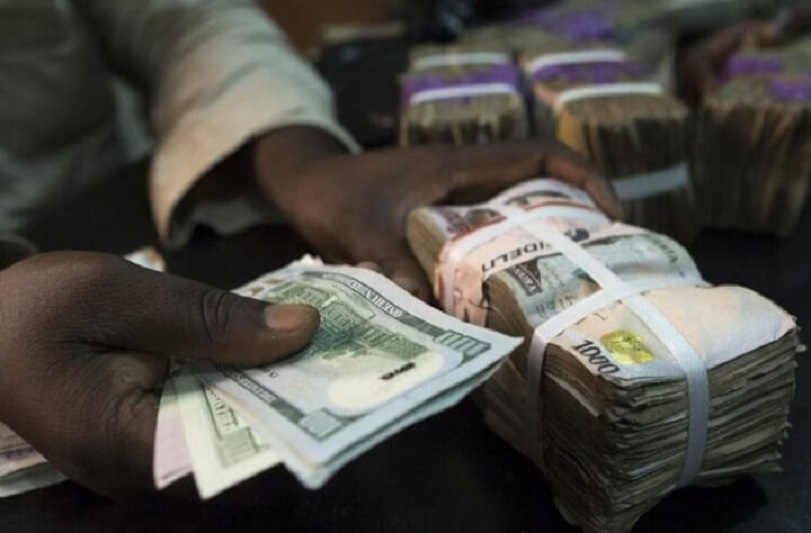
The Naira further depreciated against the United States Dollar by N3.46 or 0.25 per cent to N1,362.21/$1 from N1,358.75/$1 in the Nigerian Autonomous Foreign Exchange Market (NAFEX) on Friday, June 5.
However, it appreciated against the Pound Sterling in the same market window during the session by N4.47 to trade at N1,823.59/£1 compared with the previous day’s N1,828.06/£1, and gained N7.00 against the Euro to sell at N1,574.58/€1, in contrast to Thursday’s closing price of N1,581.58/€1.
For another trading session, the Nigerian Naira maintained stability against the Dollar in the parallel market and the GTBank forex counter on Friday at N1,375/$1 and N1,372/$1, respectively.
The Naira is expected to remain strong in the near term, backed by a rise in external reserves, which are nearing $50 billion, enhancing analysts’ confidence about its outlook in the second half of 2026.
Heightened global uncertainty has reduced the incentive for importers and corporates to demand FX, as cautious trade weighs on import needs. Analysts estimate a $40 billion net FX position for the year, a projection anchored in oil windfall gains.
As for the cryptocurrency market, prices remained depressed following a strong US jobs report that spurred markets to price in higher-for-longer interest rates, sending Treasury yields and the dollar up while hammering stocks, especially AI-related names. Crypto markets saw heavy leverage washouts with about $1.6 billion in positions liquidated over 24 hours.
Ethereum (ETH) gave up 4.9 per cent to trade at $1,584.68, Solana (SOL) fell by 3.3 per cent to $63.22, Bitcoin (BTC) crashed by 1.9 per cent to $61,333.23, Dogecoin (DOGE) slipped by 1.8 per cent to $0.0821, and Ripple (XRP) moderated by 1.8 per cent to $1.09.
Further, TRON (TRX) dropped 1.6 per cent to sell at $0.3197, Binance Coin (BNB) slumped by 1.0 per cent to $581.18, and Cardano (ADA) declined by 0.4 per cent to $0.1589, while the US Dollar Tether (USDT) gained 0.07 to sell at $0.9997, and US Dollar Coin (USDC) closed flat at $0.9998.
-
 Feature/OPED6 years ago
Davos was Different this year
-
Travel/Tourism10 years ago
Lagos Seals Western Lodge Hotel In Ikorodu
-

 Showbiz3 years ago
Estranged Lover Releases Videos of Empress Njamah Bathing
-
 Banking8 years ago
Sort Codes of GTBank Branches in Nigeria
-

 Economy3 years ago
Subsidy Removal: CNG at N130 Per Litre Cheaper Than Petrol—IPMAN
-

 Banking3 years ago
Sort Codes of UBA Branches in Nigeria
-

 Banking3 years ago
First Bank Announces Planned Downtime
-

 Sports3 years ago
Highest Paid Nigerian Footballer – How Much Do Nigerian Footballers Earn