
Banking
9 Banks Battle Drop in Interest Income as FG Restructure Debt Portfolio


By Modupe Gbadeyanka
At least nine banks operating in the country are battling with the risk of N300 billion decline in their interest income in the 2018 financial year, due to declining yield on government securities.
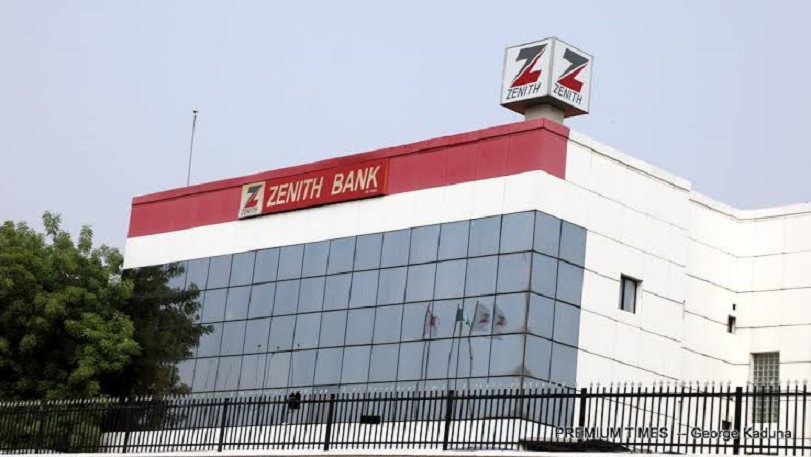
The banks are Stanbic IBTC, Fidelity Bank, Guaranty Trust Bank (GTBank), Access Bank, Zenith Bank, UBA, FBN Holdings (FBNH), Diamond Bank and FCMB.
Following the decision of the federal government to restructure its debt portfolio, by replacing domestic loan with foreign loan, the Central Bank of Nigeria (CBN) commenced a gradual reduction in yields on treasury bills.
Financial Vanguard analysis revealed that yield on 182 days treasury bills (TBs) for example declined from 17 percent in January 2017 to 13.65 percent January this year, representing decline of 330 basis points (bps).
With this trend expected to continue this year, this will translate to sharp decline in interest income for banks, while the banks frantically adjust their treasury positions as well as re-pricing their instruments.
On the average, the nine banks have 14.6 percent of their interest bearing assets in government securities.
Stanbic IBTC has the highest concentration of government securities as percentage of total interest bearing assets. The bank has 36.6 percent of its interest bearing assets in government securities, followed by GTB with 18.3 percent, FBN Holdings with 16.7 percent, UBA with 14.5 percent, and Zenith Bank with 14.4 percent.
Diamond Bank has the lowest concentration of 5.8 percent followed by FCMB with 6.3 percent, Access Bank with 8.4 percent and Fidelity Bank with 10.6 percent.
While analysts were of the view that this exposes the banks to risk of decline in net interest income as yields on government securities continue to trend downwards, the banks however pointed to other factors that will help mitigate the risk to their interest income.
Impacts
Clement Adewuyi, an analyst with CadinalStone Partners, a Lagos based investment house, said that the nine banks will suffer decline in interest income ranging from 7.8 percent to 29.6 percent of their interest income in the 2018 operating year.
In a report titled: “Declining interest rate to weigh heavily on bank’s interest revenue”, he projected that Stanbic IBTC would suffer the largest decline of 29.6 percent in interest income, followed by Fidelity Bank with 27.1 percent and GTB with 22.5 percent.
Others are Access Bank with 19.7 percent projected decline, Zenith Bank with 14.8 percent, Diamond Bank with 13.7 percent, UBA with 10.5 percent, FBNH with 9.8 percent and FCMB with 7.8 percent.
Based on the nine months unaudited results of the banks for the period ending September 2017, the above portfolios imply decline in interest income of N27 billion for Stanbic IBTC, N30 billion for Fidelity Bank, N55.8 billion for GTB, N48 billion for Access Bank and N54 billion for Zenith Bank.
This also implies decline of interest income of N18 for Diamond Bank, N15 billion for UBA, N35 billion for FBNH and N7.5 billion for FCMB.
‘The above results to a N300.3 billion decline in the interest income of the nine banks which stood at N1.87 trillion for the nine months ended September 30th2017.
Adewuyi further projected that the nine banks, on the average, will suffer 15 percent decline in net interest income, translating to N176 billion decline in the net interest income of the nine banks, which stood at N1.76 trillion, as at September 2017.”
Further speaking to Financial Vanguard, Adewuyi said: “We expect the lower interest income regime to impact interest income, interest expense, trading income and derivative gains.
“Overall, we see net interest income (NII) across our coverage banks moderating by 15 percent. We think the degree of impact that will be felt in 2018 will be highly correlated with the duration of individual banks treasury security portfolio, the sensitivity of their asset yield to interest rate as well as the willingness and ability to grow the loan book.
“In addition, we also believe the positive economic outlook makes case for better asset quality as well as lower impairment provisions in 2018.
“Thus, we expect some of the impact of the expected lower interest income on profitability to be moderated by lower impairment charges as well as provision write-backs.”
Adewuyi’s projection is supported by Fitch Ratings, which warned that Nigerian banks will struggle to sustain the same level of profitability in 2018 due to reduction in government borrowing through treasury bills and declining yields.
“We expect falling T-Bill yields and lower issuance to put pressure on Nigerian banks’ profitability in 2018,” the global rating agency said in January.
Head, Investment Research, Afrinvest Limited, Mr Robert Omotunde, however disagree with Adewuyi’s position, saying the impact of declining yield on banks’ interest income will not be significant.
He stated: “While interest income is moderating, interest expense will moderate as well. We have projected the net interest margin (NIM) for tier-1 banks in 2018 to stand at 6.5 percent.
“Resultantly, the impact of the 4-5 percent decline in the interest rate on treasury securities will only reduce NIM by 20-50 basis points, leaving NIM at a minimum of 6 percent.
“This is not to say that the moderating yield environment will have no impact, the impact will however not be significant.
“Also, for banks with operations in Nigeria as well as in other African countries, the impact of the moderating yield on their consolidated net- interest income margin will not be enormous.
“Banks typically keep most of their assets as loans. Examining the banks’ 9 months financial statement, the bank with the highest portion of its interest bearing assets invested in treasury securities is Stanbic IBTC.
“In addition, so far, we have not seen that much response in interest rates on loans. The declining yield on treasury investments may not necessarily even reduce interest income, because, banks will rationally deploy their remaining assets to other investment opportunities.
“The banks’ prime lending rate is about 18 percent and prime lending accounts for 70-80 percent of interest yielding assets. The critical factor here is the banks’ ability to identify good credit.”
Supporting Omotunde’s position, Mr Olalekan Olabode, Head, Research Division, Vetiva Capital Management Limited, said the impact will be marginal.
Speaking to Financial Vanguard, he stated: “I do not think that declining interest rate is a big issue for banks. As interest rate moderates, the cost of their debt and deposits also reduces which in turn reduces interest expense. We believe banks need to de-risk their credit portfolio and focus loan growth on diversified and less risky sectors.
“Also, the economy needs to be de-risked. Banks have a problem extending credit because of the risk of default. The BVN, credit bureau, and collateral registry initiatives are a few steps in the right direction to support credit.
“Yes, the lower interest rate on treasury securities will impact banks’ interest income given that over 25 percent of assets of banks within our coverage is invested in treasury securities.
“That said, whilst the banks suffer from the impact of lower interest rate on interest income, we expect them to benefit on the non-interest income.
“As interest rate reduces, the value of their fixed income securities increase. This therefore leads to mark-to-market gains and supports earnings. Hence, the impact is marginal.”
Banks’ Reactions
In its response to Financial Vanguard, GTB maintained that the decline in interest rate was generally anticipated and that the bank plans to grow its loan book in order to mitigate the impact.
“The bank has a healthy portfolio of quality loans in excess of our fixed income security holdings. With the pickup in economic activities, the bank projects a fair growth in its loan portfolio, which should mitigate the decline in fixed income yields.
“In addition, we anticipate a growth in credit related and transaction-based income emanating from increased business activities and growth in market share.
“The bank expects to sustain its performance in 2018, in spite of the anticipated decline in fixed income yields.”
Also, commenting, Access Bank said: “Our asset portfolio is varied taking into consideration a wide array of investment classes such that concentration, price, credit and interest rate risks are mitigated and managed via portfolio limits as well as risk limits for tenor mismatches.
“We acknowledge the downward trend in yield on government securities but this will not result in a sharp decline in the bank’s net interest income as any reduction in interest income derived from reduced yields on government securities will be offset in cost savings from reduction in interest expense incurred on tenured deposits.
“This is due to the fact that the rate on government securities forms a benchmark rate for fixed deposits across banking and other Financial Institution segments of the market.
“Given the average duration of the bank’s fixed deposit portfolio which is much lower than the tenors of these government instruments which typically are for 91, 182 and 364 days, the interest margins are set to derive from the uplift in downward re-pricing on deposits as the liabilities re-price earlier than the assets.
“Furthermore, the bank’s government securities portfolio forms only about 8 percent of our total assets.
“A further breakdown of these securities shows that our government securities portfolio is made up of medium to long tenured bond instruments as well as short tenured treasury bill securities.
“Majority of the long tenured bonds are exempt from the effects of the any reduction as the fixed coupon rate would apply on the held to maturity portions of these investments.”
Commenting, UBA stated: “We are well prepared for this lower yield environment and have strong compensating income for the lower yield on treasury assets.
“First, we are seeing stronger volume growth across our business lines, including treasury business. The continuous improvement in macroeconomic environment coupled with our steady market share gain in deposit is giving us the benefit of higher volumes on treasury assets and the overall balance sheet. This should be very positive for earnings.
“In addition, our transaction banking income lines will sustain the strong growth we have seen over the past two years, as we continue to leverage enhanced customer service and technology-led innovative offerings to dominate the market and create new opportunities and revenues lines for the Group.
“Our expectation of stronger loan growth also presents upsides to our earnings growth in the year, which is even a higher interest earnings asset class that should more than compensate us for the lower yield on treasury bills and bonds.
“All of these compensatory earnings drivers discussed earlier are in Nigeria. We have a well-diversified business, with operations in 18 other African countries.
“This unique geographic diversification reduces our Group’s vulnerability to the volatilities in one market, as the different markets where we operate in Africa are largely uncorrelated.
“More so, there has been strong growth trajectory of our African operations (ex-Nigeria), which now contributes over a third of earnings and represents a third of our Group’s balance sheet.
“This is one of the factors that stand UBA Group out from the pack and it is one of the benefits of our proactive diversification across carefully selected markets in Africa, where we see strong growth levers and opportunity to positively impact the African continent in a way that maximizes long term return on investment to our shareholders.”
On its part, Fidelity Bank said: “We have only 9 percent of our total assets in treasury securities which are relatively low compared to other banks. Nonetheless we will definitely pickup lending this year.
“Our strategic focus has always been on niche corporate banking sectors, the SMEs, and importantly retail banking driven by electronic banking services and products.
“Our retail strategy has delivered impressive results as Fidelity was rated the 4th Best Retail Bank in the Premier KPMG Annual Survey even as we were one of the 2 banks in Nigeria that pioneered the adoption of USSD banking.
“Our digital banking strategy has seen over 50 percent of customers using debit cards and 30 percent using our mobile/internet banking.
“Savings deposits have grown significantly by 97 percent to N163.8 billion as at 30 Sep 2017, from N83.3bn as at 31 December 2013. This is on the strength of the retail banking strategy as low cost deposits continued to account for over 70 percent of total customer deposits.”




By Aduragbemi Omiyale
The chairman of Access Holdings Plc, Mr Aigboje Aig-Imoukhuede, has reaffirmed the organisation’s long-term commitment to shareholders, expressing confidence in the company’s strategic positioning, which he said is underpinned by disciplined execution, a diversified business model, a strengthened capital base, and a clear focus on sustainable value creation.
Speaking at the 4th Annual General Meeting (AGM) of the firm on Wednesday, he explained that the temporary suspension of dividend distributions was a consequence of regulatory compliance requirements rather than any deterioration in the group’s financial performance.
Mr Aig-Imoukhuede reaffirmed that the financial institution’s earnings capacity remains strong and that the board’s position reflects adherence to supervisory expectations and prudent capital management principles.
He assured shareholders of the board’s commitment to resuming dividend payments as soon as the relevant regulatory conditions are satisfied, noting that, “Our approach is clear: capital retained today must translate into greater value tomorrow and sustainable returns for our shareholders.”
The Chairman reiterated the strategic imperative underpinning the company’s next phase of growth, saying, “Our strategy, From Scale to Value, reflects the natural evolution of our journey. Scale created opportunity; value creation is how we fully realise it.”
He noted that while the organisation continues to generate strong returns, ensuring that earnings per share consistently exceed the cost of capital remains central to unlocking sustainable shareholder value.
The retired banker also acknowledged the significant unrealised value embedded within the firm’s international subsidiaries and reiterated management’s focus on improving market recognition of that intrinsic value over time.
Commenting on the financial performance of the group in 2025, he said Access Holdings accelerated provisions on legacy and regulatory forbearance credit exposures, resulting in elevated impairment charges.
He explained that the group consciously prioritised balance sheet strength and long-term resilience over short-term earnings optimisation.
“Periods of economic uncertainty often reveal more about an institution than periods of uninterrupted growth. Our focus remains on building a business that is not only growing, but improving in the quality, resilience, and sustainability of its earnings,” he stated.
Last year, the financial services organisation delivered pre-tax profit of N1.007 trillion, underscoring the strength of its diversified platform and expanding earnings base across key markets. Total assets increased to N51.56 trillion, while customer deposits grew strongly, reflecting sustained franchise momentum and deepening customer trust.
By Modupe Gbadeyanka
A new report highlighting the transformation from a newly established fintech venture into one of Nigeria’s leading payment infrastructure providers has been launched by HabariPay Limited.
The report, known as the HabariPay Impact Report 2025, provides stakeholders with a comprehensive evolution, innovation journey, business performance, and impact of the fintech subsidiary of Guaranty Trust Holding Company (GTCO) Plc on the digital payments landscape.
The company’s contributions to enabling digital commerce, supporting businesses, strengthening payment infrastructure, and expanding financial access through technology-driven solutions were also captured in the piece.
The HabariPay Impact Report 2025 also highlights the organisation’s strong financial and operational performance, the growth of the Squad platform, and the development of infrastructure that powers payment acceptance, switching, transfers, merchant services, and value-added solutions.
The publication further explores the role of innovation, talent development, and ecosystem partnerships in driving the company’s success.
It showcases HabariPay’s investments in innovation through initiatives such as the Take on Squad Hackathon and the Squad Hackademy, both of which are helping to develop future technology talent and accelerate the creation of practical solutions to real-world challenges.
“As a technology-driven company, we believe that impact extends beyond financial performance. It is reflected in the businesses we enable, the merchants we support, the infrastructure we build, and the opportunities we create for the next generation of innovators.
“The HabariPay Impact Report 2025 captures this journey and demonstrates our commitment to creating sustainable value for customers, partners, and the broader economy,” the Managing Director of HabariPay, Ms Eduofon Japhet, said.
“The HabariPay Impact Report 2025 represents more than a reflection on our achievements; it is a testament to the deliberate investments we have made in building sustainable payment infrastructure, empowering businesses, fostering innovation, and creating long-term value for our stakeholders.
“As we look ahead, we remain committed to expanding our capabilities, deepening our impact, and shaping the future of digital payments through technology-driven solutions that are secure, scalable, and inclusive,” she added.

By Modupe Gbadeyanka
Some top foreign exhibitors participating in the much-anticipated Ecobank Adire Lagos Experience commencing on Thursday, June 11, 2026, are already in Nigeria.
The four-day event, closing on June 14, will witness participation from notable African fashion brands from Ghana, Sierra Leone, Senegal and the Benin Republic.
Among the international exhibitors confirmed for this year’s edition are Creative Hub Africa and Shades of Class from Sierra Leone, Drame Khadidatou from Senegal, Tampoori from Ghana, and Naylah Collection from the Republic of Benin. Their participation highlights the growing continental appeal of the Ecobank Adire Lagos Experience as a platform for cultural exchange, business collaboration and market access across Africa.
More than 100 exhibitors and vendors, including leading Nigerian brands such as Obida Design Associates, This Is Us, Imani Kids, Ashabi Fads, E25Dresses, Miné by Ejiro Amos Tafiri, Buss Fabrics Store, Aina Aladire and many others, will participate, showcasing the richness of African craftsmanship, innovation and entrepreneurship.
It was gathered that organisers are putting finishing touches to the venue of the exhibition, the prestigious Ecobank Pan African Centre (EPAC) on Victoria Island, Lagos.
All necessary arrangements to ensure a seamless, secure and memorable experience for exhibitors and attendees are being put in place by the bank, further underscoring its commitment to promoting African creativity, entrepreneurship and intra-African trade.
The Head of SMEs, Partnerships and Collaborations at Ecobank Nigeria, Mrs Omoboye Odu, said attendees can look forward to a vibrant showcase of fashion, craftsmanship, art, music, culture and entrepreneurship, with participants drawn from Nigeria and several other African countries.
“We are fully prepared and excited to welcome guests from across Nigeria and the African continent to another edition of the Ecobank Adire Lagos Experience. From exhibition spaces and cultural showcases to networking opportunities and customer engagement activities, every necessary arrangement has been put in place to ensure a seamless and rewarding experience for all attendees,” she stated.
“The Ecobank Adire Lagos Experience continues to evolve as a unique platform that connects creatives, entrepreneurs and consumers from across Africa. Attendees can look forward to exceptional products, interactive sessions, entertainment, cultural exhibitions and valuable opportunities to build relationships, explore new markets and expand their businesses,” Mrs Odu added.
Beyond the exhibition, participants will have opportunities to network, explore business partnerships, discover unique products and experience the diversity and vibrancy of African culture.
The event is open to the public, and visitors can look forward to an immersive experience that seamlessly blends tradition, innovation, fashion, enterprise and entertainment in a grand celebration of Africa’s creative economy.
Over the years, the Ecobank Adire Lagos Experience has grown into one of Nigeria’s foremost platforms for promoting indigenous textile production, supporting small and medium-sized enterprises, and showcasing the ingenuity of African creatives.
The programme has also played a significant role in expanding market access for businesses while preserving and celebrating Africa’s rich cultural heritage.
-
 Feature/OPED6 years ago
Davos was Different this year
-
Travel/Tourism10 years ago
Lagos Seals Western Lodge Hotel In Ikorodu
-

 Showbiz3 years ago
Estranged Lover Releases Videos of Empress Njamah Bathing
-
 Banking8 years ago
Sort Codes of GTBank Branches in Nigeria
-

 Economy3 years ago
Subsidy Removal: CNG at N130 Per Litre Cheaper Than Petrol—IPMAN
-

 Banking3 years ago
Sort Codes of UBA Branches in Nigeria
-

 Banking3 years ago
First Bank Announces Planned Downtime
-

 Sports3 years ago
Highest Paid Nigerian Footballer – How Much Do Nigerian Footballers Earn