

Economy
Stock Market: New Pricing Rule Favours Domestic Investors—Experts

By Dipo Olowookere
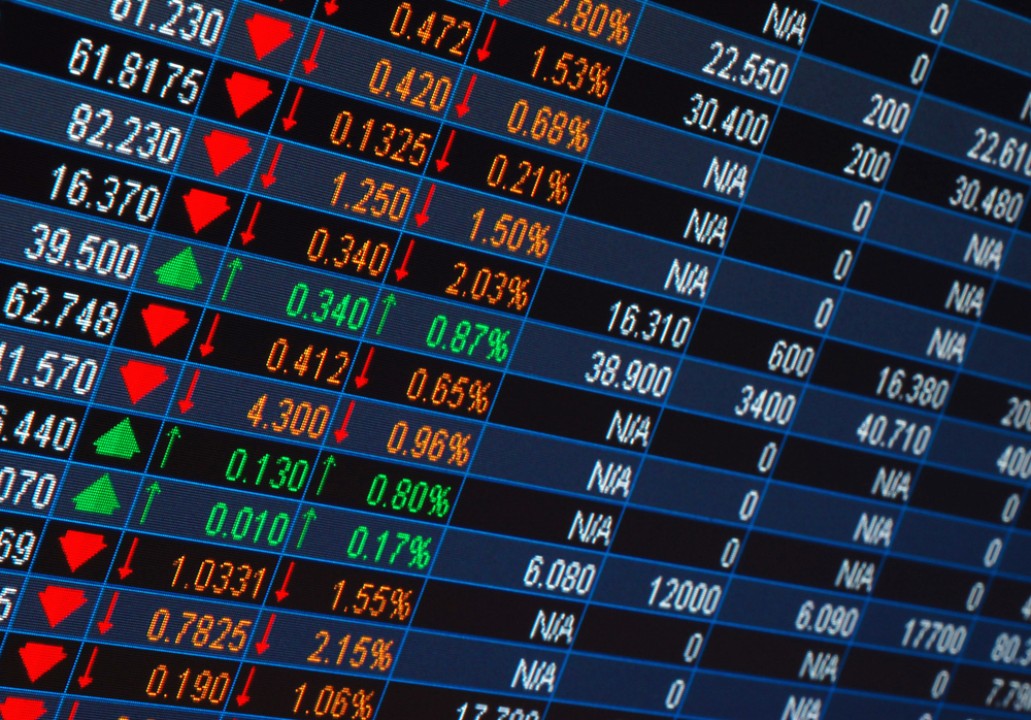
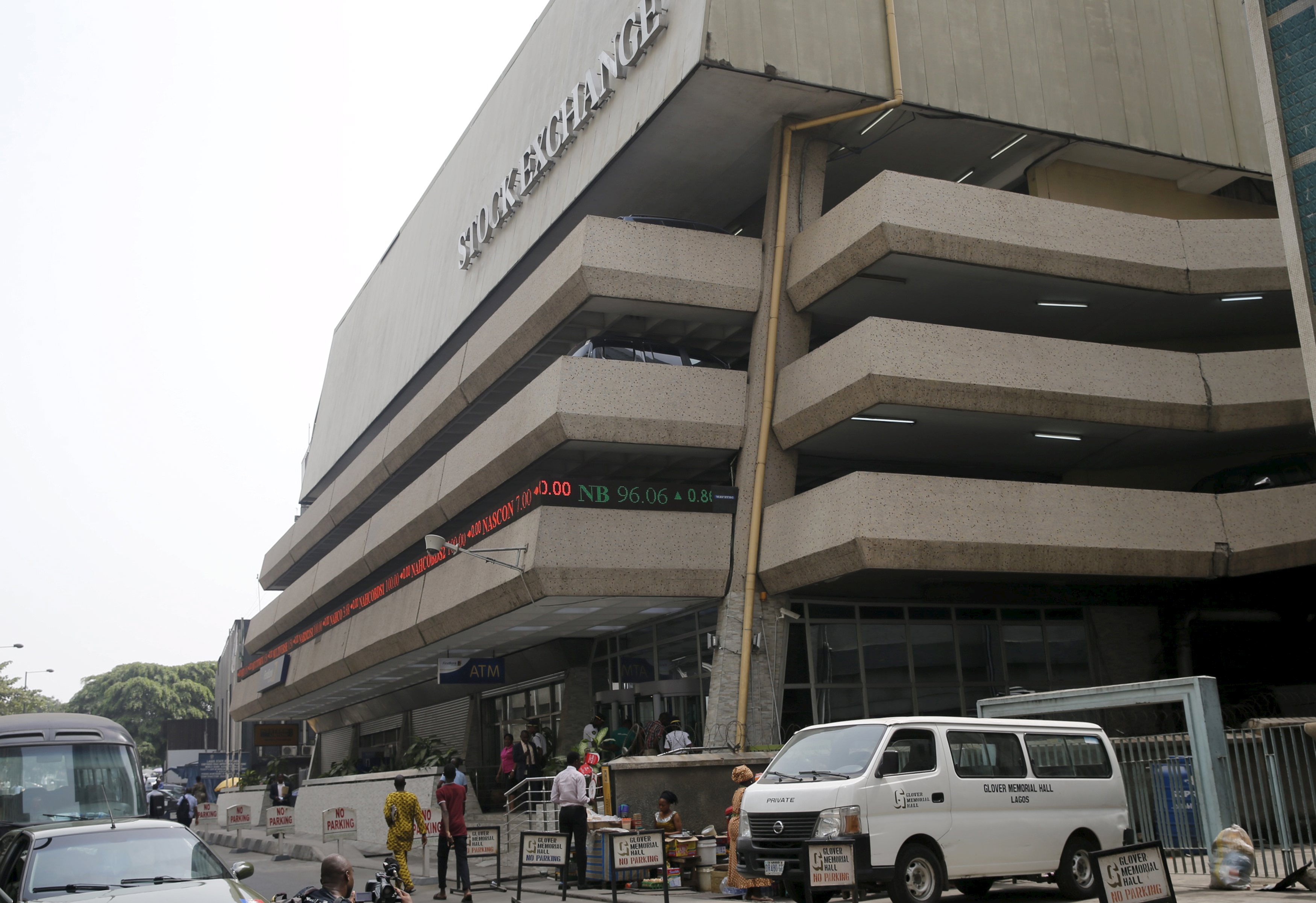
The recently introduced pricing methodology by the Nigerian Stock Exchange (NSE) has been described by experts as a tool that has favoured domestic investors by increased their participation in the stock market.
According to the Head of Banking and Finance Department at the Nasarawa State University Keffi, Dr Uche Uwaleke, has given local investors the opportunity to be more involved in the capital market because they can now pull volume with penny stocks trading below the former 50 kobo per share threshold.
“Unlike foreign investors who show more interest in high-cap stocks, a good number of domestic investors take positions in penny stocks given their affordability,” Mr Uwaleke told the News Agency of Nigeria (NAN) n Lagos.
The university don was reacting to the price depreciation posted by many penny stocks last month which had Consolidated Hallmark emerging the worst performing stock in percentage terms.
The stock opened trading in February at 50k, but lost 48 percent to close for the month at 26k per share, due to exchange new pricing method.
Mr Uwaleke said the new pricing methodology led to losses posted by most penny stocks.
“It is the new pricing methodology that has injected liquidity into those penny stocks which allowed their prices to fall below 50k,” he said.
The lecturer further said the new method was aimed at improving liquidity, narrowing spreads and ensuring that all price-improving transactions had impact.
He said that the new rule would effectively remove the previous rule which placed minimum allowable price for any stock to trade at its nominal value, irrespective of the market forces.
According to him, it specifies that stock prices will be determined by market forces of demand and supply, as prices can fall below the initial price.
On his part, Mr Ambrose Omordion, the Chief Operating Officer of InvestData Ltd, also attributed the development to the new pricing rule.
Omordion added that the losses posted by some second tier banking stocks were due to profit-taking following rally posted at the beginning of the year.
Data obtained from the NSE showed that Unic Diversified Holdings, another penny stock, came second last month after dropping by 47.83 percent to close at 24k per share against opening price of 46k.
Courtville Business Solutions dipped 46 percent to close at 27k against 50k, while Multiverse Resources lost 37.5 percent to close the month at 30k per share compared with the opening price of 48k.
Other top losers were Skye Bank, which dipped by 34.01 percent to close at 97k against N1.47k in January, while Wema Bank lost 32.65 percent, having closed at 99k in contrast with N1.47k.
Diamond Bank dropped 26.10 percent to close at N2.35k against N3.18k, while Unitykap lost 26 percent to close at 37k against the opening price of 50k.
Lasaco Insurance declined by 21.43 percent to close at 33k against 43k in January, while Royal Exchange lost 21.43 percent to close at 33k per share against 42k opening price.
Conversely, Linkage Assurance was the best performing stock in percentage terms, appreciating by 24.64 percent to close at 86k per share against the opening price of 69k.
Unity Bank trailed with a growth of 17.11 percent to close at N1.78k in contrast with N1.52k in January, while NEM Insurance rose by 16.02 percent to close at N2.10k per share against N1.81k.
Other top gainers were Beta Glass, 15.64 percent; Unilever,15.06 percent; CCNN, 11.27 percent; Transnation Express, 11.11 percent; Prestige Assurance, 10.87 percent; GSK, 10.53 percent; and AIICO Insurance, 10.29 percent.
During the month, the NSE All-Share Index lost 1,013.11 points or 2.28 percent to close at 43,330.54 against 44,343.65 achieved in January.
Also, the market capitalisation which opened at N15.895 trillion shed N146 billion or 2.18 percent to close the month at N15.549 trillion.
The volume of shares traded dipped by 44.96 percent as investors bought and sold 11.95 billion shares worth N106. 08 billion achieved in 112,255 deals.
This was in contrast with January turnover of 21.71 billion shares valued at N197.22 billion traded in 168.649 deals.











By Adedapo Adesanya
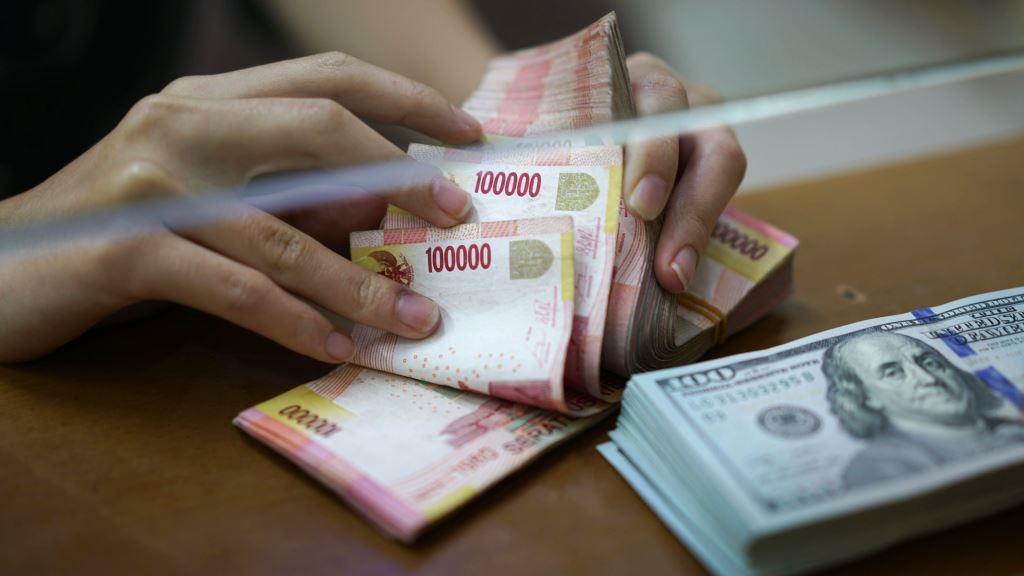
It was not a good day for the Nigerian Naira at the two major foreign exchange (FX) market on Friday as it suffered a heavy loss against the United States Dollar at the close of transactions.
In the black market segment, the Naira weakened against its American counterpart yesterday by N10 to quote at N1,485/$1, in contrast to the N1,475/$1 it was traded a day earlier, and at the GTBank forex counter, it depreciated by N2 to settle at N1,467/$1 versus Thursday’s closing price of N1,465/$1.
In the Nigerian Autonomous Foreign Exchange Market (NAFEX) window, which is also the official market, the nation’s legal tender crashed against the greenback by N6.65 or 0.46 per cent to close at N1,464.49/$1 compared with the preceding session’s rate of N1,457.84/$1.
In the same vein, the local currency tumbled against the Euro in the spot market by N2.25 to sell for N1,714.63/€1 compared with the previous day’s N1,712.38/€1, but appreciated against the Pound Sterling by 73 Kobo to finish at N1,957.30/£1 compared with the N1,958.03/£1 it was traded in the preceding session.
The market continues to face seasonal pressure even as the Central Bank of Nigeria (CBN) is still conducting FX intervention sales, which have significantly reduced but not remove pressure from the Naira. Also, there seems to be reduced supply from exporters, foreign portfolio investors and non-bank corporate inflows.
President Bola Tinubu on Friday presented the government’s N58.47 trillion budget plan aimed at consolidating economic reforms and boosting growth.
The budget is based on a projected crude oil price of $64.85 a barrel and includes a target oil output of 1.84 million barrels a day. It also projects an exchange rate of N1,400 to the Dollar.
President Tinubu said inflation had plunged to an annual rate of 14.45 per cent in November from 24.23 per cent in March, while foreign reserves had surged to a seven-year high of $47 billion.
Meanwhile, the cryptocurrency market was dominated by the bulls but it continues to face increased pressure after million in liquidations in previous session over accelerating declines, with Dogecoin (DOGE) recovering 4.2 per cent to trade at $0.1309.
Further, Ripple (XRP) appreciated by 3.9 per cent to $1.90, Cardano (ADA) rose by 3.5 per cent to $0.3728, Solana (SOL) jumped by 3.4 per cent to $126.23, Ethereum (ETH) climbed by 2.9 per cent to $2,982.42, Binance Coin (BNB) gained 2.0 per cent to sell for $853.06, Bitcoin (BTC) improved by 1.7 per cent to $88,281.21, and Litecoin (LTC) soared by 1.2 per cent to $76.50, while the US Dollar Tether (USDT) and the US Dollar Coin (USDC) traded flat at $1.00 each.
By Adedapo Adesanya
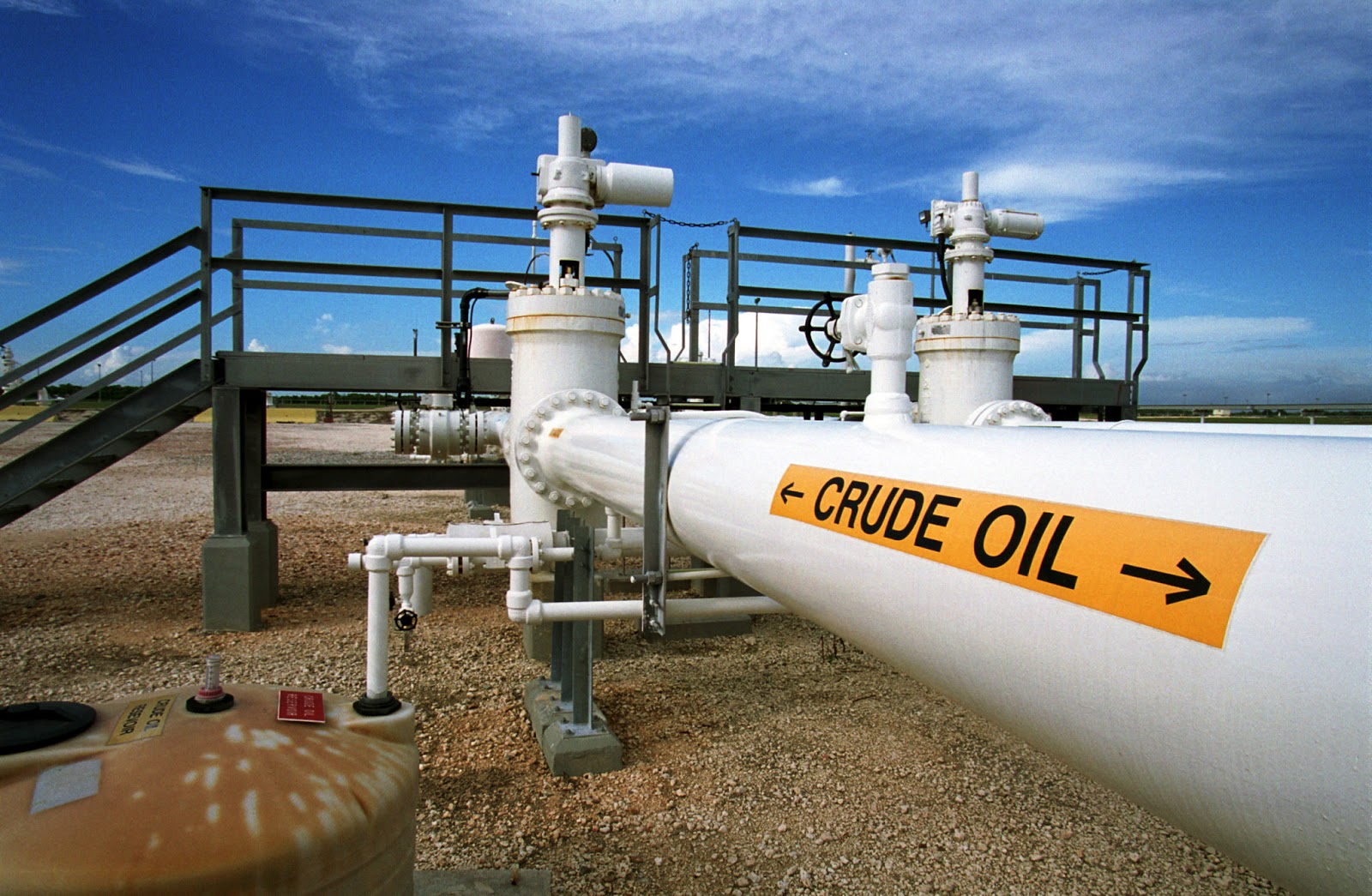
Crude oil prices edged up on possible disruptions from a US blockade of Venezuelan tankers as the market waits for news about a possible Russia-Ukraine peace deal.
Brent futures rose 65 cents or 1.1 per cent to $60.47 per barrel while the US West Texas Intermediate (WTI) futures expanded by 51 cents or 0.9 per cent to $56.66 per barrel. Both Brent and WTI were down about 1 per cent this week after both crude benchmarks fell about 4 per cent last week.
US President Donald Trump said he was leaving the possibility of war with Venezuela on the table, noting that there would be additional seizures of oil tankers near Venezuelan waters after the US seized a sanctioned oil tanker off the coast of Venezuela last week.
The American President this week ordered a “blockade” of all sanctioned oil tankers entering and leaving Venezuela, in the US’ latest move to increase pressure on Nicolas Maduro’s government, targeting its main source of income. The pressure campaign on President Maduro has included a ramped-up military presence in the region and more than two dozen military strikes on vessels in the Pacific Ocean and Caribbean Sea near Venezuela, which have killed at least 90 people.
President Trump has also previously said that US land strikes on the South American country will soon start.
Meanwhile, US Secretary of State Marco Rubio on Friday said that the US is not concerned about an escalation with Russia when it comes to Venezuela, as the Trump administration builds up military forces in the Caribbean.
This development comes as President Trump seeks an end to the unending war between Ukraine and Russia that is heading towards its fourth year.
European Union leaders decided on Friday to borrow cash to loan 90 billion Euros to Ukraine to fund its defense against Russia for the next two years as Russian President Vladimir Putin offered no compromise on Friday on his terms for ending the war in Ukraine and accused the European Union of attempting “daylight robbery” of Russian assets.
Ukraine, meanwhile, struck a Russian “shadow fleet” oil tanker in the Mediterranean Sea with aerial drones for the first time.
Earlier this week, the US and Ukraine both signaled progress in negotiations about a peace agreement during talks in German capital city of Berlin. The US is now reportedly offering Ukraine security guarantees modeled on NATO’s Article 5 mutual defense pledge.
By Adedapo Adesanya
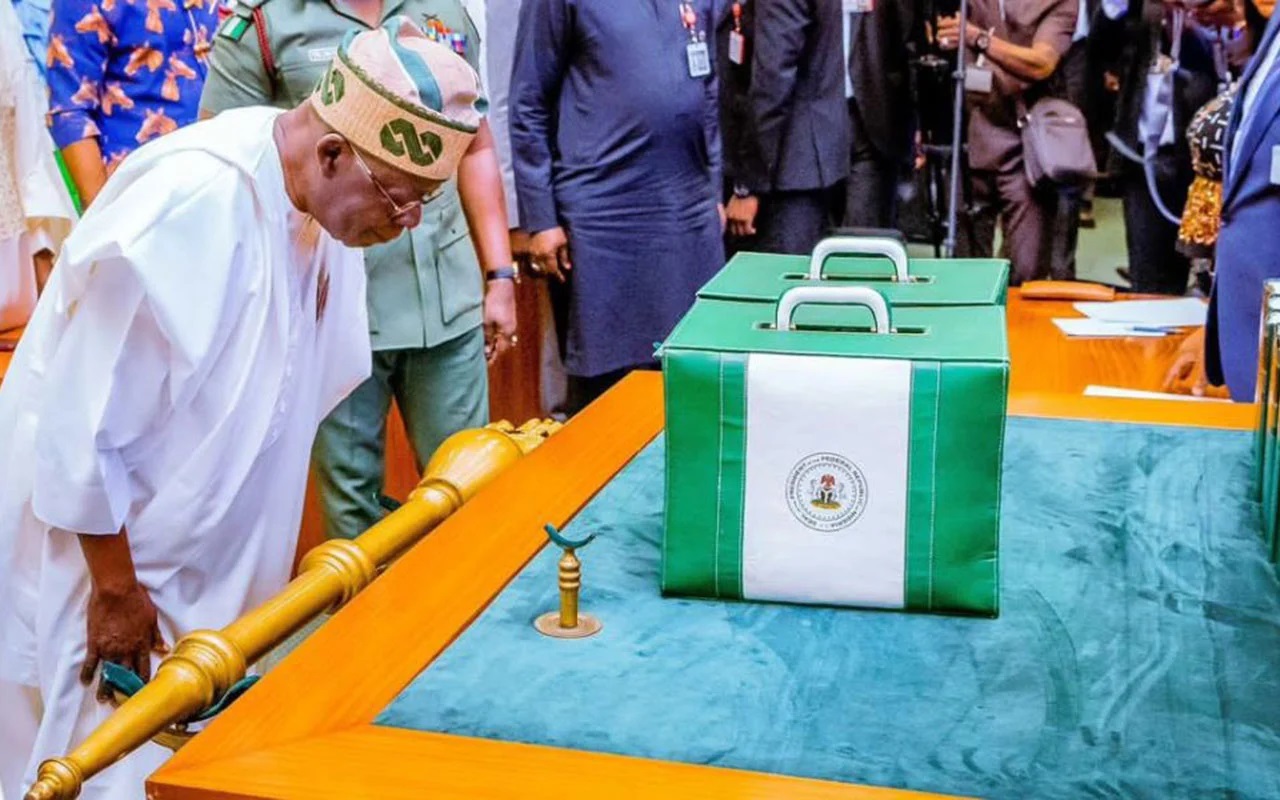
President Bola Tinubu on Friday presented a budget proposal of N58.47 trillion for the 2026 fiscal year titled Budget of Consolidation, Renewed Resilience and Shared Prosperity to a joint session of the National Assembly, with capital recurrent (non‑debt) expenditure standing at 15.25 trillion, and the capital expenditure at N26.08 trillion, while the crude oil benchmark was pegged at $64.85 per barrel.
Business Post reports that the Brent crude grade currently trades around $60 per barrel. It is also expected to trade at that level or lower next year over worries about oil glut.
At the budget presentation today, Mr Tinubu said the expected total revenue for the year is N34.33 trillion, and the proposal is anchored on a crude oil production of 1.84 million barrels per day, and an exchange rate of N1,400 to the US Dollar.
In terms of sectoral allocation, defence and security took the lion’s share with N5.41 trillion, followed by infrastructure at N3.56 trillion, education received N3.52 trillion, while health received N2.48 trillion.
Addressing the lawmakers, the President described the budget proposal as not “just accounting lines”.
“They are a statement of national priorities,” the president told the gathering. “We remain firmly committed to fiscal sustainability, debt transparency, and value‑for‑money spending.”
The presentation came at a time of heightened insecurity in parts of the country, with mass abductions and other crimes making headlines.
Outlining his government’s plan to address the challenge, President Tinubu reminded the gathering that security “remains the foundation of development”.
He said some of the measures in place to tame insecurity include the modernisation of the Armed Forces, intelligence‑driven policing and joint operations, border security, and technology‑enabled surveillance and community‑based peacebuilding and conflict prevention.
“We will invest in security with clear accountability for outcomes—because security spending must deliver security results,” the president said.
“To secure our country, our priority will remain on increasing the fighting capability of our armed forces and other security agencies by boosting personnel and procuring cutting-edge platforms and other hardware,” he added.








-
 Feature/OPED6 years ago
Davos was Different this year
-
Travel/Tourism9 years ago
Lagos Seals Western Lodge Hotel In Ikorodu
-

 Showbiz3 years ago
Estranged Lover Releases Videos of Empress Njamah Bathing
-
 Banking7 years ago
Sort Codes of GTBank Branches in Nigeria
-

 Economy3 years ago
Subsidy Removal: CNG at N130 Per Litre Cheaper Than Petrol—IPMAN
-

 Banking3 years ago
First Bank Announces Planned Downtime
-

 Banking3 years ago
Sort Codes of UBA Branches in Nigeria
-

 Sports3 years ago
Highest Paid Nigerian Footballer – How Much Do Nigerian Footballers Earn