

Economy
Nigeria’s Total Imports in 2017 Drop 8.5% as Exports Rise 59.47%

By Dipo Olowookere
Data released by the National Bureau of Statistics (NBS) have shown that in 2017, Nigeria exported more goods than it imported in the year.
Nigeria is known to rely more on imported products especially from Europe, America and Asia, but since the present administration came into power in 2015, it had done more to change the narrative, making Nigeria export more than it imports.
Last week, chief executive of the state-owned oil firm, the Nigerian National Petroleum Corporation (NNPC), Mr Maikanti Baru, disclosed that Nigeria, one of the oil producing countries in the world, was the most importer of petrol in the globe. Crude oil produced in the country is taken out to be refined and bought to service the nation.
According to the data by the stats office, the total value of goods imported into Nigeria last year was N9.562 trillion, 8.5 percent lower than the 2016 trade import value of N8.817 trillion.
But in the fourth quarter of 2017, the total imports value was N2.1 trillion, was 15.1 percent less than Q3 2017 Figure which was N2.5 trillion and 8.5 percent lower than Q4, 2016, which was N2.3 trillion.
NBS said imported agricultural goods decreased by 1.7 percent in Q4 2017 (N227.4 billion) compared to Q3 2017 (N231.4 billion) but increased by 15.9 percent when compared to Q4, 2016 (N196.2 billion). For full year, 2017, imported agricultural goods increased by 35.09 percent to N886.7 billion from N656.4 billion in 2016.
Raw materials imports in Q4 2017 (N279.4 billion) were 2.1 percent lower than Q3, 2017 value (N285.3 billion), and 2.7 percent lower than Q4 2016 (N287.2 billion). For full year 2017, imported raw materials increased by 19.3 percent to N1.1 trillion from 945.7 billion in 2016.
Solid minerals imports grew by 5.19 percent in Q4 2017 (N15.2 billion) over the Q3, 2017 value (N14.5 billion), and 9.2 percent over Q4 2016 (N13.9 billion). For full year 2017, imported solid minerals increased by 372.2 percent to N235.1 billion from N49.7 billion in 2016.
Energy goods imports grew significantly by 950 percent in Q4 2017 (N138.1 million), higher than Q3, 2017 value (N13.15 million), and 57176 percent over Q4 2016 (N0.24 million). For full year 2017, imported energy goods increased to N187.17 million from N8.07 million in 2016.
Manufactured goods imports declined in Q4 2017 by 0.28 percent (N1.2 trillion) in comparison to Q3 2017 (N1.2 trillion), but grew by 10 percent in comparison to Q4 2016 (N1.1 trillion). For full year 2017, imported manufactured products decreased by 0.06 percent to N4.6 trillion from N4.7 trillion in 2016.
Other oil products imports were 48.86 percent lower in value in Q4 2017 than Q3 2017, and 46.5 percent lower than the value recorded in Q4 2016 and for full year 2017, other oil product imports increased by 5.93 percent over 2016.
However, the total value of export stood at N3.9 trillion in Q4 2017, growing by 9.35 percent over Q3 2017, and by 31.27 percent over Q4 2016. For full year 2017, total exports of N13.6 trillion were 59.47 percent higher than for 2016 with a value of N8.5 trillion.
Agricultural goods exports grew in value by 54.9 percent in Q4 2017 (N44.7 billion) in comparison to Q3 2017 (N28.8 billion), and by 170.9 percent in comparison to Q4 2016 (N16.5 billion). For full year 2017, agriculture exports grew 180.7 percent (N170.4 billion) above the value in 2016 (N60.7 billion).
Raw material exports in Q4 2017 (N37.8 billion) were 43.2 percent more in value than Q3, 2017 (N26.4 billion) and 71.7 percent more than Q4, 2016 (N22 billion). For full year 2017, raw material exports grew 154.2 percent (N112.9 billion) above the value in 2016 (N44.4 billion).
Solid minerals exports in Q4 2017 grew by 55 percent in value when compared to Q3 2017, and by 473.5 percent in value when compared to same period last year Q4 2016. For full year 2017, solid minerals exports grew 565 percent (N77.2 billion) above the value in 2016 (N11.6 billion).
Manufactured goods exports in Q4, 2017 (N55.3 billion) were 28.1 percent more than the value attained in Q3, 2017 (N43.2 billion) but declined by 18.03 percent in comparison to Q4 2016 (N67.5 billion). For full year 2017, exports of manufactured goods grew 26.8 percent (N232.05 billion) above the value in 2016 (N182.9 billion).
Crude Oil exports in Q4 2017 were 9.51 percent more than the value recorded in Q3 2017 and 34.2 percent higher than Q4, 2016. For full year 2017, crude oil exports grew 57.6 percent above the value in 2016.
Other oil products exports increased by 0.45 percent over Q3 2017 and by 9.3 percent over the same period last year (Q4 2016). For full year 2017, exports of other oil products grew 57.75 percent above the value in 2016.
The stats office said total trade recorded for Q4 2017 was N6 trillion which represented a decline of 0.7 percent over the Q3 2017, and an increase of 13.9 percent over the same period last year Q4 2016). For full year 2017, total trade was N23.2 trillion which is 33.5 percent higher when compared to the value in 2016 of N17.4 trillion.
Trade balance, accordingly, stood at a surplus of N1.8 trillion in Q4 2017 compared to the surplus of N1.1 trillion recorded in the preceding quarter and the surplus of N671.30 billion in the corresponding quarter last year. For full year 2017, trade balance stood at N4 trillion compared to a negative trade balance of -N290.1 billion in 2016.




By Aduragbemi Omiyale
The series 1 of the N10 billion Commercial Paper (CP) issuance of Legend Internet Plc recorded an oversubscription of 19.7 per cent from investors.
This reaffirmed the strong confidence in the company’s financial stability and growth trajectory.
The exercise is a critical component of Legend Internet’s N10 billion multi-layered financing programme, designed to support its medium- to long-term growth.
Proceeds are expected to be used for broadband infrastructure expansion to deepen nationwide penetration, optimise the organisation’s working capital for operational efficiency, strategic acquisitions that will strengthen its market position and accelerate service innovation.
The telecommunications firm sees the acceptance of the debt instruments as a response to its performance, credit profile, and disciplined operational structure, noting it also reflects continued trust in its ability to execute on its strategic vision for nationwide digital infrastructure expansion.
“The strong investor participation in our Series 1 Commercial Paper issuance is both encouraging and validating. It demonstrates the market’s belief in our financial integrity, operational strength, and long-term vision for digital infrastructure growth. This support fuels our commitment to building a more connected, competitive, and digitally enabled Nigeria.
“This milestone is not just a financing event; it is a strategic enabler of our expansion plans, working capital needs, and future acquisitions. We extend our sincere appreciation to our investors, advisers, and market partners whose confidence continues to propel Legend Internet forward,” the chief executive of Legend Internet, Ms Aisha Abdulaziz, commented.
Also commenting, the Chief Financial Officer of Legend Internet, Mr Chris Pitan, said, “This achievement is powered by our disciplined financing framework, which enables us to scale sustainably, innovate continuously, and consistently meet the evolving needs of our customers.
“We remain committed to building a future where every connection drives opportunity, productivity, and growth for communities across Nigeria.”

By Adedapo Adesanya
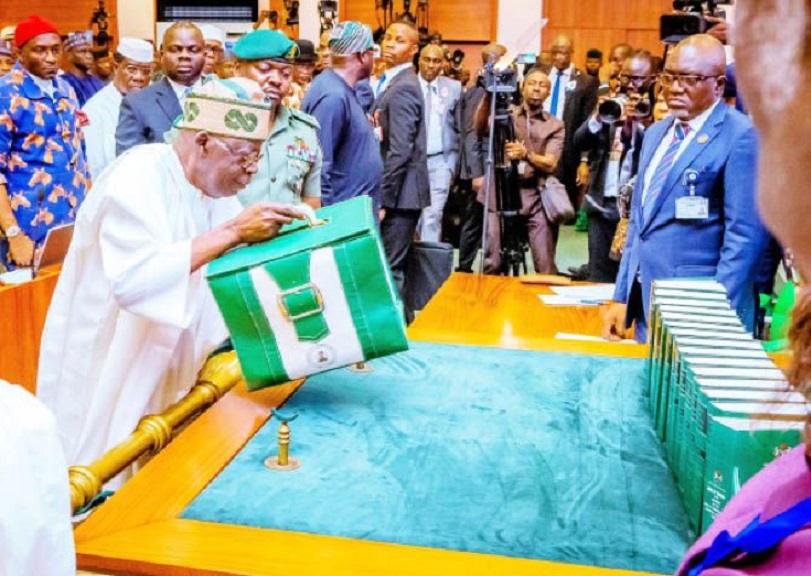
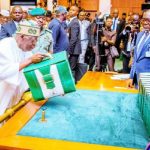
President Bola Tinubu will, on Friday, present the 2026 Appropriation Bill to a joint session of the National Assembly.
The presentation, scheduled for 2:00 pm, was conveyed in a notice issued on Wednesday by the Office of the Clerk to the National Assembly.
According to the notice, all accredited persons are required to be at their duty posts by 11:00 am on the day of the presentation, as access into the National Assembly Complex will be restricted thereafter for security reasons.
The notice, signed by the Secretary, Human Resources and Staff Development, Mr Essien Eyo Essien, on behalf of the Clerk to the National Assembly, urged all concerned to ensure strict compliance with the arrangements ahead of the President’s budget presentation.
The 2026 budget is projected at N54.4 trillion, according to the approved 2026–2028 Medium-Term Expenditure Framework (MTEF) and Fiscal Strategy Paper (FSP).
Meanwhile, President Tinubu has asked the National Assembly to repeal and re-enact the 2024 appropriation act in separate letters to the Senate and the House of Representatives on Wednesday and read during plenary by the presiding officers.
The bill was titled Appropriation (Repeal and Re-enactment Bill 2) 2024, involving a total proposed expenditure of N43.56 trillion.
In a letter dated December 16, 2025, the President said the bill seeks authorisation for the issuance of a total sum of N43.56 trillion from the Consolidated Revenue Fund of the Federation for the year ending December 31, 2025.
A breakdown of the proposed expenditure shows N1.74 trillion for statutory transfers, N8.27 trillion for debt service, N11.27 trillion for recurrent (non-debt) expenditure, and N22.28 trillion for capital expenditure and development fund contributions.
The President said the proposed legislation is aimed at ending the practice of running multiple budgets concurrently, while ensuring reasonable – indeed unprecedentedly high – capital performance rates on the 2024 and 2025 capital budgets.
He explained that the bill also provides a transparent and constitutionally grounded framework for consolidating and appropriating critical and time-sensitive expenditures undertaken in response to emergency situations, national security concerns, and other urgent needs.
President Tinubu added that the bill strengthens fiscal discipline and accountability by mandating that funds be released strictly for purposes approved by the National Assembly, restricting virement without prior legislative approval, and setting conditions for corrigenda in cases of genuine implementation errors.
The bill, which passed first and second reading in the House of Representatives, has been referred to the Committee on Appropriations for further legislative action.

By Adedapo Adesanya
The federal government has imposed an immediate nationwide ban on the export of wood and allied products, revoking all previously issued licenses and permits to exporters.
The announcement was made on Wednesday by the Minister of Environment, Mr Balarabe Lawal, during the 18th meeting of the National Council on Environment in Katsina State.
Mr Lawal said the directive, outlined in the Presidential Executive Order titled Presidential Executive Order on the Prohibition of Exportation of Wood and Allied Products, 2025, became necessary to curb illegal logging and deforestation across the country.
“Nigeria’s forests are central to environmental sustainability, providing clean air and water, supporting livelihoods, conserving biodiversity, and mitigating the effects of climate change,” the Minister said, warning that the continued exportation of wood threatens these benefits and the long-term health of the environment.
The order, published in the Extraordinary Federal Republic of Nigeria Official Gazette No. 180, Vol. 112 of 16 October 2025, relies on Sections 17(2) and 20 of the 1999 Constitution (as amended), which empower the state to protect the environment, forests, and wildlife and prevent the exploitation of natural resources for private gain.
Under the new policy, security agencies and relevant ministries are expected to enforce a total clampdown on illegal logging activities nationwide.
On his part, the Katsina State Deputy Governor, Mr Faruk Lawal Jobe highlighted the state’s history of pioneering socio-economic policies that have influenced national policy. He emphasized the importance of collaboration in addressing environmental challenges across the country.
“Environmental sustainability is critical to achieving growth and improving the quality of life of our people,” he said. “Our administration has prioritised initiatives aimed at combating desertification and promoting afforestation.”
The ban reflects the government’s commitment to safeguarding Nigeria’s shrinking forest cover and addressing climate change, while ensuring sustainable use of natural resources for future generations.







-
 Feature/OPED6 years ago
Davos was Different this year
-
Travel/Tourism9 years ago
Lagos Seals Western Lodge Hotel In Ikorodu
-

 Showbiz3 years ago
Estranged Lover Releases Videos of Empress Njamah Bathing
-
 Banking7 years ago
Sort Codes of GTBank Branches in Nigeria
-

 Economy3 years ago
Subsidy Removal: CNG at N130 Per Litre Cheaper Than Petrol—IPMAN
-

 Banking3 years ago
First Bank Announces Planned Downtime
-

 Banking3 years ago
Sort Codes of UBA Branches in Nigeria
-

 Sports3 years ago
Highest Paid Nigerian Footballer – How Much Do Nigerian Footballers Earn