
Banking
Africa’s Banking Market Second Most Profitable, Fastest Growing—Report

By Dipo Olowookere
A new report released by McKinsey & Company has revealed that the banking markets in Africa are among the most exciting in the world.
According to the McKinsey Global Banking report, the continent’s overall banking market is the second-fastest-growing and second most profitable of any global region, and a hotbed of innovation.
Nearly 300 million Africans are banked today, a number that could rise to 450 million in five years, the report said.
The report illustrates four segments of African markets – from the advanced markets like South Africa and Egypt, to fast-growing transition markets such as Kenya, Ghana and Cote D’Ivoire, to sleeping giants like Algeria, Nigeria and Angola, to nascent banking markets like DRC and Ethiopia.
The report finds that Africa’s top quintile banks – the so-called “winners” – are simultaneously 4 times more profitable and over 2 times faster growing than bottom quintile banks.
The report’s key findings are that these “winners” are defined by employing one or more of five winning practices.
The first is ‘draw the right map.’
In Africa, geography matters. About 65 percent of African banks’ profitability (measured by RoE) and 94 percent of their revenue growth are attributable to their geographic footprint. Importantly, the report highlights a shift in exchange-rate adjusted revenue pools North Africa, East Africa and West Africa, and away from South Africa.
The second is ‘right segments, compelling offers.’ It was discovered that 70 percent of revenue pool growth will occur in the middle segments, defined as earning between $6,000 and $36,000 in annual income. The mass market – individuals earning less than $6,000 per annum – accounts for 13 percent of the growth, but is the fastest growing segment. Whichever segment banks choose, having the right proposition is key. Its survey of 2,500 banking customers in 6 African countries finds that 25 percent of customers choose price as the most important factors in choosing banks. Equally important is convenience, also cited by 25 percent of customers. Service is the third most important factor, selected by 12 percent of customers. We also find huge cross-sell opportunities – while 95% of Africans have transaction products, fewer than 20 percent have lending, insurance, investment or deposit products.
The third is ‘leaner, simpler banking.’ Commenting on this, the report said ehile African banks’ cost: income has been falling, it found out that this is due to rising margins for banks, and their cost-to-assets ratio has actually been worsening. At 3.6 percent, Africa has the 2nd highest cost-to-assets ratio in the world. However, rapid efficiency gains are possible, and the research spotlighted eight African banks that have made strides in efficiency in the last five years, through a combination of three levers – end-to-end digitisation; sales productivity improvements fuelled by advanced analytics; back- and middle-office optimisation.
For the fourth point, it is ‘digital first.’ It was observed that 40 percent of Africans prefer to use digital channels for transactions. In four major African countries – South Africa, Nigeria, Kenya, Angola – a higher proportion of Africans prefer the digital channel for transactions to the branch channel. Given low branch density in Africa, banks need to employ a digital first approach. The report hones in on four themes of innovation emerging in Africa on digital – end-to-end digital transformations (e.g. Equity Bank); partnering with telco companies (e.g. CBA in Kenya or Diamond Bank in Nigeria); building a digital bank (e.g. ALAT in Nigeria); and building an ecosystem (e.g. Alipay in China).
The first point is ‘innovate on risk.’ According to the report, African banking still has the second highest cost of risk in the world. Poor data availability is part of the problem: 11 percent of Africans are on credit bureaus, compared to in excess of 90 percent in advanced markets. However, we are seeing innovations such as banks partnering with data and analytics fintechs like Jumo to improve credit underwriting; banks partnering with telcos to leverage telco data to issue small-ticket loans on mobile; and players employing payroll lending across countries.
This new report draws on the experience of McKinsey’s partners and colleagues serving banks across Africa; McKinsey’s Global Banking Pools research; a proprietary database of the financial performance of 35 of Africa’s leading banks; a survey of executives from 20 banks and financial institutions across Africa; and a broad-based survey of 2,500 banking customers from 6 African countries – South Africa, Egypt, Nigeria, Morocco, Angola and Kenya.



By Aduragbemi Omiyale
The N3.97 billion commercial paper issuance of AG Mortgage Bank Plc will close on Thursday, June 18, 2026.
The sale of the debt instrument by the real estate lender commenced on Wednesday, June 10, 2026.
It is under the N5 billion commercial paper issuance programme of the lending firm aimed to support its short-term working capital and funding requirements.
The company is selling the papers in two series, with Series 2 offered at a discounted rate of 19.2895 per cent for 270 days, and Series 3 at a discounted rate of 19.3651 per cent for 364 days.
The minimum subscription is N5 million, and subsequent additions of N1 million.
AG Mortgage Bank is a leading primary mortgage bank in Nigeria with over two decades of experience in providing affordable mortgage financing and housing finance solutions.
The bank has grown its asset base to over N33 billion and remains a key participant in major housing intervention programmes, including the National Housing Fund Scheme and other government-backed mortgage initiatives.
Supported by a diversified product offering, strong institutional credibility, and an experienced management team, AG Mortgage Bank continues to deliver solid financial performance.
For FY 2025, interest income increased by 28.1 per cent to N3.65 billion, while profit after tax rose by 130.0 per cent to N1.05 billion, reflecting strong earnings growth, operational efficiency, and prudent risk management.
By Aduragbemi Omiyale
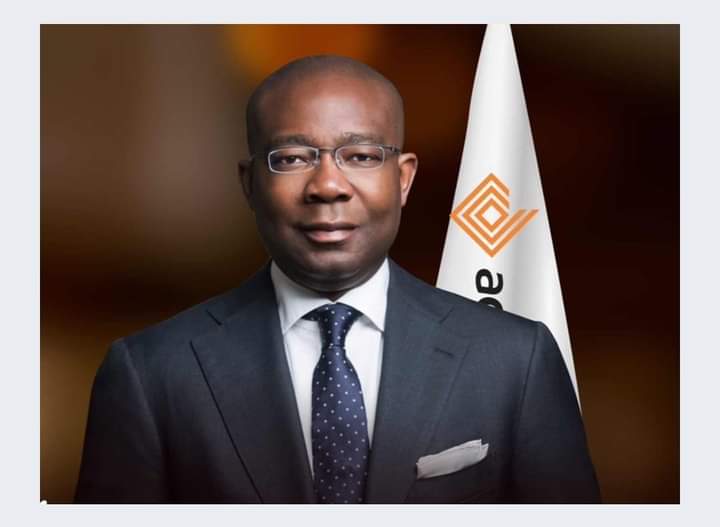
The chairman of Access Holdings Plc, Mr Aigboje Aig-Imoukhuede, has reaffirmed the organisation’s long-term commitment to shareholders, expressing confidence in the company’s strategic positioning, which he said is underpinned by disciplined execution, a diversified business model, a strengthened capital base, and a clear focus on sustainable value creation.
Speaking at the 4th Annual General Meeting (AGM) of the firm on Wednesday, he explained that the temporary suspension of dividend distributions was a consequence of regulatory compliance requirements rather than any deterioration in the group’s financial performance.
Mr Aig-Imoukhuede reaffirmed that the financial institution’s earnings capacity remains strong and that the board’s position reflects adherence to supervisory expectations and prudent capital management principles.
He assured shareholders of the board’s commitment to resuming dividend payments as soon as the relevant regulatory conditions are satisfied, noting that, “Our approach is clear: capital retained today must translate into greater value tomorrow and sustainable returns for our shareholders.”
The Chairman reiterated the strategic imperative underpinning the company’s next phase of growth, saying, “Our strategy, From Scale to Value, reflects the natural evolution of our journey. Scale created opportunity; value creation is how we fully realise it.”
He noted that while the organisation continues to generate strong returns, ensuring that earnings per share consistently exceed the cost of capital remains central to unlocking sustainable shareholder value.
The retired banker also acknowledged the significant unrealised value embedded within the firm’s international subsidiaries and reiterated management’s focus on improving market recognition of that intrinsic value over time.
Commenting on the financial performance of the group in 2025, he said Access Holdings accelerated provisions on legacy and regulatory forbearance credit exposures, resulting in elevated impairment charges.
He explained that the group consciously prioritised balance sheet strength and long-term resilience over short-term earnings optimisation.
“Periods of economic uncertainty often reveal more about an institution than periods of uninterrupted growth. Our focus remains on building a business that is not only growing, but improving in the quality, resilience, and sustainability of its earnings,” he stated.
Last year, the financial services organisation delivered pre-tax profit of N1.007 trillion, underscoring the strength of its diversified platform and expanding earnings base across key markets. Total assets increased to N51.56 trillion, while customer deposits grew strongly, reflecting sustained franchise momentum and deepening customer trust.

By Modupe Gbadeyanka
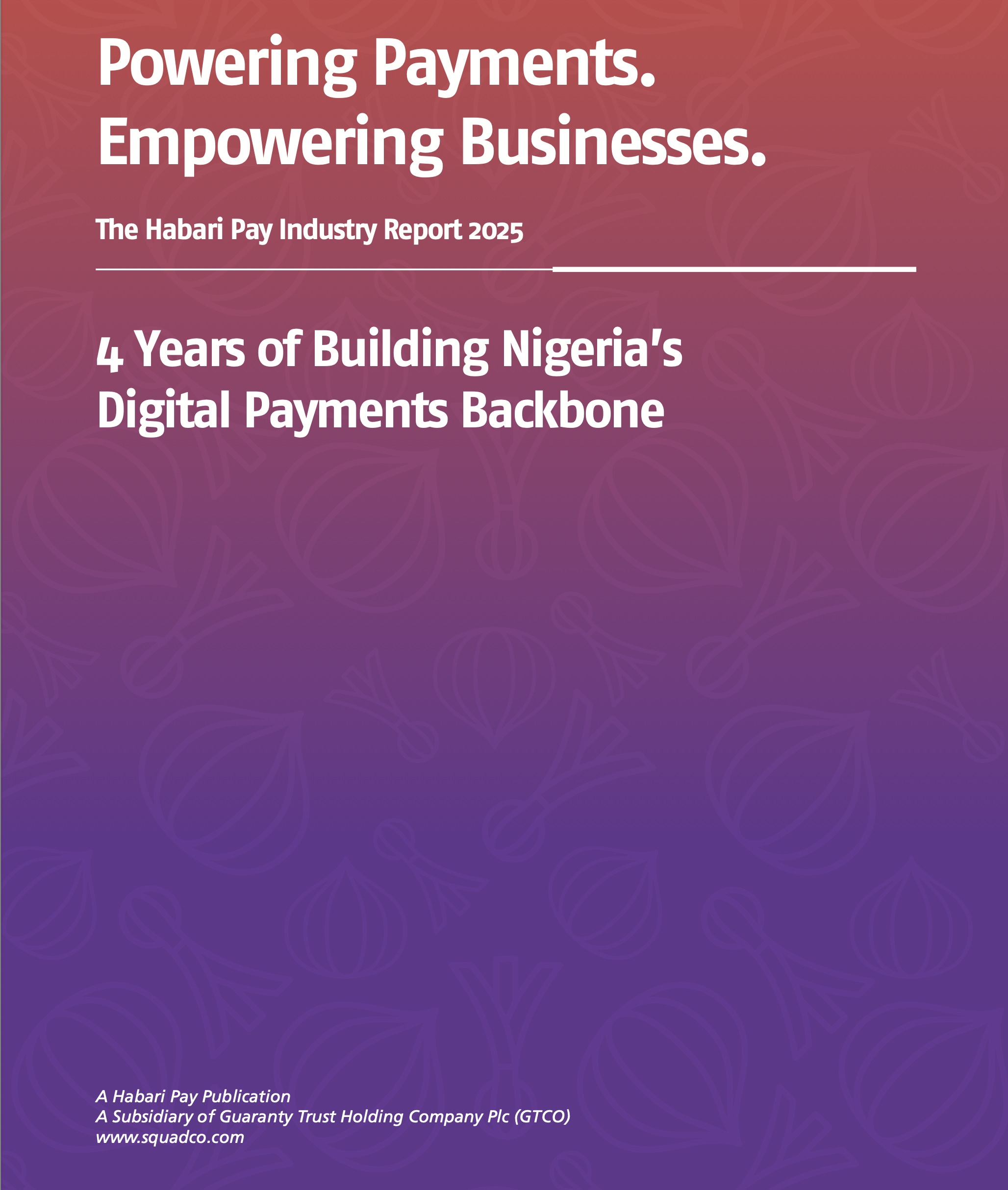
A new report highlighting the transformation from a newly established fintech venture into one of Nigeria’s leading payment infrastructure providers has been launched by HabariPay Limited.
The report, known as the HabariPay Impact Report 2025, provides stakeholders with a comprehensive evolution, innovation journey, business performance, and impact of the fintech subsidiary of Guaranty Trust Holding Company (GTCO) Plc on the digital payments landscape.
The company’s contributions to enabling digital commerce, supporting businesses, strengthening payment infrastructure, and expanding financial access through technology-driven solutions were also captured in the piece.
The HabariPay Impact Report 2025 also highlights the organisation’s strong financial and operational performance, the growth of the Squad platform, and the development of infrastructure that powers payment acceptance, switching, transfers, merchant services, and value-added solutions.
The publication further explores the role of innovation, talent development, and ecosystem partnerships in driving the company’s success.
It showcases HabariPay’s investments in innovation through initiatives such as the Take on Squad Hackathon and the Squad Hackademy, both of which are helping to develop future technology talent and accelerate the creation of practical solutions to real-world challenges.
“As a technology-driven company, we believe that impact extends beyond financial performance. It is reflected in the businesses we enable, the merchants we support, the infrastructure we build, and the opportunities we create for the next generation of innovators.
“The HabariPay Impact Report 2025 captures this journey and demonstrates our commitment to creating sustainable value for customers, partners, and the broader economy,” the Managing Director of HabariPay, Ms Eduofon Japhet, said.
“The HabariPay Impact Report 2025 represents more than a reflection on our achievements; it is a testament to the deliberate investments we have made in building sustainable payment infrastructure, empowering businesses, fostering innovation, and creating long-term value for our stakeholders.
“As we look ahead, we remain committed to expanding our capabilities, deepening our impact, and shaping the future of digital payments through technology-driven solutions that are secure, scalable, and inclusive,” she added.
-
 Feature/OPED6 years ago
Davos was Different this year
-
Travel/Tourism10 years ago
Lagos Seals Western Lodge Hotel In Ikorodu
-

 Showbiz3 years ago
Estranged Lover Releases Videos of Empress Njamah Bathing
-
 Banking8 years ago
Sort Codes of GTBank Branches in Nigeria
-

 Economy3 years ago
Subsidy Removal: CNG at N130 Per Litre Cheaper Than Petrol—IPMAN
-

 Banking3 years ago
Sort Codes of UBA Branches in Nigeria
-

 Banking3 years ago
First Bank Announces Planned Downtime
-

 Sports3 years ago
Highest Paid Nigerian Footballer – How Much Do Nigerian Footballers Earn