

Banking
UBA Board Meets to Propose Final Dividend, Consider Results

By Dipo Olowookere
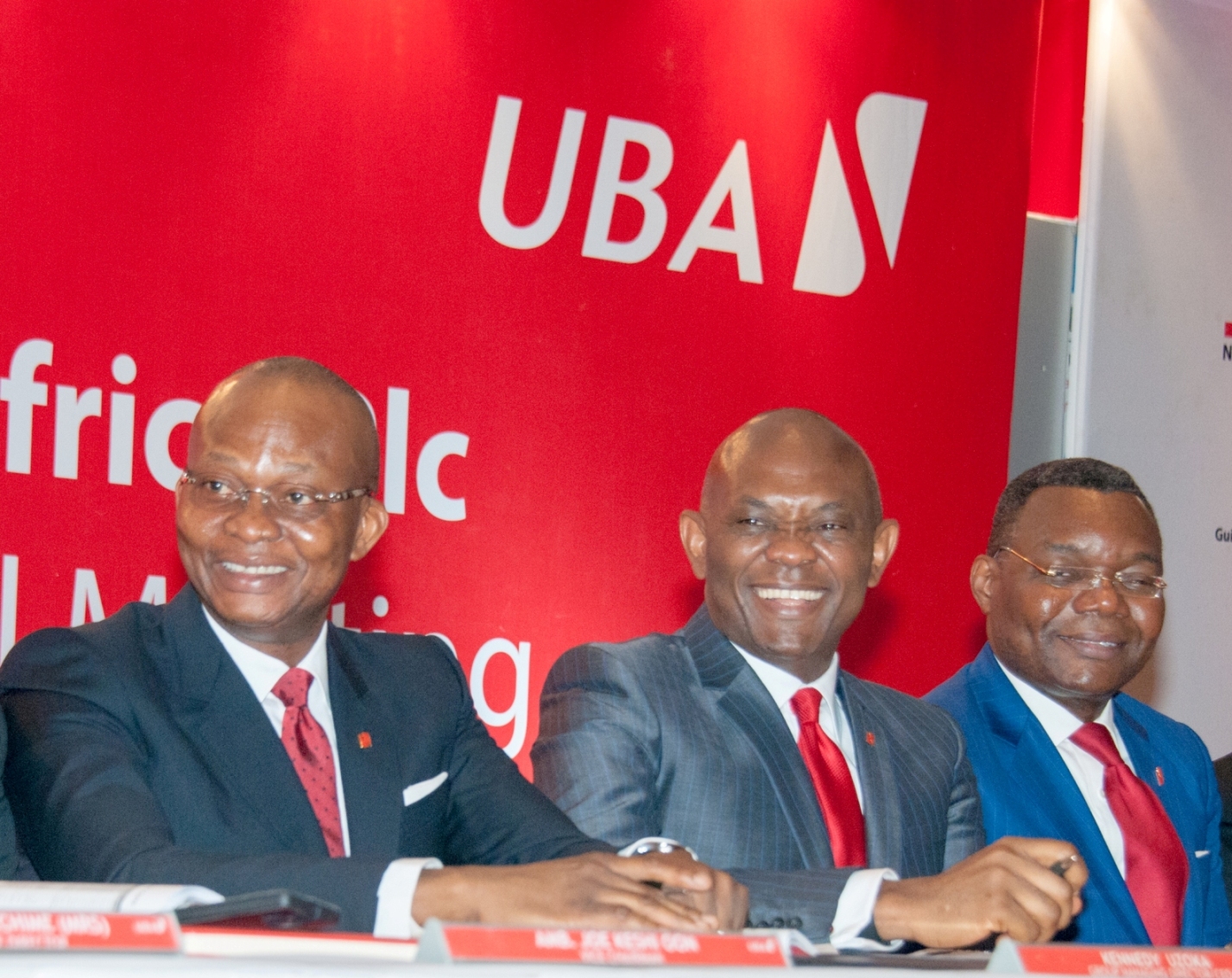
A meeting of the board of directors of United Bank for Africa (UBA) Plc has been scheduled for two weeks’ time.
During the meeting, which precisely holds on Monday, January 29, 2018 in Lagos, the board will propose a final dividend to be paid to shareholders of the lender.
UBA is one of the top five banks operating in Nigeria and its performances lately have proven to shareholders that they will always get good returns for their investments.
A statement issued by the firm disclosed that at the board meeting for the end of this month, the financial statements for the year ended December 31, 2017 would also be considered.
“The board of directors of United Bank for Africa (UBA) Plc is scheduled to meet in Lagos at 10am on Monday, January 29, 2018 to consider the financial statements for the year ended December 31, 2017 and proposal for final dividend,” the statement signed by the lender’s secretary, Bili Odum said.
As a result of the scheduled meeting, UBA has announced its closed period, which makes it impossible for key members of the company to trade in the shares of the bank on the floor of the Nigerian Stock Exchange (NSE) until the lender releases its books.
“In compliance with the NSE Rule Book and the Amendments to the Listing Rules, the closed period for trading in the bank’s shares will be from January 12, 2018 until 24 hours after the announcement of the results.
“Consequently, no director, person discharging managerial responsibility, employees with sensitve information, advisers and consultants of the bank and their connected persons may directly or indirectly deal in the securities (shares and bonds) of the bank during the closed period,” the bank said.




By Adedapo Adesanya
The Governor of the Central Bank of Nigeria (CBN), Mr Yemi Cardoso, says Nigeria anticipates remittances from citizens living abroad to increase by two-thirds in 2026 as it seeks to bolster its foreign-exchange reserves to $1 billion monthly.
“We are expecting that by the end of the year, we will hit about a billion Dollars a month from diaspora remittances,” he said at the 14th Annual BusinessDay CEO Forum in Lagos on Thursday, themed From Stability to Shared Prosperity.
Mr Cardoso said remittances are expected to be boosted from more than $600 million currently, banking on the CBN’s deliberate target at remittances to diversify reserve sources beyond oil earnings.
According to him, the apex bank engaged Nigerians abroad, banks and international partners to identify barriers to official remittance flows.
He said the lender subsequently reviewed policies to ensure easier movement of funds into and out of the country.
Mr Cardoso described the approach as providing free entry and free exit for foreign exchange.
He said the reforms helped double diaspora inflows within one year and exceeded initial expectations, also projecting annual remittances could reach about $8 billion if the current momentum was sustained, adding that the development reflected growing confidence in Nigeria’s financial system and foreign exchange market.
Mr Cardoso said reforms introduced by the apex bank had restored stability in the foreign exchange market and improved investors’ confidence.
He identified exchange rate unification as one of the central bank’s major achievements under the reforms programme.
According to him, replacing multiple exchange rate windows with a market-driven system eliminated distortions and improved transparency.
Mr Cardoso said improved foreign exchange liquidity and stronger reserves were among the gains from the reforms.
He said Nigeria’s net external reserves had risen from about $3 billion at the start of the reforms to above $40 billion currently, noting that gross external reserves had grown to about $52 billion, representing about 10 months of import cover.
According to him, the reserves are designed to shield the economy from external shocks and excessive market volatility.
He said the reserves were not meant for routine interventions or day-to-day exchange rate management.

By Modupe Gbadeyanka
The flagship banking subsidiary of Guaranty Trust Holding Company (GTCO) Plc, Guaranty Trust Bank (GTBank) Limited, has been announced as the winner of Nigeria’s Best Digital Bank award at the Euromoney Awards for Excellence 2026.
The lender clinched this accolade at the Euromoney Awards for Excellence 2026 ceremony, held on July 17, 2026, at The Peninsula London, England, for its outstanding performance, innovation, customer service, and leadership.
GTBank’s recognition as Nigeria’s Best Digital Bank reflects its continued leadership in digital innovation and its commitment to delivering seamless, secure, and customer-centric financial solutions.
As the banking franchise of GTCO, GTBank has consistently set industry benchmarks in digital transformation, pioneering solutions that have redefined how individuals and businesses access, manage, and experience financial services.
Over the years, GTBank has transformed the banking experience through a suite of innovative digital platforms, including the GTWORLD mobile app and solutions that provide millions of customers with seamless, secure, and convenient access to financial services.
The bank continues to strengthen its digital capabilities by introducing products and services that meet evolving customer needs while maintaining the highest standards of security, reliability, and service excellence.
This latest recognition underscores the company’s position as a market leader and reflects its sustained investment in technology, operational excellence, and innovation.
“This recognition is a testament to the legacy upon which GTBank was built and the vision that continues to guide us today.
“From inception, our goal has been to deliver on the Group’s vision to make end-to-end financial services accessible to everyone by leveraging technology to remove barriers, simplify experiences, and create meaningful value for our customers,” the chief executive of GTBank, Mrs Miriam Olusanya, stated.
“While we are honoured by this recognition, we see it as an acknowledgement of what we have achieved and a motivation to do even more.
“We remain focused on raising the bar for digital banking, investing in innovative solutions, and delivering exceptional experiences that create lasting value for our customers.
“As the financial services landscape continues to evolve, we will continue to innovate, adapt, and lead with the same commitment to excellence that has defined our franchise for decades,” she added.
The Euromoney Awards for Excellence 2026 convened leading financial institutions, industry executives, and policymakers from across the globe to celebrate excellence, innovation, and leadership in the financial services sector.

By Aduragbemi Omiyale
A collaboration to enable fast money transfers into Nigeria has been entered into between Flutterwave and Xoom, PayPal’s international digital money transfer service.
The partnership allows Xoom transfers to be converted by Flutterwave and settled locally in Naira, enabling quick transfers directly into recipients’ bank accounts at Access Bank, UBA, Zenith Bank, First Bank, GTBank, and additional participating banks across Nigeria.
The deal also enables Xoom’s global network with Flutterwave’s local payout infrastructure, allowing users globally to send funds directly into Nigerian bank accounts with improved speed and efficiency.
Nigeria is the leading remittance recipient in Sub-Saharan Africa, receiving over $20 billion in personal remittances in 2024. Despite this volume, receiving international payments has historically remained complex due to FX constraints and settlement delays. This collaboration helps address those challenges in a market of more than 232 million people, where the ICT sector is projected to contribute 21 per cent of GDP by 2027.
By combining Xoom’s expansive reach with Flutterwave’s local compliance and banking partnerships, the two companies are providing a more accessible financial corridor for the continent.
Xoom, a PayPal service, is a fast and secure international digital money transfer service that enables consumers to send money, pay bills, and reload phones for friends and family in approximately 160 markets globally.
As part of PayPal’s global payments ecosystem, Xoom leverages advanced fraud protection, compliance capabilities, and a trusted global network to help millions of customers move money quickly and securely across borders.
“We’re excited to have been chosen by Xoom for their Nigeria expansion. Millions of Nigerians rely on money from abroad to support everyday needs, whether it’s families receiving help from loved ones, freelancers getting paid for their work, or individuals earning income from the global economy. This helps make it easy and more reliable for people in Nigeria to receive funds and stay connected to opportunities beyond borders,” the chief executive of Flutterwave, Mr Olugbenga GB Agboola, stated.
