

Economy
55 Stocks Lift NSE Index by 1.78% in First Trading Week of 2018

By Modupe Gbadeyanka
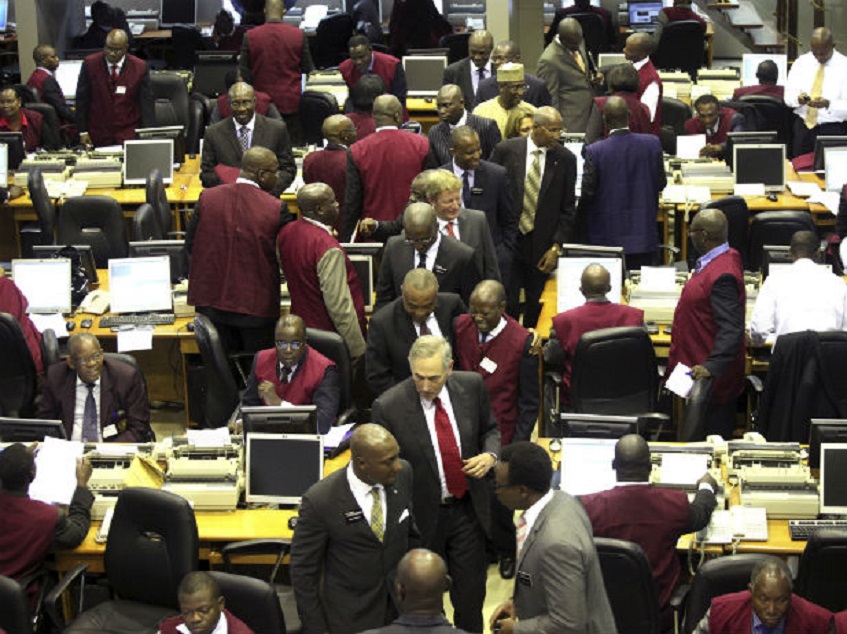
The first trading week of 2018 on the floor of the Nigerian Stock Exchange (NSE) ended positive with the All-Share Index and market capitalization appreciating by 1.78 percent to close the week at 38,923.26 points and N13.851 trillion respectively.
Similarly, all other indices finished higher during the week with the exception of the NSE Premium, NSE ASeM and NSE Lotus II indices, which depreciated by 0.58 percent, 1.44 percent and 0.82 percent respectively.
During the four trading sessions in the week as a result of the public holiday declared by the Federal Government in commemoration of the new year celebration on Monday, January 1, 2018, a total of 55 equities appreciated in price, higher than 32 of the previous week, while 12 equities depreciated in price, lower than 25 equities of the previous week, and 105 equities remained unchanged, lower than 115 equities recorded in the preceding week.
Also during the week, a total turnover of 2.417 billion shares worth N18.813 billion in 20,874 deals were traded by investors on the floor of the NSE in contrast to a total of 1.310 billion shares valued at N12.635 billion that exchanged hands last week in 9,016 deals.
The Financial Services Industry (measured by volume) led the activity chart with 1.677 billion shares valued at N8.734 billion traded in 13,033 deals, contributing 69.39 percent and 46.43 percent to the total equity turnover volume and value respectively.
The Conglomerates Industry followed with 536.922 million shares worth N1.258 billion in 1,288 deals, while the third place was occupied by Consumer Goods Industry with a turnover of 100.460 million shares worth N6.951 billion in 3,426 deals.
Trading in the top three equities namely – Transnational Corporation of Nigeria Plc, Diamond Bank Plc and Skye Bank Plc (measured by volume) accounted for 1.193 billion shares worth N1.681 billion in 2,957 deals, contributing 49.37 percent and 8.93 percent to the total equity turnover volume and value respectively.
Also traded during the week were a total of 305,604 units of Exchange Traded Products (ETPs) valued at N3.498 million executed in 8 deals, compared with a total of 276 units valued at N9,865.34 that was transacted last week in 12 deals, while a total of 2,162 units of Federal Government Bonds valued at N2.016 million were traded this week in nine deals, compared with a total of 422,672 units valued at N 436. 190 million transacted last week in 20 deals.









By Dipo Olowookere
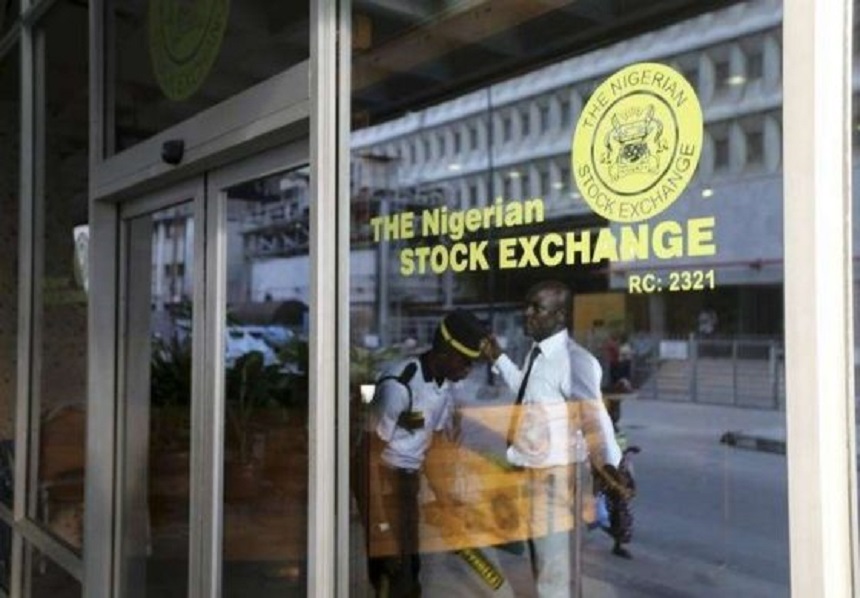
The first trading day of the week at the Nigerian Exchange (NGX) Limited ended in stalemate on Monday, though the key performance indicators were slightly up.
The All-Share Index (ASI) inched higher by 1.39 points to 149,437.88 points from last Friday’s 149,436.48 points and the market capitalisation was up by N3 billion to finish at N95.267 trillion compared with the previous trading session’s N95.264 trillion.
The financial services space was upbeat yesterday, with the banking index gaining 0.89 per cent and the insurance counter rising by 0.87 per cent.
However, the consumer goods segment performance badly, losing 0.79 per cent as the energy sector declined by 0.05 per cent, while the commodity and the industrial goods indices closed flat.
Business Post reports that investor sentiment was bullish during the session as there were 28 appreciating stocks and 23 depreciating stocks, representing a positive market breadth index.
Sovereign Trust Insurance led the gainers’ gang after it chalked up 10.00 per cent to sell for N3.74, Guinness Nigeria appreciated by 9.96 per cent to N239.50, Mecure Industries rose by 9.88 per cent to N41.70, First Holdco improved by 9.86 per cent to N34.55, and AIICO Insurance also expanded by 9.86 per cent to N3.79.
The losers’ group was led by Prestige Assurance after it gave up 10.00 per cent to finish at N1.53, FTN Cocoa lost 8.16 per cent to trade at N4.50, Guinea Insurance depreciated by 7.69 per cent to N1.08, Royal Exchange crashed by 7.25 per cent to N1.79, and Nigerian Breweries slipped by 6.86 per cent to N76.75.
A total of 553.2 million shares valued at N13.3 billion were transacted in 28,907 deals on Monday versus the 602.8 million shares worth N30.7 billion traded in 20,550 deals last Friday, indicating a shortfall in the trading volume and value by 8.23 per cent and 56.68 per cent apiece, and an improvement in the number of deals by 40.67 per cent.
FCMB was the most active stock with a turnover of 92.0 million equities valued at N964.0 million, Access Holdings sold 67.9 million shares for N1.4 billion, Consolidated Hallmark transacted 50.8 million equities worth N208.8 million, Fidelity Bank exchanged 35.8 million shares valued at N672.4 million, and Jaiz Bank traded 29.7 million stocks worth N134.1 million.


By Adedapo Adesanya
The oil market went down on Monday as investors balanced disruptions linked to escalating US-Venezuelan tensions with oversupply concerns and the impact of a potential Russia-Ukraine peace deal.
Brent crude futures lost 56 cents or 0.92 per cent to sell for $60.56 a barrel and the US West Texas Intermediate (WTI) crude futures depreciated by 62 cents or 1.08 per cent to close at $56.82 a barrel.
The market is closely monitoring developments and their impact on oil supply, with Reuters reporting that the US plans to intercept more ships carrying oil from Venezuela following the MV Skipper tanker seizure last week, intensifying pressure on Venezuelan President Nicolas Maduro.
Venezuela’s oil exports have fallen sharply since the US seized a tanker last week and imposed fresh sanctions on shipping companies and vessels doing business with the South American oil producer.
However, despite this development – ample oil supplies continues to go China which is Venezuela’s biggest oil buyer. This is in addition to plentiful global supplies and weaker demand which are capping some of the impact of supply disruptions tied to the tanker seizure.
China has been stockpiling crude oil at a daily rate of around 1 million barrels this year. It has also been building new storage capacity. This year and next will see a total of 11 new storage sites built across the country, with a combined capacity of some 169 million barrels. By building new storage capacity, the world’s largest importer can keep buying more crude.
Pressure also mounted on the market over progress in the US peace talks to resolve the 46 months war between Russia and Ukraine. The Ukrainian President Volodymyr Zelenskiy has offered to drop his country’s aspiration to join the NATO military alliance, one of the reasons Russia says it attacked the sovereign nation in 2022.
A possible peace deal could eventually increase Russian oil supply, which is currently sanctioned by Western countries.
Adding to pressure, China’s factory output there slowed to a 15-month low in November, while retail sales grew at their weakest pace since December 2022.
By Adedapo Adesanya
BudgIT, a leading civic-tech organisation promoting transparency and accountability in Nigeria’s public finance, has called on the federal government to be transparent after it deferred the implementation of 70 per cent of capital projects initially appropriated in the 2025 fiscal year to 2026.
“From our analysis, while this development is not entirely surprising, we hold cautious reservations about the implications of this decision,” it said in a statement.
The group said the deferment suggests the federal government intends to limit the number of capital projects under implementation, to use available funds more efficiently, prioritise critical projects, and reduce the long-standing problem of abandoned projects.
“In this sense, the move appears to be an attempt to retain the 2025 capital projects—many of which are based on existing economic plans and strategies—rather than introduce an entirely new set of projects in the next fiscal year.
“We view this as an effort by the federal government to restructure the sequencing of capital project implementation. Rather than rolling out a fresh budget filled with new capital projects, the government appears to be attempting a reset by carrying forward existing projects and improving implementation discipline,” it said.
BudgIT said this approach, if properly managed, could help salvage a challenging fiscal situation and strengthen budget credibility.
Recall that BudgIT has consistently raised concerns about Nigeria’s budgeting process, particularly the government’s failure to adhere to the approved budget calendar and its practice of running multiple fiscal programmes concurrently.
“We have maintained that budget timelines must be treated as sacrosanct and that unfinished but still relevant projects should be consolidated through a supplementary budget passed within the same fiscal year, rather than endlessly rolled over,” it said.
“Consequently, the continued inclusion of numerous uncoordinated and low-priority projects has bloated federal capital expenditure and increased public debt, often without clear developmental value.
“This pattern weakens the impact of capital investment, as spending decisions increasingly appear driven by project insertions rather than sound planning, prioritisation, and fiscal discipline. This is compounded by the fact that the federal government does not publish disaggregated reports on capital expenditure implementation. So, citizens are at a loss in knowing precisely what has or has not been implemented,” the statement added.
This challenge, it said, is further illustrated by developments during the 2024 fiscal year, in which the federal government extended the implementation of capital expenditure components of both the 2024 Appropriation Act and the 2024 supplementary Appropriation Act into mid-2025, and subsequently to December 2025.
“As a result, although the 2025 Appropriation Act was duly passed and assented to, it appears that only its recurrent components—such as personnel and overhead costs—were implemented in 2025. This is further evidenced by the absence of federal budget implementation reports for the 2025 period and official statements indicating that revenues from the 2025 fiscal year were used to fund the implementation of the 2024 budget.”
It revealed that it remains unclear whether the 2024 fiscal year has been formally closed.
“The recently published Q4 2024 federal budget implementation report is explicitly described as “provisional,” raising concerns about proper fiscal closure. Formal closure of fiscal accounts is essential, as failure to do so undermines financial reporting, fiscal transparency, and consolidation standards.”
In light of these, BudgIT stressed that this decision to defer capital project implementation must be robustly defended during the upcoming budget defence sessions at the National Assembly.
“The Executive arm of government must clearly demonstrate to the Legislature that this action is necessary to restore order to Nigeria’s fiscal framework and to end the damaging practice of implementing multiple budgets concurrently. By the time the annual Appropriation Act is passed by the National Assembly and transmitted for presidential assent, it is often heavily bloated with additional projects. While the National Assembly’s power to increase or decrease the budget is constitutionally recognised, BudgIT has long argued that this power has been widely abused, often disregarding fiscal planning and national development priorities.”
Commenting, BudgIT’s Deputy Country Director, Mr Vahyala Kwaga, underscored the need for discipline and clarity in implementing the deferment.
“Deferring 70 per cent of capital projects is neither a solution nor a setback on its own. What matters is whether this decision marks a clear break from the cycle of bloated budgets, overlapping fiscal years, and weak project implementation. Without strict adherence to budget timelines, proper fiscal closure, and transparent payment processes, the risk is that we simply postpone inefficiencies rather than resolve them,” Mr Kwaga said.
In addition, BudgIT urged the federal government to fully adhere to its “Bottom-Up Cash Plan” as outlined by the Federal Ministry of Finance.
“This approach—where payments are made directly to verified contractors rather than routed through MDAs—has the potential to improve efficiency and accountability in capital project implementation. The government must ensure strict compliance with payment protocols, contractor verification processes, and timely disbursement of funds.
“To this end, we call on the Ministry of Finance, the Ministry of Budget and Economic Planning, the Budget Office of the Federation, the Bureau of Public Procurement, relevant MDAs, and the President of the Federal Republic of Nigeria, Bola Ahmed Tinubu, to uphold the principles of transparency, legal compliance, and accountability in the management of public funds and public projects.
“We also encourage citizens, civil society, the private sector, and the media to actively support and scrutinise capital expenditure implementation, as the benefits of effective public spending ultimately accrue to all Nigerians.”










-
 Feature/OPED6 years ago
Davos was Different this year
-
Travel/Tourism9 years ago
Lagos Seals Western Lodge Hotel In Ikorodu
-

 Showbiz3 years ago
Estranged Lover Releases Videos of Empress Njamah Bathing
-
 Banking7 years ago
Sort Codes of GTBank Branches in Nigeria
-

 Economy3 years ago
Subsidy Removal: CNG at N130 Per Litre Cheaper Than Petrol—IPMAN
-

 Banking3 years ago
First Bank Announces Planned Downtime
-

 Banking3 years ago
Sort Codes of UBA Branches in Nigeria
-

 Sports3 years ago
Highest Paid Nigerian Footballer – How Much Do Nigerian Footballers Earn