
Economy
Group Calls for Audit of SEC Finances Under Gwarzo

** Accuses FG, Anti-Graft Agencies of Stalling Probe
By Modupe Gbadeyanka
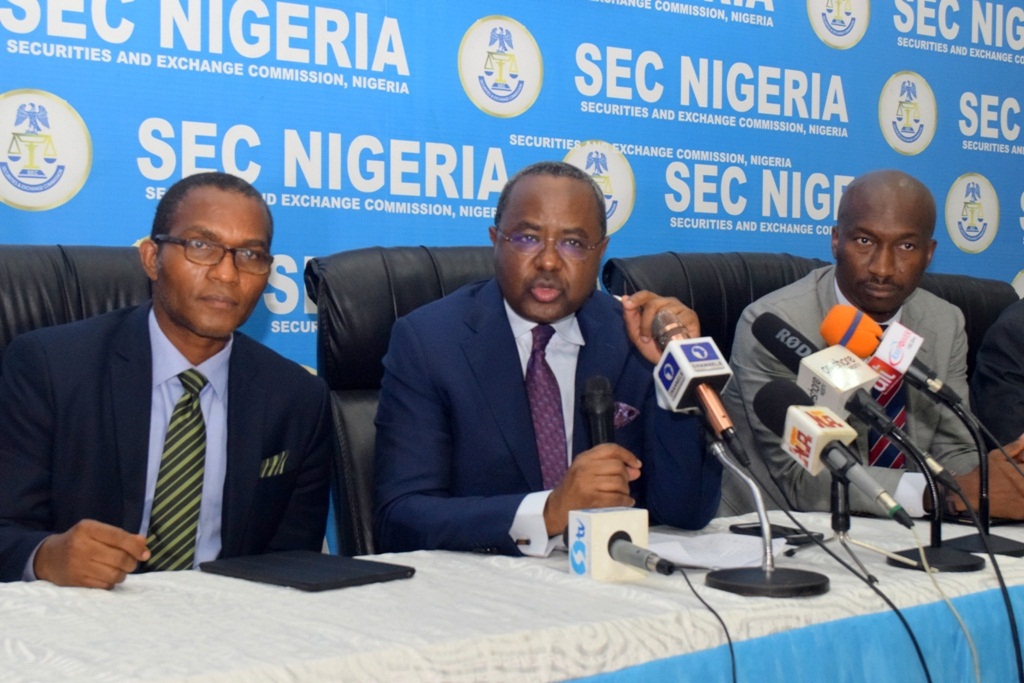
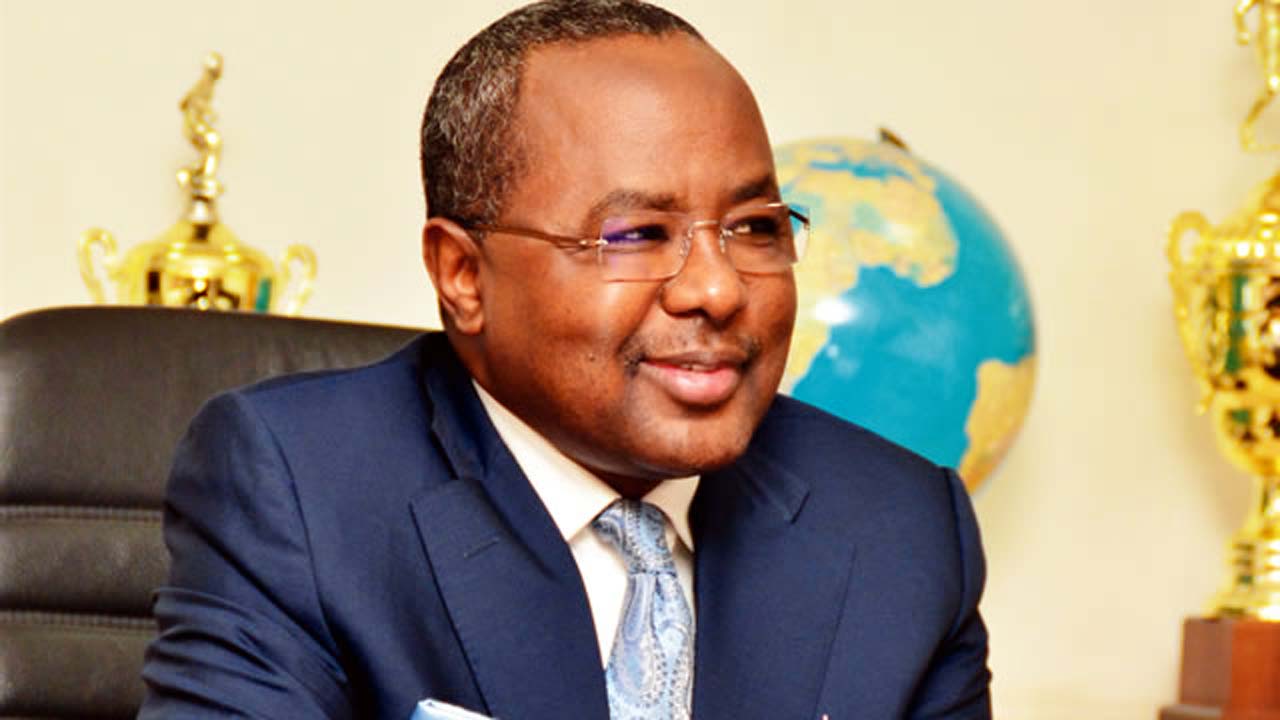
An alarm has been raised by a human right, good governance and non-government organization known as Campaign Against Impunity in Nigeria over alleged attempts to surreptitiously close investigations against the suspended Director General of Securities and Exchange Commission (SEC), Mr Mournir Haliru Gwarzo.
Speaking on Thursday in Lagos at a media briefing, the group said it found it curious that weeks after its sister organisation sent a formal petition to President Muhammadu Buhari, the leadership of the National Assembly and the anti-corruption agencies, not a single arrest has been made so far.
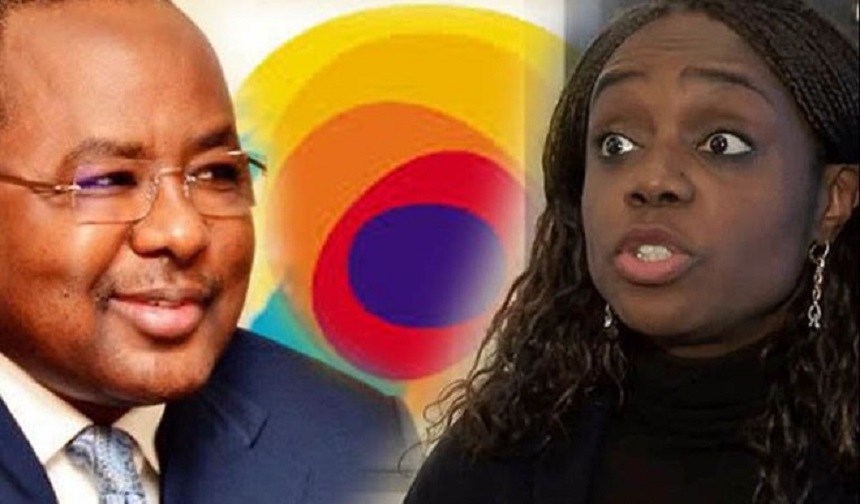
The group also urged the Minister of Finance, Mrs Kemi Adeosun, to order a thorough audit of the finances of the commission.
Recall that the Centre for Anti-Corruption and Open Leadership (CACOL) had petitioned the President, National Assembly and security agencies, accusing the embattled SEC boss of paying himself N104.8 million as severance package.
While addressing newsmen yesterday at the Rights House, CDHR Secretariat, Ikeja, Lagos, popular human rights activist and leader of the Campaign Against Impunity in Nigeria team, Comrade Shina Loremikan, noted that his group had followed with keen interest issues revolving around allegations of gross abuse of office and official recklessness levelled against Mr Gwarzo.
Comrade Loremikan said, “We find it disturbing that apart from the initial invitation and questioning of Mr Mounir Gwarzo for just a few hours by the Independent Corrupt Practices Commission (ICPC), nothing has been heard by the public on the status of the investigation.
“Indeed, we must ask, how come no arrest has been made by any of the anti-corruption agencies on this matter?”
According to Comrade Loremikan, It is in view of the lukewarm attitude of the government and the anti-corruption agencies to this issue that “we hereby urge the Economic and Financial Crimes Commission (EFCC) to quickly make public the outcome of its ongoing investigation into the activities of Mr Mournir Haliru Gwarzo’s as the Director General of the Securities and Exchange Commission.
“The EFCC is in possession of all supporting documents on the allegations which are also at our disposal. Why is it taking the anti-corruption agencies this long to determine the ownership of the following companies?”
On January 2, 2013, Mr Gwarzo was appointed an Executive Commissioner in SEC for a four-year tenure by the then administration of President Goodluck Jonathan.
Before the end of his four-year term, Mr Gwarzo was promoted by same government as the Director General of the commission on May 22, 2015.
Mr Gwarzo allegedly ordered the payment of a severance package of the sum N104,851,154.94 to himself.
Mr Loremikan said the standing rule in the civil service provides that severance benefits can only be paid to an employee who has concluded his or her service and has completely disengaged from service and not to an employee who was promoted within the commission as is in the case of Mr Gwarzo.
The Comrade, at the briefing, asked Mr Gwarzo to tell the anti-corruption agencies if he paid himself a severance package or not? If he awarded contracts to his own companies and others with links to himself his wife and some of his cronies using the privilege of his office or not?
He further asked it Mr Gwarzo can deny the veracity of the incorporation records with the Corporate Affairs Commission (CAC) that the companies said to belong to him and his cronies indeed belong to them?
“Why is it taking the anti-corruption agencies this long to determine the ownership of the following companies?” he queried also.
Comrade Loremikan said Campaign Against Impunity in Nigeria and Nigerians also want to know if Mr Gwarzo, his wife and some directors of SEC are owners of the following companies: (1.) Outbound Investment Ltd, RC NO. 807317 (2.) Medusa Investments Limited, RC NO. 326829 (3.) Northwind Environmental Services. REG NO BN2389176 (4.) Micro-Technologies LTD RC NO. 173805 (5.) Tida International Ltd RC NO. 26414 (6.) Outlook Communications (7.) Acromac Nig. Ltd RC NO. 10687864 (8.) Balfort International Investment Ltd RC NO. 109153 (9.) Interactiven Worldwide Nigeria Ltd RC NO. 779442.
Recall further that a Senior Advocate of Nigeria (SAN) and leading human rights activist, Mr Festus Keyamo, had earlier warned against recent attempts to sweep the Mr Gwarzo investigation under the carpet by powerful individuals.
Mr Loremikan said at the conference on Thursday that Nigerians want the probe to ascertain whether or not Mr Gwarzo paid himself severance benefits of N104.8 million after his elevation to from Executive Commissioner to DG despite not having completed his tenure on his previous position.
Concluding, Comrade Loremikan said, “Considering the likelihood that a lot more acts of impunity may have been committed unchecked under the arrangement in which Mr Gwarzo functioned as the DG of SEC without checks from a Board, the Campaign Against Impunity in Nigeria calls on the Finance Minister, Mrs Kemi Adeosun to order a thorough audit of the finances of the commission.
“We also urge the Minister to stand firm and not buckle under any pressure by the campaign of impunity being sponsored by Mr Gwarzo against her person.
“The entire process smells of an attempt to cover impunity with blackmail. We therefore demand that Mrs Kemi Adeosun should make public the report of the Administrative Panel put in place to investigate the allegations against Mr Gwarzo.
“She should also direct her office to forward the report to the Economic and Financial Crimes Commission and the Independent Corrupt Practices Commission (ICPC),” Mr Loremikan told journalists.



By Adedapo Adesanya
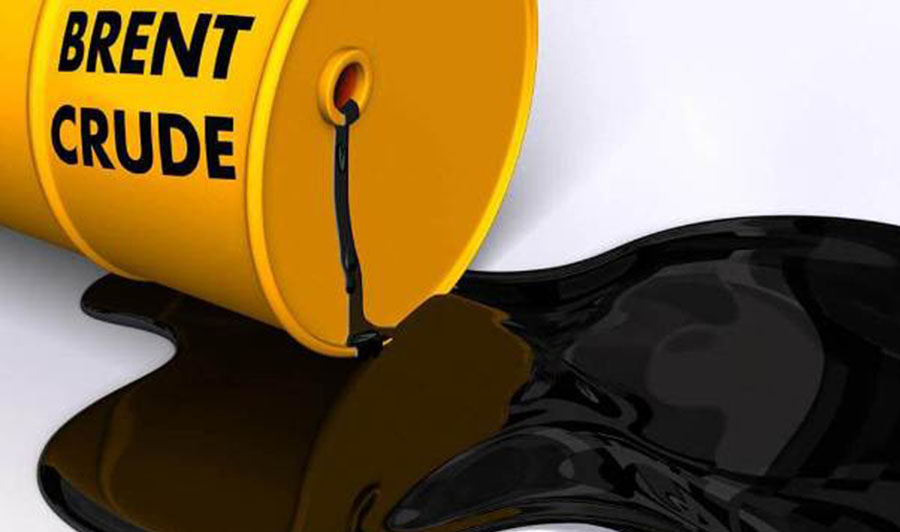
Brent crude prices fell by $3.05 or 3.37 per cent to $87.33 per barrel on Friday, the lowest level since early March, triggered by expectations of an imminent peace agreement between the United States and Iran.
Also, the US West Texas Intermediate (WTI) crude finished at $84.88 a barrel after it gave up $2.83 or 3.23 per cent. It was its lowest level since April 17.
Reuters reported that a memorandum between the US and Iran to halt the war in the Gulf could be signed as soon as Sunday, citing sources.
The sources indicate that the US would immediately begin releasing billions of Dollars in frozen Iranian assets and waive sanctions on its oil exports, in return for Iran opening the strait.
The proposals also include discussion of possible war reparations for Iran and dropping longstanding US demands for limits on Iran’s missile program, the sources were quoted as saying.
Meanwhile, Iranian Foreign Minister Abbas Araqchi said on Friday that a memorandum of understanding had not yet been signed and could still change.
He also said that management of the Strait of Hormuz would not return to the pre-war era, that sovereignty over the strait belonged to Iran and Oman, and that Iran would secure safe passage for ships through it.
US President Donald Trump called off threatened air strikes against Iran on Thursday, while it was reported that final negotiations on the memorandum would focus on nuclear and economic issues but would exclude discussions about Iran’s missile programme.
On Thursday, Iran announced a complete closure of the Strait of Hormuz, saying it would fire on any ship trying to pass through.
Traffic through the strait, which normally carries a fifth of global oil and liquefied natural gas shipments, has been extremely limited as a result of the war.
The US military, however, said on social media that commercial ships continued to transit the waterway.
Goldman Sachs lowered its 2027 average Brent forecast to $80 a barrel on higher supply and lower demand, but expects prices to exceed the 2025 average on stockpiling of OECD commercial oil stocks and a security premium for disruptions.
The Organisation of the Petroleum Exporting Countries (OPEC) on Thursday lowered its forecast for 2026 world oil demand growth to 970,000 barrels per day from a previous 1.17 million barrels per day, its second straight downward revision.
By Modupe Gbadeyanka
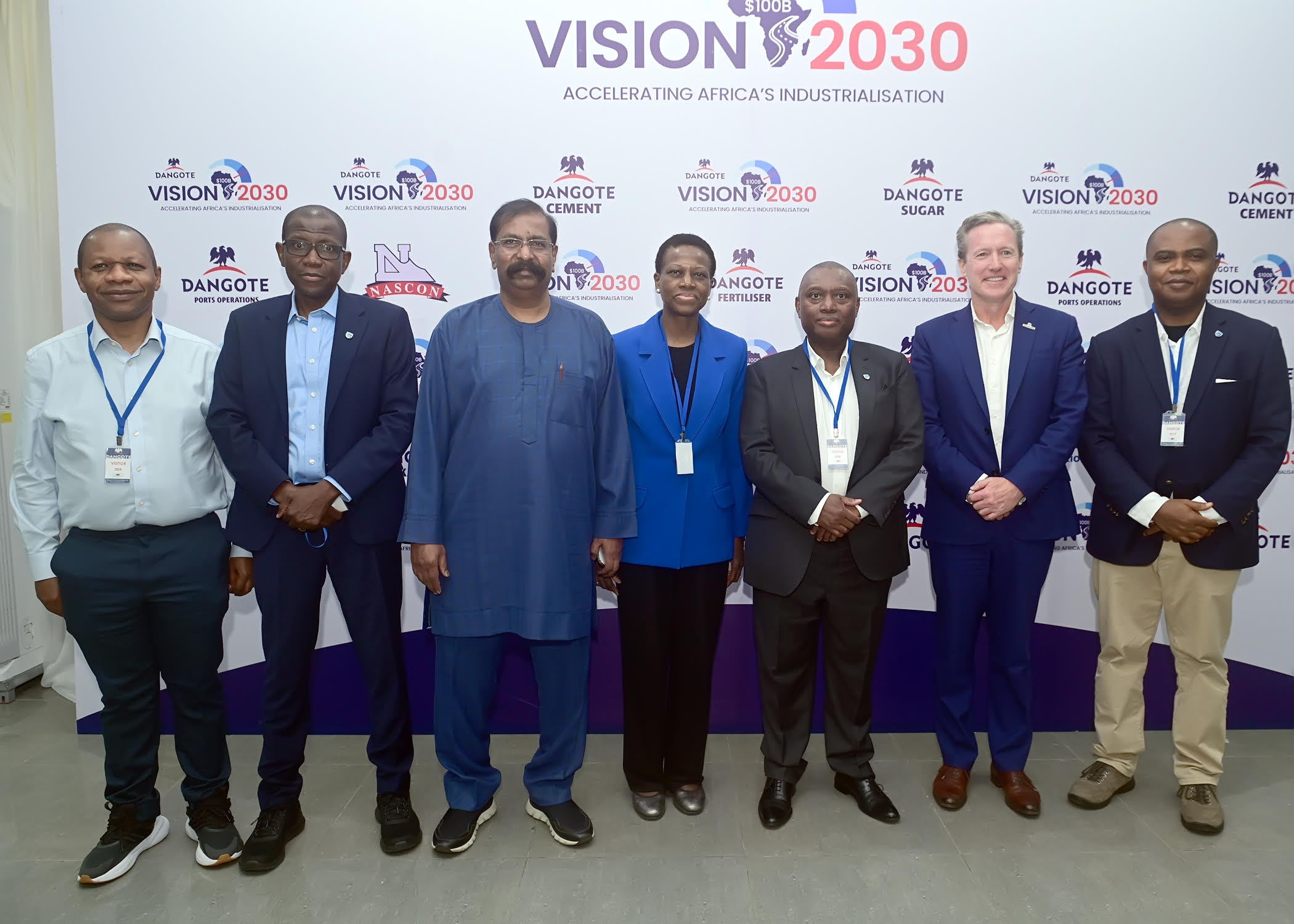
The Lagos-based Dangote Petroleum Refinery has been described by Standard Bank Group as a transformational industrial project with far-reaching implications for Nigeria and Africa.
The company, which is Africa’s largest financial institution, gave this description after a tour of the facility recently.
Standard Bank, the parent company of Stanbic IBTC Holdings, has promised to support the planned listing of the 650,000 barrels per day refinery and expressed readiness to finance future expansion projects across the continent.
The chief executive of the lender, Mr Sim Tshabalala, said, “We are here because the Dangote Group is a large and important global player and a significant force on the African continent.”
“Standard Bank is the largest financial institution in Africa, and we have partnered with Dangote on a variety of initiatives. We are here to lend support, to see this magnificent refinery and to discuss Vision 2030 and how we can continue supporting the Group’s growth ambitions,” he added.
Mr Tshabalala disclosed that Standard Bank intends to play a leading role in the refinery’s planned Initial Public Offering and future growth initiatives.
“As Dangote lists, there is an IPO coming up, and we are a leading player in that process,” he said, adding that, “As the group continues to expand in Nigeria and across Africa, there will be opportunities for financial advisory services and balance sheet support, and we stand ready to provide both.”
He further described the refinery as “a wonder of the world,” noting that its impact is already being felt through stronger foreign exchange earnings, improved balance-of-payments performance and enhanced energy security.
“This is a wonder to behold. It is massive, productive and transformative. It is already making a significant contribution to Nigeria’s economy through its impact on foreign reserves, the balance of payments and the lives of ordinary Nigerians,” he said.
The Group Vice President for Oil and Gas at Dangote Industries Limited, Mr Devakumar Edwin, said the visit represented a significant milestone in a partnership that began during the refinery’s construction phase.
“The bank visited us during construction and understood the scale of what we were building,” Mr Edwin said. “Today, the refinery is fully operational, and they can see what their support has helped to create. It is like nurturing a tree and eventually seeing it bear fruit.”
He added that both organisations are exploring opportunities to deepen collaboration as Dangote expands its industrial footprint across Africa.
Also speaking, the chief executive of Dangote Petroleum Refinery, Mr David Bird, said the visit highlighted the importance of long-term partnerships in delivering large-scale industrial projects.
“Standard Bank has been one of our strongest supporters throughout the history of the refinery and the broader Dangote Group.
“This visit was an opportunity to demonstrate what that support has enabled. Seeing is believing, and it allows our partners to appreciate the scale of what has been achieved,” Mr Bird stated.
The visit also coincided with a major operational milestone for the refinery, which has now exceeded its original design capacity.
Mr Bird disclosed that the refinery recently completed performance test runs at 700,000 barrels per day, above its nameplate capacity of 650,000 barrels per day.
“We have always believed there was engineering flexibility built into the design,” he said. “Achieving sustained production of 700,000 barrels per day is a testament to the technical capability of our people and the strength of the systems we have built.”
By Adedapo Adesanya
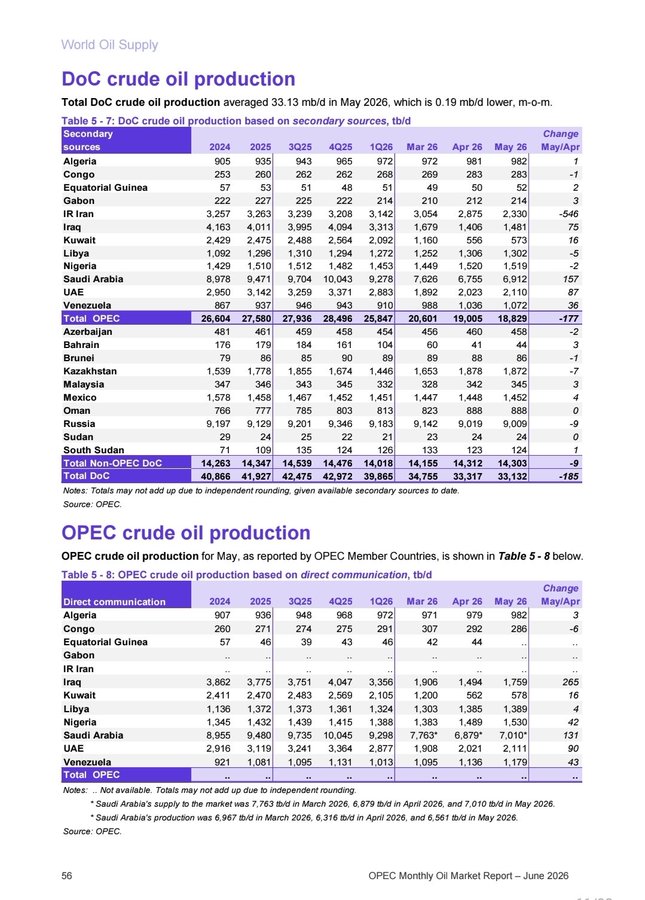
Nigeria produced about 1.530 million barrels of crude oil per day in May 2026, beating its Organisation of Petroleum Exporting Countries (OPEC) quota by 42,000 barrels per day. In the preceding month, the country only produced 1.489 million barrels per day.
In the latest OPEC’s Monthly Oil Market Report (MOMR), it was also revealed that Iraq in April supplied 1.494 million barrels per day while in May, it produced 1.759 million barrels per day, an increase 265,000 barrels per day; Saudi Arabia, 6.879 million barrels per day in April, 7.010 million barrels per day in May, an increase of 131,000 barrels per day; United Arab Emirate (UAE), 2.021 million barrels per day in April and in May 2.111 million barrels per day, an increase of 90,000 barrels per day while Venezuela, 1.136 million barrels per day in April and 1.179 million barrels per day in May, an increase of 43,000 barrels per day.
Using secondary sources, Nigeria’s production decreased from 1.520 million barrels per day in April to 1.519 million barrels per day; Saudi Arabia, 6.755 million barrels per day in April and 6.912 million barrels per day in May; UAE, 2.023 million barrels per day in April, 2.110 million barrels per day in May; and Venezuela, 1.036 million barrels per day in April and 1.072 million barrels per day in May.
Nigerian Upstream Petroleum Regulatory Commission (NUPRC), in a statement by its Head, Media and Corporate Communications, Mr Eniola Akinkuotu, confirmed that Nigeria, in May, met 102 per cent of OPEC quota as production hit an 11-month high.
According to it, Nigeria’s oil production witnessed an upswing in May 2026, averaging 1,530,354 barrels of crude oil and 170,446 barrels of condensates per day, bringing the total combined production to 1, 700, 800 barrels per day and consolidating Nigeria’s position as Africa’s largest oil producer.
It stated that the average crude oil production recorded in May represents 102 per cent of Nigeria’s 1.5mbpd of production quota allocated by OPEC.
It explained that production performance during the review period remained robust, with combined crude oil and condensate output ranging between a low of 1.51 million barrels per day and a peak of 1.86 million barrels per day.
The organisation added that the May 2026 production figures represented the highest recorded by Nigeria since July 2025, when output surged to 1,712,282.
NUPRC said: “In strict crude oil terms (excluding condensates), the 1.53 million barrels recorded in May 2026 represents the highest Nigeria has witnessed since January 2025 when crude oil production hit 1.538 mbpd.”
“On a month-on-month basis, production rose by 2.77 per cent in May 2026 as against 1.48mbpd in April. The broader production trend over the last five months has also remained positive.
“Combined crude oil and condensate output increased from 1.48 mbpd in February to 1.54 mbpd in March, 1.66 mbpd in April, and then 1.7 mbpd in May, underscoring sustained growth in Nigeria’s hydrocarbon production levels.
“Among production streams, Bonny Terminal led the pack with a total blend of 293,870 bpd, closely followed by Forcados Terminal at 289,900 bpd. Qua Iboe ranked third with 173,360 bpd, while Escravos Oil Terminal contributed 135,470 bpd. Odudu (Amenam Blend) completed the top five production streams, accounting for 63,250 bpd during the month under review.”
The commission attributed the rise in production to a sustained positive momentum as operations remained stable throughout the reporting period with no significant pipeline or facility outages recorded.
-
 Feature/OPED6 years ago
Davos was Different this year
-
Travel/Tourism10 years ago
Lagos Seals Western Lodge Hotel In Ikorodu
-

 Showbiz3 years ago
Estranged Lover Releases Videos of Empress Njamah Bathing
-
 Banking8 years ago
Sort Codes of GTBank Branches in Nigeria
-

 Economy3 years ago
Subsidy Removal: CNG at N130 Per Litre Cheaper Than Petrol—IPMAN
-

 Banking3 years ago
Sort Codes of UBA Branches in Nigeria
-

 Banking3 years ago
First Bank Announces Planned Downtime
-

 Sports3 years ago
Highest Paid Nigerian Footballer – How Much Do Nigerian Footballers Earn