
Economy
Domestic IPO by African Issuers Rises 19.5% to $1.4b in 2017—Report

By Dipo Olowookere
For the second year in a row, the capital raised in domestic listings by African issuers increased by 19.5 percent year-on-year to $1.4 billion in 2017, research in the latest Global Cross-Border Index from Baker McKenzie has revealed.
The report, which was made available to Business Post on Thursday, disclosed that there were fewer domestic listings in Africa in 2017, with only seven domestic IPOs were recorded in Africa in the period under review.
However, the value of domestic IPOs was higher in 2017, $1,379 million, compared to $1,154 million in 2016.
The report showed that there were two cross-border IPOS in Africa in 2017, both by Swiss Issuers: Aspire Global Plc listed on the Nasdaq First North Exchange, raising $38.96 million and Rainbow Rare Earths Ltd raised $8.22 million when it listed on the London Stock Exchange in 2017.
There were also two cross-border IPOS in Africa in 2016. In 2016, $246 million was raised through cross-border IPOs, compared to $47 million in 2017.
“Africa’s uneven FDI picture reflects the global uncertainty, but local challenges aggravate the unevenness. IPO activity is highly dependent on political and economic instability, particularly in the key markets of South Africa, Kenya, and Nigeria.
“In 2016, more FDI flowed to the hub economies, with new East and West Africa clusters emerging. This trend also dominated in 2017, and while South Africa has the most attractive exchange for issuances, the new clusters are shaping up to drive the IPO landscape going forward,” said Mr Wildu du Plessis, Partner and Head of Africa at Baker McKenzie in Johannesburg.
“African economies have also engaged in repricing. The most tangible manifestation of this repricing has been rapid fall in some currencies as export revenues slid. This has created shortages of foreign exchange.
“The currency slide, has in turn, led to an increase in consumer prices, which impacted the retail, logistics, and other consumer-oriented sectors. Currency falls, however, can also create longer-term opportunities, because assets become cheaper,” he said.
Mr Du Plessis noted further that as more governments across the continent engaged in the privatisation of state-owned entities and listings in the coming years, regulatory frameworks would be developed that would inspire market confidence in African bourses.
“In addition, removing barriers to cross-border investments through regional integration, would harmonise regulations and increase cross-border investments. This would provide more choices of financial products for investors in future,” he noted.
Global picture
Globally, IPO volumes in 2017 reached the highest level since 2007. Momentum built through the year with an acceleration in both volume and value of capital raised in the second half.
In total, 1,694 companies raised $206.6 billion from IPOs, a jump of around a third in both value and volume on 2016. Both cross-border and domestic activity grew.
Cross-border deals jumped by 60% in volume, growing in all regions, including Latin America, which saw its first cross-border listing in 10 years. However, growth in cross-border capital was once again outpaced by growth in domestic capital raising, which rose 55% in value and this resulted in a slight decline in our Global Cross-Border Index.
“The IPO market in 2017 has put in its best performance in 10 years,” said Koen Vanhaerents, Global Head of Capital Markets at Baker McKenzie. “A more stable political environment in some of the key markets, combined with strong economic growth, has boosted both the number of listings and the volume of capital raised.”
“With key risks to the global economic outlook easing, we expect IPOs to hit a new post-financial crisis high in 2018,” he added. “We recently forecast that domestic IPO activity will continue to rise, to a peak of over USD 220 billion in 2018.”



By Adedapo Adesanya
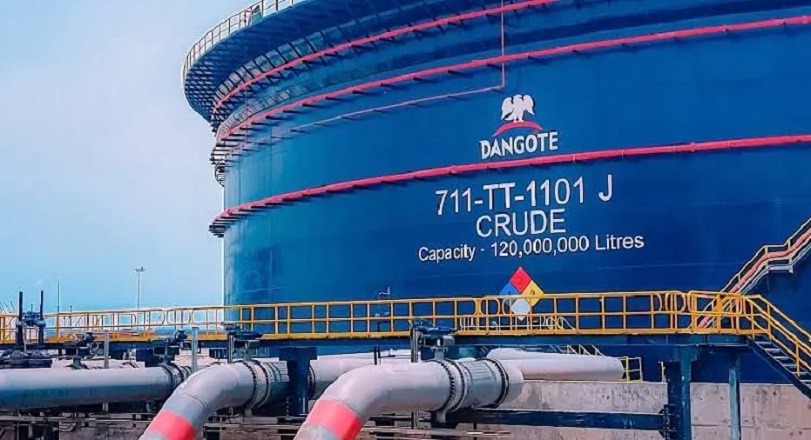
Dangote Petroleum Refinery is seeking to raise about $1 billion through a private placement that values the company at $39.1 billion.
According to reports, the refinery is offering 3 billion ordinary shares at $0.35 per share. Investors must subscribe for at least 1 million shares, equal to $350,000, with additional subscriptions accepted in multiples of 500,000 shares. The shares will be subject to a 365-day lock-up period from allotment.
It was reported that demand for the offer has already exceeded $2 billion, suggesting that the placement may be oversubscribed.
The operation is already attracting the interest of local investors. Recall that Nigerian billionaire, Mr Femi Otedola, has committed $100 million, while Afrobeats superstar, Mr David Adeleke, popularly known as Davido, also announced he would participate.
The proceeds will be used for expansion projects and general corporate purposes as the refinery deepens its role in Nigeria’s fuel supply market.
The facility has a nameplate capacity of 650,000 barrels per day and began fuel production in 2024. It produces diesel, aviation fuel, naphtha and premium motor spirit.
Standard Bank Group has also said it plans to play a leading role in the refinery’s future public listing, after the facility completed test runs at 700,000 barrels per day. It aims to reach 1.4 million barrels per day by 2028.
The fundraising is likely to renew expectations of a future public listing with a major stakeholder, Mr Aliko Dangote, saying the refinery could be listed, though no timeline was disclosed in the memorandum.
The current placement is seen as an early step that could expand ownership ahead of any future initial public offering (IPO).
Mr Dangote plans to sell between 5 and 10 per cent of the refinery on five major African exchanges: the Nigerian Exchange (NGX), the Johannesburg Stock Exchange (JSE), the BRVM, the Nairobi Securities Exchange (NSE) and the Ghana Stock Exchange (GSE).
It has appointed Stanbic IBTC Capital, Vetiva Capital Management and FirstCap to lead the planned initial public offering of its refinery business on the Nigerian Exchange.

By Adedapo Adesanya
The NASD Over-the-Counter (OTC) Securities Exchange entered a third straight day of losses after it fell by 0.12 per cent on Wednesday, June 10.
The depletion trimmed the market capitalisation further by N3.1 billion to N2.590 trillion from N2.593 trillion, and cut the NASD Unlisted Security Index (NSI) by 5.19 points to 4330.12 points from 4,335.31 points.
11 Plc lost N22.21 during the session to finish at N221.00 per share versus the previous day’s N243.21 per share, MRS Oil Plc depreciated by N6.90 to N158.10 per unit from N165.00 per unit, and Central Securities Clearing System (CSCS) Plc decreased by N2.81 to N78.32 per share from N81.13 per share.
On the flip side, FrieslandCampina Wamco Nigeria Plc went up by N9.27 to N183.08 per unit from N173.81 per unit, Nitrox Industrial Gases Plc added N1.92 to its value to close at N23.80 per share compared with the preceding day’s N21.88 per share, and Food Concepts Plc gained 10 Kobo to exchange at N2.58 per unit, in contrast to Tuesday’s closing price of N2.48 per unit.
At the close of business, the volume of securities traded by investors contracted by 92.6 per cent to 117,374 units from 1.6 million units, and the value of securities moderated by 80.5 per cent to N12.2 million from N62.3 million, while the number of deals increased by 4.9 per cent to 43 deals from 41 deals.
Great Nigeria Insurance (GNI) Plc finished the day as the most traded stock by value on a year-to-date basis with 3.4 billion units worth N8.4 billion, followed by Infrastructure Credit Guarantee (Infracredit) Plc with 2.3 billion units traded for N6.5 billion, and CSCS Plc with 65.2 million units exchanged for N4.4 billion.
GNI Plc also closed the session as the most traded stock by volume on a year-to-date basis with 3.4 billion units valued at N8.4 billion, followed by Infracredit Plc with 2.3 billion units transacted for N6.5 billion, and Resourcery Plc with 1.1 billion units sold for N415.7 million
By Adedapo Adesanya
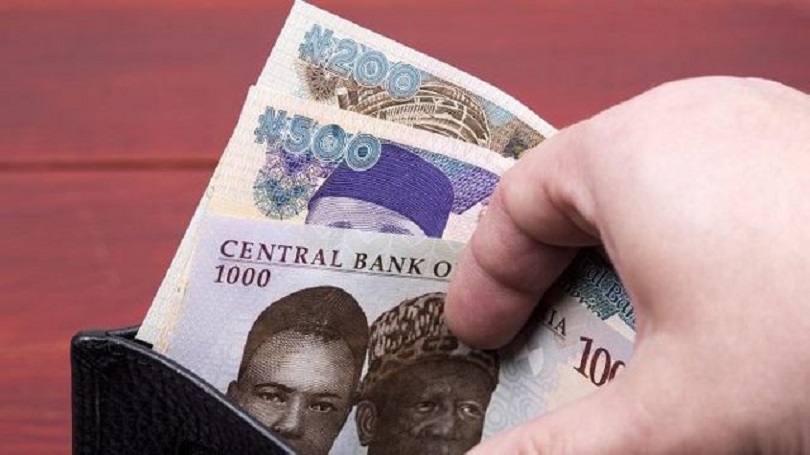
The Naira fell against the United States Dollar by N1.50 or 0.11 per cent in the Nigerian Autonomous Foreign Exchange Market (NAFEX) to sell at N1,362.05/$1 on Wednesday, June 10, compared with the N1,360.55/$1 it traded on Tuesday.
Also, the local currency lost N4.33 against the Pound Sterling in the official window yesterday to trade at N1,827.33/£1 versus the preceding day’s N1,823.00/£1, and depreciated against the Euro by N1.74 to quote at N1,575.35/€1, in contrast to N1,573.61/€1 of the previous session.
However, at the GTBank forex desk, the Naira gained N3 against the US Dollar to sell at N1,370/$1 versus N1,373/$1, and at the parallel market, it remained unchanged at N1,380/$1.
Updated data from the Central Bank of Nigeria (CBN) showed that foreign reserves surged further due to additional inflows from various sources. Nigeria’s gross external reserves increased to $50.439 billion, its highest level since March 2026, reflecting sustained inflows from oil revenue and other FX sources.
Also, the International Monetary Fund (IMF) has said increased confidence in the Naira, supported by lower and more stable inflation, would encourage households, businesses and investors to hold more local currency assets and reduce reliance on foreign currencies.
The global lender, in a recent assessment, stressed the importance of strengthening the CBN’s operational framework and aligning liquidity management operations more closely with monetary policy objectives.
In the cryptocurrency market, there were recoveries from recent losses as US headline inflation rose an expected 0.5 per cent in May, but the beat on the core rate — which cuts out food and energy costs — pleased markets. The core rate, though, rose just 0.2 per cent in May against forecasts for 0.3 per cent.
The print reinforces the view that the US Federal Reserve will keep interest rates at 350-375 basis points at its June 17 meeting, but is likely to increase rates by 25 basis points by the end of the year.
Cardano (ADA) went up by 2.4 per cent to $0.1647, Bitcoin (BTC) rose by 2.3 per cent to $62,794.09, Binance Coin (BNB) jumped 1.8 per cent to $596.23, Ethereum (ETH) grew by 1.7 per cent to $1,658.12, and Solana (SOL) also soared by 1.7 per cent to $65.23.
Further, Dogecoin (DOGE) appreciated by 1.5 per cent to $0.0849, Ripple (XRP) expanded by 0.4 per cent to $1.11, and TRON (TRX) increased by 0.05 per cent to $0.3218, while the US Dollar Tether (USDT) lost 0.10 per cent to close at $0.9989, and the US Dollar Coin (USDC) declined by 0.01 per cent to $0.9997.
-
 Feature/OPED6 years ago
Davos was Different this year
-
Travel/Tourism10 years ago
Lagos Seals Western Lodge Hotel In Ikorodu
-

 Showbiz3 years ago
Estranged Lover Releases Videos of Empress Njamah Bathing
-
 Banking8 years ago
Sort Codes of GTBank Branches in Nigeria
-

 Economy3 years ago
Subsidy Removal: CNG at N130 Per Litre Cheaper Than Petrol—IPMAN
-

 Banking3 years ago
Sort Codes of UBA Branches in Nigeria
-

 Banking3 years ago
First Bank Announces Planned Downtime
-

 Sports3 years ago
Highest Paid Nigerian Footballer – How Much Do Nigerian Footballers Earn