
Economy
Excitement as DMO Redeems Maturing N198b Maturing T-Bills

By Modupe Gbadeyanka
Market operators have received, with excitement, news of the Debt Management Office (DMO) disclosing that it would redeem maturing treasury bills worth N198.032 billion this week and next week.
On Thursday, December 14, 2017, N131.415 billion worth of Nigerian Treasury Bills (NTBs) will mature, while on Thursday, December 21, 2017, another NTBs valued at N66.617 billion will also mature.
But the debt office has disclosed that it would redeem these maturing bills in full as at when due instead of the usual practice of rolling over NTBs at maturity.
These payments, according to the DMO, are aimed to help the private sector have to access funds and possibly at a lower cost than was hitherto possible.
However, the DMO said it expects operators in the market to use this opportunity to develop the other segments of the debt capital market such as corporate bonds.
The debt office noted that the NTBs would be redeemed primarily using proceeds of the $500 million raised through a Eurobond Issuance by Nigeria in November 2017.
Nigeria had issued a dual-tranche $3 billion Eurobond in November 2017 out of which $2.5 billion is to part-finance the deficit in 2017 Appropriation Act and the balance of $500 million is for the refinancing of domestic debt.
Recently, Federal Government said it was planning to refinance some maturing domestic debt with external borrowing as part of its overall debt management strategy of reducing debt service costs.
Other objectives of this strategy are to free up space in the domestic market for other borrowers and achieve a more sustainable debt portfolio mix of 60 percent domestic and 40 percent external.
In addition, the redemption overtime will help reduce the refinancing risk associated with short-term borrowings through NTBs with tenors of 91, 182 and 365 days.
As at September 30, 2017, NTBs accounted for 30.23 percent of the Federal Government’s domestic debt of N12.5 trillion compared to the DMO’s target of a maximum of 25 percent.








Today, Nigeria’s economic landscape is sparking a revolution in the digital sphere, unfolding right before our eyes. Candidly, without seeing a bigger picture or grasping technical intricacies, even experienced Nigerian traders may get nowhere, lost in the jungle of algorithms. Thus, old-school investment methods are slowly giving way to progressive patterns, with leading-edge trading tools along the way.
Amidst macroeconomic reforms by the Central Bank, skyrocketing volatility of the national currency, and structural changes in the corporate sector, the local financial community is actively pursuing different possibilities to diversify and secure capital. In the sea of choices, retail algorithmic trading has become a leading option across Nigeria. To guarantee peace of mind, download mt4 for pc to lock in profits on your trade.
Mobile Trading in Nigeria: When Accessibility Harms Efficiency
For decades, the market was dominated by the trend of widespread financial “mobilization” on the go. Smartphones opened the windows to the world of trade, offering free access to international markets to new participants across Africa. Despite this fact, Nigeria’s professional community is facing another unforeseeable storm, as hardware restrictions in mobile infrastructure are directly diminishing profitability of retail investors.
In pursuit of milliseconds, accuracy, and stability, Nigerian traders are returning en masse to habitual computer architecture. Of course, smartphones are still a good option for passive investing, long-term planning, or periodic portfolio monitoring, but when it comes to active intraday trading or running automated trading advisors (EAs), mobile operating systems exhibit critical shortcomings. Let’s check the reasons for that.
First and foremost, phones are always about limited multithreading. The thing is, mobile processors are optimized for energy conservation and overheating prevention, but not for the arduous mathematical calculations to process a dense data stream. The second weakness is signal latency. Wireless networks, despite their continuing development of infrastructure in major hubs like Lagos and Abuja, are massively prone to packet loss and ping instability during peak periods, making them a poor choice for high-frequency trading.
For a trader dealing with the dynamic Nigerian market, even a millisecond of delay in order execution can turn into a lost opportunity. This is why true experts go for installing specialized software on their PCs, choosing a classic desktop terminal over a laptop or a smartphone.
Dominance of PC Platforms in the Age of Automation
Many perceive the transition to the desktop version of the trading platforms as a throwback to the past. To avoid confusion, a comprehensive analysis is required to professionalize the regional market. Nowadays, a PC running a reliable software system offers perks like system resource updates and a heightened level of interaction, among others.
The main advantage for traders in Nigeria lies in the possibility of backtesting and optimization. Backtesting a strategy on extensive historical data, taking into account floating spreads and real tick volume, requires colossal computing power. A desktop platform fully utilizes all the cores of a PC’s processor, allowing it to process thousands of parameter combinations within minutes—a feature impossible on a mobile device.
Another critical aspect for the Nigerian region is the unbroken connectivity via virtual private servers (VPSs). Even expert traders prove powerless when having to cope with power supply problems and internet service outages. Working on the desktop version, on the contrary, allows for seamless integration of the trading terminal with a remote server in proximity to liquidity providers’ data centers in London or Frankfurt. This way, traders can manage the process from their home workstations, but the trades themselves are executed remotely with minimal latency.
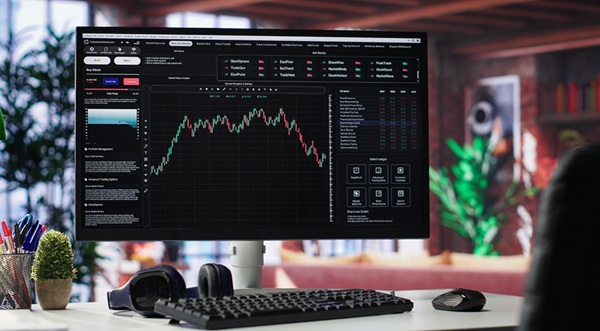
Finally, ergonomics and visual control can’t be dismissed. Technical market analysis is supposed to simultaneously monitor multiple timeframes and correlated instruments, such as the dollar index, commodity prices, and gold. Desktop platforms are robust enough to deploy complex workspaces across disparate monitors, with each chart equipped with dozens of indicators, analytical panels, and graphical elements. As well, this feature is physically impossible to accommodate comfortably on a standard smartphone screen.
A New Paradigm for Nigerian Investors
Nigeria’s contemporary financial sector is in anticipation of maturity and a systematic approach from its participants. The era when trading was perceived solely as an effortless way to make cash with a single click is irrevocably gone. Trading in Nigeria has established itself as a full-fledged technology-driven business in search of a trustworthy and fault-tolerant infrastructure.
Ultimately, the integration of automated scripts, thorough analysis of market microstructure, and rigorous risk management is possible only with desktop computing power. For traders seeking to safeguard their capital amid sweeping changes, top-notch PC software is becoming a competitive edge. Building a profound foundation, going with a reputable broker, and deploying a professional terminal on your computer, allows you to control your trading operations with absolute precision.


By Adedapo Adesanya
The NASD Over-the-Counter (OTC) Securities Exchange opened the week weaker by 0.47 per cent on Monday, June 15, biting N12.38 billion out of the market capitalisation to N2.605 trillion from N2.617 trillion.
This also brought down the NASD Unlisted Security Index (NSI) by 20.68 points to 4,354.33 points from last Friday’s 4,375.01 points.
The loss was witnessed despite the unlisted securities exchange closing the session with two price gainers and two price losers.
Central Securities Clearing System (CSCS) Plc crashed by N3.31 to trade at N80.62 per share compared with the preceding trading day’s N83.93 per share, and Geo-Fluids Plc declined by 7 Kobo to close at N2.80 per unit versus N2.87 per unit.
On the flip side, Food Concepts Plc gained 20 Kobo to sell at N2.78 per share compared with the preceding session’s N2.58 per share, and UBN Property Plc improved by 12 Kobo to N2.10 per unit from N1.98 per unit.
During the session, the volume of securities traded by investors depreciated by 68.2 per cent to 992,164 units from the 3.1 million units achieved last Friday, the value of securities moderated by 42.8 per cent to N39.2 million from the preceding session’s N68.5 million, and the number of deals decreased by 14.8 per cent to 23 deals from the 27 deals reported in the previous trading day.
At the close of trades, Great Nigeria Insurance (GNI) Plc remained the most active stock by value on a year-to-date basis, with 3.4 billion units worth N8.4 billion, followed by Infrastructure Credit Guarantee (Infracredit) Plc with 2.3 billion units transacted for N6.5 billion, and CSCS Plc with 66.8 million units exchanged for N4.6 billion.
The most traded stock by volume on a year-to-date basis remained GNI Plc with 3.4 billion units sold for N8.4 billion, followed by Infracredit Plc with 2.3 billion units traded for N6.5 billion, and Resourcery Plc followed with 1.1 billion units valued at N415.7 million.
By Adedapo Adesanya
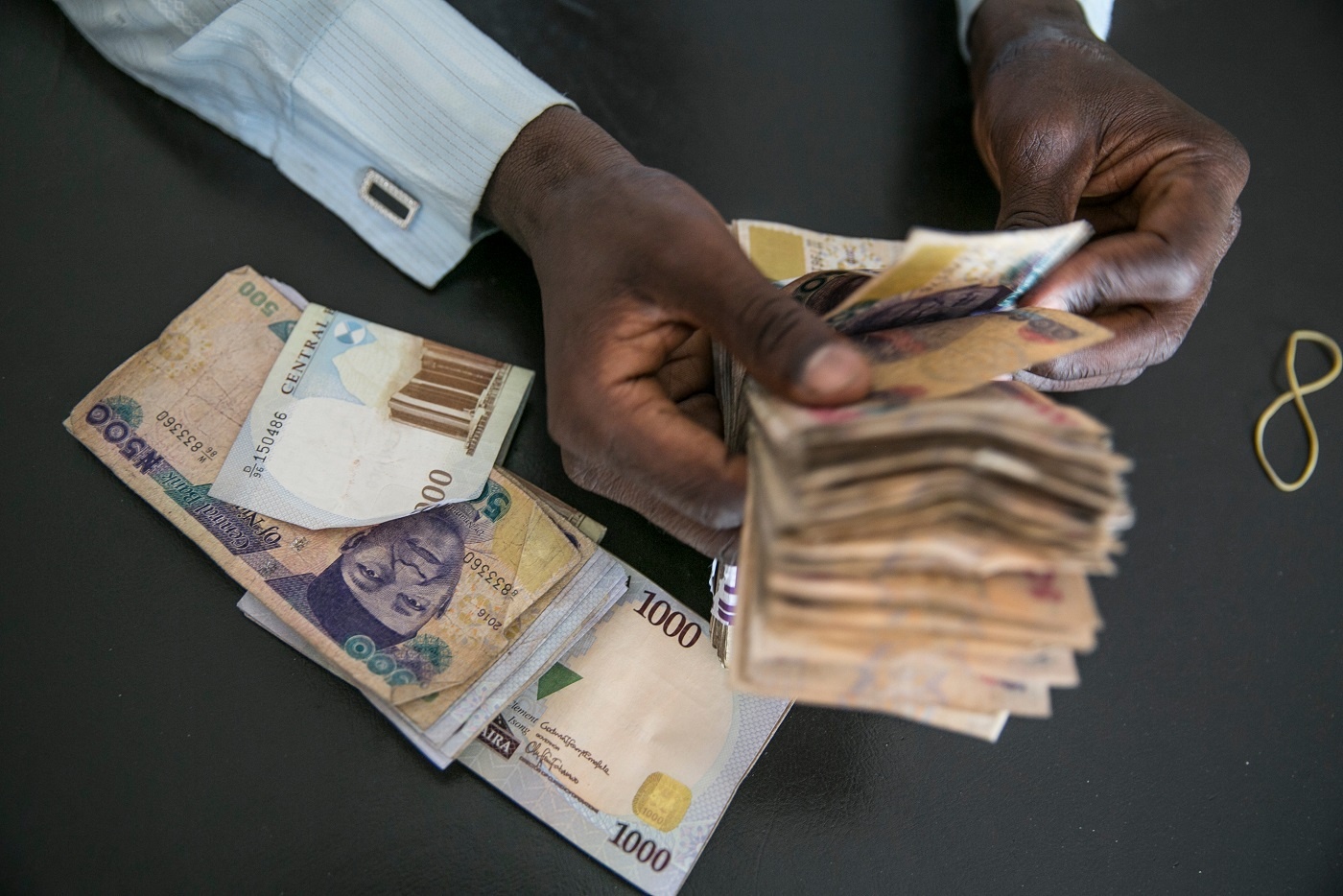
The Naira recorded a positive performance against the United States Dollar in the Nigerian Autonomous Foreign Exchange Market (NAFEX) on Monday, June 15.
At the official FX window, the Nigerian legal tender appreciated against its US counterpart by N7.56 or 0.55 per cent to sell at N1,356.27/$1 compared with the previous session’s N1,363.83/$1.
The local currency also gained N12.39 against the Pound Sterling during the trading day to trade at N1,808.86/£1 versus last Friday’s value of N1,821.25/£1, but shed N2.96 against the Euro to sell at N1,575.85/€1 compared with the previous N1,572.89/€1.
At the GTBank forex desk, the Nigerian Naira depreciated against the greenback yesterday by N2 to quote at N1,373/$1 versus the preceding session’s N1,371/$1, and at the black market, it maintained stability at N1,380/$1.
The pressure on the Naira has remained calm, as Nigeria’s gross external reserves surged to $50.505 billion, the highest since January 2009, driven by inflows from oil sales, affirming expectations that the local currency will remain along a stable band.
Meanwhile, the headline inflation rate rose to 15.93 per cent in May 2026, extending the upward trend recorded since the beginning of the year, according to the latest data released by the National Bureau of Statistics (NBS). The figure shows an increase from the 15.69 per cent recorded in April, indicating that prices of goods and services continued to climb despite a slower monthly rate of inflation.
The NBS said the latest figures suggest that while prices are still rising, the rate of increase has moderated from the previous month, largely impacted by the war in the Middle East, which drove up fuel prices.
In the cryptocurrency market, top benchmarked coins reversed early losses after the Bank of Japan raised interest rates to a 31-year high in its fight against inflation.
There had been profit-taking across the board as traders waited for Iran’s signing after US President Donald Trump and Vice President JD Vance signed an electronic copy of a memorandum of understanding. President Trump said the Strait of Hormuz, already partially open, will fully reopen on Friday.
Ripple (XRP) soared by 3.7 per cent to $1.22, Solana (SOL) grew by 3.6 per cent to $73.82, Ethereum (ETH) jumped by 2.7 per cent to $1,765.24, and Bitcoin (BTC) gained 0.7 per cent to trade at $66,191.45.
On the flip side, Cardano (ADA) slid 1.9 per cent to $0.1776, Dogecoin (DOGE) expanded by 1.7 per cent to $0.0874, TRON (TRX) slumped by 0.8 per cent to $0.3180, and Binance Coin (BNB) declined by 0.6 per cent to $614.10, while the US Dollar Tether (USDT) and the US Dollar Coin (USDC) traded flat at $1.00 each.
-
 Feature/OPED6 years ago
Davos was Different this year
-
Travel/Tourism10 years ago
Lagos Seals Western Lodge Hotel In Ikorodu
-

 Showbiz3 years ago
Estranged Lover Releases Videos of Empress Njamah Bathing
-
 Banking8 years ago
Sort Codes of GTBank Branches in Nigeria
-

 Economy3 years ago
Subsidy Removal: CNG at N130 Per Litre Cheaper Than Petrol—IPMAN
-

 Banking3 years ago
Sort Codes of UBA Branches in Nigeria
-

 Banking3 years ago
First Bank Announces Planned Downtime
-

 Sports3 years ago
Highest Paid Nigerian Footballer – How Much Do Nigerian Footballers Earn