

Banking
S&P Affirms UBA’s ‘B/B’ Ratings with Stable Outlook

By Modupe Gbadeyanka
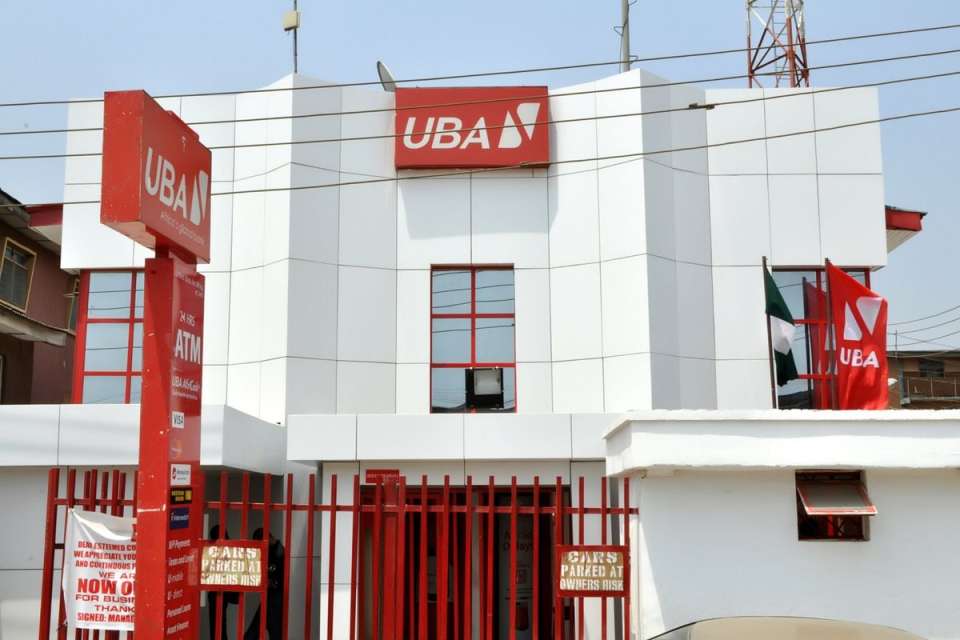
Leading rating firm in the world, S&P Global Ratings, has announced affirming its ‘B/B’ and ‘ngBBB/ngA-2’ ratings on United Bank of Africa (UBA) Plc.
A statement issued by the rating agency on Monday disclosed that it believes the tier-1 lender in Nigeria will continue to maintain sound earnings and asset quality over the next 12 months, despite the sluggish economy in its operating environment a and the high economic risk in other parts of Africa where the bank operates.
Also in the statement, S&P affirmed its stable outlook on the financial institution, explaining that the “stable outlook reflects that on Nigeria and our expectation that the group’s financial profile will remain broadly stable in the next 12 months.”
In its earnings for third quarter of this year, the lender increased its profit after tax to N61 billion from N49.5 billion in Q3 of 2016, while its gross earnings closed at N334 billion compared with N265.5 billion 12 months ago.
S&P Global Ratings, in its statement yesterday, noted that it affirmed its long- and short-term Nigeria national scale ratings on UBA at ‘ngBBB/ngA-2’.
“The affirmation reflects our view that the group will maintain its top-tier competitive position in the Nigerian banking sector. UBA benefits from a good franchise in the corporate and retail segments in Nigeria and increasing geographic diversification. Overall, we think the group has an adequate business position.
“Furthermore, we believe that the group will display relatively stable asset quality and good earnings generation over the next 12 months.
“We assess the group’s capital and earnings as moderate under our risk-adjusted capital (RAC) framework. We estimate UBA’s RAC ratio (before adjustments for diversification) at 5.2% for year-end 2016. We project that the RAC ratio will remain broadly stable over the next 12 months on the back of the group’s good earning capacity and expected stable cost of risk.
“Our forecast assumptions include loan growth of around 20% (factoring in the expected depreciation of the Nigerian naira), stable interest margins, cost control, and moderate dividend distribution. On June 30, 2017, UBA’s capital adequacy ratio was 19.7%, which is well above the regulatory minimum of 15%, and we believe it will remain stable over the next 12 months.
“We assess UBA’s risk position as adequate, which reflects our expectation that the group will exhibit broadly stable asset quality in the next 12 months. The group’s cost of risk increased to 2.1% in 2016 compared with 0.5% in 2015, before declining to 1.2% at end-June 2017.
“This ratio compares well with the sector average. However, nonperforming loans (NPLs; loans overdue by 90 days or more) ratio increased to 4.2% at end-June from 3.9% at end-2016 (1.7% at year-end 2015) and was hit hard by the foreign currency shortages, which mainly affected the general commerce and oil and gas trading companies.
“The Central Bank of Nigeria allowed banks to write-off fully provisioned NPLs the same year, without prejudice to the prudential guideline that requires banks to retain fully provisioned NPLs for one year before write-off. This was aimed at avoiding accumulation of NPLs, since banks were expected to record additional provisions in the context of the naira devaluation in 2016. As a result, UBA’s NPL coverage by provisions dropped to 60.1% at end-June 2017 from 83.3% at end-2016, after reaching about 100% on Sept. 30, 2016.
“NPLs outside Nigeria accounted for 60% of the group’s total NPLs. We anticipate that credit losses will decline to about 1% in 2017-2018, while the NPL ratio will stabilize at around 4%-5% over the same period. Similar to other Nigerian banking groups, the UBA group extends loans in U.S. dollars (about 35% of total loans at end-2016), but this risk appears to be mitigated by receivables in the same foreign currency.
“We consider the group’s funding to be above average and its liquidity to be adequate, owing to its steady and relatively low-cost, retail-deposit-based funding profile. Similar to its Nigerian peers, UBA exhibits contractual asset-liability mismatches, including in foreign currency.
“Despite tightening monetary policy in Nigeria in 2016, the group maintained a stable cost of funding at about 3.6% as of end-June 2017. The group reported a net stable funding ratio of 143% as of the same date. Broad liquid assets covered short-term wholesale funding at about 4.5x as of the same date. UBA issued a $500 million Eurobond in May 2017. We understand that the group has sufficient U.S. dollar liquidity to meet its financial obligations in 2017.
“The stable outlook on UBA reflects that on Nigeria and our expectation that the group’s financial profile will remain broadly stable in the next 12 months.
“We would lower the ratings on UBA if we lowered the rating on Nigeria or observed a higher-than-expected deterioration in the group’s assets quality indicators over the next 12 months. We would also lower the ratings on UBA in the unlikely scenario of a significant drop in capitalization, leading to a RAC ratio (before adjustments for diversification) below 3%.
“An upgrade is unlikely in the next 12 months because it would hinge on an upgrade of the sovereign and a decline in the economic risks faced by the Nigerian banking sector or a significant strengthening of capitalization, as reflected by a RAC ratio (before adjustments for diversification) sustainably exceeding 7%,” the statement said.




By Aduragbemi Omiyale
A collaboration to enable fast money transfers into Nigeria has been entered into between Flutterwave and Xoom, PayPal’s international digital money transfer service.
The partnership allows Xoom transfers to be converted by Flutterwave and settled locally in Naira, enabling quick transfers directly into recipients’ bank accounts at Access Bank, UBA, Zenith Bank, First Bank, GTBank, and additional participating banks across Nigeria.
The deal also enables Xoom’s global network with Flutterwave’s local payout infrastructure, allowing users globally to send funds directly into Nigerian bank accounts with improved speed and efficiency.
Nigeria is the leading remittance recipient in Sub-Saharan Africa, receiving over $20 billion in personal remittances in 2024. Despite this volume, receiving international payments has historically remained complex due to FX constraints and settlement delays. This collaboration helps address those challenges in a market of more than 232 million people, where the ICT sector is projected to contribute 21 per cent of GDP by 2027.
By combining Xoom’s expansive reach with Flutterwave’s local compliance and banking partnerships, the two companies are providing a more accessible financial corridor for the continent.
Xoom, a PayPal service, is a fast and secure international digital money transfer service that enables consumers to send money, pay bills, and reload phones for friends and family in approximately 160 markets globally.
As part of PayPal’s global payments ecosystem, Xoom leverages advanced fraud protection, compliance capabilities, and a trusted global network to help millions of customers move money quickly and securely across borders.
“We’re excited to have been chosen by Xoom for their Nigeria expansion. Millions of Nigerians rely on money from abroad to support everyday needs, whether it’s families receiving help from loved ones, freelancers getting paid for their work, or individuals earning income from the global economy. This helps make it easy and more reliable for people in Nigeria to receive funds and stay connected to opportunities beyond borders,” the chief executive of Flutterwave, Mr Olugbenga GB Agboola, stated.
By Aduragbemi Omiyale
An initiative known as Nigeria Lightning Rounds, designed to expand funding opportunities for Nigerian startups and small businesses by connecting founders with local and international investors, has been launched by ProvidusUnity Bank, in partnership with US-based global venture firm and accelerator, gener8tor.
Scheduled to be held on July 15, 2026, Nigeria Lightning Rounds will feature carefully selected startups engaging with targeted investors who have expressed interest in supporting Nigerian innovation.
Participating founders will have the opportunity to pitch their businesses through focused 15-minute virtual sessions facilitated by gener8tor and ProvidusUnity Bank’s networks.
The program will focus on high-growth sectors including fintech, healthtech, manufacturing, sustainability, and AI, but welcomes SMEs from all industries, with intending participants urged to apply via https://www.gener8tor.com/lightning-rounds/nigeria.
“We recognise that access to capital remains one of the biggest challenges facing entrepreneurs in Nigeria. Through our partnership with gener8tor, we are creating a platform that connects promising Nigerian founders with investors who can provide the support required to scale their businesses,” the Head of Business Development at ProvidusUnity Bank, Mr Ernest Elue, stated.
“The partnership reinforces ProvidusUnity Bank’s commitment to strengthening Nigeria’s entrepreneurial ecosystem by supporting innovation, enabling access to opportunities, and creating pathways for businesses with high-growth potential,” he added.
Also commenting, the Director of Lightning Rounds at gener8tor, Ms Elizabeth Larios, said, “gener8tor is thrilled to partner with ProvidusUnity Bank to extend the Lightning Rounds model into Nigeria.
“This collaboration reflects our commitment to building equitable ecosystems and driving capital to the most promising and underrepresented entrepreneurs.”
Lightning Rounds are a signature initiative of gener8tor’s investment platform, which has facilitated thousands of investor-startup meetings globally. The format is optimised to eliminate friction, reduce bias in early-stage fundraising, and help founders secure capital from investors aligned with their mission and stage. gener8tor’s previous Lightning Rounds for Nigerian Founders in 2025 featured 18 participating Investors and led to 50 investment meetings facilitated.

By Modupe Gbadeyanka
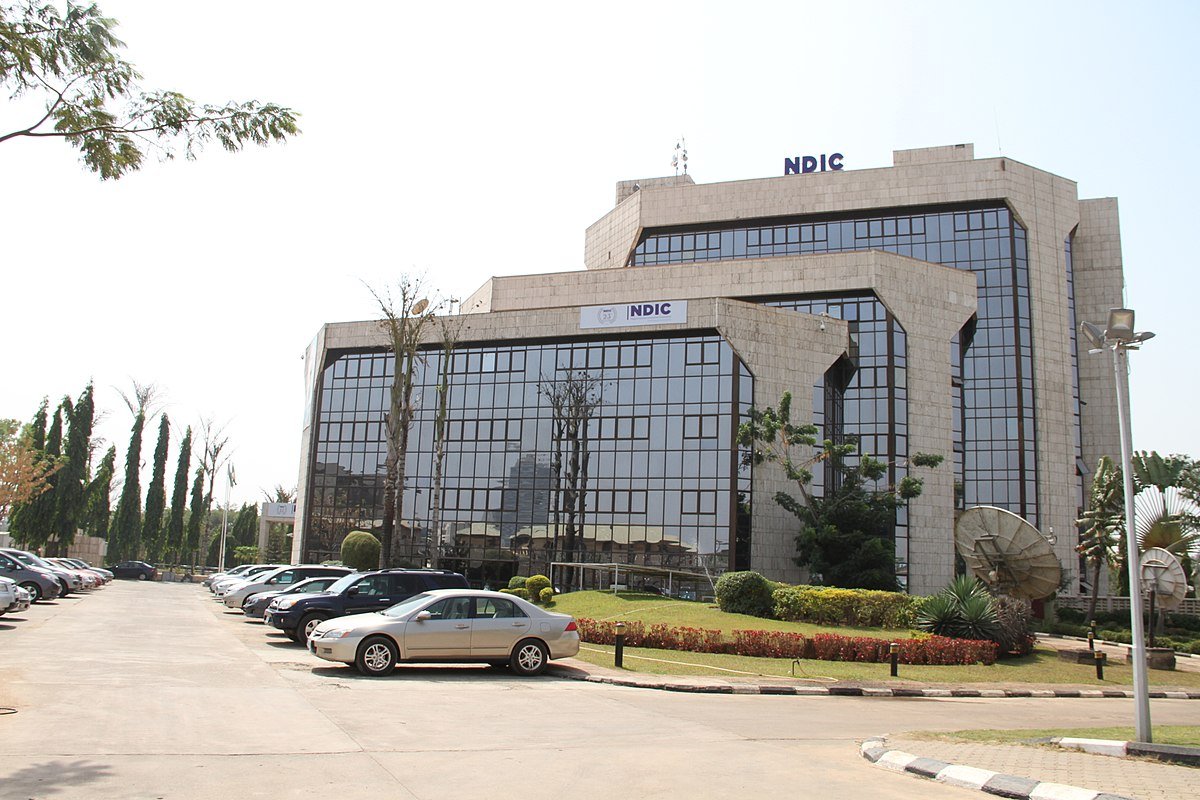
The verification of the depositors of the 46 microfinance banks, whose operating licenses were revoked by the Central Bank of Nigeria (CBN) over a week ago, has commenced.
The exercise, aimed at refunding those whose funds were trapped in the small lenders, is being conducted by the Nigeria Deposit Insurance Corporation (NDIC).
In a statement on Thursday, the agency said its staff members have been positioned at the offices of the affected banks across the country to attend to depositors.
It was disclosed that depositors of the defunct banks, who had their Bank Verification Numbers (BVNs) linked to their accounts in the failed banks, will be paid through their alternative accounts in existing banks.
However, depositors whose BVNs were not linked to their accounts in the failed banks have been encouraged to visit the affected banks’ offices with proof of account ownership, a passport photograph, verifiable means of identification (Driver’s Licence, Permanent Voter’s Card, International Passport or National ID Card) and BVN.
NDIC also stated that depositors can alternatively file their claims online through its website: www.ndic.gov.ng, to complete the Pre-Verification Claims Form by clicking on the Search Bar, and typing Pre-Verification Claims Form; opening the Form and filling in their details. They can also do so by clicking the link: https://ndic.gov.ng/ndic-pre-verification-claims-form/ or by visiting any of the NDIC offices closest to them to file their claims.
For further enquiries, the corporation can be reached on any of the following lines: 09037273810, 09038197064, 08104220807, 09064657140.
