
Economy
Nigeria Needs Full Tax Reform—IMF

By Dipo Olowookere
The International Monetary Fund (IMF) has advised Nigeria to embark on a full Value Added Tax (VAT) reform.
With this in place, according to the global lending firm, the country’s economy would be on the way to full recovery.
The lender’s Mission Chief for Nigeria, African Department, Mr Amine Mati, who was a guest at the 2017 Chartered Institute of Bankers of Nigeria (CIBN) Investiture in Lagos last weekend, said government must raise taxes where necessary, especially on luxury items.
According to Mr Mati, the Federal Government must broaden its VAT system by revisiting exemptions.
At the event themed ‘Coherent set of Policies for Greater Exchange Rate Flexibility, the IMF chief in Nigeria said government should consider cancelling tax holidays and exemptions that erode the Company Income Tax (CIT) base.
In addition, government should also increase taxes on alcohol and tobacco and broaden VAT by revisiting exemptions, he said.
Mr Mati noted that if the Federal Government can work reform its tax system, the economy would be jumpstarted.
Lately, Nigeria has looked toward tax to generate more revenue due to its fall into recession last year.
Minister of Finance, Mrs Kemi Adeosun, has consistently said the government intends to increase its revenue by increasing its tax base.
According to Federal Inland Revenue Service (FIRS), the total number of tax payers in Nigeria is just 12,649,654 [as at April 2017]. Of these, 96 percent have their taxes deducted at source under PAYE and just 4 percent comply with Direct Assessment.
In June 2017, the Federal Government launched the Voluntary Asset and Income Declaration Scheme (VAIDS).
The platform was put in place for defaulting Nigerian taxpayers to work out a flexible way to pay their outstanding tax liabilities due from them relating to the last six relevant tax years, regularize their tax transactions and obtain genuine tax clearance certificates for all the relevant years without fear of criminal prosecution for tax offences and with the benefit of forgiveness of interest and penalties.
Mrs Adeosun had stated at the launch of the initiative that the policy embraces all federal and state taxes such as Companies Income Tax, Personal Income Tax, Petroleum Profits Tax, Capital Gains Tax, Stamp Duties, Tertiary Education Tax, Technology Tax, Tenement Rates, Property Taxes.
Earlier this month, the Finance Minister said Nigeria will reduce the rate at which it borrows money for developmental projects only if the tax to gross domestic product (GDP) hits 10 percent.
At the moment, the country’s tax to GDP ratio is at 6 percent.
“We must pay taxes properly in Nigeria, if we do this, we do not need to borrow.
“Of course I am not suggesting that there isn’t responsibility on the part of government; we have to be more responsible, to be more efficient (when people citizens pay their taxes).
“We are really focusing on this, we are finding ways to cut cost, but fundamentally, we must invest but we don’t have the power we need, the roads, we are working in progress.
“A lot of money is needed to reposition this economy and we need to generate more through tax.
“We just need to move our tax to GDP from 6 percent from where it is now to 10 percent; it will significantly reduce the amount of money we need to borrow and that will have a wider effect on the economy.
“One, it would reduce the demand for short-term borrowing and help bring down interest rate.
“Two, it would create headroom for the private sector to borrow; that is the strategy,” Mrs Adeosun had said.
At the 3rd International Conference on Tax in Africa (ICTA) held in Abuja from September 25 to 29, 2017, stakeholders highlighted the need for African countries to build stronger domestic tax regimes by strengthening VAT, PIT and CIT.
At the Pan-African Conference on Illicit Financial Flows (IFFs) from Africa organised by Tax Justice Network Africa (TJNA) in Nairobi, Kenya, it was said that Africa has lost over $50 billion to multinationals who take advantage of weak tax laws and unfair trade treaties on the continent.





By Adedapo Adesanya
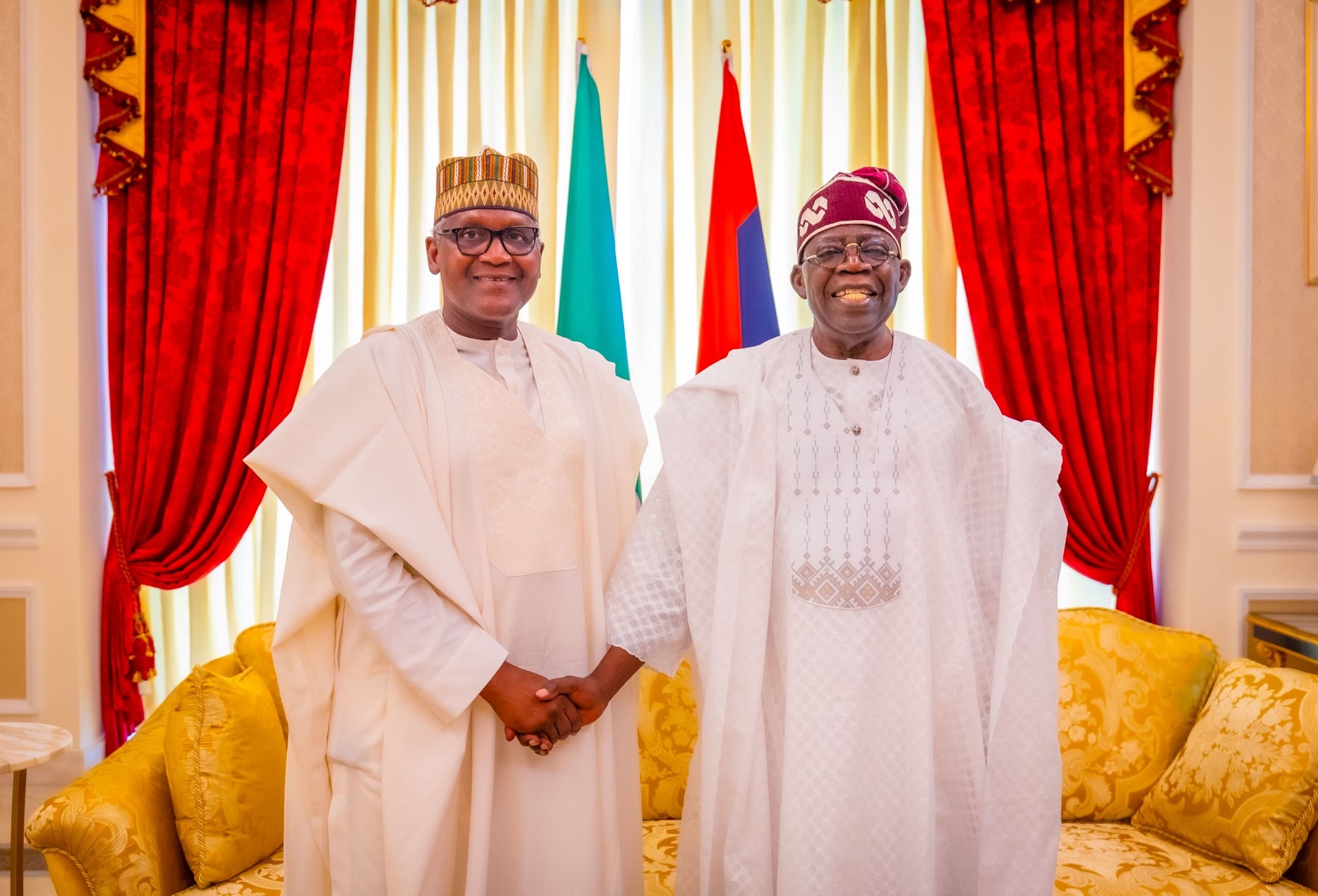
The president of the Dangote Group, Mr Aliko Dangote, met with President Bola Tinubu on Monday to discuss and address concerns about the growing volatility in the global oil market and its impact on Nigerians.
Petrol prices have jumped to as high as N1,400 per litre amid the continuous rise in prices of crude oil in the global market as a result of the Middle East war. Brent crude rose above $100 per barrel due to compounding supply constraints, though it closed below the mark yesterday.
Mr Dangote, whose company controlled about 60 per cent of Nigeria’s domestic supply pre-war, speaking after the meeting, said that although Nigeria is not directly involved in the war, the ripple effects of global oil price fluctuations would inevitably be felt.
“It means quite a lot. We don’t have much to do with it, but I know the world is a global village. And it definitely will affect us, unfortunately, but we pray this situation will be sorted out,” he said after his visit to President Tinubu in Lagos yesterday.
He warned that a prolonged crisis could further destabilise economies, particularly in Africa, where fiscal buffers are limited, and debt pressures remain high.
“If it doesn’t de-escalate, we’ll end up paying high prices, like what I said earlier on CNN. Africa is very busy paying debt, and putting this again on top of us is going to add a lot of hardship on people, on the government, on the people, on everybody, for something that we have no involvement in.”
He stressed that energy costs are central to nearly all sectors of the economy, meaning sustained increases would have widespread and cascading effects on livelihoods and production.
He explained that governments could face mounting fiscal strain as subsidies rise and revenues fluctuate under unstable global oil market conditions.
Mr Dangote added that Africa’s rising debt burden could worsen under prolonged instability, further limiting fiscal space and weakening economic resilience.
“Africa is already grappling with debt, and additional shocks will only compound hardship for governments and the people,” he said.
He said escalating energy costs would disrupt nearly every sector, including small enterprises, manufacturing chains, logistics operations and household consumption patterns.
The business mogul noted that some countries were already adopting coping strategies such as reduced workdays, energy rationing and remote working arrangements.
Mr Dangote said such measures, while necessary, could reduce productivity, slow economic output and affect livelihoods, particularly among vulnerable populations.
He urged global leaders to prioritise de-escalation, stressing that many Africans rely on daily earnings and remain highly exposed to economic shocks.

By Aduragbemi Omiyale
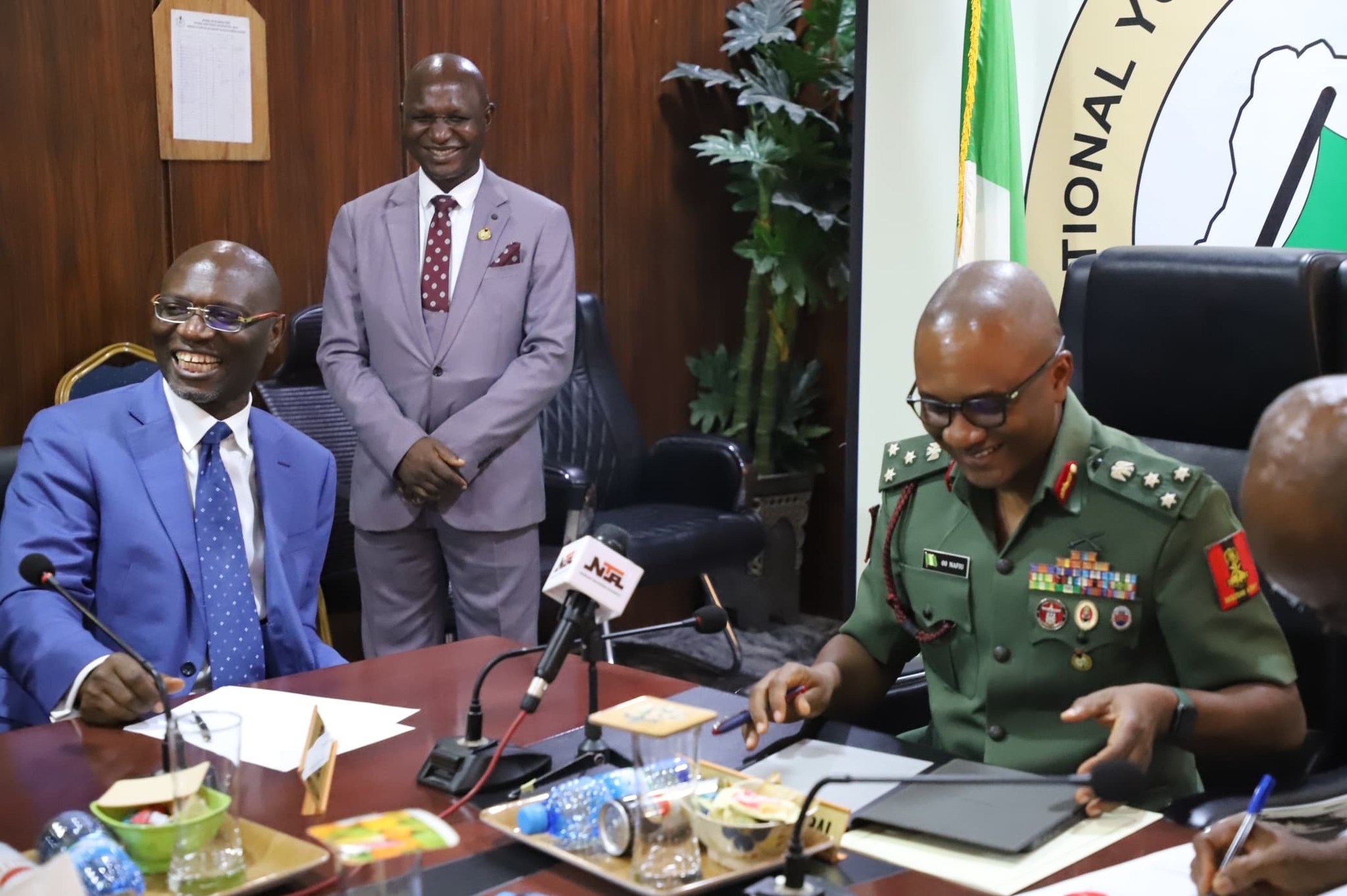
A Community Development Service (CDS) group focused on investment education for corps members is to be established by the National Youth Service Corps (NYSC) in partnership with the Securities and Exchange Commission (SEC).
Both organisations recently sealed a Memorandum of Understanding (MoU) for this new initiative, which will promote sound investment habits among Nigerian youths, equip corps members with essential financial knowledge and help them avoid fraudulent schemes.
Under the agreement, the NYSC and SEC will work together on joint awareness campaigns, utilising various channels and platforms, including social media, traditional media, and community outreach, to disseminate information on safe investment and expose fraudulent schemes.
They will also agree on mechanisms for sharing relevant data and reporting on the progress and impact of the collaborative initiatives.
Specifically, the capital market regulator will develop and provide relevant and up-to-date educational content, materials, and training modules on capital market operations, safe investment practices, and the identification and avoidance of Ponzi schemes.
The agency will also be responsible for the content, resources and funding of training sessions for selected corps members and NYSC supervisors who will serve as trainers and facilitators in their respective communities.
On its part, the NYSC will facilitate the integration of anti-Ponzi scheme education into its Education and Enlightenment CDS programme, which could be through dedicated sessions, workshops, or awareness campaigns during orientation camps and throughout the service year.
The Director General of SEC, Mr Emomotimi Agama, expressed satisfaction with the collaboration, saying it will promote financial literacy and sound investment habits among young Nigerians.
His counterpart at the NYSC, Brig-Gen Olakunle Nafiu, lauded the initiative, stressing that it will help in enhancing public awareness campaigns against illegal financial schemes across all Local Government Areas in the country, among other objectives.

By Adedapo Adesanya
The NASD Over-the-Counter (OTC) Securities Exchange opened the week on a positive note after it appreciated by 0.84 per cent on Monday, March 23.
Trading activity returned yesterday after a two-day break last Thursday and Friday to celebrate the end of Ramadan.
The market capitalisation was up by N20.68 billion to N2.482 trillion from N2.461 trillion, and the NASD Unlisted Security Index (NSI) increased by 34.68 points to 4,149.38 points from 4,114.75 points.
The bourse was bullish amid a 1.34 per cent decline in the share price of Geo-Fluids Plc at the close of transactions. The loss was offset by the 3.45 per cent surge in the value of FrieslandCampina Wamco Plc.
A look at the trading data indicated that the activity was weaker yesterday, as the trading volume, value, and number of deals all tumbled.
There was a 99.9 per cent slip in the volume of securities to 412,260 units from the 400.8 million units recorded in the preceding session. The value of securities fell by 99.4 per cent to N7.37 million from N1.2 billion, and the number of deals went down by 31.9 per cent to 32 deals from 47 deals.
Central Securities Clearing System (CSCS) Plc ended the day as the most traded stock by value on a year-to-date basis with 38.7 million units sold for N2.4 billion. Infrastructure Guarantee Credit Plc followed with 400 million units valued at N1.2 billion, and Okitipupa Plc occupied the third spot with 6.4 million units traded for N1.2 billion.
Resourcery Plc closed the trading session as the most active by volume on a year-to-date basis with 1.1 billion units worth N415.7 million, trailed by Infrastructure Credit Plc with 400 million units transacted for N1.2 billion, and Geo-Fluids Plc with 131.1 million units exchanged for N505.6 million.







-
 Feature/OPED6 years ago
Davos was Different this year
-
Travel/Tourism10 years ago
Lagos Seals Western Lodge Hotel In Ikorodu
-

 Showbiz3 years ago
Estranged Lover Releases Videos of Empress Njamah Bathing
-
 Banking8 years ago
Sort Codes of GTBank Branches in Nigeria
-

 Economy3 years ago
Subsidy Removal: CNG at N130 Per Litre Cheaper Than Petrol—IPMAN
-

 Banking3 years ago
Sort Codes of UBA Branches in Nigeria
-

 Banking3 years ago
First Bank Announces Planned Downtime
-

 Sports3 years ago
Highest Paid Nigerian Footballer – How Much Do Nigerian Footballers Earn