

Economy
Bankers, Judges Alert Nigerians on Crypto Currencies’ Risks


By Modupe Gbadeyanka
Nigerians have been warned by bankers and judges to be wary of risks involved in transacting their businesses with virtual currencies like bitcoins and others.
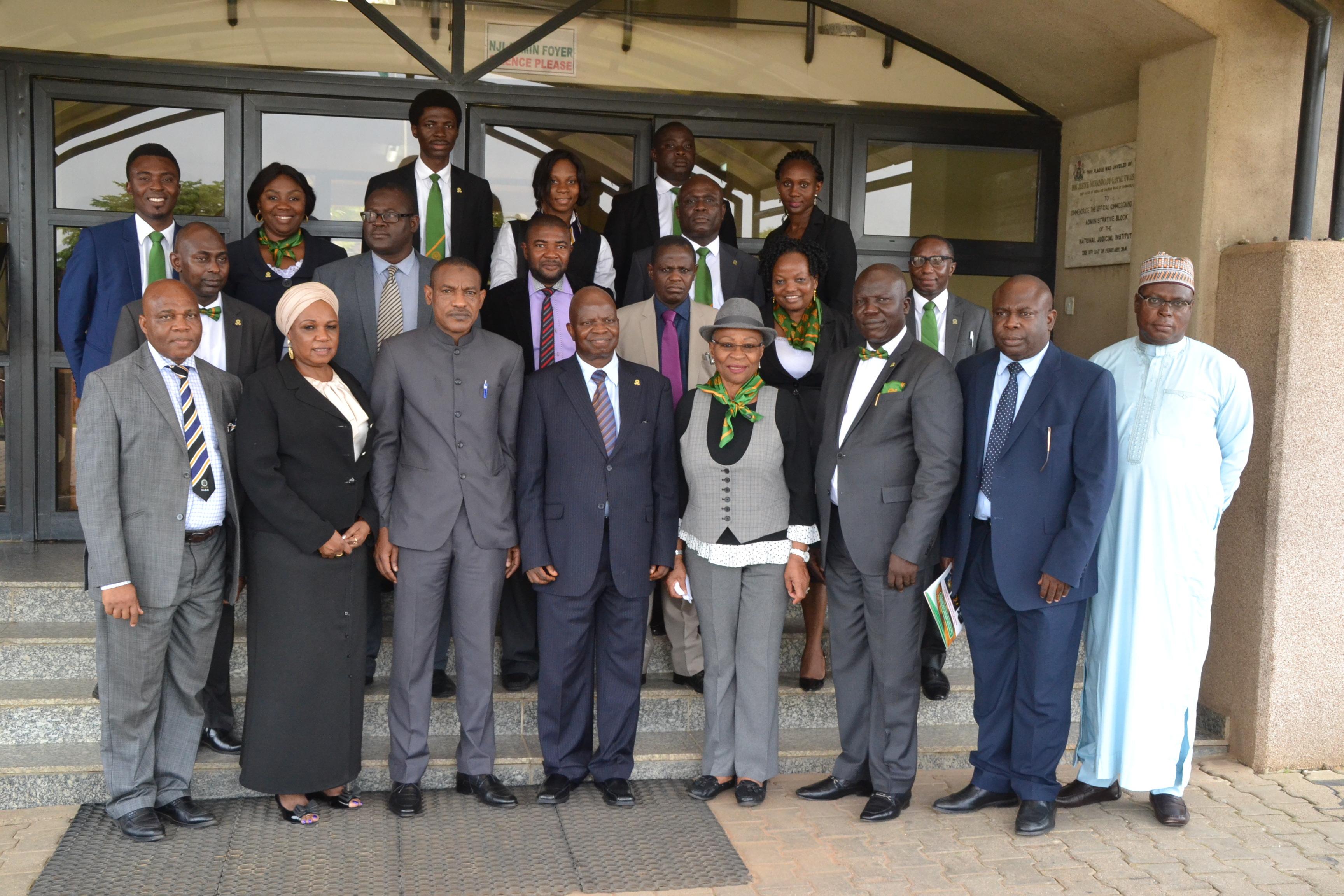
Speaking in Abuja on Wednesday at a seminar organised by Chartered Institute of Bankers of Nigeria (CIBN), the Chief Justice of Nigeria (CJN), Justice Walter Onnoghen, said efforts must be made to protect customers in the banking sector.
At the event tagged ‘17th National Seminar on Banking and Allied Matters for Judges,’ the CJN, represented by a Justice of the Supreme Court, Justice Mahmud Muhammad, said the judiciary will continue to provide support for the banking industry.
He said the programme, which focused on the ‘Emergence of New Frontiers in Banking and its Legal Implications,’ came at the right time.
Mr Onnoghen stressed that the judiciary has a huge part to play in the protection of depositors’ funds and warned members of the judiciary not to truncate the present judicial reforms with technicalities.
The CJN said Nigerians should just be careful of how they are exposed to crypto currencies, which seem to be gaining ground by the day despite warnings.
However, he assured that the judiciary will ensure it plays its vital role in the prompt, speedy and just dispensation of cases to protect depositors’ funds.
On his part, President of CIBN, Professor Segun Ajibola, admitted that virtual currencies have altered the traditional form of banking system in Nigeria, but emphasised that efforts must be made to protest citizens’ funds.
He said efforts are being made to study the new trend with a view to finding ways to minimise the risks.
Prof Ajibola noted that, “One of the side effects of the disruptive technology, artificial intelligence and other new tools is the use of the same technology to undermine the control systems in banks and other financial institutions.
“Unfortunately, fraudsters are usually a step ahead of operators, and operators are usually a step ahead of regulators. This explains why policies and regulations aimed at fighting crimes, albeit cybercrimes, are more reactive than being pro-active.
“We need the judiciary to improve on the speed at which cybercrimes are tried and dispensed with. We need the judiciary to assist in strengthening the statutory framework for fighting cybercrimes in this country.”
He promised that bankers will continue to work closely with the judiciary so as to tackle the issues head-on.
Also at the seminar, other speakers called on the government, especially the National Assembly, to closely look into crypto currencies. They said for now, there is no legal backing for the use of virtual currencies in the country.
A cryptocurrency is an encrypted decentralized digital currency transferred between peers and confirmed in a public ledger via a process known as mining. It is also a digital or virtual currency that uses cryptography for security.
A cryptocurrency is difficult to counterfeit because of this security feature.
A defining feature of a cryptocurrency, and arguably its most endearing allure, is its organic nature; it is not issued by any central authority, rendering it theoretically immune to government interference or manipulation.
Business Post recalls that at a Workshop for Financial Correspondents in December 2016 in Kaduna, Managing Director of Nigeria Deposit Insurance Commission (NDIC), Mr Umaru Ibrahim, disclosed that his commission and the Central Bank of Nigeria (CBN) had set up a committee to look into the trending ‘bitcoin’ scheme.
“On our part, we have constituted a committee together with the central bank to have an in debt study of this phenomenal bitcoin.
“We will look at its advantages and disadvantages, what it means for the payment system and what it means for safety and security of customers.
“We will also look at what it means for money laundering, anti-corruption, crime and measurement of money /near money instrument for the economy.
“But we need a lot of education to do this and I’m calling on you (media) to educate yourselves about all of this so you can educate the public,” Mr Ibrahim had said at the event themed ‘Economic Recession and the Nigerians Banking Sector: Opportunities, Challenges and the way Forward.’
In January 2017, the Securities and Exchange Commission (SEC), in a statement posted on its website, warned Nigerian investors to be very careful of advertisements encouraging them to invest in cryptocurrencies such as Swisscoin, OneCoin, Bitcoin and such other virtual or digital currencies.
The capital market regulator had said members of the public must “exercise extreme caution with regard to digital (crypto currencies) as a vehicle of investments,” noting that “this warning is in consonance with similar warnings issued by capital market regulators and Central Banks across the world over the past few years.”
SEC had said it “wishes to alert the public that none of the persons, companies or entities promoting cryptocurrencies has been recognized or authorized by it or by other regulatory agencies in Nigeria to receive deposits from the public or to provide any investment or other financial services in or from Nigeria.
“The public should also be aware that any investment opportunities promoted by these persons, companies or entities are likely to be of a risky nature with a high risk of loss of money, whilst others may be outright fraudulent pyramid schemes.”
But at crypto currency conference held in Lagos last month tagged ‘Learning to Glow with the Flow,’ Deputy Director/Head, Payments System Policy and Oversight at the CBN, Mr Musa Jimoh, disclosed that the apex bank had commenced arrangement to introduce a digital currency in the country a move to key into the global adoption of crypto currency initiative.
Mr Jimoh was quoted to have said at the event that CBN cannot stop the tide of waves generated by the blockchain technology and its derivatives.
“Currently, we have taken measures to create four departments in the institution that are looking forward to harmonise the white paper on Crypto currency,” he had said at the event.
Also at the event, President of Information Security Society of Nigeria (ISSAN), Dr David Isiawe, had said, “The reality that is before us today, particularly in Nigeria, is that the Distributed Ledger Technology (DLT), blockchain and Crypto currency are facts that we must face, whether we like it or not. We cannot wish this reality away.
“It is made worse when we realise that we are still grappling with current challenges of e-commerce and other electronic payment systems but technology development and advancements are not waiting.
“The impact of the emergence of blockchain and Crypto currency will be felt in the nation just as in the global community.
“Nigerian must be proactive rather than reactive by considering how these technologies would affect and influence our lifestyles and business operations and channel, and thus fashion our rules of engagement for their adoption.”
However, Mr Isiawe also admonished prospective investors to be careful investing in crypto currencies, as every investment has its share of risks.
This month, at the 12th Abuja International Trade Fair, Managing Director of the Nigeria Deposit Insurance Corporation (NDIC), Mr Umaru Ibrahim, warned Nigerians to be very careful of how they embrace digital currencies, especially bitcoins, emphasising that they had not yet be certified okay by the necessary regulatory bodies in the country.
He admitted that in other climes, they have been fully embraced, but warned that anyone in Nigeria involved in the trade do so at their own risk as such currencies were not insured by the NDIC.
“In view of the growing popularity which the phenomenon is gaining in Nigeria, it has become important to state that digital currencies are not authorised by the Central Bank of Nigeria, and they are not insured by NDIC,” he had warned earlier this month.









By Dipo Olowookere
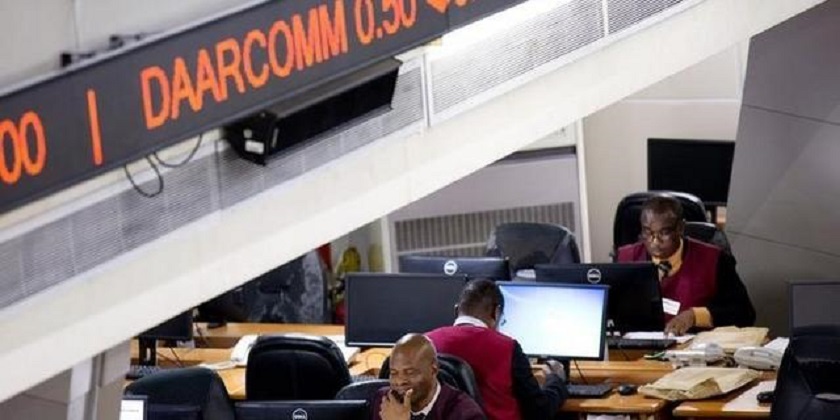
The local stock market firmed up by 1.13 per cent on Friday as appetite for Nigerian stocks remained strong.
Investors reacted well to the 2026 budget presentation of President Bola Tinubu to the National Assembly yesterday, especially because of the more realistic crude oil benchmark of $64 per barrel compared with the ambitious $75 per barrel for 2025. This year, prices have been between $60 and $65 per barrel.
Business Post observed profit-taking in the commodity and energy sectors as they respectively shed 0.14 per cent and 0.03 per cent.
But, bargain-hunting in the others sustained the positive run, with the consumer goods index up by 3.82 per cent.
Further, the industrial goods space appreciated by 1.46 per cent, the banking counter improved by 0.08 per cent, and the insurance industry gained 0.04 per cent.
As a result, the All-Share Index (ASI) increased by 1,694.33 points to 152,057.38 points from 150,363.05 points and the market capitalisation chalked up N1.080 trillion to finish at N96.937 trillion compared with Thursday’s closing value of N95.857 trillion.
A total of 34 shares ended on the advancers’ chart, while 24 were on the laggards’ log, representing a positive market breadth index and bullish investor sentiment.
Austin Laz gained 10.00 per cent to close at N2.42, Union Dicon also jumped 10.00 per cent to N6.60, Tantalizers increased by 9.80 per cent to N2.69, Aluminium Extrusion improved by 9.78 per cent to N12.35, and Champion Breweries grew by 9.71 per cent to N16.95.
Conversely, Sovereign Trust Insurance dipped by 7.42 per cent to N3.87, Royal Exchange lost 6.84 per cent to trade at N1.77, Omatek slipped by 6.84 per cent to N1.09, Eunisell depreciated by 5.88 per cent to N80.00, and Eterna dropped 5.63 per cent to close at N28.50.
Yesterday, traders transacted 1.5 billion units worth N21.8 billion in 25,667 deals compared with the 839.8 million units sold for N32.8 billion in 23,211 deals in the preceding session, showing a surge in the trading volume by 76.61 per cent, an uptick in the number of deals by 10.58 per cent, and a shrink in the trading value by 33.54 per cent.


By Adedapo Adesanya
Three stocks stretched the bearish run of the NASD Over-the-Counter (OTC) Securities Exchange by 1.21 per cent on Friday, December 19, with the market capitalisation giving up N26.01 billion to close at N2.121 billion compared with the N2.147 trillion it ended a day earlier, and the NASD Unlisted Security Index (NSI) dropping 43.47 points to 3,546.41 points from 3,589.88 points.
The trio of FrieslandCampina Wamco Nigeria Plc, Central Securities Clearing System (CSCS) Plc, and NASD Plc overpowered the gains printed by four other securities.
FrieslandCampina Wamco Nigeria Plc lost N6.00 to sell at N54.00 per unit versus N60.00 per unit, NASD Plc shrank by N3.50 to N58.50 per share from N55.00 per share, and CSCS Plc depleted by N2.91 to N33.87 per unit from N36.78 per unit.
On the flip side, Air Liquide Plc gained N1.01 to close at N13.00 per share versus N11.99 per share, Golden Capital Plc appreciated by 70 Kobo to N7.68 per unit from N6.98 per unit, Geo-Fluids Plc added 39 Kobo to sell at N5.50 per share versus N5.11 per share, and IPWA Plc rose by 8 Kobo to 85 Kobo per unit from 77 Kobo per unit.
During the trading day, market participants traded 1.9 million securities versus the previous day’s 30.5 million securities showing a decline of 49.3 per cent. The value of trades went down by 64.3 per cent to N80.3 million from N225.1 million, but the number of deals jumped by 32.1 per cent to 37 deals from 28 deals.
Infrastructure Credit Guarantee Company (InfraCredit) Plc finished the session as the most active stock by value on a year-to-date basis with 5.8 billion units valued at N16.4 billion, followed by Okitipupa Plc with 178.9 million units transacted for N9.5 billion, and MRS Oil Plc with 36.1 million units traded for N4.9 billion.
The most active stock by volume on a year-to-date basis was still InfraCredit Plc with 5.8 billion units worth N16.4 billion, trailed by Industrial and General Insurance (IGI) Plc with 1.2 billion units sold for N420.7 million, and Impresit Bakolori Plc with 536.9 million units traded for N524.9 million.
By Adedapo Adesanya
It was not a good day for the Nigerian Naira at the two major foreign exchange (FX) market on Friday as it suffered a heavy loss against the United States Dollar at the close of transactions.
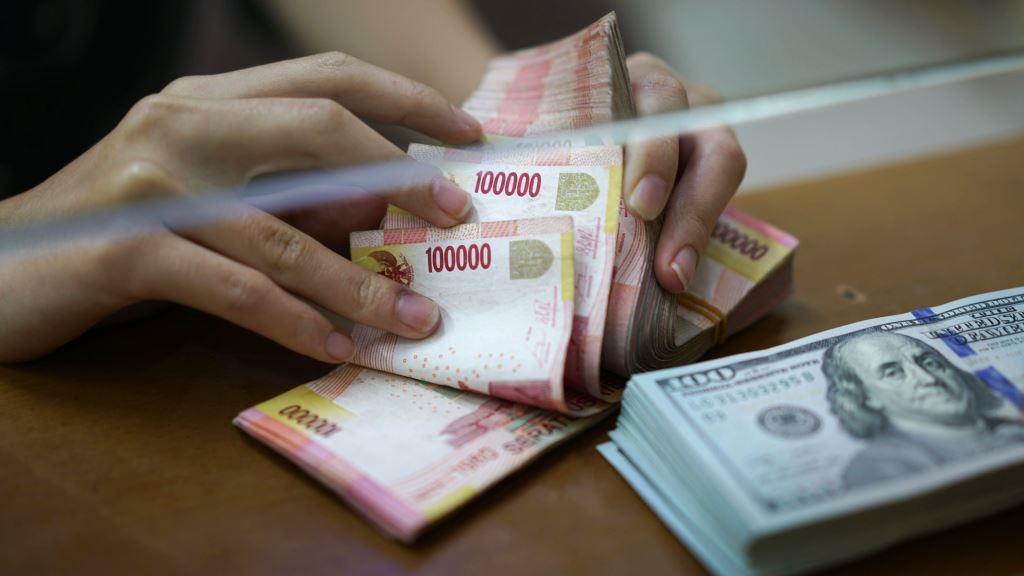
In the black market segment, the Naira weakened against its American counterpart yesterday by N10 to quote at N1,485/$1, in contrast to the N1,475/$1 it was traded a day earlier, and at the GTBank forex counter, it depreciated by N2 to settle at N1,467/$1 versus Thursday’s closing price of N1,465/$1.
In the Nigerian Autonomous Foreign Exchange Market (NAFEX) window, which is also the official market, the nation’s legal tender crashed against the greenback by N6.65 or 0.46 per cent to close at N1,464.49/$1 compared with the preceding session’s rate of N1,457.84/$1.
In the same vein, the local currency tumbled against the Euro in the spot market by N2.25 to sell for N1,714.63/€1 compared with the previous day’s N1,712.38/€1, but appreciated against the Pound Sterling by 73 Kobo to finish at N1,957.30/£1 compared with the N1,958.03/£1 it was traded in the preceding session.
The market continues to face seasonal pressure even as the Central Bank of Nigeria (CBN) is still conducting FX intervention sales, which have significantly reduced but not remove pressure from the Naira. Also, there seems to be reduced supply from exporters, foreign portfolio investors and non-bank corporate inflows.
President Bola Tinubu on Friday presented the government’s N58.47 trillion budget plan aimed at consolidating economic reforms and boosting growth.
The budget is based on a projected crude oil price of $64.85 a barrel and includes a target oil output of 1.84 million barrels a day. It also projects an exchange rate of N1,400 to the Dollar.
President Tinubu said inflation had plunged to an annual rate of 14.45 per cent in November from 24.23 per cent in March, while foreign reserves had surged to a seven-year high of $47 billion.
Meanwhile, the cryptocurrency market was dominated by the bulls but it continues to face increased pressure after million in liquidations in previous session over accelerating declines, with Dogecoin (DOGE) recovering 4.2 per cent to trade at $0.1309.
Further, Ripple (XRP) appreciated by 3.9 per cent to $1.90, Cardano (ADA) rose by 3.5 per cent to $0.3728, Solana (SOL) jumped by 3.4 per cent to $126.23, Ethereum (ETH) climbed by 2.9 per cent to $2,982.42, Binance Coin (BNB) gained 2.0 per cent to sell for $853.06, Bitcoin (BTC) improved by 1.7 per cent to $88,281.21, and Litecoin (LTC) soared by 1.2 per cent to $76.50, while the US Dollar Tether (USDT) and the US Dollar Coin (USDC) traded flat at $1.00 each.








-
 Feature/OPED6 years ago
Davos was Different this year
-
Travel/Tourism9 years ago
Lagos Seals Western Lodge Hotel In Ikorodu
-

 Showbiz3 years ago
Estranged Lover Releases Videos of Empress Njamah Bathing
-
 Banking7 years ago
Sort Codes of GTBank Branches in Nigeria
-

 Economy3 years ago
Subsidy Removal: CNG at N130 Per Litre Cheaper Than Petrol—IPMAN
-

 Banking3 years ago
First Bank Announces Planned Downtime
-

 Banking3 years ago
Sort Codes of UBA Branches in Nigeria
-

 Sports3 years ago
Highest Paid Nigerian Footballer – How Much Do Nigerian Footballers Earn
1 Comment