

Economy
We’ll Reduce Borrowing if Tax to GDP Hits 10%—Adeosun

By Dipo Olowookere
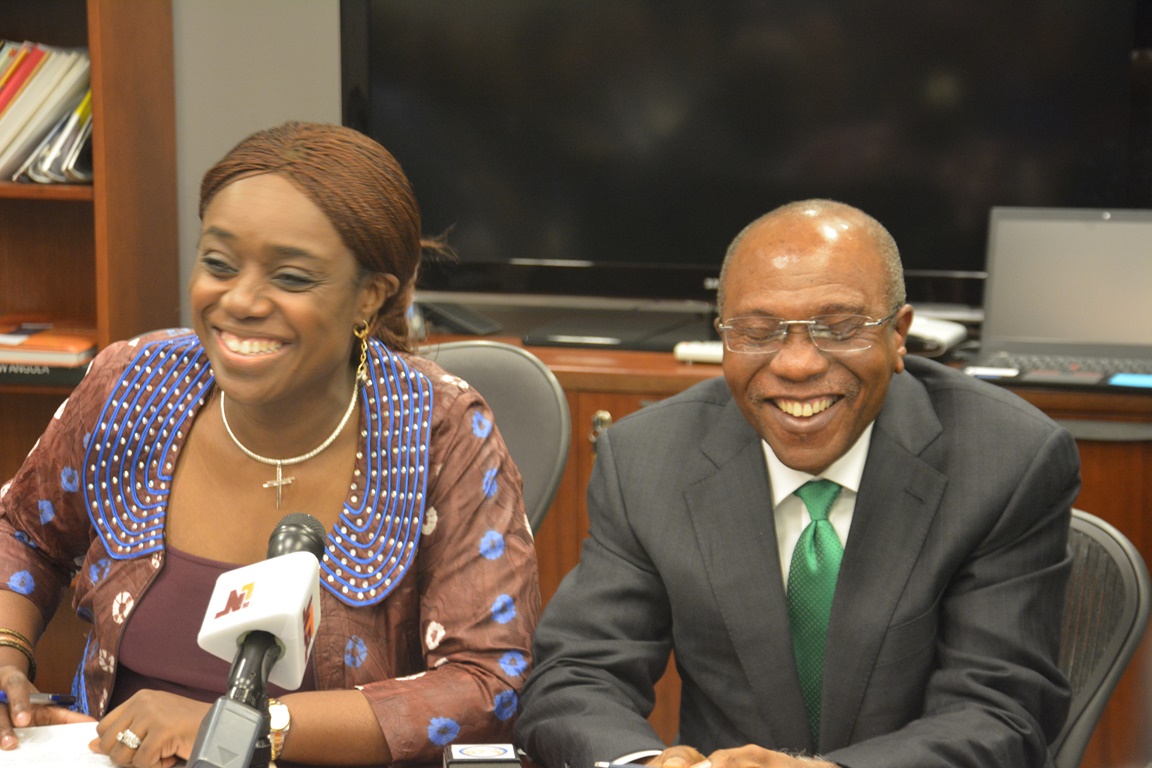
Nigeria’s Minister of Finance, Mrs Kemi Adeosun, has disclosed that Nigeria will reduce the rate at which it borrows money for developmental projects only if the tax to gross domestic product (GDP) hits 10 percent.
According to the Minister, the country’s tax to GDP ratio is at 6 percent.
Mrs Adeosun, while addressing newsmen, noted that with the tax to GDP ratio at 10 percent, the economy will flourish and consequently bring down the interest rate, which is presently in double digits.
The Minister informed newsmen that if the strategy of this present administration of President Muhammadu Buhari is allowed to be implemented, the private sector will be better for it because they will have the opportunity to assess funds to grow their businesses.
However, she emphasised that to make this happen, Nigerians must be ready to pay their taxes.
“We must pay taxes properly in Nigeria, if we do this, we do not need to borrow.
“Of course I am not suggesting that there isn’t a responsibility on the part of government; we have to be more responsible, to be more efficient (when people citizens pay their taxes).
“We are really focusing on this, we are finding ways to cut cost, but fundamentally, we must invest but we don’t have the power we need, the roads, we are work in progress.
“A lot of money is needed to reposition this economy and we need to generate more through tax.
“We just need to move our tax to GDP from 6 percent from where it is now to 10 percent; it will significantly reduce the amount of money we need to borrow and that will have a wider effect on the economy.
“One, it would reduce the demand for short-term borrowing and help bring down interest rate.
“Two, it would create headroom for the private sector to borrow; that is the strategy,” Mrs Adeosun said.
In June 2017, the Federal Government launched the Voluntary Asset and Income Declaration Scheme (VAIDS).
The platform was put in place for defaulting Nigerian taxpayers to work out a flexible way to pay their outstanding tax liabilities due from them relating to the last six relevant tax years, regularize their tax transactions and obtain genuine tax clearance certificate for all the relevant years without fear of criminal prosecution for tax offences and with the benefit of forgiveness of interest and penalties.
Mrs Adeosun had stated at the launch of the initiative that the policy embraces all federal and state taxes such as Companies Income Tax, Personal Income Tax, Petroleum Profits Tax, Capital Gains Tax, Stamp Duties, Tertiary Education Tax, Technology Tax, Tenement Rates, and Property Taxes.
“VAIDS is specifically targeted at taxpayers who have not been fully declaring their taxable income/assets; have not been paying the tax due at all; have been underpaying or under remitting; are under a process of tax audits or investigations with the Relevant Tax Authority; are engaged in tax disputes with the relevant tax authority but are prepared to settle the tax dispute out of court; are new taxpayers who are yet to register with the tax authorities; and are existing registered taxpayers who have new disclosures to make.
“It does not matter whether the relevant tax default arose from undeclared assets within or outside the country.
“If tax should have been paid, VAIDS is providing a once in a lifetime opportunity to declare the tax outstanding and resolve it definitively,” the Minister had said.
She had also said, “Nigeria’s tax to GDP ratio, at just 6 percent, is one of the lowest in the world (compared to India’s of 16 percent, Ghana’s of 15.9 percent, and South Africa’s of 27 percent).
“Most developed nations have tax to GDP ratios of between 32 percent and 35 percent. Whilst considerable progress has been made with taxing those in formal employment, self-employed persons, professionals and companies are able to evade full tax payment due to the inability of the tax authorities to access and assess their true income.
“According to Federal Inland Revenue Service the total number of tax payers in Nigeria is just 12,649,654 [as at April 2017]. Of these, 96 percent have their taxes deducted at source under PAYE and just 4 percent comply with Direct Assessment.”









By Adedapo Adesanya
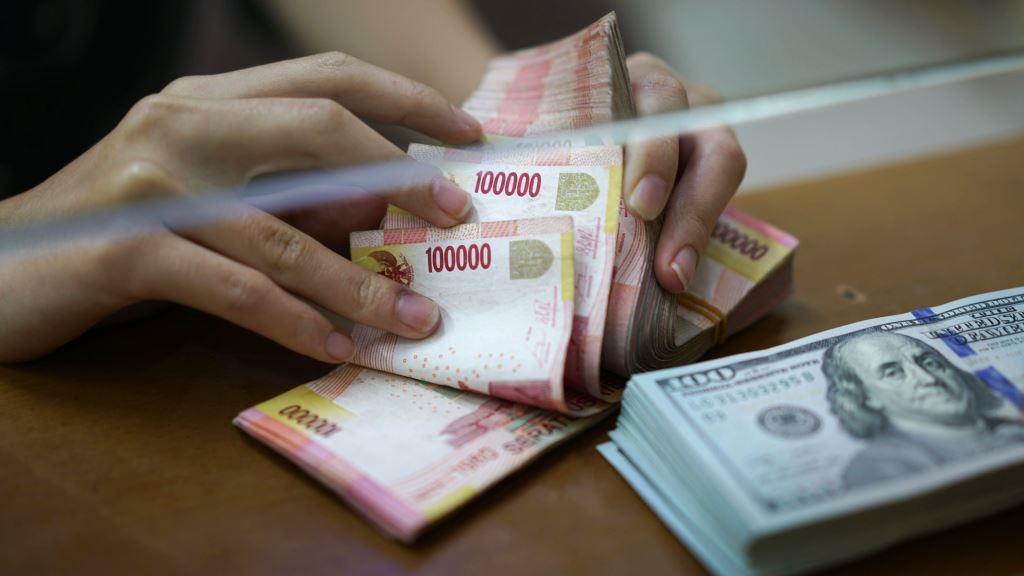
It was not a good day for the Nigerian Naira at the two major foreign exchange (FX) market on Friday as it suffered a heavy loss against the United States Dollar at the close of transactions.
In the black market segment, the Naira weakened against its American counterpart yesterday by N10 to quote at N1,485/$1, in contrast to the N1,475/$1 it was traded a day earlier, and at the GTBank forex counter, it depreciated by N2 to settle at N1,467/$1 versus Thursday’s closing price of N1,465/$1.
In the Nigerian Autonomous Foreign Exchange Market (NAFEX) window, which is also the official market, the nation’s legal tender crashed against the greenback by N6.65 or 0.46 per cent to close at N1,464.49/$1 compared with the preceding session’s rate of N1,457.84/$1.
In the same vein, the local currency tumbled against the Euro in the spot market by N2.25 to sell for N1,714.63/€1 compared with the previous day’s N1,712.38/€1, but appreciated against the Pound Sterling by 73 Kobo to finish at N1,957.30/£1 compared with the N1,958.03/£1 it was traded in the preceding session.
The market continues to face seasonal pressure even as the Central Bank of Nigeria (CBN) is still conducting FX intervention sales, which have significantly reduced but not remove pressure from the Naira. Also, there seems to be reduced supply from exporters, foreign portfolio investors and non-bank corporate inflows.
President Bola Tinubu on Friday presented the government’s N58.47 trillion budget plan aimed at consolidating economic reforms and boosting growth.
The budget is based on a projected crude oil price of $64.85 a barrel and includes a target oil output of 1.84 million barrels a day. It also projects an exchange rate of N1,400 to the Dollar.
President Tinubu said inflation had plunged to an annual rate of 14.45 per cent in November from 24.23 per cent in March, while foreign reserves had surged to a seven-year high of $47 billion.
Meanwhile, the cryptocurrency market was dominated by the bulls but it continues to face increased pressure after million in liquidations in previous session over accelerating declines, with Dogecoin (DOGE) recovering 4.2 per cent to trade at $0.1309.
Further, Ripple (XRP) appreciated by 3.9 per cent to $1.90, Cardano (ADA) rose by 3.5 per cent to $0.3728, Solana (SOL) jumped by 3.4 per cent to $126.23, Ethereum (ETH) climbed by 2.9 per cent to $2,982.42, Binance Coin (BNB) gained 2.0 per cent to sell for $853.06, Bitcoin (BTC) improved by 1.7 per cent to $88,281.21, and Litecoin (LTC) soared by 1.2 per cent to $76.50, while the US Dollar Tether (USDT) and the US Dollar Coin (USDC) traded flat at $1.00 each.
By Adedapo Adesanya
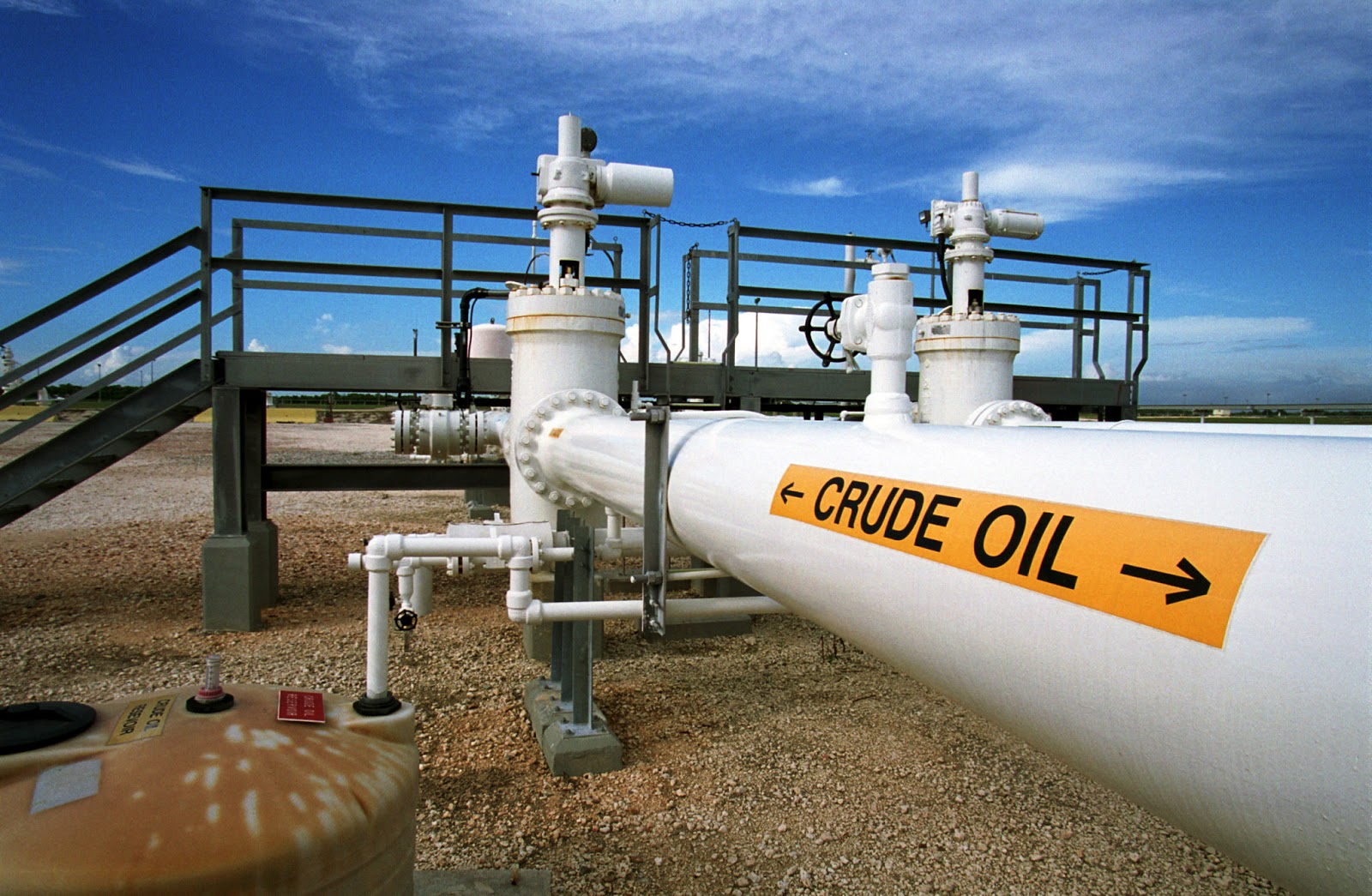
Crude oil prices edged up on possible disruptions from a US blockade of Venezuelan tankers as the market waits for news about a possible Russia-Ukraine peace deal.
Brent futures rose 65 cents or 1.1 per cent to $60.47 per barrel while the US West Texas Intermediate (WTI) futures expanded by 51 cents or 0.9 per cent to $56.66 per barrel. Both Brent and WTI were down about 1 per cent this week after both crude benchmarks fell about 4 per cent last week.
US President Donald Trump said he was leaving the possibility of war with Venezuela on the table, noting that there would be additional seizures of oil tankers near Venezuelan waters after the US seized a sanctioned oil tanker off the coast of Venezuela last week.
The American President this week ordered a “blockade” of all sanctioned oil tankers entering and leaving Venezuela, in the US’ latest move to increase pressure on Nicolas Maduro’s government, targeting its main source of income. The pressure campaign on President Maduro has included a ramped-up military presence in the region and more than two dozen military strikes on vessels in the Pacific Ocean and Caribbean Sea near Venezuela, which have killed at least 90 people.
President Trump has also previously said that US land strikes on the South American country will soon start.
Meanwhile, US Secretary of State Marco Rubio on Friday said that the US is not concerned about an escalation with Russia when it comes to Venezuela, as the Trump administration builds up military forces in the Caribbean.
This development comes as President Trump seeks an end to the unending war between Ukraine and Russia that is heading towards its fourth year.
European Union leaders decided on Friday to borrow cash to loan 90 billion Euros to Ukraine to fund its defense against Russia for the next two years as Russian President Vladimir Putin offered no compromise on Friday on his terms for ending the war in Ukraine and accused the European Union of attempting “daylight robbery” of Russian assets.
Ukraine, meanwhile, struck a Russian “shadow fleet” oil tanker in the Mediterranean Sea with aerial drones for the first time.
Earlier this week, the US and Ukraine both signaled progress in negotiations about a peace agreement during talks in German capital city of Berlin. The US is now reportedly offering Ukraine security guarantees modeled on NATO’s Article 5 mutual defense pledge.
By Adedapo Adesanya
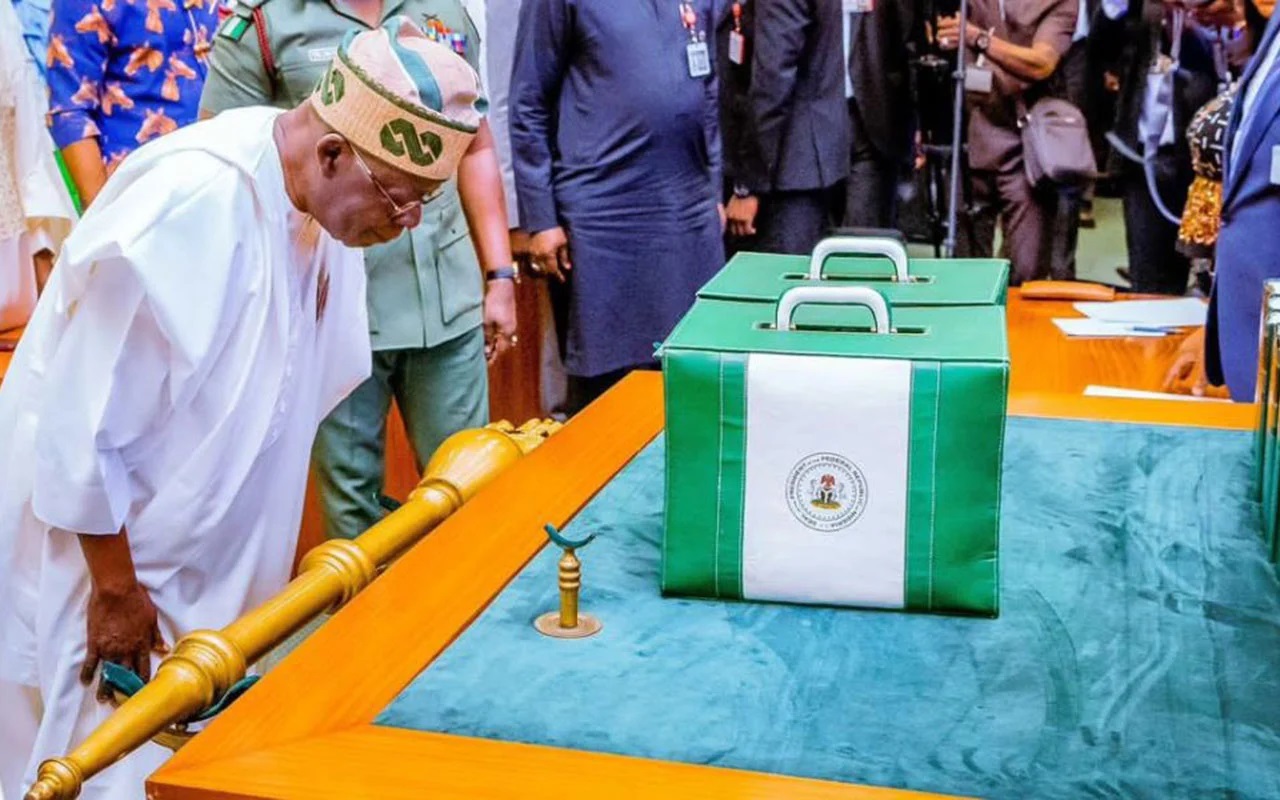
President Bola Tinubu on Friday presented a budget proposal of N58.47 trillion for the 2026 fiscal year titled Budget of Consolidation, Renewed Resilience and Shared Prosperity to a joint session of the National Assembly, with capital recurrent (non‑debt) expenditure standing at 15.25 trillion, and the capital expenditure at N26.08 trillion, while the crude oil benchmark was pegged at $64.85 per barrel.
Business Post reports that the Brent crude grade currently trades around $60 per barrel. It is also expected to trade at that level or lower next year over worries about oil glut.
At the budget presentation today, Mr Tinubu said the expected total revenue for the year is N34.33 trillion, and the proposal is anchored on a crude oil production of 1.84 million barrels per day, and an exchange rate of N1,400 to the US Dollar.
In terms of sectoral allocation, defence and security took the lion’s share with N5.41 trillion, followed by infrastructure at N3.56 trillion, education received N3.52 trillion, while health received N2.48 trillion.
Addressing the lawmakers, the President described the budget proposal as not “just accounting lines”.
“They are a statement of national priorities,” the president told the gathering. “We remain firmly committed to fiscal sustainability, debt transparency, and value‑for‑money spending.”
The presentation came at a time of heightened insecurity in parts of the country, with mass abductions and other crimes making headlines.
Outlining his government’s plan to address the challenge, President Tinubu reminded the gathering that security “remains the foundation of development”.
He said some of the measures in place to tame insecurity include the modernisation of the Armed Forces, intelligence‑driven policing and joint operations, border security, and technology‑enabled surveillance and community‑based peacebuilding and conflict prevention.
“We will invest in security with clear accountability for outcomes—because security spending must deliver security results,” the president said.
“To secure our country, our priority will remain on increasing the fighting capability of our armed forces and other security agencies by boosting personnel and procuring cutting-edge platforms and other hardware,” he added.







-
 Feature/OPED6 years ago
Davos was Different this year
-
Travel/Tourism9 years ago
Lagos Seals Western Lodge Hotel In Ikorodu
-

 Showbiz3 years ago
Estranged Lover Releases Videos of Empress Njamah Bathing
-
 Banking7 years ago
Sort Codes of GTBank Branches in Nigeria
-

 Economy3 years ago
Subsidy Removal: CNG at N130 Per Litre Cheaper Than Petrol—IPMAN
-

 Banking3 years ago
First Bank Announces Planned Downtime
-

 Banking3 years ago
Sort Codes of UBA Branches in Nigeria
-

 Sports3 years ago
Highest Paid Nigerian Footballer – How Much Do Nigerian Footballers Earn