

Economy
Another Economic Crisis Looms over CBN “Reckless Funding of FG”

By Premium Times
Just when Nigerians are celebrating the exit of the economy from recession, a report has warned that another trouble is lurking around the corner.
According to Premium Times, a massive and clearly illegal multi-source funding of the federal government by the CBN could drag the Nigerian economy to its knees, experts familiar with domestic monetary conditions and current happenings at the CBN have warned.
The central bank had, in the last one year, pumped trillions of naira into illegally financing the federal government under different guises: from mass purchase of treasury bills to humongous direct financing of the government through the “window account”.
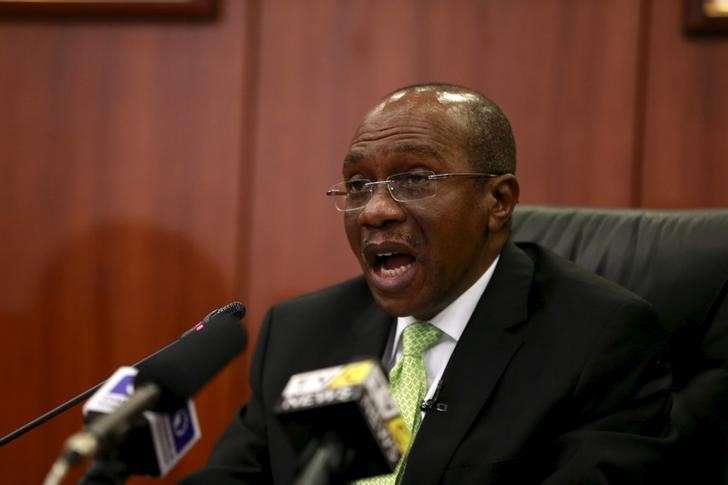
Insiders say the apex bank is “creating money” to “finance a government that is broke and which does not have economic vision,” in what one of them called a “desperate move by the central bank governor, Godwin Emefiele, to remain in office”.
A former governor of the CBN and a former deputy governor of the bank who spoke with PREMIUM TIMES were both alarmed by the long-term implications of such “direct and reckless financing of government” on inflation and other economic indices, including crowding-out the private sector from the domestic credit creation process.
The Alarming Transactions
The warning whistle was first blown at the last meeting of the CBN’s Monetary Policy Committee, held between July 24 and 25.
In the communiqué of the meeting published on Tuesday, members of the policy advisory committee expressed “concern over the increasing fiscal deficit estimated at N2.51 trillion in the first half of 2017 and the crowding out effect of high government borrowing.”
Some members of the committee, in their respective submissions captured in the 50-page report of the meeting, expressed reservations over the apex bank’s handling of key monetary and fiscal issues that may plunge the economy into a ditch.
However, it was an external member of the committee, Adedoyin Salami, who directly painted a gloomy picture of the extent of the government’s financing by the apex bank and other irregularities.
Mr Salami, an economist and faculty member with the Lagos Business School, literary took the CBN to the cleaners in his assessment of its monetary policy which, he warned, was pushing the country towards a serious economic crisis.
He criticised CBN’s “massive injections of cash” to the government, accusing the bank of serving as a “piggy bank” for the government, against its own rules.
“Monetary data shows a sharp rise in the extent of CBN financing of the government deficit,” he said.
From December 2016, according to the economist, the CBN had variously made cash available to the federal government running into trillions, mostly beyond legal thresholds.
He said the CBN’s claims on the federal government under the period amounts to N814bn, which is “twentyfold higher” than what the law permits.
Ironically, the claim of commercial banks, he said, “rose marginally by 0.4% to N4.6 trillion”.
Another route through which the CBN pumped money to the government, Mr Salami said, was via the bank’s N454 billion spending on purchase of government’s treasury bills, which he said, had risen by 30 percent.
The government’s overdrafts from the apex bank also rose to N2.8 trillion within the period, representing a five percent increase.
But the sharpest rise in the figures, according to Mr Salami, was in the government’s “mirror account” liabilities, which rose “from N3 billion at the end of 2016 to N1.5 trillion in April 2017”.
Authorities at the CBN are yet to contradict Mr Salami’s claims.
Illegalities
A look at the CBN Act 2007 show that the huge direct financing of the federal government is in direct contravention of clear provisions of the Act.
Although Section 38 (1) of the Act empowers the bank to grant “temporary advances to the Federal Government in respect of temporary deficiency of budget revenue” subsection 2 of the same section stipulates, “the amount of such advances outstanding shall not at any time exceed five per cent of the previous year’s actual revenue of the Federal Government”.
Additionally, subsection three of the section provides that such advances should be paid “as soon as possible and shall in any event be repayable by the end of the Federal Government financial year in which they are granted and if such advances remain unpaid at the end of the year, the power of the Bank to grant such further advances in any subsequent years shall not be exercisable, unless the outstanding advances have been repaid”.
By the estimated N6 trillion earned by the government last year, the CBN should have only granted advances to the federal government not exceeding N300 billion, representing five percent of the earnings.
Contracting Private Sector
The conduct of the government and the CBN, according to the economist, may, by limiting the organised private sector’s access to credit, have contributed to the dire straits in which the sector currently finds itself.
“We thus find ourselves at a point where government borrowing from the CBN is neutralised by raising the CRR of banks, thereby limiting private-sector access to credit,” he said.
“In other words, the private sector is deliberately “crowded-out”. It is ironic that the government, in need of tax revenues – having in the 1st half of the year accumulated its full-year deficit – is constraining the private sector from which the sorely needed revenues are to be derived.”
Sounding perplexed and perhaps frustrated, Mr Salami said, “Whilst I still wonder what the underlying economics is – I sincerely hopes it works!”
Desperate Measures
To cushion the impact of these mass and illegal financing of the federal government, experts say, the CBN has been scrambling to evolve policies that would counter the destructive effects of its actions.
Some of these measures, PREMIUM TIMES understands, include the regular pumping of forex into the foreign exchange market to cater for high demand due to the attendant rise in naira liquidity.
The apex bank, Mr Salami said, also carries out “special auctions” to help normalise banks’ Cash Reserve Ratios (CRR).
“To prevent the effect of continuous and massive injections of cash to fund the Federal Government showing up in sharply higher inflation and currency weakness, the Central Bank now applies “special auctions” Mr Salami said.
Apart from raising the CRR beyond the 22.5 percent approved rate, Mr Salami said, “the format of these “auctions” recall the dark days of “stabilisation securities”.
Mr Salami also flayed the bank’s “seeming haste to declare “victory” for “fragile” improvements in forex and inflationary statistics, saying the country is far from being out of the woods in some of those areas.
He lamented that “the most challenging of the present characteristics of the economy in Nigeria is the adoption of a quantitative easing stance by the management of the Central Bank”.
Another member of the MPC, Abdul-Ganiyu Garba, also faulted CBN’s monetary policies, accusing it of causing “contradiction or inconsistency problem”.
“The coexistence of high interest rate and growth in money supply are unnatural. Indeed, it generates a contradiction or inconsistency problem. Strong growth in money supply in all countries that adopted quantitative easing pushed down interest rates almost to zero,” he said.
Mr Garba, a professor, also indicted the bank for the significant distortions in “the forex market, the money market, the stock market and domestic prices” due to “strong growth in money supply in 2015 and 2016”.
A former deputy governor of the CBN and well-regarded economist who spoke to PREMIUM TIMES on condition of anonymity described the actions of the apex bank as “reckless” and beyond the parameters set by law.
He accused Mr Emefiele of “hauling cash” to the government in contravention of the set rules and statues of the apex bank.
“CBN governor is a banker and adviser to the government,” he said. “The bank is a monetary authority, not financial authority. Their role does not mean reckless lending to government,” he said.
According to him, the government and the CBN “are setting the economy for a big fall”.
He said both the government and the bank “need to take policy adjustment measures” if they want to change the position of things, otherwise “they will continue to create money which will lead to serious inflation”.
More Troubles
Apart from the huge advances it is illegally taking from the CBN, the federal government has also been ramping up a raft of local and foreign loans.
Another MPC member, Suleiman Barau, also sounded a note of warning on the implication of the payment of N760 billion as Paris Club refunds to states.
Mr Barau, a deputy governor of the CBN, added that the possibility of payment of more money to states in the name of the refunds could further complicate economic recovery.
“The whole idea underlying the deployment of the fund is not completely bad as it could stimulate growth in output in the long run.
“The reality, however, is that the impact of this type of injection on aggregate demand tends to precede the influence on aggregate supply and invariably stoke inflation in the short run. Besides, there is evidence of growing liquidity surfeit in the banking industry in the face of sluggish growth in credit particularly to the private sector.
“It is not unlikely that the current injection may complicate the liquidity surge with potential adverse impact to the foreign exchange markets,” he explained.
CBN Responds
This reporter’s efforts to reach CBN’s acting director of corporate communication, Isaac Okoroafor, for comments, on Sunday, were unsuccessful.
He also did not answer or return calls Monday morning. He however sent a text message requesting an SMS enquiry.
But as at the time of publishing this story, at 10 am on Monday, Mr Okoroafor was yet to respond to the text message enquiry sent to him.
He however responded about an hour later, asking rhetorically; “is it illegal for CBN to fund government activities?”
Reminded that such funding were far off the legal boundaries, he responded: “I can’t respond to rumours or speculation. All I want to say is that there’s no illegality in the advances CBN has made to the Federal Government.”
Optimistic Emefiele
However, in his personal statement contained in the MPC meeting report, the CBN governor, who is also chairman of the committee expressed cautious optimism on the economy.
He also acknowledged the effect of the government’s undue mopping of money from the system, although in a subtle and passing manner.
Mr Emefiele noted: “The growth in government credits due to expanded fiscal operations evokes the crowding-out of productive private sector in the short-run.
He however expressed optimism that “if the government succeeds in reducing the infrastructure deficit through its fiscal operation, I expect a favourable crowding-in of the private sector in the medium- to long-term.”
The CBN governor also blamed inflation and foreign exchange crisis on other factors other than he and the CBN’s roles.
“As I had noted earlier, the underlying deterrents include: foreign exchange scarcity (due to low crude oil receipts and inadequately diversified economy); constrained fiscal space; infrastructural bottlenecks; high energy prices; and depressed domestic demand (partly attributable to sizeable salary arrears owed to some civil servants),” he said.



By Dipo Olowookere
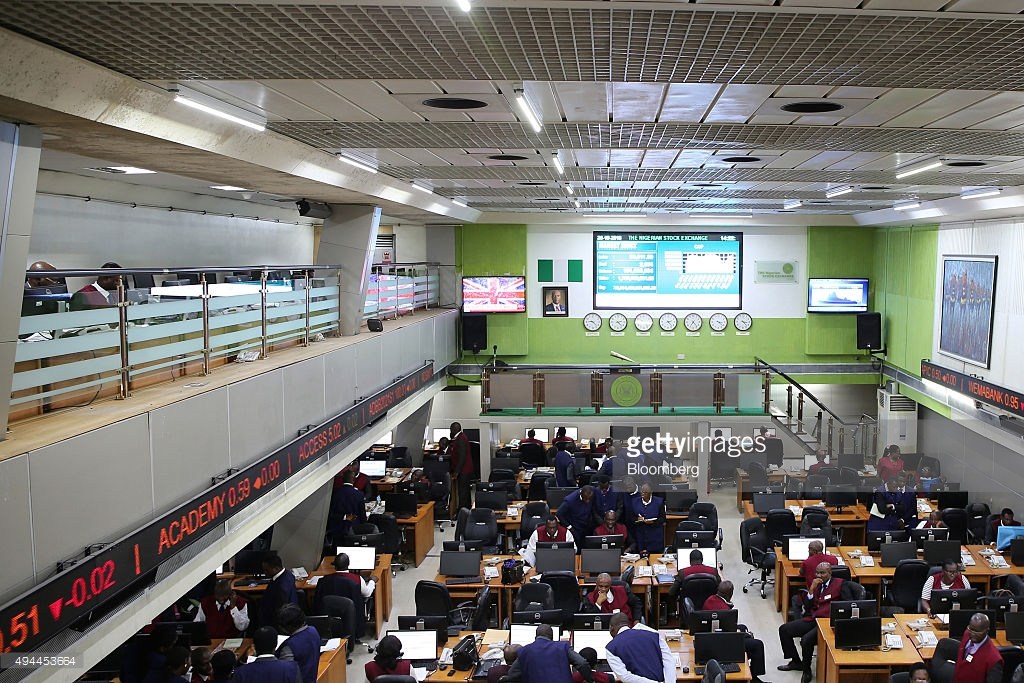
The bulls regained control of the Nigerian Exchange (NGX) Limited on Friday after surrendering power to the bears a day earlier as a result of mild selling pressure.
Yesterday, the Nigerian bourse rebounded by 0.54 per cent, mainly due to the gains recorded by First Holdco and others.
Data harvested by Business Post indicated that the industrial goods and energy sectors were flat, while the banking index chalked up 3.13 per cent. The insurance space expanded by 1.08 per cent, and the consumer goods counter rose by 0.21 per cent.
Consequently, the All-Share Index (ASI) went up by 1,316.52 points to 243,462.13 points from 242,145.61 points, and the market capitalisation grew by N850 billion to N157.057 trillion from N156.207 trillion.
The market breadth index was bullish during the last trading session of this week, printing 31 appreciating stocks and 23 depreciating stocks, representing strong investor sentiment.
First Holdco led the advancers’ log after it climbed 9.97 per cent to N95.95, Haldane McCall appreciated by 9.94 per cent to N3.65, LivingTrust Mortgage Bank soared by 9.73 per cent to N3.72, LASACO Assurance jumped by 5.26 per cent to N2.00, and Thomas Wyatt gained 5.10 per cent to quote at N3.09.
On the flip side, Red Star Express declined by 9.50 per cent to N20.00, Omatek slipped by 6.08 per cent to N1.70, C&I Leasing shrank by 5.93 per cent to N5.55, Jaiz Bank crashed by 5.03 per cent to N8.50, and Livestock Feed fell by 3.89 per cent to N8.65.
As for the activity chart, market participants bought and sold 685.9 million equities for N42.7 billion in 44,134 deals on Friday versus the 498.5 million equities worth N34.9 billion traded in 39,484 deals on Thursday, implying a rise in the trading volume, value, and number of deals by 37.59 per cent, 22.35 per cent, and 11.78 per cent, respectively.
Investors’ darling for the day was First Holdco, with a turnover of 225.9 billion units valued at N21.0 billion, Guinea Insurance sold 53.4 million units for N45.2 million, Zenith Bank traded 41.5 million units worth N4.7 billion, Access Holdings exchanged 29.1 million units valued at N720.6 million, and UBA exchanged 27.5 million units for N1.2 billion.

By Modupe Gbadeyanka
The Africa Association of Professional Freight Forwarders and Logistics of Nigeria (APFFLON) has appealed to the Nigeria Customs Service (NCS) to deepen its sensitisation on the newly introduced Green Tax Surcharge Policy.
The chairman of APFFLON, Mr Akeem Ayobiojo, made this plea on behalf of his colleagues on Tuesday, July 14, 2026, at the Customs House in Abuja, during a stakeholders’ engagement with the agency.
He also called for improvements in the administration of Pre-Arrival Assessment Reports and Post Clearance Audit and the African Continental Free Trade Area (AfCFTA).
Mr Ayobiojo stated that freight forwarders were happy to work with the customs, commending the organisation for implementing Chapter 99, describing it as a major relief for manufacturers.
He, however, emphasised that a deeper understanding of the new tax was necessary for his members, saying more predictable procedures would reduce delays and unexpected costs for importers and freight forwarders.
In his remarks, the Comptroller-General of Customs, Mr Adewale Adeniyi, assured manufacturers, freight forwarders and other players in the nation’s trade sector that the NCS would continue to engage them on fiscal policies affecting their businesses, saying sustained dialogue remains key to resolving implementation challenges and improving the country’s trading environment.
He also promised them the service’s resolve to enhance and facilitate trade, acknowledging that, “Your feedback is important because it helps us understand what is happening in the field, and where necessary, we will take your concerns to the Federal Ministry of Finance and other relevant government institutions.”
Speaking about Authorised Economic Operator (AEO), Mr Adeniyi further explained that Nigeria would not lower the standards required under the Authorised Economic Operator Programme as the initiative is guided by global benchmarks established by the World Customs Organisation (WCO).
On her part, the Deputy Comptroller-General of Customs for Tariff and Trade, Ms Caroline Niagwan, clarified that electric vehicles can be imported without payment of duty only by holders of Import Duty Exemption Certificate (IDEC) issued by the Federal Ministry of Finance.
She also urged importers facing classification disputes to take advantage of the Advance Ruling system, noting, “Once an Advance Ruling is issued based on genuine documentation, importers have certainty on classification, valuation or origin before the goods arrive, thereby reducing unnecessary disputes during clearance.”

By Adedapo Adesanya
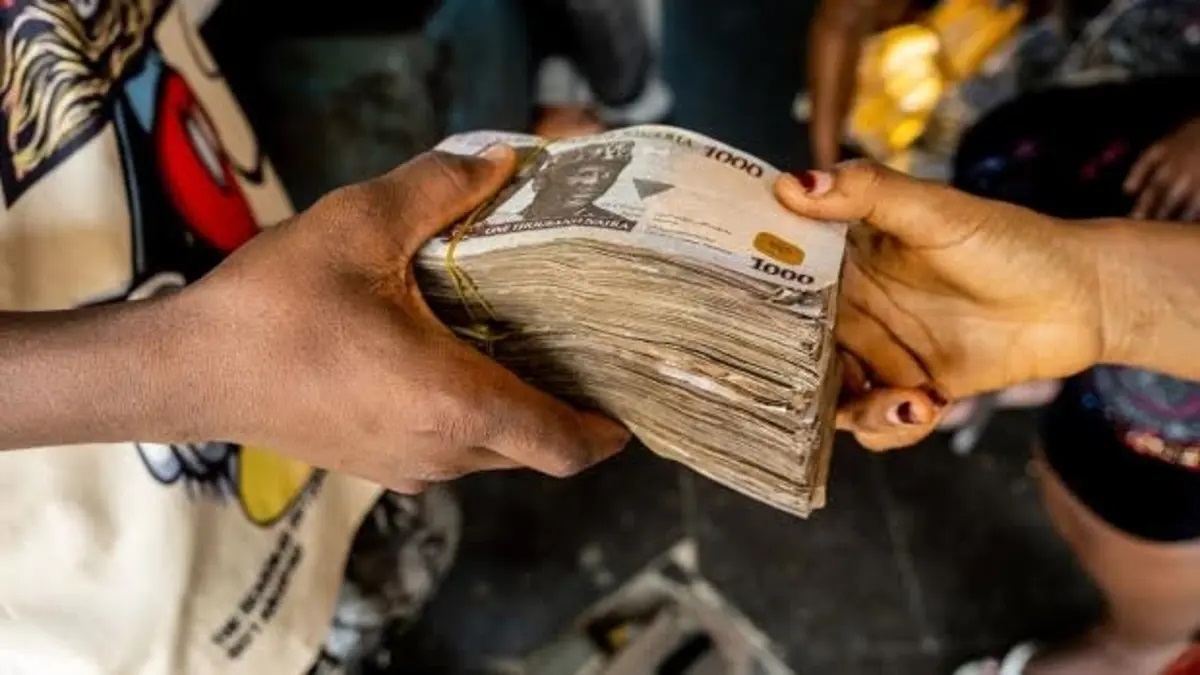
The Naira appreciated against the US Dollar in the Nigerian Autonomous Foreign Exchange Market (NAFEX) on Friday, July 17, by N1.35 or 0.07 per cent to N1,380.18/$1 from N1,381.53/$1.
It also improved its value against the Pound Sterling in the same market segment during the session by N11.75 to trade at N1,854.42/£1 compared with the previous day’s N1,866.17/£1, and gained N5.69 against the Euro to sell at N1,576.99/€1 versus Thursday’s closing price of N1,582.68/€1.
In the same vein, the Naira chalked up N1 against the United States currency yesterday at the GTBank forex desk to quote at N1,388/$1, in contrast to the preceding day’s N1,389/$1, but closed flat at the black market at N1,405/$1.
The appreciation of the Nigerian currency on Friday came amid fresh signals that Nigeria is building its external reserves for protection against shocks and excessive currency volatility.
The Governor of the Central Bank of Nigeria (CBN), Mr Yemi Cardoso, said the country’s gross reserves had risen above approximately $52 billion by 15 July, while net reserves had increased from about $3 billion when the current CBN leadership took office to more than $40 billion.
Mr Cardoso linked the increase in reserves to reforms that had restored greater confidence in the foreign exchange system. He also pointed to efforts to diversify foreign currency inflows, including policies designed to increase remittances through official channels.
He noted that monthly diaspora remittances had risen above $600 million and the CBN expected them to reach approximately $1 billion by the end of 2026. The target is part of a broader effort to grow reserves through recurring inflows rather than temporary measures.
The improvement, he argued, had strengthened Nigeria’s capacity to respond when unexpected events threatened market stability.
The apex bank has also launched a new digital platform that will track every foreign exchange transaction involving Bureau De Change (BDC) operators, marking a major step in its efforts to improve transparency and strengthen oversight of Nigeria’s retail forex market.
As for the crypto market, prices were up as markets overlooked geopolitical developments and macro forces weighing on the whole market ecosystem rather than anything crypto-specific, with Cardano (ADA) up by 4.6 per cent to $0.1661.
Bitcoin (BTC) jumped by 1.8 per cent to $63,968.32, Ethereum (ETH) improved by 0.9 per cent to $1,843.88, Dogecoin (DOGE) also rose by 0.9 per cent to $0.0723, Solana (SOL) soared by 0.6 per cent to $74.90, Ripple (XRP) also appreciated by 0.6 per cent to $1.08, and Binance Coin (BNB) advanced by 0.1 per cent to $567.32.
However, TRON (TRX) depreciated by 0.2 per cent to close at $0.3218, while the US Dollar Tether (USDT) and the US Dollar Coin (USDC) remained unchanged at $1.00 each.
