
Economy
CBN Moves to Formally Legalise Crypto Currency in Nigeria


By Modupe Gbadeyanka
Deputy Director/Head, Payments System Policy and Oversight at the Central Bank of Nigeria (CBN), Mr Musa Jimoh, has disclosed that the apex bank has commenced arrangement to introduce a digital currency in the country a move to key into the global adoption of Crypto currency initiative.
According to Guardian, the apex bank executive made this disclosure at the Crypto currency conference held recently in Lagos.
Mr Jimoh was quoted to have said at the event that, CBN cannot stop the tide of waves generated by the blockchain technology and its derivatives.
“Currently, we have taken measures to create four departments in the institution that are looking forward to harmonise the white paper on Crypto currency.”
Crypto currency is a digital currency in which encryption techniques are used to regulate the generation of units of currency, and verify the transfer of funds, operating independently of a central bank.
Before now, the CBN had been wary to adopting digital currency until it had concluded assessment on its transaction methodology, especially as it has been said that “decentralised crypto currencies such as bitcoin now provide an outlet for personal wealth that is beyond restriction and confiscation.”
Speaking on the development, President of Information Security Society of Nigeria (ISSAN), Dr David Isiawe, said: “The reality that is before us today, particularly in Nigeria, is that the Distributed Ledger Technology (DLT), blockchain and Crypto currency are facts that we must face, whether we like it or not. We cannot wish this reality away.
“It is made worse when we realise that we are still grappling with current challenges of e-commerce and other electronic payment systems but technology development and advancements are not waiting.
“The impact of the emergence of blockchain and Crypto currency will be felt in the nation just as in the global community.
“Nigerian must be proactive rather than reactive by considering how these technologies would affect and influence our lifestyles and business operations and channel, and thus fashion our rules of engagement for their adoption.”
Mr Isiawe also admonished prospective investors to be careful investing in Crypto currencies, as every investment has its share of risks.
The conference tagged: “Learning to Glow with the Flow,” also served as the debut of a new coin, Corion.
Highlighting the coin, the President, Corion Platform, Ida Frauda, said: “Crypto currency is a currency that allows parties to exchange value. Unlike gold, paper money and other means of payments, Crypto currency is digital and decentralised granting transactions to be made without intermediaries and giving the transactors control over their money.
“With the Corion, users have daily payments and value storage with a staple price, fair distribution of benefits, keys to the challenges to engage the majority in using Crypto currency on a daily basis, an ecosystem to get the financial benefits from merely being a user. They make transaction in multiple currencies, peer-to-peer exchange in a limitless market in the global market; make money from the daily coin release from the increasing number of users instead of speculation.”
For the conference organiser, Chimezie Chuta, Nigeria should create learning institutions to educate and engage the youths and make them relevant in this space.
He urged the youths to equip themselves with learning blockchain, as it is the technology of the future. “Any sector can be on it like the Internet, which will lead to a skill shortage. People should read online, and research as many firms are going to be requiring blockchain experts in their sphere.
“The blockchain technology can be used across boards like smart contract, e-voting, identity management, healthcare. We should not be sole users rather; we should harness our numerical strength in his space,” said.
The Chief Technical Officer (CTO), Digital Encode, Oluseyi Akindeinde, said crypto currency is the currency of the future. “This currency cannot be monopolized by any government or company. It allows transparency; the velocity of transactions can be monitored with the blockchain, as it cuts across borders of accounts with the use of Applications.”
Highlighting the use of blockchain for transactions, Akindeinde said: “The technology is not only used for Crypto currency, although, the naira can be on the blockchain just like some other countries, so instead of spending bitcoin, everyone can spend the naira and transfer from peer to peer without going to financial institutions. Nonetheless, it can be used for land registration, stock exchange. Everything that has value can be used on the blockchain.”
Speaking on the security of the blockchain, he said: “If the CBN places the naira on it, then they are securing it with the hashing power of the blockchain. Presently based on the design which has been in existence since 2009, the blockchain is hack-proof due to the encryption and cryptography technology.
“The reasons banks are prone to hack is because they are centralised. Blockchain is decentralised. It is located everywhere there is Internet, so except someone hacks the entire Internet, then they can hack the blockchain system.”
Source: Guardian












By Adedapo Adesanya
Five price advancers buoyed the NASD Over-the-Counter (OTC) Securities Exchange by 1.88 per cent on Tuesday, March 3, as the demand for unlisted stocks continues to grow.
During the session, the market capitalisation added N46.64 billion to close at N2.524 trillion versus the Monday session’s N2.477 trillion, and the NASD Unlisted Security Index (NSI) increased by 77.94 points to finish at 4,219.47 points compared with the previous day’s 4,141.53 points.
11 Plc gained N13.23 yesterday to sell at N290.23 per share compared with the preceding session’s N277.00 per share, FrieslandCampina Wamco Nigeria Plc appreciated by N7.76 to N117.76 per unit from N110.00 per unit, Central Securities Clearing System (CSCS) Plc improved by N7.05 to N84.05 per share from N70.00 per share, First Trust Mortgage Bank Plc added 17 Kobo to close at N1.92 per unit versus N1.75 per unit, and Industrial and General Insurance (IGI) Plc advanced by 4 Kobo to settle at 49 Kobo per share versus 45 Kobo per share.
On the flip side, Food Concepts Plc dropped 37 Kobo to sell at N3.39 per unit compared with the previous day’s N3.76 per unit, and NASD Plc dipped 20 to N56.21 per share from N56.41 per share.
On Tuesday, the volume of securities went down by 19.6 per cent to 1.4 million units from 1.8 million units, but the value of securities increased by 447.2 per cent to N93.4 million from N17.1 million, and the number of deals soared by 118.5 per cent to 59 deals from 27 deals.
At the close of transactions, CSCS Plc remained the most active stock by value (year-to-date) with 35.8 million units sold for N2.2 billion, trailed by Okitipupa Plc with 6.3 million units worth N1.1 billion, and Geo-Fluids Plc exchanged 122.8 million units valued at N480.4 million.
The most active stock by volume (year-to-date) was Resourcery Plc with 1.05 billion units worth N408.7 million, followed by Geo-Fluids Plc with 122.8 million units worth N480.4 million, and CSCS Plc with 35.8 million units transacted for N2.2 billion.

By Adedapo Adesanya
The Naira continued to depreciate against the United States Dollar in the different segments of the foreign exchange (FX) market on Tuesday, March 4.
During the session, it lost N6.27 or 0.46 per cent in the Nigerian Autonomous Foreign Exchange Market (NAFEX) to close at N1,384.29/$1, in contrast to the previous trading day’s N1,378.02/$1.
The local currency depreciated against the Pound Sterling in the official market yesterday by N3.92 to quote at N1,842.22/£1 versus the previous day’s N1,846.14/£1, but gained N6.79 on the Euro to close at N1,606.19/€1 compared with Monday’s rate of N1,612.98/€1.
In the parallel market, the Naira further lost N10 against the Dollar during the trading day to settle at N1,375/$1 compared with the preceding session’s N1,375/$1, and at the GTBank FX desk, it was traded at N1,373/$1.
The exchange rate has been trending down for over 10 days following an unusual FX purchase activity by the Central Bank of Nigeria (CBN) at the official market in February.
However, the Naira is expected to trade with a stable bias in line with prevailing market demand and supply dynamics, supported by an improving external reserves position.
Nigeria’s strong net reserves position has been touted as enough, as it rose 50.5 per cent year-on-year to $34.8 billion in 2025 from $23.11 billion in 2024.
The Governor of the apex bank, Mr Yemi Cardoso, said that the growth in external reserves reflects stronger external sector fundamentals and sustained policy reforms.
He stated that the figures emphasised the benefits of increased transparency and credibility in foreign exchange management, boosting investor confidence, attracting stronger FX inflows, and improving reserve management practices aimed at preserving capital, ensuring liquidity, and supporting long-term sustainability.
As for the cryptocurrency market, most majors recovered from the weekend lows but couldn’t sustain it over a 24-hour trading period, leaving the market in a holding pattern while it waits for clarity on the Iran situation.
Cardano (ADA) slumped 3.5 per cent to $0.2600, Dogecoin (DOGE) dropped 2.7 per cent to trade at $0.0889, Ethereum (ETH) went down by 1.2 per cent to $1,970.48, Ripple (XRP) depreciated by 0.8 per cent to $1.35, and Solana (SOL) decreased by 0.6 per cent to sell at $85.22.
On the flip side, Litecoin (LTC) increased by 1.2 per cent to $54.60, Bitcoin (BTC) added 0.5 per cent to sell for $68,207.17, and Binance Coin (BNB) rose 0.1 per cent to $632.25, while the US Dollar Tether (USDT) and the US Dollar Coin (USDC) remained unchanged at $1.00 each.

By Dipo Olowookere
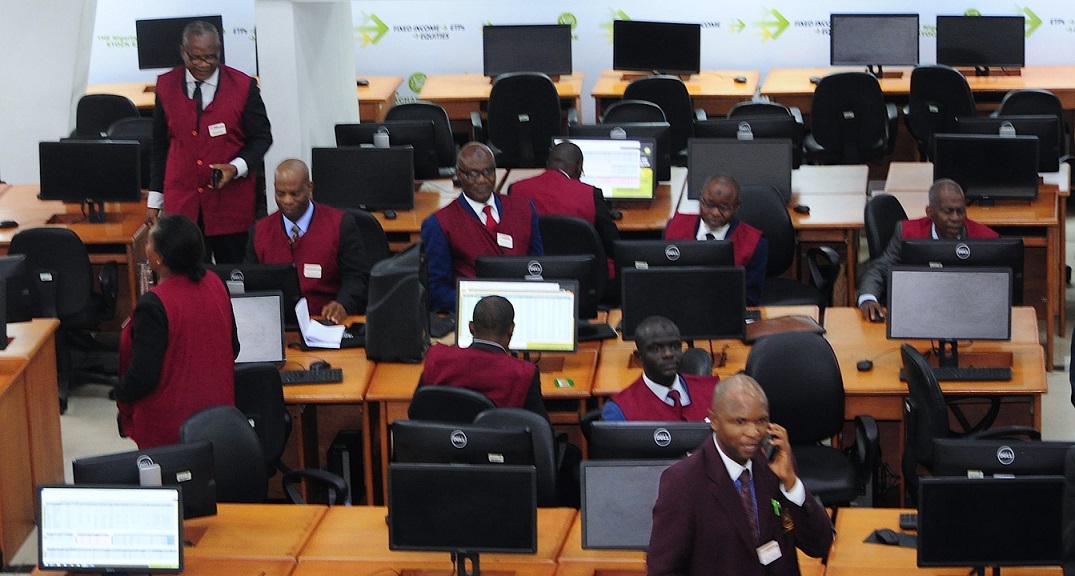
A 0.57 per cent growth was recorded by the Nigerian Exchange (NGX) Limited on Tuesday, resulting in the portfolios of investors swelling by N711 billion, with the market capitalisation closing at N126.199 trillion compared with the previous day’s N125.488 trillion.
In the same vein, the All-Share Index (ASI) increased at the close of transactions by 1,107.73 points to 196,621.96 points from 195,514.23 points.
Buying pressure was across the key sectors of the market yesterday, with the energy index outshining after it closed higher by 4.52 per cent. The insurance counter appreciated by 1.55 per cent, the consumer goods space improved by 0.88 per cent, the industrial goods sector gained 0.17 per cent, and the banking segment expanded by 0.04 per cent.
Investor sentiment was bullish after Customs Street finished with 39 price gainers and 35 price losers, representing a positive market breadth index.
Sunu Assurances gained 10.00 per cent to trade at N4.84, UAC Nigeria also appreciated by 10.00 per cent to N106.70, Oando grew by 9.96 per cent to N50.25, Sovereign Trust Insurance surged 9.88 per cent to N2.67, and Fortis Global Insurance rose by 9.71 per cent to N1.13.
Conversely, Fidson lost 10.00 per cent to settle at N81.00, Mecure decreased by 9,95 per cent to N68.30, Aluminium Extrusion slipped by 9.88 per cent to N15.50, McNichols gave up 8.26 per cent to quote at N7.00, and Deap Capital shed 8.17 per cent to N6.52.
A total of 880.0 million stocks worth N44.5 billion exchanged hands in 86,761 deals on Tuesday compared with the 789.9 million stocks valued at N35.1 billion traded in 84,259 deals on Monday, showing a spike in the trading volume, value, and number of deals by 11.41 per cent, 26.78 per cent, and 2.97 per cent, respectively.
Fortis Global Insurance led the activity chart with 58.4 million equities valued at N66.0 million, Sterling Holdco traded 56.8 million shares worth N461.0 million, Japaul exchanged 47.3 million stocks for N189.0 million, Zenith Bank transacted 40.9 million equities valued at N3.8 billion, and Jaiz Bank sold 38.7 million shares worth N483.7 million.










-
 Feature/OPED6 years ago
Davos was Different this year
-
Travel/Tourism10 years ago
Lagos Seals Western Lodge Hotel In Ikorodu
-

 Showbiz3 years ago
Estranged Lover Releases Videos of Empress Njamah Bathing
-
 Banking8 years ago
Sort Codes of GTBank Branches in Nigeria
-

 Economy3 years ago
Subsidy Removal: CNG at N130 Per Litre Cheaper Than Petrol—IPMAN
-

 Banking3 years ago
Sort Codes of UBA Branches in Nigeria
-

 Banking3 years ago
First Bank Announces Planned Downtime
-

 Sports3 years ago
Highest Paid Nigerian Footballer – How Much Do Nigerian Footballers Earn
11 Comments