
Economy
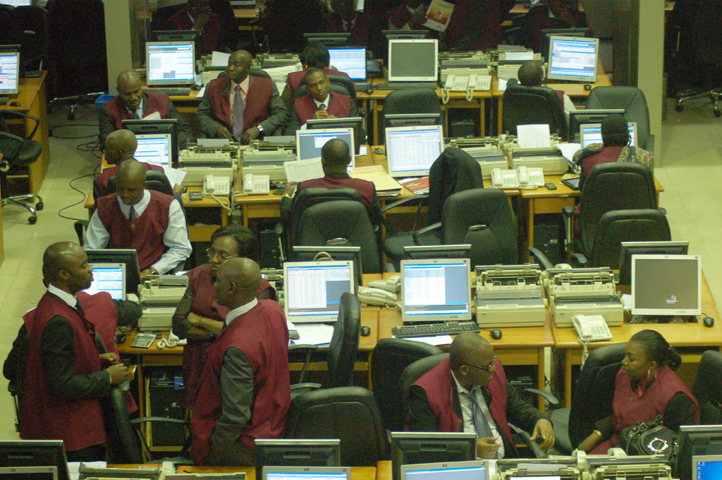
Nigerian Stocks Welcome Buhari with N115.9b Loss

By Modupe Gbadeyanka
The Nigerian Stock Exchange (NSE) commenced the new trading week on a bearish note, losing 0.91 percent at the end of transactions on Monday, and trimming the year-to-date return to 36.13 percent.
It was the first official day at work for President Muhammadu Buhari at the Presidential Villa after being away for over 100 days for a medical attention in London.
The stock market had closed on Friday on a positive with investors optimistic that the rally would be extended today.
However, heavy losses recorded by large-cap stocks like Nestle and Dangote Cement dragged the market to the red zone.
Nestle suffered N9.99k loss to close at N1,200.1k per share, while Dangote Cement shed N9.38k to settle at N215.62k per share.
Stanbic IBTC declined by 74k to end at N38.11k per share, Lafarge fell by 50k to finish at N58.50k per share, and Zenith Bank depreciated by 28k to wrap the day at N24 per share.
Though transactions closed bearish on Monday, the market breadth finish positive with 26 gainers compared with 16 losers.
The gainers’ chart was led by Beta Glass, which went up by N2.51k to close at N59.84k per share.
It was trailed by Flour Mills of Nigeria, which advanced by N2.49k to settle at N31 per share, and Nigerian Breweries, which progressed by N2.48k to finish at N183.50k per share.
GTBank expanded by N1.20k to end at N40.70k per share, while UACN moved up by 50k to wrap the day at N16.50k per share.
Business Post reports that AIICO emerged the most active stock today with 131 million shares sold at N74.7 million.
It was followed by GTBank, which transacted 61.2 million units for N2.5 billion, and Zenith Bank, which traded 22.7 million shares valued at N542.2 million.
Unity Kapital Assurance transacted 16 million shares worth N8 million, while UBA exchanged 11.2 million shares at N104.7 million.
In all, investors transacted a total of 368.4 million shares in 3,729 deals valued at N6.3 billion compared with 236.6 million shares traded in 3,803 deals last Friday worth N4.8 billion.
A look at the market indices today showed that the All-Share Index (ASI) tripped by 336.12 points to close at 36,584.44 points, while the market capitalisation declined by N115.9 billion to settle at N12.6 trillion.








By Aduragbemi Omiyale
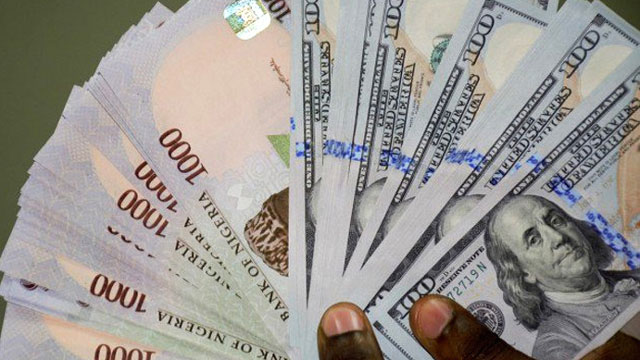
The gross foreign reserves of Nigeria reached a 17-year high of $51.04 billion, data from the Central Bank of Nigeria (CBN) shows.
Business Post gathered from the apex bank’s website that this new feat was achieved on Thursday, June 18, 2026.
A day earlier, which was Wednesday, June 17, 2026, the amount in the country’s external reserves stood at $50.96 billion, indicating accretion of 0.16 per cent.
This latest development is expected to strengthen the value of the Nigerian Naira in the foreign exchange (FX) market.
It was observed that since the beginning of this month, the amount in the forex reserves has been building up gradually after an initial scare.
It is believed that inflows from crude oil sales have been boosting the reserves, though prices are expected to trend downward as a result of the ceasefire deals between the United States and Iran on Friday.
The price of crude oil has cooled to around $80 per barrel. It should further moderate to its level before February 28, 2026, when the bombardment of Iran started, which led to the death of the country’s 86-year-old Supreme Leader, Ayatollah Ali Khamenei.
By Aduragbemi Omiyale
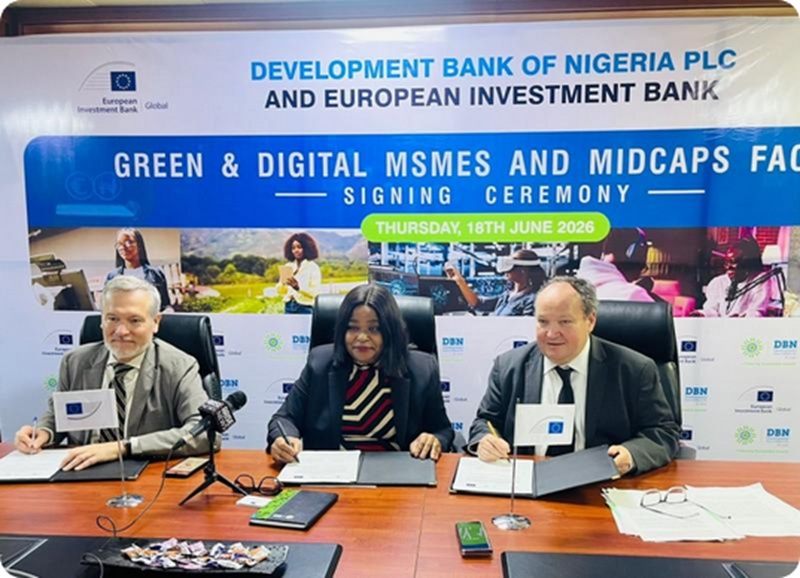
A €200 million financial partnership to support the development of small-scale investments of Nigerian enterprises contributing to the country’s green and digital economy has been signed by the Development Bank of Nigeria (DBN) and the development arm of the European Investment Bank (EIB) Group, EIB Global.
The funds would be disbursed to Micro, Small, and Medium Enterprises (MSMEs) in Nigeria, with a focus on agriculture, renewable energy, digitalisation and innovation.
The collaboration aligns with EIB Global’s strategy to support sustainable, inclusive, and resilient economic growth in Nigeria under the Global Gateway Initiative.
The investment programme will boost private sector development in Nigeria and support entrepreneurs and job creation by easing access to suitable finance for MSMEs and Midcaps.
It will also strengthen Nigeria’s green transition by expanding financing opportunities for companies in the renewable energy and agribusiness sectors.
In agriculture, it will help improve productivity, develop local supply chains, and strengthen food security for a country that hosts the largest population in Africa.
On the energy side, improved financing for renewable energy businesses will support clean energy access, reduce carbon emissions, and help build climate resilience in underserved communities.
“This partnership with DBN will strengthen the competitiveness of Nigeria’s private sector, especially for SMEs in the green and digital sectors.
“In supporting green projects and women entrepreneurs, we are also fostering inclusive growth and climate action.
“This is a powerful example of EIB’s real impact on the ground,” EIB Vice-President, Mr Ambroise Fayolle, said at a signature ceremony on Thursday, June 18, 2026, at the Lagos office of the DBN.
Also commenting, the chief executive of DBN, Mr Tony Okpanachi, described the investment as a significant milestone in efforts to drive Nigeria’s economic growth and sustainability.
“The €200 million investment from EIB Global is a significant milestone in our mission to drive Nigeria’s economic growth and sustainability. By supporting local financial institutions and MSMEs in key sectors like agriculture, renewable energy, digitalisation, and innovation, we’re empowering entrepreneurs and fostering a culture of sustainable innovation,” he stated.

By Adedapo Adesanya
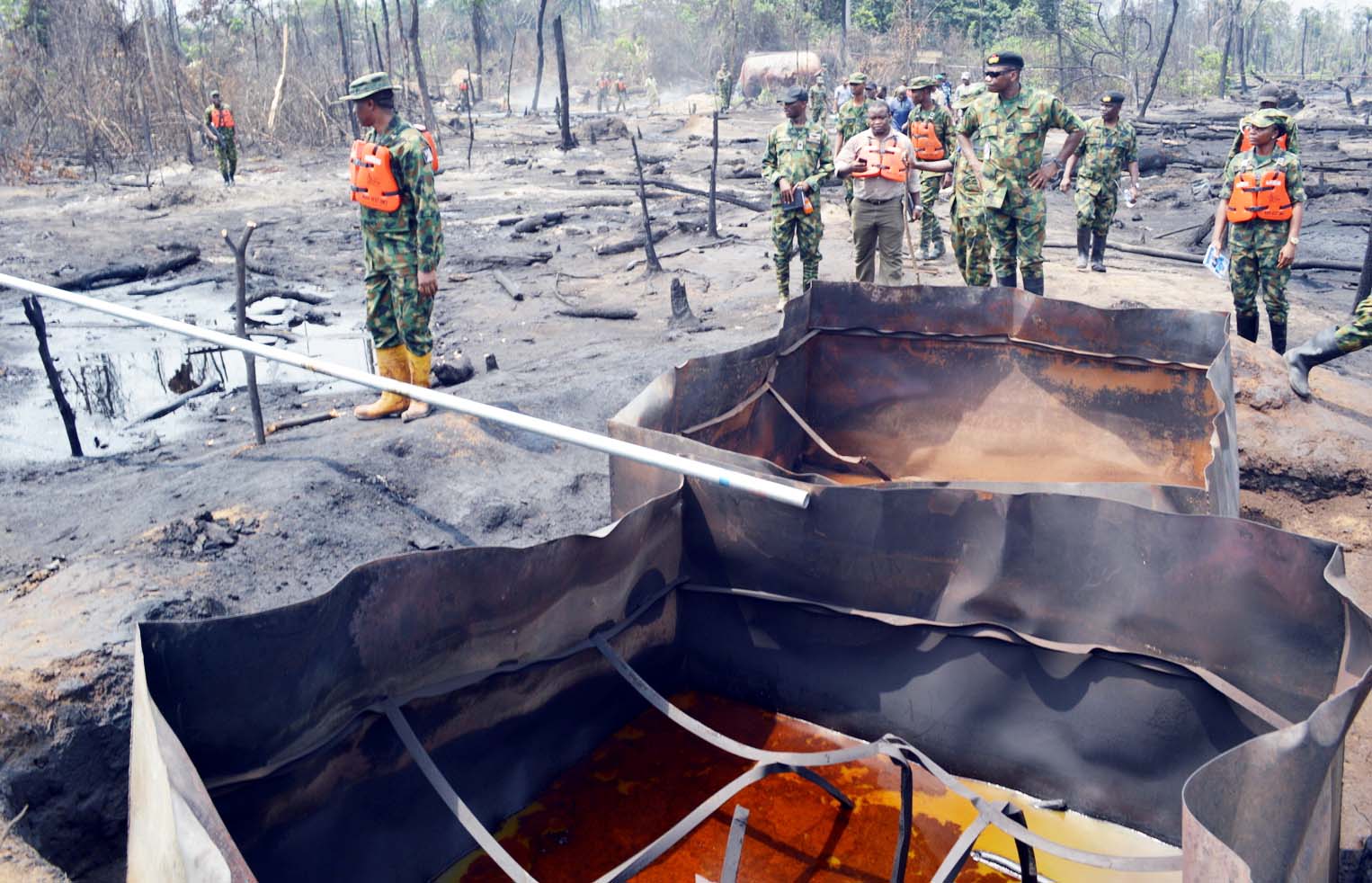
Nigeria has the potential to produce 1.9 million barrels of crude oil per day, having hit a peak production of 1.86 million barrels per day in May, according to the chief executive of the Nigerian Upstream Petroleum Regulatory Commission (NUPRC), Mrs Oritsemeyiwa Eyesan.
The NUPRC chief said this on Wednesday during a meeting with the chairman of the Nigeria Revenue Service, Mr Zacch Adedeji, at the NRS headquarters in Abuja.
In a statement signed by the agency’s Head of Media and Corporate Communications, Mr Eniola Akinkuotu, it was disclosed that the country’s oil industry has continued to record production growth, noting that crude output reached a peak of 1.86 million barrels per day in May, placing the industry on a stronger recovery path.
The meeting also focused on strengthening collaboration between the two agencies to promote transparency, accountability and efficiency in the collection of oil and gas revenues.
Speaking during the engagement, Mrs Eyesan commended the leadership of the NRS for reforms that culminated in the enactment of the NRS Act and described the transition of revenue collection responsibilities as smooth.
Mrs Eyesan said the process had been seamless. The CCE also highlighted the Commission’s efforts in creating an enabling environment for operators in the oil and gas industry.
“We are here to enable them, enable their businesses, ensure that they survive and succeed. And we want to grow the pie because when you grow the pie, everybody benefits,” she said.
She also disclosed that recent gains in crude production demonstrate that industry reforms and collaborative efforts by stakeholders are beginning to yield positive results.
“We are back to production. We are ramping up now, and we want to continue working. We still recognise the constraints. Infrastructure and asset integrity are major constraints, but we will work on these. Even human capacity in the industry—we see that because we want to grow, we must also grow that capacity to meet the demands,” she said.
The NUPRC boss also pointed out that one of the key targets upon assuming office was the digitisation of NUPRC’s operations, a goal she said has largely been achieved.
-
 Feature/OPED6 years ago
Davos was Different this year
-
Travel/Tourism10 years ago
Lagos Seals Western Lodge Hotel In Ikorodu
-

 Showbiz3 years ago
Estranged Lover Releases Videos of Empress Njamah Bathing
-
 Banking8 years ago
Sort Codes of GTBank Branches in Nigeria
-

 Economy3 years ago
Subsidy Removal: CNG at N130 Per Litre Cheaper Than Petrol—IPMAN
-

 Banking3 years ago
Sort Codes of UBA Branches in Nigeria
-

 Banking3 years ago
First Bank Announces Planned Downtime
-

 Sports3 years ago
Highest Paid Nigerian Footballer – How Much Do Nigerian Footballers Earn