

General
29 Things You Must Take Along To NYSC Camp

By Modupe Gbadeyanka
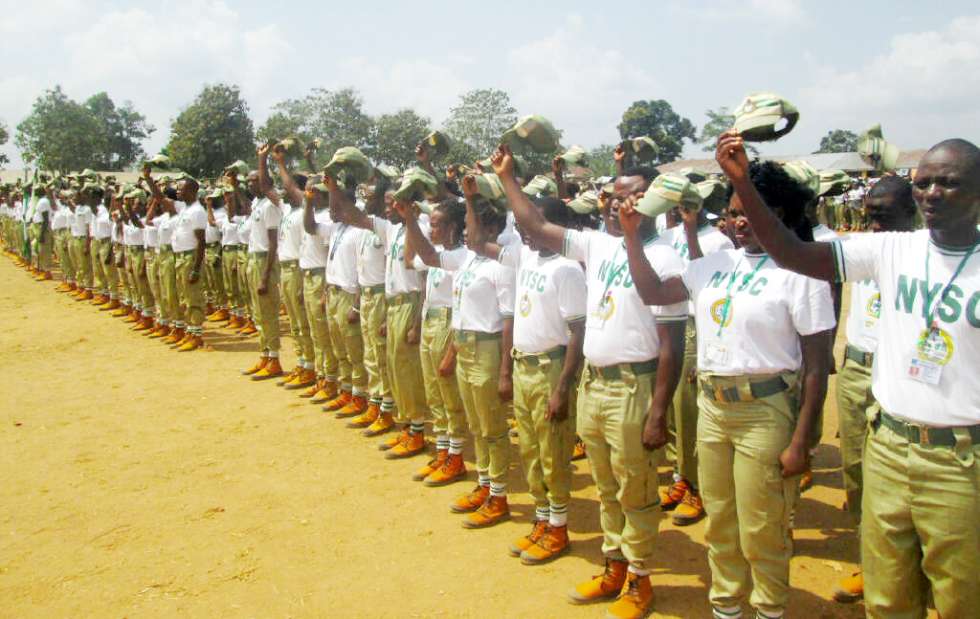
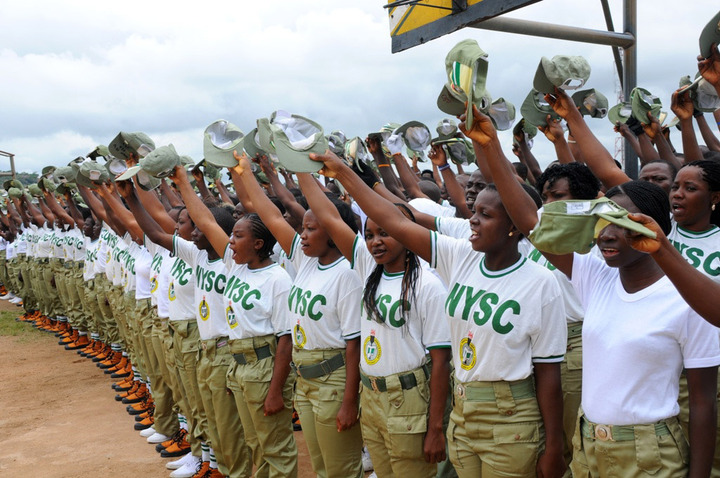
On Thursday, November 24, 2016, the Batch B of the National Youth Service Corps (NYSC) will resume orientation.
Already, their call-up letters have been posted on the NYSC portal for print out.
It is no doubt that some intending corps members get confused on what they should take along to the camp, but Business Post is here to help you solve that problem.
Below is a list of Official NYSC Camp Registration Requirements:
- CALL UP LETTER: This is a vital part of camp registration and the only evidence that you are a prospective corps member and you are not impersonating anyone. This will be taken from and not returned to you.
Tip: DO NOT LAMINATE IT!
- Registration Documents: Foreign graduates should take along important registration documents used in registering at Abuja.
- Final Year Student Identity CARD
- Notification/Statement of Result from School
- PASSPORT PHOTOGRAPHS: This is very important. Take as many as you can, about 20 in red backgrounds. You would need them at every registration point mostly.
- PHOTOCOPIES OF YOUR DOCUMENTS: Now make about 5-10 copies of every document required. There would be photocopiers in camp at mammy market but trust me, it is double the price and it saves time.
Tip: The forms that will be handed to you are very easy to fill. Attach your passport where necessary and fill them correctly. After your registration, you will be issued with your State Code Number. This will be like your PIN throughout your Service Year.
- CERTIFICATES/LICENSES: For Doctors, Pharmacists, Nurses & Lab Scientists, take along your proof of certification.
- STATIONERY: PEN, PAPER, GUM, TIPPEX.
Tip: After getting your NYSC State Code Number, you can proceed to claim your NYSC Kit and Mattress after which you can proceed to get a Room. After you have gotten your kit and secured a place in the hostels. Your NYSC kit should contain 1 NYSC Crested Vest, A pair of Khaki Trousers, Cap and Jacket, 2 White T-shirts, 2 Pairs of Knickers, 2 pairs of green-stripped Stockings, A Pair of Orange Jungle Boots and One Pair of White Converse. A “Belt” is also included.
YOUR DAILY NEEDS:
- ROUND-NECKED WHITE T-SHIRTS: This is an essential outfit in camp in fact in most camps this is the only allowed cloth to be worn throughout your 3 weeks. Even to church, you might not be allowed to wear colour cloths. You would be given 2 pairs of white t-shirts at camp but endevour to bring extra pairs 6, Why? Because you probably won’t have time to wash during the week after being stressed out from the parades and Man-O-War drills.
Tip: Do not carry more than 2 pairs of colour clothes because you won’t need it.
- WHITE SHORTS: I beg you please do bring yours. you would also be given 2 pairs of shorts which are really poor in material. They tear easily and it can be annoying. So my dear Otondos bring like 4 pairs of shorts.
- PLAIN WHITE SNEAKERS/TENNIS SHOES
- WHITE SOCKS: Just get extra pairs.
- MOSQUITO TREATED NET: You would do not want to fall sick in camp from malaria. Just bring yours.
- BASIC DRUGS: Like Panadol or paracetamol, medicine for your allergies, menstrual pain relief drug, nausea relief drugs, antibiotics e.t.c. The camp clinic is sometimes inadequately stocked with drugs so help yourself.
- PADLOCKS: Please lock your boxes and bags to avoid regrets and tears.
- WAIST POUCH: You need it to carry your money, phone, small valuables, pens, etc around with you at all times.
- BEVERAGE: The camp will supply u with “Tea-water” so you can make tea when u need to!
- DETTOL OR ANY DISINFECTANT
- DETERGENT: [BUY from Mammy.] Again, this reduces the amount of load you’re bringing into camp. However, if you’re lucky the mammy market will have vendors offering laundry services! It costs about N50 per item, N100 for your khaki trousers or shirt, extra N50 if you want your items pressed.
Tip: The Bucket: Buy this in Mammy. Don’t stress yourself taking one to Camp, which you’re probably going to leave behind after 3 weeks.
Toiletries: Toilet Paper, Sanitary Pad, soap dish etc. BUY in Mammy.
- TOWELS
- A PAIR OF SLIPPERS: [BRING or BUY]
- Bed sheets, Pillow Cases and A Pillow. You could also get pillow from mammy market to reduce load.
- HANDKERCHIEF.
- FLASHLIGHT OR RECHARGEABLE LAMPS: [BRING or BUY]
- PLATE, BOWL AND CUP: [BRING or BUY]
- Some form of entertainment: Novels, PSP, chess, iPod or MP3 players
- Your Ray-Ban sunglasses for the sun.
- Get extra phone batter(ies) and extra Network SIMs.
- CASH: Extremely important. You would need about N15,000. Then between N20,000 – N30,000 to be ‘just’ comfortable. For those that can manage, say, N10,000 – N15,000. There are lots of things that take up money. Things like food (for those who don’t intend eating camp food), drinks, recharge cards, charging of phones, laundry, pleasures e.t.c




By Adedapo Adesanya
The Nigeria Customs Service (NCS) and the Nigerian Midstream and Downstream Petroleum Regulatory Authority (NMDPRA) are strengthening their collaboration to combat the diversion of petroleum products intended for domestic use and to safeguard Nigeria’s energy security.
This renewed partnership was highlighted during a meeting between Comptroller General of Customs, Mr Adewale Adeniyi and the NMDPRA Executive Director of Distribution Systems, Storage and Retailing Infrastructure, Mr Ogbugo Ukoha, at Customs House, Maitama, Abuja.
During the engagement, Mr Adeniyi reaffirmed the service’s commitment to strengthening inter-agency cooperation, particularly in safeguarding Nigeria’s domestic energy security and ensuring that petroleum products meant for local consumption are not diverted to neighbouring countries.
He noted that collaboration between both agencies had already produced measurable results, especially through Operation Whirlwind, which he described as a model for intelligence sharing, joint enforcement and coordinated field operations.
He said the Nigeria Customs Service remains fully aligned with ongoing reforms in the petroleum regulatory space and will continue to provide technical input, operational feedback and border management expertise to support the implementation of new guidelines being developed by the NMDPRA.
He commended the Authority for its efforts to harmonise legacy processes with the Petroleum Industry Act, stressing that clear and efficient export point procedures are essential as Nigeria moves from being a net importer to an emerging exporter of petroleum products.
“We welcome every initiative that strengthens energy security and ensures that the gains made in reducing cross border diversion are not reversed. Our shared responsibility is to protect national interest, support legitimate trade and maintain a transparent system that stakeholders can rely on. We will continue to work closely with sister agencies to achieve these outcomes,” he stated.
In his remarks, the Executive Director, Mr Ukoha, said the NMDPRA enjoys a longstanding and productive working relationship with the Nigeria Customs Service, noting that Operation Whirlwind remained the high point of that collaboration.
He explained that both agencies deployed personnel, exchanged intelligence and jointly monitored petroleum products in border corridors, leading to a marked reduction in cross border diversion.
Ukoha said the purpose of the visit was to brief the CGC on newly developed guidelines for designating export points for petroleum products as Nigeria’s refining capacity expands.
He said the NMDPRA is engaging key institutions, including Customs, the Central Bank of Nigeria (CBN), the Federal Ministry of Industry, Trade and Investment, and the Nigerian Navy, to ensure the guidelines reflect operational realities before implementation.
The NMDPRA executive recalled several field operations and strategic engagements with the Customs leadership, including the joint launch of Operation Whirlwind in Yola, where both agencies reinforced their commitment to curbing diversion and securing the domestic supply chain.
He added that while enforcement had played a major role in reducing irregular movements of petroleum products, the removal of fuel subsidy had significantly reduced the economic incentive for cross border smuggling.
According to him, the authority will continue to work closely with the Customs Service to sustain progress and ensure that petroleum exports are properly regulated without exposing the country to energy security risks.
By Adedapo Adesanya
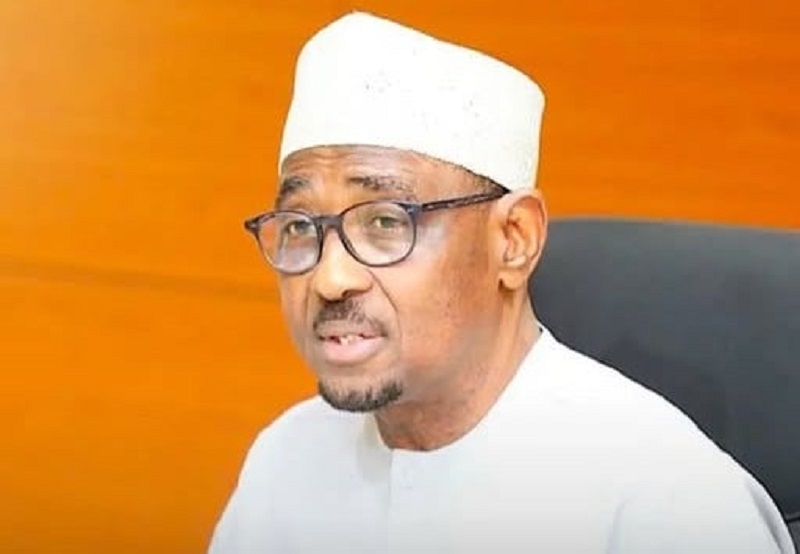
The president of Dangote Group, Mr Aliko Dangote, has published details alleging extensive foreign education expenses made by the chief executive of the Midstream and Downstream Petroleum Regulatory Authority (NMDPRA), Mr Farouk Ahmed, on four children in a new turn of event between the businessman and regulators.
Speaking on Sunday, the business mogul alleged that Mr Ahmed paid about $5 million for the secondary school education of his four children in Switzerland, and wondered how the government official could afford to pay such amount of money when there are several students in the home state of Mr Ahmed, Sokoto State. He threatened to published more details.
In the latest illustrated claims, Mr Dangote alleged that Mr Ahmed’s children attended secondary schools in Switzerland for about six years each. He listed the schools as Montreux School, Aiglon College, Institut Le Rosey and La Garenne International School. He named the children of Mr Ahmed as Faisal Farouk, Farouk Jr., Ashraf Farouk, and Farhana Farouk.
Mr Dangote alleged that the total cost of secondary education for the four children — covering tuition, upkeep, travel and related expenses exceeded $5 million.
He further claimed that an additional $2 million was spent on university education for the four children over a four-year period.
Specific figures were also cited for 2025, with Mr Dangote alleging that about $210,000 was spent on one child’s Master of Business Administration programme at Harvard University.
The breakdown reportedly includes $150,000 for tuition and $60,000 for accommodation, travel and other incidentals.
The claims have not been independently verified by Business Post at the time of filing this report but Mr Dangote revealed these details in an advertorial in most of the national newspaper on Tuesday.
Also, Mr Ahmed has yet to publicly respond to the allegations.
Mr Dangote earlier called on the authorities to institute a full scale investigation into the activities of the NMDPRA boss, with the outcome made public.
By Adedapo Adesanya
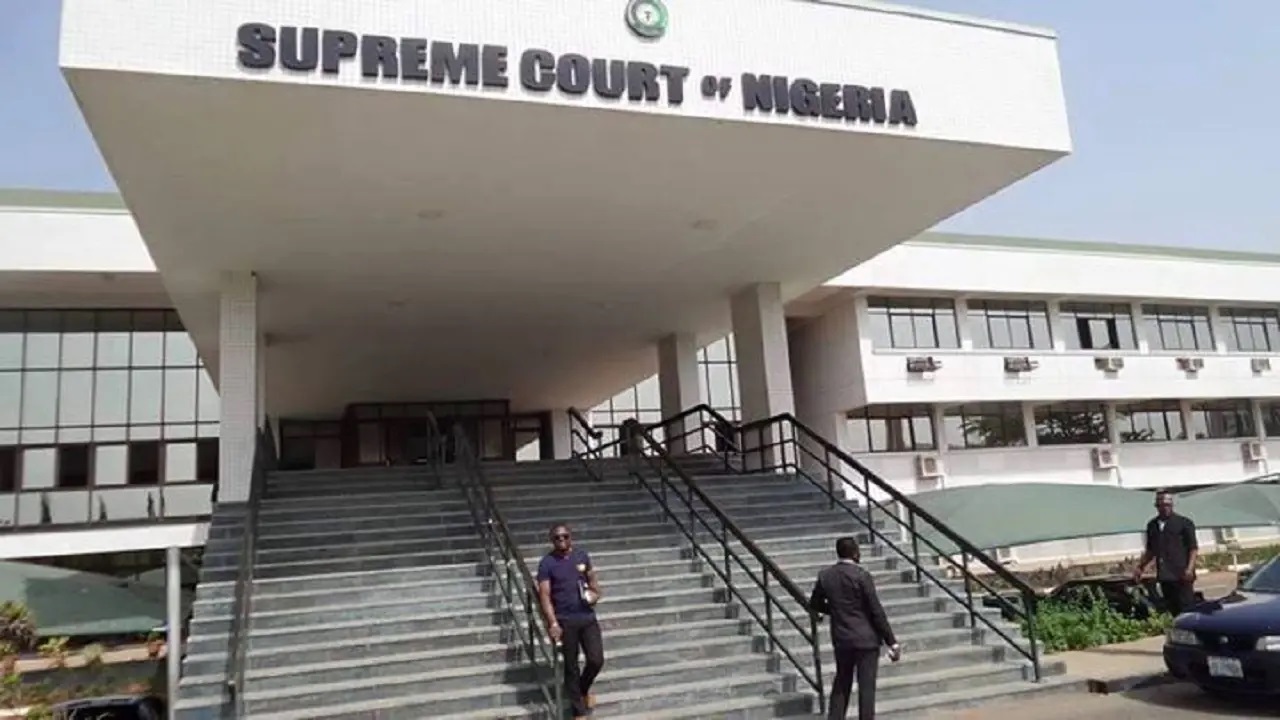
The Supreme Court has upheld the power of the President to declare a state of emergency in any state to prevent a breakdown of law and order or degeneration into a state of chaos or anarchy.
In a split decision of six-to-one, the apex court held that the President, during a state of emergency, can suspend elected officials, but within a limited period.
In the lead majority judgment, Justice Mohammed Idris held that Section 305 of the Constitution empowers the President to deploy extraordinary measures to restore normalcy where emergency rule is declared.
Justice Mohammed Idris noted Section 305 was not specific on the nature of the extraordinary measures, thereby granting the President the discretion on how to go about it.
The judgment was on the suit filed by Adamawa State and 10 other Peoples Democratic Party-led states challenging the propriety of the state of emergency declared by President Bola Tinubu in Rivers State, during which elected state officials, including Governor Siminalayi Fubara, were suspended for six months.
On March 18, President Tinubu declared a state of emergency in Rivers State following a reported attack on crude oil pipelines; and in the same breath, suspended the sitting governor and his deputy, Mrs Ngozi Odu. He then put in place a sole administrator.
This was challenged at the apex court by some states.
Justice Idris, in the earlier part of the judgment, upheld the preliminary objections raised by the two defendants against the competence of the suit.
In upholding the objections raised by the Attorney General of the Federation (AGF) and the National Assembly (the defendants), Justice Idris held that the plaintiffs (the 11 PDP states) failed to establish any cause of action capable of activating the original jurisdiction of the apex court.
He struck out the suit for want of jurisdiction, proceeded to also determine the case on the merits, and dismissed it.
However, Justice Obande Ogbuinya dissented and held that the case succeeded in part.
Among others, Justice Ogbuinya held that although the President could declare a state of emergency, he cannot use such powers as a tool to suspend elected state officials, including governors, deputy governors, and members of parliament.








-
 Feature/OPED6 years ago
Davos was Different this year
-
Travel/Tourism9 years ago
Lagos Seals Western Lodge Hotel In Ikorodu
-

 Showbiz3 years ago
Estranged Lover Releases Videos of Empress Njamah Bathing
-
 Banking7 years ago
Sort Codes of GTBank Branches in Nigeria
-

 Economy3 years ago
Subsidy Removal: CNG at N130 Per Litre Cheaper Than Petrol—IPMAN
-

 Banking3 years ago
First Bank Announces Planned Downtime
-

 Banking3 years ago
Sort Codes of UBA Branches in Nigeria
-

 Sports3 years ago
Highest Paid Nigerian Footballer – How Much Do Nigerian Footballers Earn