
Economy
UBA, First Bank, Others Lift NSE Turnover by N14b in 5 Days

By Modupe Gbadeyanka
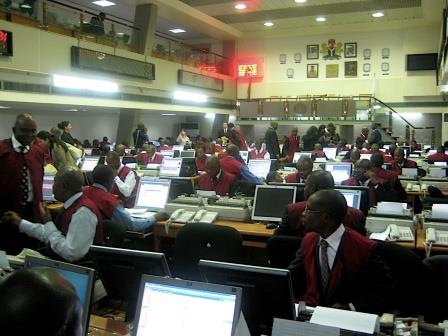
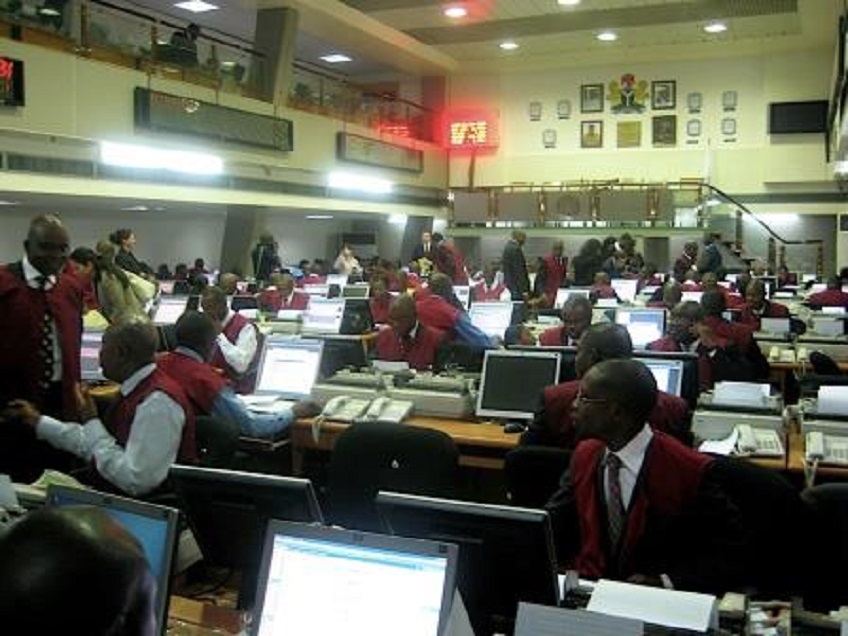
Heavy transactions in the shares of some banks and insurance companies lifted the volume of equities traded on the floor of the Nigerian Stock Exchange (NSE) this week as a total of 1.272 billion shares worth N13.993 billion in 19,385 deals were traded by investors in contrast to 1.061 billion units that exchanged hands last week in 18,847 deals shares valued at N12.295 billion.
In particular, at the close of trading activities at the local bourse this week, the financial services industry, measured by volume, led the activity chart with 1.086 billion shares valued at N9.743 billion traded in 11,229 deals; thus contributing 85.33 percent and 69.63 percent to the total equity turnover volume and value respectively.
The consumer goods industry followed with 44.786 million shares worth N1.536 billion in 2,853 deals, while the third place was occupied by the conglomerates industry with a turnover of 38.104 million shares worth N75.759 million in 727 deals.
Trading in the Top Three Equities namely – United Bank for Africa Plc, FBN Holdings Plc and Zenith Bank Plc (measured by volume) accounted for 505.388 million shares worth N5.454 billion in 4,009 deals, contributing 39.73 percent and 38.98 percent to the total equity turnover volume and value respectively.
In addition, the All-Share Index (ASI) and market capitalization appreciated by 2.47 percent to close the week at 33,261.66 and N11.464 trillion respectively.
Similarly, all other indices finished higher during the week with the exception of the NSE ASeM index that closed flat.
Furthermore, 48 equities appreciated in price during the week, higher than 16 equities of the previous week.
However, 27 equities depreciated in price, lower than 51 equities of the previous week, while 97 equities remained unchanged lower than 105 equities recorded in the preceding week.
Also traded during the week were a total of 25,540 units of Exchange Traded Products (ETPs) valued at N2.646 million executed in 10 deals compared with a total of 5 units valued at N484.85 transacted last week in 1 deal.
In addition, a total of 2,977 units of Federal Government Bonds valued at N2.946 million were traded this week in 11 deals, compared with a total of 358 units valued at N344,610 transacted last week in 7 deals.



By Adedapo Adesanya
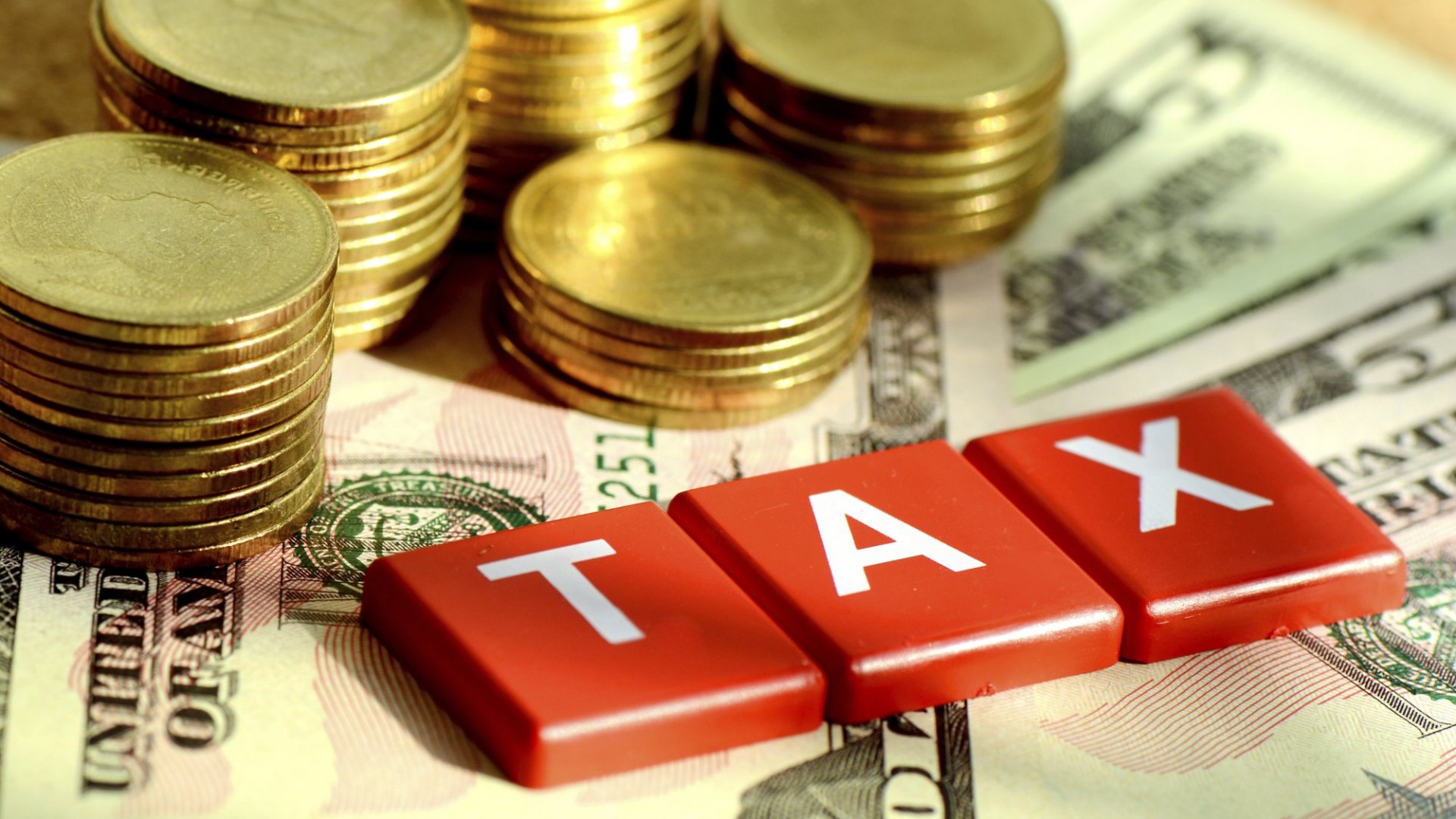
The Nigerian government on Wednesday dismissed reports suggesting that it has adopted or is considering new taxes on telecommunications services and petroleum products following the publication of the International Monetary Fund (IMF) Article IV Consultation Report on Nigeria.
The clarification followed reports that the IMF recommended that Nigeria may need to extend VAT to fuel products and introduce excise duties on telecommunications services to raise revenue, fund development, and social spending, a development that sparked outrage from Nigerians.
In a statement by the Head of Information and Public Relations Unit of the Ministry of Finance, Mr Efe Ovuakporie, it was clarified that the reports misrepresented the content of the IMF report and did not reflect its policy direction.
“The IMF Article IV Consultation Report contains the Fund’s assessment of Nigeria’s economy as well as recommendations for consideration by the authorities.
“Those recommendations do not amount to government policy and are not binding on Nigeria. Decisions on tax matters are taken through established constitutional and legislative processes and are guided by national priorities and prevailing economic realities”.
The government clarified that the Value Added Tax (VAT) waiver on petroleum products remains in place and has not been withdrawn.
It also noted that although existing legislation provides for a fuel surcharge, such a measure can only take effect through a ministerial order and publication in the Official Gazette.
“No such process is under consideration.
“The continued suspension of these charges has helped cushion the effect of global energy price fluctuations on households and businesses while keeping domestic fuel prices relatively stable”.
The government further clarified that the telecommunications excise duty introduced before 2023 has been repealed under the new tax laws and is therefore no longer applicable.
Against this backdrop, the statement noted that reports claiming that new taxes are being planned for telecommunications services or petroleum products “are not factual and should be disregarded”.
The federal government said it remained focused on reforms that promote economic growth, improve revenue administration, and create a more competitive environment for investment and job creation.
“The emphasis remains on expanding economic activity, plugging leakages and improving efficiency rather than placing additional tax burdens on citizens.
“Any future tax measures will be announced through official channels and implemented in line with the law”, the statement added.
By Adedapo Adesanya
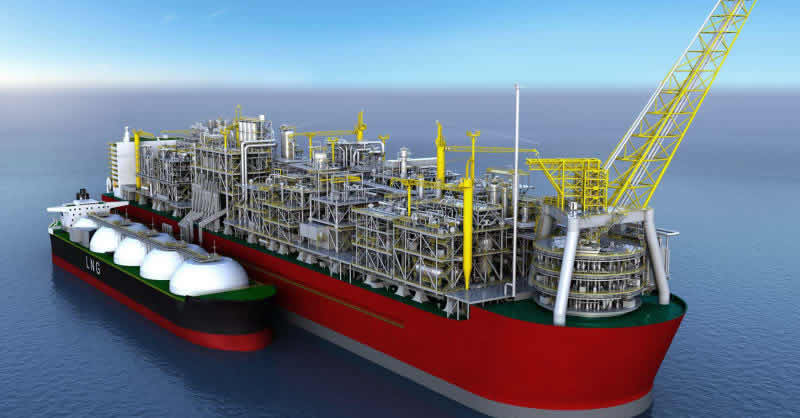
Nigeria’s natural gas production slid marginally by 0.12 per cent on a month-on-month basis to 7.93 billion standard cubic feet per day (bcf/d) in May 2026 from April’s 7.94bcf/d.
According to fresh data from the Nigerian Upstream Petroleum Regulatory Commission (NUPRC), the figure represents a 0.63 per cent year-on-year increase from 7.88bcf/d recorded in May 2025.
Breakdown of the May data shows Associated Gas contributed 3.96 bcf/d, while Non-Associated Gas accounted for 3.98bcf/d, highlighting a near-even split in Nigeria’s production mix and the growing strength of dedicated gas developments.
Domestic utilisation continued to expand. Sales to the local market rose to 2.18bcf/d, up from 2.03bcf/d previously, representing 26.6 per cent of total gas usage, as demand from power generation and industrial users strengthened under the national gas expansion agenda.
Export sales, however, declined to 3.07bcf/d, accounting for about 40 per cent of utilisation, while 2.11bcf/d (26.5 per cent) was consumed for field operations. Gas flaring stood at 0.57bcf/d, or 6.9 per cent, reinforcing gradual progress toward Nigeria’s 2030 zero-flare target.
Production has maintained a steady upward trend over the year, rising from 7.80bcf/d in January to 7.94bcf/d in April, before stabilising in May. Year-to-date performance averaged 7.87bcf/d, slightly higher than the first-quarter average.
Between January and April 2026, Nigeria produced 947.78bcf of gas. Of this, 872.69bcf was utilised, while 57.34bcf was flared, translating to utilisation levels of about 92 per cent, according to NUPRC’s provisional data.
Monthly performance showed consistent utilisation above 90 per cent: January recorded 91.4 per cent, February 93 per cent, March 93.2 per cent, and April 93.1 per cent, underscoring improved efficiency in gas utilisation across the value chain.
Domestic supply remained stable throughout the period, averaging between 59bcf and 66bcf monthly, while exports fluctuated but remained significant, with volumes peaking at 98.69bcf in April.
The commission noted that the growing contribution of non-associated gas reflects ongoing investments in dedicated gas projects and aligns with government efforts under the Decade of Gas initiative to expand domestic utilisation, reduce flaring, and strengthen energy security.
Nigeria, which holds over 200 trillion cubic feet of proven gas reserves, continues to face infrastructure and investment constraints that limit full monetisation of its resources, despite improving production and utilisation trends.

By Dipo Olowookere
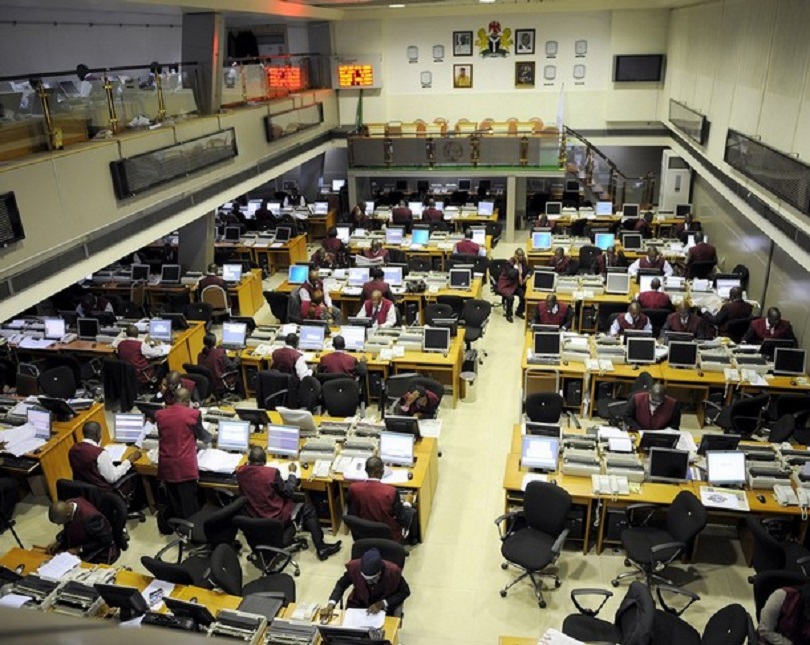
The Nigerian Exchange (NGX) Limited was further pulled back by 0.50 per cent on Tuesday as a result of profit-taking in some heavyweight stocks.
Like the preceding session, the key sectors of Customs Street were depressed yesterday, with the banking index down by 2.82 per cent. The consumer goods declined by 0.52 per cent, the insurance space lost 0.10 per cent, and the energy counter shrank by 0.03 per cent, while the industrial goods segment was flat.
Consequently, the All-Share Index (ASI) eased by 1,437.54 points to 241,984.80 points from 243,422.34 points, and the market capitalisation contracted by N922 billion to N155.204 trillion from N156.126 trillion.
The worst-performing stock was International Energy Insurance, which gave up 10.00 per cent to close at N5.76. Vitafoam dipped by 10.00 per cent to N189.00, Austin Laz crashed by 9.93 per cent to N3.90, SUNU Assurances depleted by 9.82 per cent to N3.58, and Sovereign Trust Insurance lost 8.37 per cent to finish at N2.30.
On the flip side, Conoil gained 9.79 per cent to trade at N213.00, Prestige Assurance also expanded by 9.79 per cent to N1.57, Neimeth jumped 9.74 per cent to N8.45, eTranzact chalked up 9.40 per cent to close at N16.30, and Cornerstone Insurance improved by 9.09 per cent to N5.40.
The bourse witnessed heavy sell-offs in some equities, with Sterling Holdings recording the sale of 100.9 million units worth N782.8 million to lead the activity log. UAC Nigeria transacted 49.4 million units valued at N9.1 billion, Access Holdings sold 28.8 million units for N699.3 million, Zenith Bank exchanged 29.4 million units worth N3.0 billion, and GTCO traded 20.2 million units valued at N2.7 billion.
At the close of transactions, market participants bought and sold 535.5 million shares worth N36.8 billion in 55,123 deals compared with 569.1 million shares valued at N31.4 billion traded in 77,652 deals on Monday. This implied that the trading value went up by 17.20 per cent, while the trading volume and the number of deals went down by 5.90 per cent and 29.01 per cent, respectively.
-
 Feature/OPED6 years ago
Davos was Different this year
-
Travel/Tourism10 years ago
Lagos Seals Western Lodge Hotel In Ikorodu
-

 Showbiz3 years ago
Estranged Lover Releases Videos of Empress Njamah Bathing
-
 Banking8 years ago
Sort Codes of GTBank Branches in Nigeria
-

 Economy3 years ago
Subsidy Removal: CNG at N130 Per Litre Cheaper Than Petrol—IPMAN
-

 Banking3 years ago
Sort Codes of UBA Branches in Nigeria
-

 Banking3 years ago
First Bank Announces Planned Downtime
-

 Sports3 years ago
Highest Paid Nigerian Footballer – How Much Do Nigerian Footballers Earn