
Economy
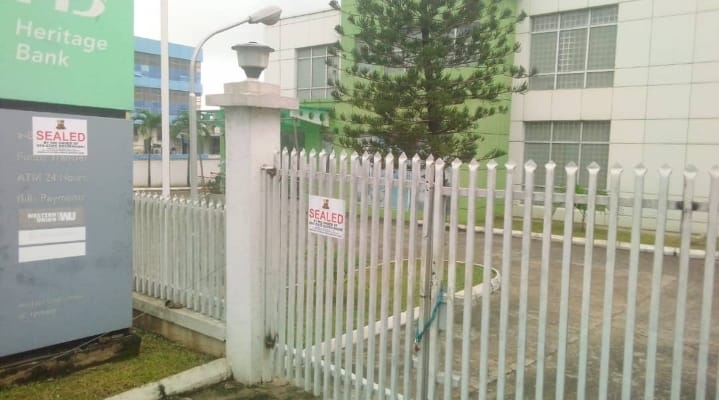
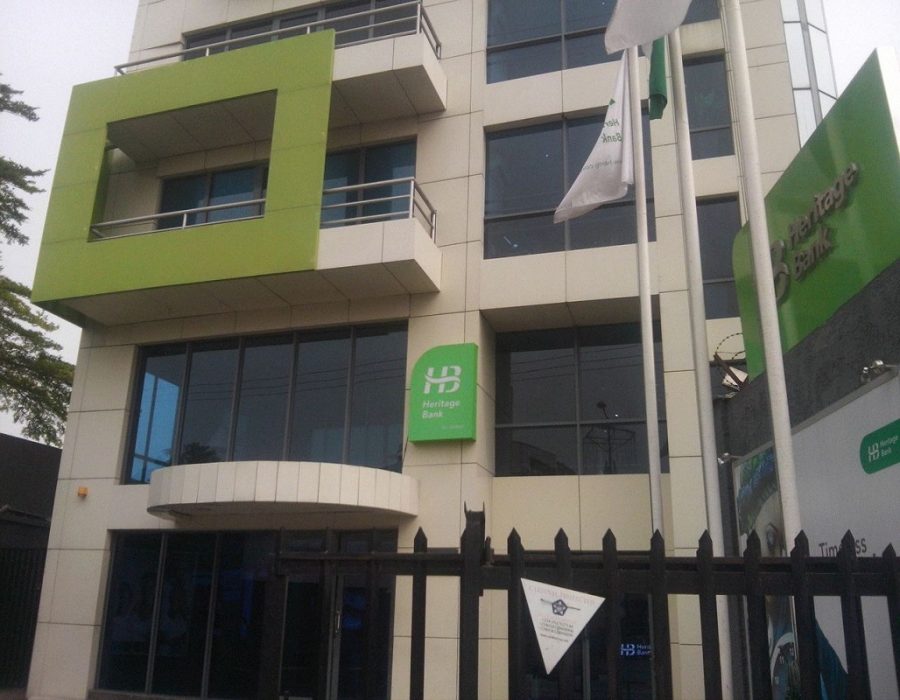
Heritage Bank Deepens Agro-Business Funding



By Modupe Gbadeyanka
Managing Director and CEO of Heritage Bank Plc, Mr Ifie Sekibo, has disclosed that the lender will focus in supporting the agricultural space through financing farmers to purchase modern technology.
The bank chief noted that the funding will bring about transformative development in the sector, which has been getting government’s attention lately.
Mr Sekibo, in a statement released on Wednesday by the Group Head of Corporate Communications at Heritage Bank, Mr Fela Ibidapo, reiterated the financial institution’s commitment to further deepen the drive to support agribusiness value chain in order to fast track food security and sufficiency in the country.
He said the bank will continue to make farming profitable to stakeholders and attractive to the youth by boosting the agric base of the nation so as to support food sufficiency.
Mr Sekibo stated that Heritage Bank will support the drive for cash crop commodities that would boost Nigeria’s foreign exchange earnings, which the President Muhammadu Buhari’s administration has always been cautious given the dangers the continuous reliance on imported food items pose to its efforts to create jobs as well as develop and diversify the economy.
Also, the bank’s Group Head, Agriculture Finance, Mr Olugbenga Awe, disclosed that Heritage Bank was committed to the development of agribusiness and small and medium enterprises (SMEs).
“Our support cuts across the entire value chain with focus on large corporates and small holder farmers. We encourage value addition and ultimately export,” he said.
He, however, noted that the bank’s support goes beyond food sufficiency to increasing cash crop commodities that would boost Nigeria’s foreign exchange earnings.
He hinted that Heritage Bank is effectively tackling the bottlenecks since it has long identified the opportunities in agribusiness, thereby offering solutions to ease of doing business in the sector.
“For ease of financing, we would be better off with functional commodity exchanges as a country. We can start by refinancing commodities through warehousing receipt systems, gradually we will move to crop receipt.
“With commodities exchange, the value-chain is strengthened and the whole system is structured.
“Exchange helps in reducing the long marketing chain, it helps in enforcement of commodity standards, it provides price certainty and in some cases storage and warehousing facilities,” Mr Awe suggested.
He further noted that, “If we sustain the current momentum on rice, we shall surely export rice in the nearest future, and the operative word here is sustaining the momentum. However, there is need for strategic alignment on objectives.
“The current focus by government is on small holders’ farmers using the instrumentality of the Anchor Borrowers Programme (ABP) by Central Bank of Nigeria.”
The Agriculture Finance’s Group Head also said to hasten the export drive, commercial farmers will have to step in and drive the process using mechanization on thousands of hectares of farmland with vast irrigation networks and all year round farming as most importers need large quantities delivered on schedule.
Meanwhile, he noted that with the Heritage Bank strategic partnership, CBN had continued to provide lot of supports through various on-lending scheme, as ABP has made visible and measurable impact especially in rice, while hoping other commodities especially grains would follow.
Mr Awe explained that via the strategic partnerships Heritage Bank have achieved vast footprints in agribusiness.
“For example, through our partnership with Triton Aqua Africa Limited and on-lending support from CBN, Heritage Bank has provided N2 billion for fishery to reduce our heavy reliance on fish import.
“Nigeria’s current annual demand for fish is estimated at 2.7 million metric tonnes and we currently produce about 800,000 metric tonnes.
“With support from CBN through Commercial Agriculture Credit Scheme CACS, Triton is now producing about 27,000 metric tonnes and their projection is to reach 100,000 metric tonnes in five years.
“From recent forecast, they will meet that projection easily. The bank is also supporting rice farmers under the ABP in Bakolori, Zamfara, Sanga in Kaduna and Soyabeans farmers in Rijana, Kaduna. Heritage Bank also has ongoing projects across the country,” he said.








By Adedapo Adesanya
The NASD Over-the-Counter (OTC) Securities Exchange extended its gains by 1.68 per cent on Tuesday, February 10, further lifting the Unlisted Security Index (NSI) by 63.37 points to 3,830.31 points from the previous session’s 3,766.94 points.
In the same vein, the market capitalisation of the bourse expanded by N37.92 billion during the session to N2.291 trillion from the N2.253 trillion it ended on Monday.
The growth was helped by six price gainers led by Central Securities Clearing System (CSCS), which gained N5.88 to sell at N64.73 per share versus N58.85 per share, FrieslandCampina Wamco Nigeria Plc rose by N3.67 to N69.67 per unit from N66.00 per unit, Afriland Properties Plc increased by 94 Kobo to N15.95 per share from N15.01 per share, Geo-Fluids Plc appreciated by 33 Kobo to N4.41 per unit from N4.08 per unit, IPWA Plc soared by 26 Kobo to N2.85 per share from N2.59 per share, and Food Concepts Plc improved by 26 Kobo to N2.89 per unit from N2.63 per unit.
Business Post reports that there were three price losers yesterday, led by MRS Oil, which lost N20.00 to trade at N180.00 per share versus N200.00 per share, NASD Plc dipped by N3.60 to N51.40 per unit from N55.00 per unit, and Air Liquide Plc depreciated by N2.21 to N20.32 per share from N22.53 per share.
The activity level was down on Tuesday, as the volume of securities slid 50.1 per cent to 6.9 million units from 13.3 million units, the value of securities decreased by 10.4 per cent to N89.1 million from N99.3 million, and the number of deals reduced by 2.1 per cent to 46 deals from 47 deals.
CSCS Plc was the most traded stock by value on a year-to-date basis, with 17.7 million units sold for N752.8 million, Geo-Fluids Plc recorded the sale of 29.2 million units valued at N149.8 million, and FrieslandCampina Wamco Nigeria Plc ended with a turnover of 1.8 million units worth N119.8 million.
The most traded stock by volume on a year-to-date basis was Geo-Fluids Plc with 29.2 million units exchanged for N149.8 million, followed by CSCS Plc with 17.7 million units traded for N752.8 million, and Mass Telecom Innovation Plc with 15.1 million units valued at N6.1 million.

By Adedapo Adesanya
The consistent reform agenda of the Central Bank of Nigeria (CBN) aimed at enhancing market stability by improving foreign exchange (FX) liquidity further strengthened the Nigerian Naira against the US Dollar in the Nigerian Autonomous Foreign Exchange Market (NAFEX) on Tuesday, February 10, by N3.24 or 0.24 per cent to N1,351.02/$1 from the previous day’s N1,354.26/$1.
At the black market, the Naira gained N20 against the United States Dollar yesterday to trade at N1,430/$1 compared with the preceding day’s N1,450/$1, and at the GTBank FX desk, it improved its value by N16 to sell for N1,363/$1, in contrast to the N1,379/$1 it was exchanged a day earlier.
The domestic currency also appreciated against the Euro in the official market during the session by N6.70 to N1,606.49/€1 from the preceding session’s N1,613.19/€1 but depreciated against the Pound Sterling by 85 Kobo to close at N1,846.57/£1 compared with Monday’s closing price of N1,845.72/£1.
Nigeria’s FX market has continued the year on a firmer footing, extending the positive momentum recorded in 2025.
The Governor of the central bank, Mr Yemi Cardoso, said reforms have extended across the financial landscape, anchored on disinflation, FX market normalisation, and financial-system resilience, which are strengthening real-sector confidence.
In addition, stronger trade receipts, reflecting the impact of elevated global oil prices, helped boost FX supply and support currency stability.
Meanwhile, the cryptocurrency market was under pressure, with analysts saying the recent drawdown, which is the steepest since the 2024 halving, has come on low spot trading volumes, suggesting retail investors have mostly stepped aside while leveraged derivatives drive price moves.
This comes ahead of a closely-watched US employment data for January due on Wednesday, which the US government officials suggest could be weaker than forecast.
Originally scheduled for last Friday, the government’s January Nonfarm Payrolls Report is now coming out on Wednesday morning due to the brief federal shutdown last month.
Solana (SOL) weakened by 4.5 per cent to $81.91, Binance Coin (BNB) slumped 4.4 per cent to $608.22, Ripple (XRP) dipped 4.3 per cent to $1.37, Ethereum (ETH) dropped 3.7 per cent to $1,975.44, and Dogecoin (DOGE) saw a 3.2 per cent fall in value to trade at $0.0916.
Further, Bitcoin (BTC) went down by 2.8 per cent to $67,517.93, Cardano (ADA) slid 2.7 per cent to $0.2581, and Litecoin (LTC) declined by 2.1 per cent to $52.55, while the US Dollar Tether (USDT) and the US Dollar Coin (USDC) closed flat at $1.00 each.

By Dipo Olowookere
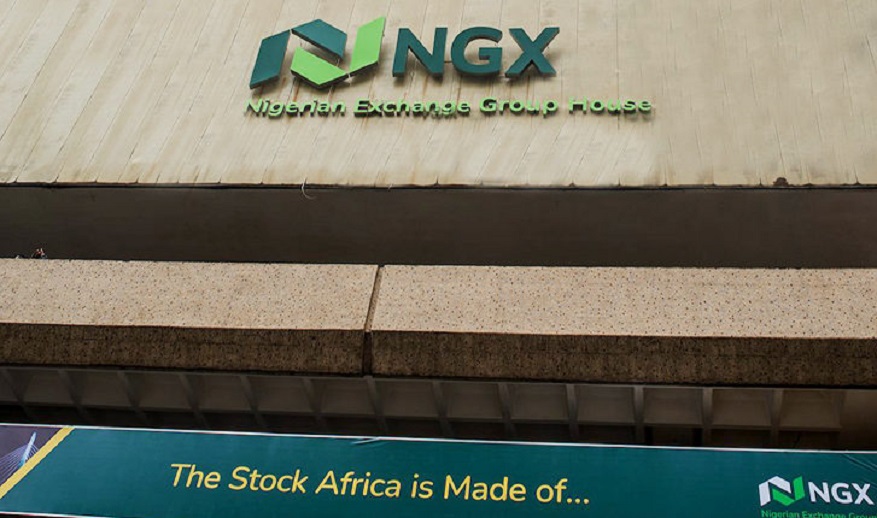
The Nigerian bourse showed no signs of slowing its bull run as it further appreciated by 1.65 per cent on Tuesday, its highest daily gain in 2026.
This was influenced by continued interest in shares in the energy, consumer goods and industrial goods sectors.
Data from the Nigerian Exchange (NGX) Limited revealed that the energy space increased by 2.97 per cent, the industrial goods counter appreciated by 2.93 per cent, the banking index expanded by 1.83 per cent, the consumer goods sector improved by 0.16 per cent, and the insurance segment rose by 0.01 per cent.
As a result, the All-Share Index (ASI) added 2,863.20 points to close at 176,809.42 points compared with the previous day’s 173,946.22 points, and the market capitalisation soared by N1.838 trillion to N113.497 trillion from N111.659 trillion.
The growth recorded by Customs Street yesterday was mainly due to buying pressure on some bellwether stocks like MTN, GTCO, BUA Cement, Lafarge Africa and others.
Sixty-six equities ended on the gainers’ chart during the session, while 22 equities finished on the losers’ chart, indicating a positive market breadth index and bullish investor sentiment.
The quartet of Omatek, Deap Capital, eTranzact, and John Holt chalked up 10.00 per cent each to sell for N3.19, N8.25, N20.35, and N8.80 apiece, while Vitafoam Nigeria gained 9.98 per cent to settle at N105.80.
Conversely, Abbey Mortgage Bank lost 9.82 per cent to trade at N12.40, SAHCO declined by 9.06 per cent to N150.00, Guinea Insurance slipped by 6.67 per cent to N1.54, Consolidated Hallmark shrank by 6.64 per cent to N4.50, and Livestock Feeds depleted by 6.34 per cent to N6.65.
A total of 1.3 billion stocks valued at N50.4 billion exchanged hands in 58,965 deals on Tuesday compared with the 775.2 million stocks worth N27.9 billion transacted in 65,960 deals on Monday, implying a fall in the number of deals by 10.61 per cent, and a growth in the trading volume and value by 67.70 per cent and 80.65 per cent, respectively.
Deap Capital was the most active stock for the day with a turnover of 283.1 million units valued at N2.0 billion, Access Holdings traded 135.5 million units worth N3.2 billion, Veritas Kapital transacted 67.3 million units for N149.7 million, Tantalizers exchanged 54.7 million units valued at N289.8 million, and Zenith Bank sold 52.1 million units worth N4.0 billion.











-
 Feature/OPED6 years ago
Davos was Different this year
-
Travel/Tourism10 years ago
Lagos Seals Western Lodge Hotel In Ikorodu
-

 Showbiz3 years ago
Estranged Lover Releases Videos of Empress Njamah Bathing
-
 Banking8 years ago
Sort Codes of GTBank Branches in Nigeria
-

 Economy3 years ago
Subsidy Removal: CNG at N130 Per Litre Cheaper Than Petrol—IPMAN
-

 Banking3 years ago
Sort Codes of UBA Branches in Nigeria
-

 Banking3 years ago
First Bank Announces Planned Downtime
-

 Sports3 years ago
Highest Paid Nigerian Footballer – How Much Do Nigerian Footballers Earn
6 Comments