

Economy
Financial Stocks Contribute 77.2% to NSE Turnover



By Dipo Olowookere
In the last trading week at the Nigerian Stock Exchange (NSE), the financial services industry, measured by volume, led the activity chart.
The sector, Business Post gathered, led with a total of 1.783 billion shares valued at N15.865 billion were traded by investors in 15,948 deals.
This, the NSE said, represented 77.17 percent and 64.55 percent to the total equity turnover volume and value respectively.
The conglomerates industry claimed the second spot with 239.226 million shares worth N571.910 million in 1,251 deals, while the third place was occupied by the consumer goods industry with a turnover of 85.663 million shares worth N4.522 billion in 3,673 deals.
In all, a total turnover of 2.311 billion shares worth N24.577 billion in 27,836 deals were traded this week by investors on the floor of the NSE in contrast to a total of 2.737 billion shares valued at N32.042 billion that exchanged hands last week in 32,217 deals.
Trading in the top three equities namely – Zenith International Bank Plc, Transnational Corporation of Nigeria Plc and FBN Holdings Plc (measured by volume) accounted for 665.483 million shares worth N6.695 billion in 5,649 deals, contributing 28.80 percent and 27.24 percent to the total equity turnover volume and value respectively.
In addition, the NSE All-Share Index and Market Capitalization depreciated by 4.99 percent to close the week at 32,122.14 and N11.108 trillion respectively.
Similarly, all other Indices finished lower during the week with the exception of the NSE ASeM Index, which appreciated by 0.08 percent respectively.
In the week, 23 equities appreciated in price, lower than 38 equities of the previous week and 52 equities depreciated in price, higher than 42 equities of the previous week, while 98 equities remained unchanged higher than 93 equities recorded in the preceding week.
Also traded during the week were a total of 63,927 units of Exchange Traded Products (ETPs) valued at N841,330.04 executed in 11 deals compared with a total of 16,300 units valued at N973,376.00 transacted last week in 3 deals.
Furthermore, a total of 2,212 units of Federal Government Bonds valued at N2.098 million were traded this week in 7 deals, compared with a total of 12,193 units valued at N12.440 million transacted last week in 14 deals.
Activities will resume next week at the stock exchange on Wednesday, June 28, 2017, due to the public holiday declared by the Federal Government on Monday and Tuesday to mark the end of Ramadan by Muslims.











By Adedapo Adesanya
The Independent Petroleum Marketers Association of Nigeria (IPMAN) has warned that member filling stations will stop selling petrol if the federal government tries to enforce a planned price control.
Speaking to Punch Newspapers, the National Publicity Secretary of the fuel marketers, Mr Chinedu Ukadike, said the warning was in response to comments by the Minister of State for Petroleum Resources (Oil), Mr Heineken Lokpobiri, that the government would not tolerate profiteering and other practices that exploit fuel consumers.
Mr Lokpobiri, speaking in Abuja at the opening ceremony of the 2026 General Counsel and Legal Advisers Forum organised by the Nigerian Midstream and Downstream Petroleum Regulatory Authority (NMDPRA), reiterated that although the era of government-fixed petrol prices was over, deregulation did not mean regulators should abdicate their responsibility to protect consumers.
In response, the IPMAN mouthpiece denied allegations of profiteering, saying many marketers are running into losses with the series of reductions carried out lately by the Dangote refinery.
Mr Ukadike said the federal government should first investigate the root cause of the current high petrol prices and boost competition by making sure its refineries work, stressing that marketers will sell what they buy.
“Marketers will shut down if they try somehow to enforce price control. We are going to shut down our stations nationwide. You can’t be regulating a deregulated market. You can’t tell me how much to sell my product without trying to know how much I bought it,” he told the newspaper.
He also said independent marketers are losing money.
“We bought petrol at a particular rate a few days ago; on our way to our filling stations, there was a reduction. We have been struggling with the price. We have been struggling against financial losses. We are also struggling against stagnation due to low patronage of our products. Because those marketers who are purchasing now are purchasing at a lower price, and they are selling cheaper.
“If you don’t bring down your price, you cannot see buyers. This is the beauty of deregulation. If you cannot compete, you will not survive in the market. And because most of us are trading on bank loans, the bank does not know when the price goes up or goes down. Their interest rate is fixed; their return on investment is fixed. So, you must pay them. This is the situation we find ourselves in.”
He also called for increased competition and questioned the current arrangement.
“It is not about going to filling stations to check who is selling at higher prices. Do you know how much I bought the fuel for? Can you have a regulated market in a deregulated economy? You can’t be blowing hot and cold at the same time. The PIA must be followed to the letter. If they try to enforce price control, we will shut down,” he said in parts of the interview.
Crude prices have dropped from a high of $120 during the US-Iran war to as low as $73 a barrel, but this has not translated to a reprieve in the price of petrol at the pump.
By Adedapo Adesanya
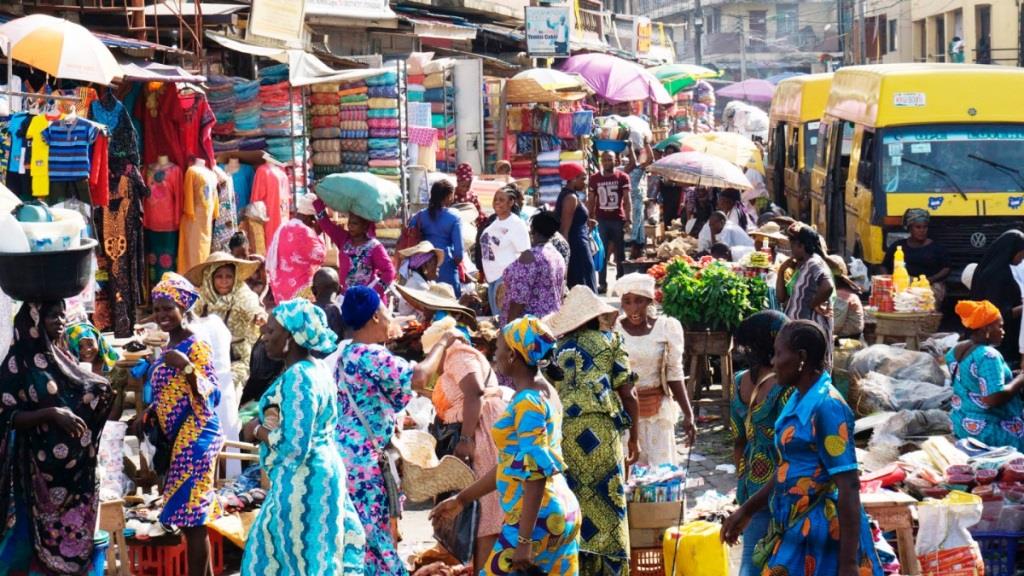
Nigeria Employers’ Consultative Association (NECA) has inaugurated the country’s first Environmental, Social and Governance (ESG) Implementation Guide for Micro, Small and Medium Enterprises (MSMEs) to strengthen business sustainability.
The guide was inaugurated on Tuesday during the 2026 Nigeria Employers’ Summit in Abuja in collaboration with the International Labour Organisation (ILO).
Chairman of the NECA ESG Advisory Board, Mr Femi Jaiyeola, described the guide as a milestone for strengthening the competitiveness and sustainability of Nigerian MSMEs.
He said MSMEs remained the backbone of Nigeria’s economy and required practical tools to compete in an increasingly sustainability-driven global business environment.
Mr Jaiyeola said ESG had evolved beyond regulatory compliance into a strategic business tool for attracting investment, improving competitiveness and enhancing long-term enterprise value.
He said ESG also presented significant opportunities for MSMEs and Nigeria’s economy beyond meeting regulatory obligations.
According to him, the guide comes as regulators, financial institutions and global markets increasingly demand sustainable business practices from enterprises of all sizes.
The official said ESG reporting was expected to become mandatory in Nigeria by 2030, urging MSMEs to begin preparations immediately.
He said the guide provided a practical roadmap to help MSMEs adopt ESG principles progressively while delivering measurable business value and organisational resilience.
According to him, ESG adoption will improve access to finance, strengthen business reputation and expand opportunities in international value chains.
He described the guide as a practical tool that would enable Nigerian MSMEs to compete, grow and thrive in a sustainability-driven economy.
Mr Jaiyeola commended ILO consultants and members of the NECA ESG Advisory Board for supporting the development of the implementation guide.
He recalled that NECA, with ILO support, launched an ESG assessment on Dec. 4, 2025, to strengthen sustainability practices across Nigerian businesses.
According to him, the assessment highlighted the need to integrate MSMEs into Nigeria’s ESG framework because of their contributions to economic growth and employment.
Mr Jaiyeola said the implementation guide was the first designed specifically for MSMEs in Nigeria and, to NECA’s knowledge, across Africa.
He expressed confidence that the guide would help MSMEs understand ESG principles and improve competitiveness in local and international markets.
Mr Jaiyeola disclosed that six NECA officials were undergoing specialised ESG training for SMEs at the ILO International Training Centre in Turin, Italy.
He said the officials would train MSMEs across Nigeria’s six geopolitical zones after completing the programme. According to him, the initiative demonstrates NECA’s commitment to building business capacity for sustainability and global competitiveness.
By Adedapo Adesanya
The World Bank has approved $1.25 billion in development financing to help Nigeria spur economic growth and create jobs.
Unveiled under its Nigeria Actions for Investment and Jobs Acceleration programme, the approval was announced on Wednesday alongside the launch of a new Country Partnership Framework for Nigeria, spanning 2026 to 2032.
The global lender, in a statement, noted that the newly endorsed strategy aims to guide its support over the next six years, primarily focusing on creating higher-quality jobs.
The Bretton Woods-based bank said the $1.25 billion Development Policy Financing operation is expected to back reforms aimed at improving Nigeria’s business environment and strengthening long-term economic growth.
According to the statement, the planned reforms include expanding capital markets, updating regulations for the digital economy and e-governance, accelerating electricity sector reforms, reducing trade barriers in line with Nigeria’s commitments under the Economic Community of West African States (ECOWAS) and the African Continental Free Trade Area (AfCFTA), improving access to quality agricultural seeds and increasing domestic revenue generation.
The loan comes amid increased criticism over the rate of borrowing under the Bola Tinubu-led administration, which has seen the country’s debt profile now almost at N160 trillion, as per the latest data from the Debt Management Office (DMO).
The Bank stressed that the new framework is built on Nigeria’s recent macroeconomic reforms, which it noted have successfully driven economic growth, bolstered external reserves, and improved investor confidence.
“The World Bank Group has endorsed a new Country Partnership Framework for Nigeria spanning 2026–2032, setting out a strategy to create more and better jobs at scale by unlocking private sector-led growth,” the bank stated in the statement.
World Bank Country Director for Nigeria, Mr Mathew Verghis, while highlighting the need to convert financial benchmarks into human development, emphasised the core mission of the project.
“Our new Country Partnership Framework provides the strategy for how the World Bank Group will support Nigeria over the coming years, with a strong focus on helping to create more and better jobs, particularly by enabling private sector-led growth.
“The recent macroeconomic gains have been critical to help stabilise the economy. Translating improved macroeconomic conditions into better living standards will require addressing the structural constraints to spur private sector investment and job creation,” Mr Verghis said.

-
 Feature/OPED6 years ago
Davos was Different this year
-
Travel/Tourism10 years ago
Lagos Seals Western Lodge Hotel In Ikorodu
-

 Showbiz3 years ago
Estranged Lover Releases Videos of Empress Njamah Bathing
-
 Banking8 years ago
Sort Codes of GTBank Branches in Nigeria
-

 Economy3 years ago
Subsidy Removal: CNG at N130 Per Litre Cheaper Than Petrol—IPMAN
-

 Banking3 years ago
Sort Codes of UBA Branches in Nigeria
-

 Banking3 years ago
First Bank Announces Planned Downtime
-

 Sports3 years ago
Highest Paid Nigerian Footballer – How Much Do Nigerian Footballers Earn