
Banking
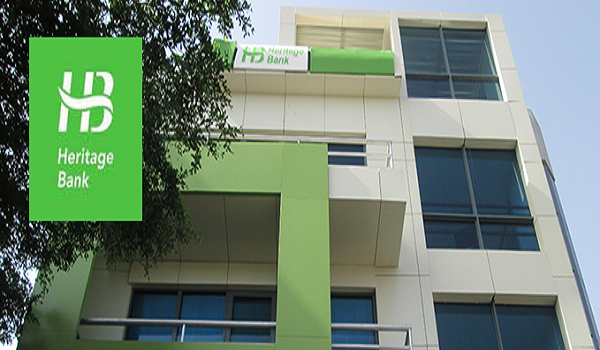
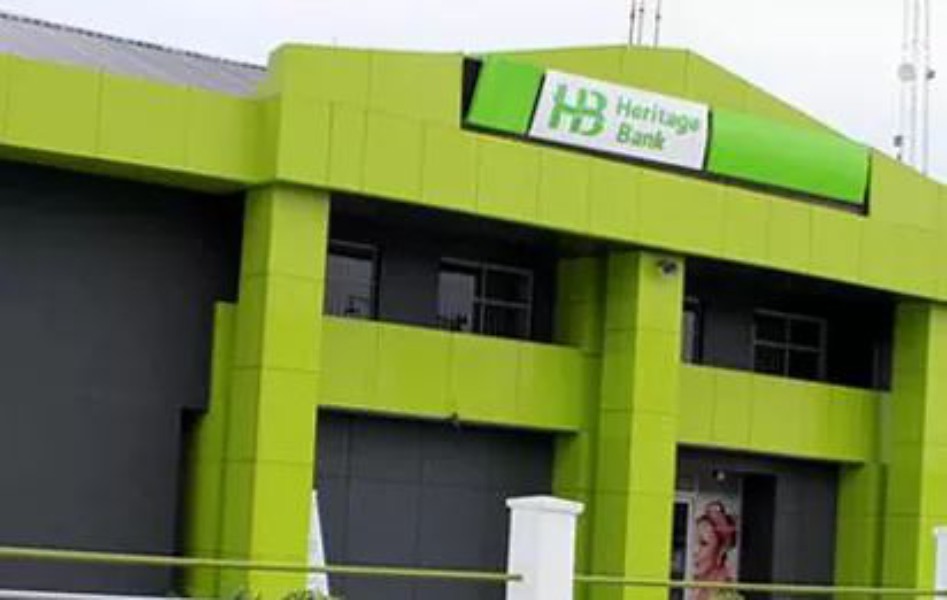
Heritage Bank Customers in Panic Over Bank’s True State

By Dipo Olowookere
If a poll is conducted on which bank customers in Nigeria are in confused and panic mode at the moment, the result might show those with Heritage Bank in the lead.
News reports hitting the cyber space lately concerning the financial institution have not been very palatable to the ears. Even the deaf and the blind are getting worried too.
In the past months, Heritage Bank has had to run to the roof tops to allay the fears of its numerous customers that it is not in distress as being reported in some quarters.
Also, the Central Bank of Nigeria (CBN) has had to join in the ‘town crying’ that Heritage Bank is healthy and not heading to the rocks.
Some weeks ago, it was reported that Heritage Bank Plc was unable to meet customers’ immediate withdrawal requests and also wiped out all foreign currency domiciliary accounts.
It was further alleged in the report that senior management staff of the bank plunged it to crisis through embezzlement carried out by award of bogus contracts to relatives.
According to a latest report, it was alleged that Heritage Bank is presently like a ghost its management is desperately trying to give the appearance of a virile financial institution.
It was also alleged that Heritage Bank sold one of its properties on Femi Pearse Street, Victoria Island, Lagos, to attain a measure of liquidity and used the proceeds to pay the rent of the bank’s offices at Ajose Adeogun and Moshood Olugbani Streets, both on Victoria Island, Lagos.
Furthermore, the report further alleged that the bank’s management has been borrowing money to pay salaries since September 2016 and has also embarked on sacking its workers in batches so as to lessen its workforce due to its present state.
In all these, customers of the bank do not know what step to take at the moment; whether to quickly withdraw all their hard-earned money or leave it with the bank or if to believe assurances from the bank and the CBN or to reports warning them of imminent danger.
What has fuelled the dilemma more is the fact that in Nigeria, it is normal for management of banks to make things look very good until bubble bursts. Cases of banks looking very vibrant on the outside in the late 2000s, which were later sold, quickly come to mind.
It is now being feared if Heritage Bank customers won’t turn out to be like participants of MMM Nigeria, who were being assured of safety of their money by operators despite warnings from government agencies, but only to wake up this week to learn that they have been barred from withdrawing their money until 2017, dashing their hopes of a vibrant Christmas.
But in all, Heritage Bank has continued to assure its customers that it is still very healthy and that their money is in safe hands.






By Modupe Gbadeyanka
Some top foreign exhibitors participating in the much-anticipated Ecobank Adire Lagos Experience commencing on Thursday, June 11, 2026, are already in Nigeria.
The four-day event, closing on June 14, will witness participation from notable African fashion brands from Ghana, Sierra Leone, Senegal and the Benin Republic.
Among the international exhibitors confirmed for this year’s edition are Creative Hub Africa and Shades of Class from Sierra Leone, Drame Khadidatou from Senegal, Tampoori from Ghana, and Naylah Collection from the Republic of Benin. Their participation highlights the growing continental appeal of the Ecobank Adire Lagos Experience as a platform for cultural exchange, business collaboration and market access across Africa.
More than 100 exhibitors and vendors, including leading Nigerian brands such as Obida Design Associates, This Is Us, Imani Kids, Ashabi Fads, E25Dresses, Miné by Ejiro Amos Tafiri, Buss Fabrics Store, Aina Aladire and many others, will participate, showcasing the richness of African craftsmanship, innovation and entrepreneurship.
It was gathered that organisers are putting finishing touches to the venue of the exhibition, the prestigious Ecobank Pan African Centre (EPAC) on Victoria Island, Lagos.
All necessary arrangements to ensure a seamless, secure and memorable experience for exhibitors and attendees are being put in place by the bank, further underscoring its commitment to promoting African creativity, entrepreneurship and intra-African trade.
The Head of SMEs, Partnerships and Collaborations at Ecobank Nigeria, Mrs Omoboye Odu, said attendees can look forward to a vibrant showcase of fashion, craftsmanship, art, music, culture and entrepreneurship, with participants drawn from Nigeria and several other African countries.
“We are fully prepared and excited to welcome guests from across Nigeria and the African continent to another edition of the Ecobank Adire Lagos Experience. From exhibition spaces and cultural showcases to networking opportunities and customer engagement activities, every necessary arrangement has been put in place to ensure a seamless and rewarding experience for all attendees,” she stated.
“The Ecobank Adire Lagos Experience continues to evolve as a unique platform that connects creatives, entrepreneurs and consumers from across Africa. Attendees can look forward to exceptional products, interactive sessions, entertainment, cultural exhibitions and valuable opportunities to build relationships, explore new markets and expand their businesses,” Mrs Odu added.
Beyond the exhibition, participants will have opportunities to network, explore business partnerships, discover unique products and experience the diversity and vibrancy of African culture.
The event is open to the public, and visitors can look forward to an immersive experience that seamlessly blends tradition, innovation, fashion, enterprise and entertainment in a grand celebration of Africa’s creative economy.
Over the years, the Ecobank Adire Lagos Experience has grown into one of Nigeria’s foremost platforms for promoting indigenous textile production, supporting small and medium-sized enterprises, and showcasing the ingenuity of African creatives.
The programme has also played a significant role in expanding market access for businesses while preserving and celebrating Africa’s rich cultural heritage.
By Modupe Gbadeyanka
Union Bank of Nigeria has again stressed the importance of education to the nation, saying it is a strategic investment and not a social obligation.
The Chief Brand and Marketing Officer of Union Bank, Ms Olufunmilola Aluko, said this is why the company continues to throw its full weight behind quality educational programmes.
According to her, education is central to the financial institution’s purpose rather than a peripheral cause.
She was speaking in respect to the bank’s partnership with Nigerian Breweries Plc and the Felix Ohiwerei Education Trust Fund for the organisation of the 12th Maltina Teacher of the Year Competition.
The flag off of this year’s programme was held in Lagos on Monday, and it is the third consecutive year Union Bank has served as a partner.
“At Union Bank, we believe education is not a social obligation. It is a strategic investment. A nation that does not invest in its teachers and its learners is borrowing from its own future, and we are in the business of building futures, not mortgaging them,” Ms Aluko stated.
She pointed to Edu360, the bank’s flagship education initiative under the UnionCares platform, as the practical expression of that conviction.
Edu360 spans the full education value chain, from widening access for children in underserved communities and investing in the teachers who multiply learning outcomes, to building digital literacy and STEM capability, and preparing young people for employment or enterprise.
On the role of the financial sector, Ms Aluko challenged her peers to think differently.
“Financial institutions need to stop thinking of ourselves as donors and start thinking of ourselves as ecosystem builders. We can embed financial literacy into school curricula, design products that help parents save for their children’s education, and convene policymakers, educators and the private sector around shared goals. Above all, we can show up consistently, not only when it suits our brand calendars,” she disclosed.
She noted that lasting change requires sustained collaboration between the public and private sectors, and pointed to the strength of the signal sent when institutions commit to teachers at scale, citing the competition’s N100 million grand prize. With twelve editions and more than three hundred teachers recognised to date, she described MTOTY as a model of the consistency Union Bank embodies through Edu360.
Her closing message was directed at educators across the country, stating, “To every teacher in this country, what you do is not small. Your story deserves to be told, and Nigeria needs to know your name.”

By Adedapo Adesanya
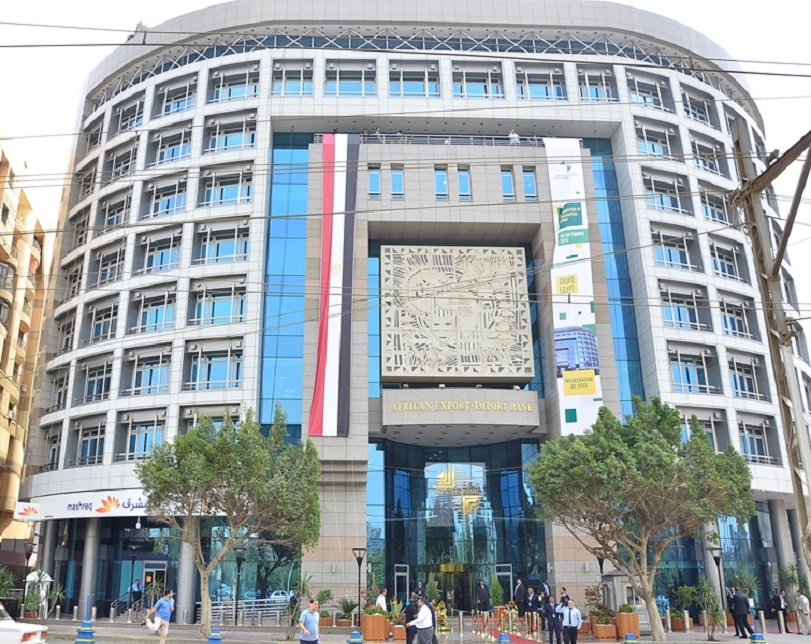
The African Energy Bank (AEB) will now officially launch in September in Abuja after failing to meet its targeted first-half 2026 commencement date, marking a fresh timeline for the continent’s energy financing institution.
The Secretary General of the African Petroleum Producers’ Organisation (APPO), Mr Farid Ghezali, as per Argus Media, acknowledged “several postponements” but said the new deadline is “to make the bank operational in September 2026 in view of the incompressible deadlines from an administrative point of view”.
A planned April start was pushed back to June before APPO members were again mobilised around a third-quarter deadline. At a recent meeting, the Nigerian government reiterated the country’s commitment to the African Energy Bank’s formal commencement of operations.
The bank was established by the APPO and the African Export-Import Bank (Afreximbank) to address the critical financing needs of Africa’s oil, gas and broader energy sectors and mitigate the global funding pressure against hydrocarbon investments in Africa.
The APPO scribe said funding has remained a major challenge even when the Nigerian government said the headquarters of the bank was ready since 2025.
Mr Ghezali called on APPO members to redeem their pledges towards the $500 million start-up capital before the end of June.
Argus quoted sources as saying that 91 per cent of the capital had been raised and that the Nigerian National Petroleum Company (NNPC) Limited and the Nigerian Content Development and Monitoring Board (NCDMB) would make up the balance.
Mr Ghezali said AEB aims to reverse the situation that sees Africa importing more than 60 per cent of its oil products consumption and producing only 12 per cent of global upstream liquids while being home to many of the world’s largest national oil and gas reserves.
He stated that the bank will target the financing of 20–30 LNG, petroleum products pipeline, terminals and refining projects by 2030. Projects that monetise natural gas as a transition fuel will take up 40 per cent of AEB’s loan book, and priority will be given to projects that contribute towards the creation of “500,000 to 1 million direct and indirect jobs in the energy value chain”.
Speaking at a Nigerian energy summit in February, Mr Ghezali said the bank plans to raise $15 billion in its first three years of operations to fund strategic energy projects.
He also unveiled the three-phase road map for the AEB, including “Phase one, which, as I said in the first half of 2026, launches the African Energy Bank platform with 10-pillar projects involving countries such as Nigeria, Angola, and Libya. APPO certification and integration of IOCs such as Shell or ENI.”
“Phase two, in 2027, we plan to start a regional gas-oil trade, integrating the principles of the Bassari Declaration for 15 per cent local content.”
Phase three, reaching 2030, the African Energy Bank will be a true African financial hub, with $200 billion mobilised.”
-
 Feature/OPED6 years ago
Davos was Different this year
-
Travel/Tourism10 years ago
Lagos Seals Western Lodge Hotel In Ikorodu
-

 Showbiz3 years ago
Estranged Lover Releases Videos of Empress Njamah Bathing
-
 Banking8 years ago
Sort Codes of GTBank Branches in Nigeria
-

 Economy3 years ago
Subsidy Removal: CNG at N130 Per Litre Cheaper Than Petrol—IPMAN
-

 Banking3 years ago
Sort Codes of UBA Branches in Nigeria
-

 Banking3 years ago
First Bank Announces Planned Downtime
-

 Sports3 years ago
Highest Paid Nigerian Footballer – How Much Do Nigerian Footballers Earn