

Economy
Nigeria’s November Inflation Rate To Hit 18.45%—Report


By Modupe Gbadeyanka
A report by FSDH Securities Limited has disclosed that the November 2016 inflation rate (year-on-year) to increase further to 18.45 percent from 18.33 percent it recorded in the month of October 2016.
According to the report, the expected increase in the inflation rate will be driven by higher prices within the Food and Non-Alcoholic Beverages division, as well as the depreciation in the foreign exchange rate during the month.
The National Bureau of Statistics (NBS) is expected to release the inflation rate for the month of November 2016 on December 15, 2016 based on the data calendar on its website.
The Food Price Index (FPI) released today by the Food and Agriculture Organization (FAO) shows that the FPI trended downward in November.
The Index was down by 0.43 percent, compared with the revised October figure.
The FPI’s easing in November 2016 was driven by a sharp fall in sugar prices, which was more than enough to offset a rebound in the prices of vegetable oils. The FAO Sugar Index fell by 8.93%, the first decline after six consecutive months of increase.
According to FSDH Securities Limited, the weakening Brazilian currency against the US Dollar coupled with reports of a higher harvest in the Central South, Brazil’s main producing region put downward pressure on prices.
The FAO Cereal Price Index declined by 0.60 percent, mainly due to the decrease in the prices of wheat and rice.
The FAO Meat Price Index was down by 0.21 percent, almost unchanged from its revised value for October.
On the flip side, the FAO Dairy Index appreciated by 1.95% from October, as prices of whole milk powder and butter firmed up.
The FAO Vegetable Oil Price Index appreciated by 4.55 percent, marking the highest level since August 2014.
The strong rebound was primarily driven by the price of palm oil on the heels of lower than anticipated production in Southeast Asia.
FSDH Securities Limited disclosed that its analysis indicates that the value of the Naira appreciated at the inter-bank market while it depreciated at the parallel market by 2.09 percent to close at $/N478 from $/N468 at the end of October.
The depreciation at the parallel market led to an increase in the prices of imported consumer goods in Nigeria between the two months under review. The prices of food items that FSDH Research monitored in November 2016 moved in varying directions.
The prices of palm oil, Irish potatoes, meat and rice were up by 32.17 percent, 10.78 percent, 2.56 percent and 1.99 percent. While the prices of tomatoes and onions were down by 17.89 percent and 2.78 percent. The prices of garri, yam, beans, sweet potatoes and vegetable oil remained unchanged.
The movement in the prices of food items during the month resulted in a 0.7 percent increase in our Food and Non-Alcoholic Index to 214.41 points.
The report further said it noticed increases in Clothing and Footwear; Housing, Water, Electricity, Gas & Other Fuels divisions between October and November 2016.
“Our model indicates that the price movements in the consumer goods and services in November 2016 would increase the Composite Consumer Price Index (CCPI) to 211.28 points, representing a month-on-month increase of 0.76 percent,” it said, adding that it estimates that the increase in the CCPI in November will produce an inflation rate of 18.45 percent.




By Adedapo Adesanya
The NASD Over-the-Counter (OTC) Securities Exchange was weakened by 1.19 per cent on Thursday, July 9, by three bellwether stocks on the platform.
Consequently, the NASD Security Index (NSI) lost 50.47 points to close at 4,199.73 compared with the previous day’s 4,250.20 points, and the market capitalisation gave up N30.29 billion to settle at N2.520 trillion versus Wednesday’s closing value of N2.551 trillion.
The price decliners were led by 11 Plc, which fell by N20.54 to sell at N200.01 per share compared with the preceding session’s N220.55 per share. FrieslandCampina Wamco Nigeria Plc crashed by N11.48 to trade at N140.51 per unit compared with the N151.98 per unit it ended a day earlier, and UBN Property Plc depreciated by 19 Kobo to N1.80 per share from N1.99 per share.
Business Post reports that the sole gainer at the session was IPWA Plc, which added 88 Kobo to quote at N9.71 per unit, in contrast to the previous day’s closing price of N8.83 per unit.
Yesterday, the volume of securities traded by market participants surged by 14,965.4 per cent to 23.9 million units from the previous session’s 158,933 units, and the value of stocks rose by 528.1 per cent to N68.2 million from the preceding session’s N10.9 million, while the number of deals decreased by 3.2 per cent to 30 deals from Wednesday’s 31 deals.
Great Nigeria Insurance (GNI) Plc closed the trading day as the most active stock by value on a year-to-date basis, with 3.4 billion units valued at N8.4 billion, trailed by Infrastructure Credit Guarantee (Infracredit) Plc with 2.3 billion units sold for N6.5 billion, and Central Securities Clearing System (CSCS) Plc with 70.7 million units exchanged for N4.9 billion.
GNI Plc also closed the day as the most traded stock by volume on a year-to-date basis, with 3.4 billion units worth N8.4 billion, followed by Infracredit Plc with 2.3 billion units transacted for N6.5 billion, and Resourcery Plc with 1.1 billion units traded for N415.7 million.
By Adedapo Adesanya
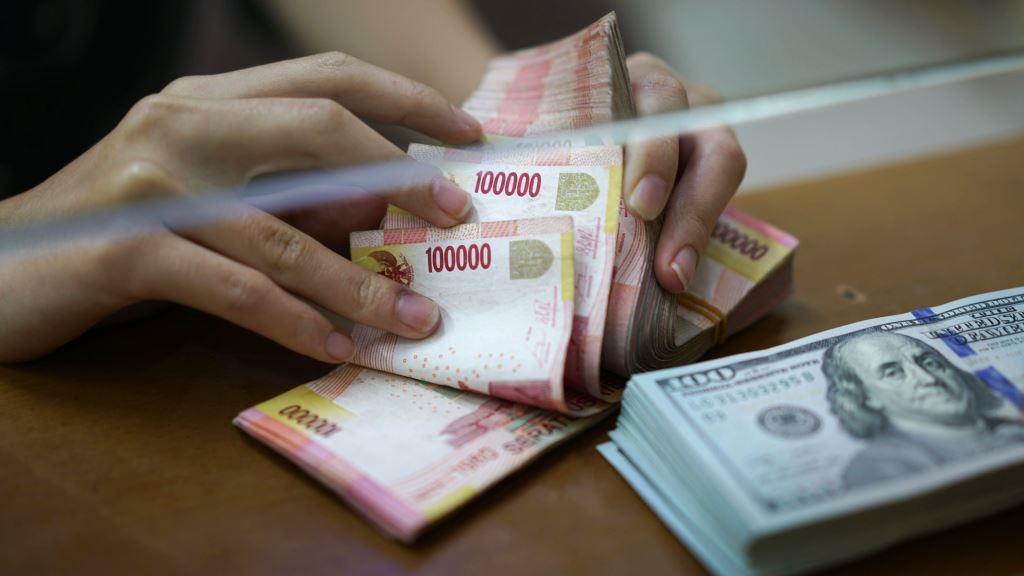
A slowdown in the demand for foreign exchange (FX) strengthened the value of the Nigerian Naira against the United States Dollar in the Nigerian Autonomous Foreign Exchange Market (NAFEX) on Thursday, July 9.
At the official market, the Naira gained 64 Kobo or 0.05 per cent against the greenback yesterday to sell at N1,378.43/$1 compared with Wednesday’s exchange rate of N1,379.07/$1.
The market saw a sharp decrease in transaction volume and value, meaning that heavy demand for the Dollar eased.
Interbank FX turnover reduced sharply by more than 62 per cent to $78.708 million, according to the Central Bank of Nigeria (CBN), from $208.094 million in the preceding day.
FX traders also noticed a sharp decline in the number of deals at the NFEM window in the absence of Dollar injection by the central bank. Deal counts shrank to 106 during the NFEM window, down from 150, reflecting a slowdown in FX activity among market makers.
However, the local currency depreciated against the Pound Sterling in the spot market during the session by N6.18 to N1,846.82/£1 from N1,840.64/£1, and declined against the Euro by N2.79 to close at N1,576.09/€1 versus the preceding session’s N1,573.30/€1.
At the GTBank FX desk, the Naira lost N4 against the US Dollar to quote at N1,385/$1, in contrast to the N1,381/$1 it was traded at midweek, and at the parallel market, it remained unchanged at N1,400/$1.
Meanwhile, the cryptocurrency market soared after a moderation in oil prices and bond yields following the collapse of the Iran war ceasefire.
As has been the pattern for months, markets are looking past inflamed rhetoric and new airstrikes to likely conciliatory statements in the near future.
Bitcoin (BTC) gained 2.3 per cent to sell at $64,048.89, Dogecoin (DOGE) grew by 1.9 per cent to $0.0741, Ethereum (ETH) expanded by 1.6 per cent to $1,777.98, Solana (SOL) rose by 1.0 per cent to $79.13, Ripple (XRP) appreciated by 0.9 per cent to $1.10, Binance Coin (BNB) added 0.6 per cent to sell for $576.91, and TRON (TRX) also improved by 0.6 per cent to $0.3329.
However, Cardano (ADA) crashed by 0.9 per cent to $0.1669, while the US Dollar Tether (USDT) and the US Dollar Coin (USDC) traded flat at $1.00 each.


By Dipo Olowookere
Subscription for the July 2026 edition of the FGN savings bond is closing today, Friday, July 10.
The exercise started on Monday, July 6, with two tenures of two years and three years on offer to retail investors.
The retail bonds are sold by the federal government through the Debt Management Office (DMO) to raise funds for the country’s budget deficits.
The savings bond offers investors steady tax-free income. It is risk-free, backed by the Nigerian government, and listed on the Nigerian Exchange (NGX) Limited, allowing for secondary market trading and easy exit before maturity.
For the two-year FGN savings bond maturing on July 15, 2028, the debt office is offering it at a 14.716 per cent per annum interest rate, while the three-year FGN savings bond due July 15, 2029, is at 15.716 per cent per annum, with the interest on the investment being paid by the government every quarter.
Intending investors can purchase the debt instrument at a unit price of N1,000, subject to a minimum subscription of N5,000 and in multiples of N1,000 thereafter, subject to a maximum subscription of N50.0 million.

2 Comments